All journeys

Civilizations

The rise and fall of civilizations across Africa, the Americas, Asia, Europe and Oceania, from the first cities of Sumer to the empires of the modern world, with Aboriginal Australia, one of the oldest living cultures, at the start.

Stories
147
Distance
52,025 years
Route
c. 50,000 BC to present
  1. Before the first cities11 stories
  2. The first civilizations23 stories
  3. The classical age33 stories
  4. The post-classical era60 stories
  5. The early modern era14 stories
  6. The modern world6 stories
Begin the journey
  1. Chapter I

    Before the first cities

    11 stories in this chapter

  2. Ancient Aboriginal rock paintings of animals and figures at Ubirr in Kakadu National Park, Northern Territory

    Story 1 of 147 · Before the first cities

    Oceania

    Aboriginal Australia

    People reached Australia 50,000 to 65,000 years ago and built one of the world's oldest continuing cultures. They formed about 500 groups speaking over 250 languages, and kept law, history and maps in songs, stories and art tied to Country.

    Next storyc. 9500 BC · Neolithic Jericho
  3. About 40,500 years later

    c. 50,000 BC to c. 9500 BC

  4. The round stone Neolithic tower at Tell es-Sultan, Jericho, seen in its excavation trench

    Story 2 of 147 · Before the first cities

    Middle East and Central Asia

    Neolithic Jericho

    Natufian hunter-gatherers camped by a spring at Tell es-Sultan, and by 10,000 to 9000 BC they had settled for good. The early farming town that followed built a stone wall and a 9-metre-wide tower around 8300 BC, the tallest building on Earth for millennia.

    Next storyc. 8800 BC · Pre-Pottery Neolithic B villages
  5. About 700 years later

    c. 9500 BC to c. 8800 BC

  6. Excavated stone foundations of closely packed houses at Aşıklı Höyük, Türkiye

    Story 3 of 147 · Before the first cities

    Middle East and Central Asia

    Pre-Pottery Neolithic B villages

    Across the Levant and upper Mesopotamia, villagers now relied more on domestic animals as well as crops. They built rectangular houses with polished white lime-plaster floors, at sites such as Ain Ghazal and Abu Hureyra, but still made no pottery.

    Next storyc. 7500 BC · Çatalhöyük
  7. About 1,300 years later

    c. 8800 BC to c. 7500 BC

  8. Excavated mudbrick walls of the south area at Çatalhöyük under a protective roof

    Story 4 of 147 · Before the first cities

    Middle East and Central Asia

    Çatalhöyük

    In southern Anatolia, farmers built a huge town of mudbrick houses packed so tightly that there were no streets; people walked over the roofs and climbed down into their homes. It flourished around 7000 BC.

    Next storyc. 6500 BC · The Ubaid period
  9. About 1,000 years later

    c. 7500 BC to c. 6500 BC

  10. A painted Ubaid pottery jar with bands of geometric pattern

    Story 5 of 147 · Before the first cities

    Middle East and Central Asia

    The Ubaid period

    Ubaid farmers made the first known settlements on the river plain of southern Mesopotamia, at Eridu and other sites, and spread a painted pottery style across the region. In the south the period ran from about 5500 BC until the Uruk period.

    Next storyc. 6100 BC · Halaf culture
  11. About 400 years later

    c. 6500 BC to c. 6100 BC

  12. A painted Halaf pottery bowl with fine geometric patterns

    Story 6 of 147 · Before the first cities

    Middle East and Central Asia

    Halaf culture

    Farming villages of the Khabur valley in today's south-eastern Turkey, Syria and northern Iraq made fine painted pottery that spread across northern Mesopotamia. Its plant designs are the oldest systematic ones in Near Eastern art.

    Next storyc. 5400 BC · Vinča culture
  13. About 700 years later

    c. 6100 BC to c. 5400 BC

  14. A seated clay figurine with a mask-like face, Vinča culture, Serbia

    Story 7 of 147 · Before the first cities

    Europe

    Vinča culture

    In the central Balkans, Vinča farmers built large tell settlements, among the biggest in prehistoric Europe, and made dark polished pottery and many clay figurines. Their towns shared ritual objects over long distances but were probably not one state.

    Next storyc. 5050 BC · Cucuteni–Trypillia culture
  15. About 350 years later

    c. 5400 BC to c. 5050 BC

  16. Two large jars painted with swirling spirals, Cucuteni–Trypillia culture

    Story 8 of 147 · Before the first cities

    Europe

    Cucuteni–Trypillia culture

    Farmers of what are now Moldova, Romania and Ukraine made fine painted pottery and, from about 4100 BC, built mega-sites with up to 3,000 buildings and perhaps 20,000 or more people. Each village was burned after 60 to 80 years, for reasons still argued over.

    Next storyc. 5000 BC · Yangshao culture
  17. A painted pottery jug with swirling black and red patterns, Yangshao culture

    Story 9 of 147 · Before the first cities

    East Asia

    Yangshao culture

    Along the middle Yellow River, Yangshao farmers lived in villages such as Banpo, grew millet and made painted pottery. Their culture spread over the Central Plains of China for some 2,000 years.

    Next storyc. 4700 BC · Hongshan culture
  18. About 300 years later

    c. 5000 BC to c. 4700 BC

  19. A C-shaped green jade dragon carved by the Hongshan culture

    Story 10 of 147 · Before the first cities

    East Asia

    Hongshan culture

    In the West Liao basin of north-east China, from Inner Mongolia to Liaoning, Hongshan people carved some of the earliest jade, including pig dragons, and built the ritual complex of temples and cairns at Niuheliang.

    Next storyc. 4500 BC · Varna culture
  20. About 200 years later

    c. 4700 BC to c. 4500 BC

  21. A polished Chalcolithic pottery vessel in the Varna Archaeological Museum

    Story 11 of 147 · Before the first cities

    EuropeUnverified

    Varna culture

    On Bulgaria's Black Sea coast, a Copper Age people buried their dead with copper tools, obsidian blades, shells and the oldest worked gold in the world. The 294 graves of the Varna necropolis were found by chance in 1972.

    Next storyc. 3500 BC · Caral–Supe civilization
  22. About 1,000 years later

    c. 4500 BC to c. 3500 BC

  23. Chapter II

    The first civilizations

    23 stories in this chapter

  24. Stone ruins of the sacred city of Caral in the Supe valley of Peru

    Story 12 of 147 · The first civilizations

    Americas

    Caral–Supe civilization

    On Peru's dry north-central coast, people built stone pyramids and sunken plazas in as many as thirty centres along three river valleys. It is the oldest known civilization in the Americas.

    Next storyc. 3500 BC · Sumer
  25. The rebuilt Ziggurat of Ur in southern Iraq

    Story 13 of 147 · The first civilizations

    Middle East and Central Asia

    Sumer

    In southern Mesopotamia, in what is now Iraq, the Sumerians built some of the first cities, such as Uruk and Ur. Around 3200 BC they developed cuneiform, one of the earliest systems of writing.

    Next storyc. 3300 BC · Liangzhu culture
  26. About 200 years later

    c. 3500 BC to c. 3300 BC

  27. A square jade cong tube with a round hole, carved by the Liangzhu culture

    Story 14 of 147 · The first civilizations

    East Asia

    Liangzhu culture

    In the Yangtze delta, the Liangzhu people carved jade cong and built a walled city with large dams to control water. Jade, silk, ivory and lacquer were buried only with the elite, a sign of a ranked society and an early state.

    Next storyc. 3100 BC · Ancient Egypt
  28. About 200 years later

    c. 3300 BC to c. 3100 BC

  29. Great Sphinx of Giza and the pyramid of Khafre

    Story 15 of 147 · The first civilizations

    Africa

    Ancient Egypt

    Along the Nile, Egypt was united under one king around 3100 BC and lasted three thousand years, building pyramids and temples and writing in hieroglyphs. It ended when Rome took over after Cleopatra's death.

    Next storyc. 3100 BC · Minoan civilization
  30. The reconstructed south propylaeum of the Minoan palace at Knossos, with its red columns

    Story 16 of 147 · The first civilizations

    Europe

    Minoan civilization

    On the island of Crete the Minoans built great palaces at Knossos and Phaistos, painted lively wall frescoes and traded across the Mediterranean. After about 1450 BC they came under the sway of the Mycenaeans from the mainland.

    Next storyc. 2700 BC · Elam
  31. About 400 years later

    c. 3100 BC to c. 2700 BC

  32. The stepped mud-brick ziggurat of Chogha Zanbil in south-west Iran, built by the Elamites

    Story 17 of 147 · The first civilizations

    Middle East and Central Asia

    Elam

    In south-west Iran, Elam was a neighbour and rival of Sumer, Babylon and Assyria for some two thousand years. Its capital Susa held great temples and later became a capital of the Persian Empire.

    Next storyc. 2600 BC · Indus Valley civilization
  33. The bronze Dancing Girl statuette from Mohenjo-daro

    Story 18 of 147 · The first civilizations

    South and Southeast Asia

    Indus Valley civilization

    Cities such as Harappa and Mohenjo-daro, in what is now Pakistan and north-west India, had grid streets, brick houses and covered drains. Their script has never been deciphered.

    Next storyc. 2500 BC · Kingdom of Kerma
  34. Excavated brick foundations of the ancient city of Kerma in Sudan, seen from above

    Story 19 of 147 · The first civilizations

    Africa

    Kingdom of Kerma

    On the Nile in what is now Sudan, the Kerma culture grew from cattle herders into a rich kingdom of traders and builders. At its peak, around 1750 to 1500 BC, it rivalled Egypt, until Egyptian armies conquered it.

    Next storyc. 2500 BC · The Oxus civilisation
  35. A small stone statuette of a seated woman in a flounced robe, from Bactria

    Story 20 of 147 · The first civilizations

    Middle East and Central Asia

    The Oxus civilisation

    In the oases of what are now Turkmenistan, Uzbekistan, Afghanistan and Tajikistan, a Bronze Age people built towns fortified by impressive walls and gates. Archaeologists call it the Bactria–Margiana Archaeological Complex, or Oxus civilisation.

    Next storyc. 2334 BC · Akkadian Empire
  36. About 170 years later

    c. 2500 BC to c. 2334 BC

  37. Bronze head of an Akkadian king, found at Nineveh, thought to show Sargon or Naram-Sin

    Story 21 of 147 · The first civilizations

    Middle East and Central Asia

    Akkadian Empire

    Sargon of Akkad united the Sumerian city-states under one ruler, creating what is often called the world's first empire. It reached from the Mediterranean to Iran before drought and invaders broke it apart.

    Next storyc. 2025 BC · Assyria
  38. About 310 years later

    c. 2334 BC to c. 2025 BC

  39. A human-headed winged bull guarding a gateway of the North-West Palace at Nimrud

    Story 22 of 147 · The first civilizations

    Middle East and Central Asia

    Assyria

    Beginning as a city-state on the upper Tigris, Assyria became the largest empire the world had yet seen, with a fearsome army, a well-run bureaucracy and a great library at Nineveh. It collapsed in 609 BC.

    Next storyc. 1900 BC · Erlitou culture
  40. A bronze jue wine vessel on three legs, from the Erlitou culture

    Story 23 of 147 · The first civilizations

    East Asia

    Erlitou culture

    At Erlitou in Henan, an early Bronze Age society built palaces and workshops that cast the first Chinese ritual bronze vessels. Chinese archaeologists often link it with the late Xia dynasty of tradition.

    Next storyc. 1894 BC · Babylonia
  41. The blue glazed-brick Ishtar Gate of Babylon, rebuilt in the Pergamon Museum in Berlin

    Story 24 of 147 · The first civilizations

    Middle East and Central Asia

    Babylonia

    Centred on Babylon in Mesopotamia, this state rose around 1894 BC. Hammurabi issued a famous law code, and later Nebuchadnezzar II built the Ishtar Gate. Persia conquered it in 539 BC.

    Next storyc. 1750 BC · Mycenaean Greece
  42. The gold funeral mask known as the Mask of Agamemnon, from a grave at Mycenae

    Story 25 of 147 · The first civilizations

    Europe

    Mycenaean Greece

    Warrior kings ruled palace states at Mycenae, Pylos and Tiryns, kept records in Linear B, the oldest Greek writing, and were buried with gold. Around 1200 BC the palaces fell and Greece entered a dark age.

    Next storyc. 1650 BC · Hittite Empire
  43. A Hittite stone lion from a gateway, in the Museum of Anatolian Civilizations in Ankara

    Story 26 of 147 · The first civilizations

    Middle East and Central Asia

    Hittite Empire

    From Hattusa in Anatolia the Hittites built an empire that reached Syria and fought Egypt. They wrote on clay tablets, and the empire collapsed around 1180 BC amid the troubles that ended the Bronze Age.

    Next storyc. 1600 BC · Lapita culture
  44. A Lapita pottery vessel on display at the Vanuatu Cultural Centre in Port Vila

    Story 27 of 147 · The first civilizations

    Oceania

    Lapita culture

    Seafaring Austronesian people spread from Southeast Asia into the south-west Pacific from about 1600 BC. They decorated their pottery with stamped geometric patterns, and their descendants went on to settle Polynesia.

    Next storyc. 1600 BC · Shang dynasty
  45. The Houmuwu ding, a huge Shang bronze cauldron

    Story 28 of 147 · The first civilizations

    East Asia

    Shang dynasty

    The Shang kings ruled the Yellow River valley and left the earliest known Chinese writing, carved on oracle bones used to put questions to their ancestors. Their bronze workers cast huge ritual vessels.

    Next storyc. 1500 BC · Nok culture
  46. Two Nok terracotta figures from Nigeria, standing close together

    Story 29 of 147 · The first civilizations

    Africa

    Nok culture

    In central Nigeria the Nok farmed the savanna and made striking terracotta heads and figures, among the oldest large sculptures in West Africa. Their terracottas were first found at the village of Nok in 1928.

    Next storyc. 1200 BC · Ancestral Puebloans
  47. About 300 years later

    c. 1500 BC to c. 1200 BC

  48. Cliff Palace, a village of stone rooms built into a cliff alcove at Mesa Verde, Colorado

    Story 30 of 147 · The first civilizations

    Americas

    Ancestral Puebloans

    In the Four Corners region of the south-west United States, the Ancestral Puebloans moved from pit houses to great houses and cliff dwellings. They built kivas, watched the sky and traded widely, and later settled in the Pueblo villages of today.

    Next storyc. 1200 BC · Olmec civilization
  49. An Olmec colossal stone head from San Lorenzo

    Story 31 of 147 · The first civilizations

    Americas

    Olmec civilization

    On Mexico's Gulf Coast, the Olmecs built ceremonial centres and carved colossal stone heads, some about three metres tall, probably portraits of their rulers.

    Next storyc. 1200 BC · Phoenicia
  50. Ruins of the ancient Phoenician city of Byblos in Lebanon

    Story 32 of 147 · The first civilizations

    Middle East and Central Asia

    Phoenicia

    The Phoenicians of today's Lebanon were sailors and traders living in independent city-states such as Tyre and Sidon. They founded colonies from Cyprus to Spain, including Carthage, and spread an alphabet.

    Next storyc. 1070 BC · Kingdom of Kush
  51. Steep-sided pyramids of Meroë in Sudan

    Story 33 of 147 · The first civilizations

    Africa

    Kingdom of Kush

    South of Egypt, in what is now Sudan, the kings of Kush grew rich on gold and trade, and for about a century ruled Egypt itself. They built more pyramids than the Egyptians did.

    Next storyc. 1046 BC · Zhou dynasty
  52. A bronze square wine vessel from the Western Zhou period

    Story 34 of 147 · The first civilizations

    East Asia

    Zhou dynasty

    The Zhou ruled China for 790 years, the longest of any dynasty. Their kings claimed to rule by the Mandate of Heaven. Later the realm broke into warring states, yet it was the age of Confucius and many other thinkers.

    Next storyc. 900 BC · Chavín culture
  53. Chapter III

    The classical age

    33 stories in this chapter

  54. The stone ruins of the temple centre of Chavín de Huántar in the Peruvian Andes

    Story 35 of 147 · The classical age

    Americas

    Chavín culture

    High in the Peruvian Andes, at 3,150 metres, the Chavín built the temple centre of Chavín de Huántar. Its carved stones and fanged gods spread a shared art and religion along the coast.

    Next storyc. 900 BC · Etruscan civilization
  55. The Etruscan Sarcophagus of the Spouses, a clay tomb showing a couple reclining at a banquet

    Story 36 of 147 · The classical age

    Europe

    Etruscan civilization

    In central Italy a league of independent Etruscan cities grew rich on metals and trade with Greeks and Celts. Etruscan culture strongly influenced early Rome. The cities lost power to Rome and were fully absorbed by 27 BC.

    Next storyc. 814 BC · Carthage
  56. The sheltered ancient harbour of Carthage in Tunisia

    Story 37 of 147 · The classical age

    Africa

    Carthage

    Merchants from Tyre founded Carthage in what is now Tunisia around 814 BC. It grew into the richest sea power in the western Mediterranean, until Rome beat it in three Punic Wars and destroyed the city in 146 BC.

    Next storyc. 800 BC · Ancient Greece
  57. The Parthenon on the Acropolis of Athens

    Story 38 of 147 · The classical age

    Europe

    Ancient Greece

    Greek city-states such as Athens and Sparta flourished around the Mediterranean. Athens developed an early form of democracy, and Greek thinkers laid the foundations of philosophy, mathematics, drama and history.

    Next storyc. 753 BC · Ancient Rome
  58. The Colosseum in Rome

    Story 39 of 147 · The classical age

    Europe

    Ancient Rome

    From a small city on the Tiber, Rome grew into a republic and then an empire that ruled the whole Mediterranean. The western empire fell in 476; the eastern half lived on as the Byzantine Empire.

    Next storyc. 700 BC · Zapotec civilization
  59. The Great Plaza of Monte Albán, the Zapotec city in Oaxaca

    Story 40 of 147 · The classical age

    Americas

    Zapotec civilization

    In the Valley of Oaxaca the Zapotec built Monte Albán, one of the first major cities in Mesoamerica, on a levelled mountaintop. It had ball courts, tombs and gold jewellery. Zapotec peoples still live in Oaxaca and speak Zapotec languages.

    Next story550 BC · Achaemenid Persian Empire
  60. About 150 years later

    c. 700 BC to 550 BC

  61. The Gate of All Nations at Persepolis, Iran

    Story 41 of 147 · The classical age

    Middle East and Central Asia

    Achaemenid Persian Empire

    Cyrus the Great founded an empire that stretched from Egypt and Greece to India, linked by roads and a royal postal service. It ruled many peoples and largely let them keep their customs and religions.

    Next story437 BC · Anuradhapura kingdom
  62. The white dome of the Ruwanwelisaya stupa at Anuradhapura, Sri Lanka

    Story 42 of 147 · The classical age

    South and Southeast Asia

    Anuradhapura kingdom

    Sri Lanka's first great kingdom made Buddhism part of its government. Its kings raised huge stupas and built giant irrigation tanks that watered rice fields. Chola invaders from southern India broke it up around 1017.

    Next storyc. 322 BC · Maurya Empire
  63. The Lion Capital of Ashoka, four lions back to back

    Story 43 of 147 · The classical age

    South and Southeast Asia

    Maurya Empire

    Chandragupta Maurya united most of the Indian subcontinent. His grandson Ashoka, appalled by a bloody conquest, turned to Buddhism and had edicts on tolerance and welfare carved on rocks and pillars.

    Next story312 BC · Seleucid Empire
  64. Bronze bust of Seleucus I Nicator, founder of the Seleucid Empire

    Story 44 of 147 · The classical age

    Middle East and Central Asia

    Seleucid Empire

    Seleucus, one of Alexander the Great's generals, founded a Greek-ruled empire across Syria, Mesopotamia and Iran. It spread Greek cities and culture into Asia, then shrank under Parthian and Roman pressure until Rome annexed it in 63 BC.

    Next story305 BC · Ptolemaic Egypt
  65. The Rosetta Stone, a decree of Ptolemy V carved in three scripts

    Story 45 of 147 · The classical age

    Africa

    Ptolemaic Egypt

    After Alexander the Great died, his general Ptolemy made himself king of Egypt. His Greek-speaking family ruled for nearly three centuries from Alexandria, until the death of Cleopatra VII in 30 BC.

    Next story247 BC · Parthian Empire
  66. Clay plaque of a mounted archer from the Parthian period

    Story 46 of 147 · The classical age

    Middle East and Central Asia

    Parthian Empire

    A nomad-born Iranian dynasty took Iran and Mesopotamia from the Seleucids and held the Silk Road between Rome and Han China. Its mounted archers destroyed a Roman army at Carrhae in 53 BC.

    Next story221 BC · Qin dynasty
  67. Rows of life-size clay soldiers of the Terracotta Army buried with Qin Shi Huang

    Story 47 of 147 · The classical age

    East Asia

    Qin dynasty

    In 221 BC the king of Qin finished conquering his rivals and became Qin Shi Huang, China's first emperor. His government set one system of writing and measures, and he was buried with an army of clay soldiers. The dynasty fell within four years of his death.

    Next story209 BC · The Xiongnu
  68. A gold crown topped by an eagle, from the Xiongnu of Inner Mongolia

    Story 48 of 147 · The classical age

    Middle East and Central Asia

    The Xiongnu

    Under Modu Chanyu, from 209 BC, a confederation of steppe nomads became the leading power of the eastern steppe and forced Han China into a peace treaty in 198 BC. After centuries of war with the Han, it split in two.

    Next story202 BC · Han dynasty
  69. Ruins of a Han-dynasty watchtower at Dunhuang in Gansu, China

    Story 49 of 147 · The classical age

    East Asia

    Han dynasty

    The Han dynasty united China for four centuries, opened the Silk Road trade routes to the west and invented paper. Most Chinese people still call themselves Han.

    Next storyc. 100 BC · Hopewell tradition
  70. Grass-covered burial mounds inside an earthen enclosure at Mound City, Ohio

    Story 50 of 147 · The classical age

    Americas

    Hopewell tradition

    Peoples of the Ohio and Mississippi river valleys built great earthworks and burial mounds and traded goods over a network running from Lake Ontario to Florida. It was not one society but many, linked by exchange.

    Next storyc. 100 BC · Nazca culture
  71. Aerial view of the Hummingbird, a giant figure drawn in the desert of Nazca, Peru

    Story 51 of 147 · The classical age

    Americas

    Nazca culture

    On Peru's dry southern coast the Nazca drew huge animals and lines in the desert, the Nazca lines, and dug underground aqueducts. Several dozen of these puquios still bring water today.

    Next storyc. 100 BC · Teotihuacan
  72. The Pyramid of the Sun at Teotihuacan, with the Avenue of the Dead

    Story 52 of 147 · The classical age

    Americas

    Teotihuacan

    Near modern Mexico City, Teotihuacan grew into one of the largest cities in the world, with perhaps 100,000 people. Its Pyramid of the Sun is among the largest pyramids ever built.

    Next story57 BC · Silla
  73. Stone stairways at the entrance of Bulguksa temple in Gyeongju, built under Silla

    Story 53 of 147 · The classical age

    East Asia

    Silla

    Silla began as the weakest of Korea's Three Kingdoms. It allied with Tang China to beat its rivals and united most of the peninsula by 676. Its capital, Gyeongju, filled with Buddhist temples, and women ruled as queens.

    Next story37 BC · Goguryeo
  74. A tomb mural of Goguryeo showing rows of people in the clothing of the kingdom

    Story 54 of 147 · The classical age

    East Asia

    Goguryeo

    One of Korea's Three Kingdoms, Goguryeo held northern Korea and much of Manchuria. It repeatedly fought off Chinese invasions before an alliance of Tang and Silla defeated it in 668. Its tomb paintings are among the finest early art in East Asia.

    Next story18 BC · Baekje
  75. A Baekje envoy as drawn in the Liangzhigongtu, a Chinese painting of foreign visitors

    Story 55 of 147 · The classical age

    East Asia

    Baekje

    In south-west Korea, Baekje had the largest population of the Three Kingdoms. Its scholars, monks and craftsmen carried writing, Buddhism and skills to Japan, until Silla and Tang forces conquered it in 660.

    Next story1st century · Funan
  76. A small gold coin from Oc Eo, the trading port linked with Funan

    Story 56 of 147 · The classical age

    South and Southeast Asia

    Funan

    Funan was a loose network of Indianized states on the lower Mekong, in what are now Cambodia, Vietnam and Thailand. Chinese envoys gave it the name; its port towns traded between India and China.

    Next storyc. 30 · Kushan Empire
  77. A gold coin of the Kushan king Kanishka showing the standing Buddha

    Story 57 of 147 · The classical age

    Middle East and Central Asia

    Kushan Empire

    The Yuezhi founded an empire in Bactria that spread over Afghanistan, Pakistan and northern India as far as Varanasi. Its rulers, such as Kanishka the Great, mixed Greek, Iranian and Indian gods and backed Buddhism.

    Next storyc. 100 · Kingdom of Aksum
  78. Henry Salt's 1809 painting of the great obelisk at Aksum

    Story 58 of 147 · The classical age

    Africa

    Kingdom of Aksum

    From the highlands of today's Ethiopia and Eritrea, Aksum controlled trade between the Roman world and India, minted its own coins and raised giant stone obelisks. King Ezana adopted Christianity in the 4th century.

    Next storyc. 100 · Moche culture
  79. A Moche ceramic vessel modelled as the portrait of a ruler

    Story 59 of 147 · The classical age

    Americas

    Moche culture

    Along Peru's north coast the Moche raised big adobe pyramids and made lifelike portrait pots. Many scholars think they were several rival states sharing one culture, not a single empire.

    Next storyc. 192 · Champa
  80. Brick towers of the Cham temple complex at My Son in central Vietnam

    Story 60 of 147 · The classical age

    South and Southeast Asia

    Champa

    A group of Cham kingdoms of sea traders and rice farmers along the coast of central and southern Vietnam. They raised brick temples to Hindu gods at sites such as My Son. Vietnam slowly took their land, and the last Cham principality was annexed in 1832.

    Next story224 · Sasanian Empire
  81. Rock relief at Naqsh-e Rustam showing the god Ahura Mazda giving Ardashir I the ring of kingship

    Story 61 of 147 · The classical age

    Middle East and Central Asia

    Sasanian Empire

    Ardashir I overthrew the Parthians in 224 and revived the glory of ancient Persia. For over four centuries the Sasanians fought Rome and Byzantium, made Zoroastrianism the state religion and fell to Arab armies in 651.

    Next storyc. 250 · Classic Maya civilization
  82. Temple of the Great Jaguar at Tikal, Guatemala

    Story 62 of 147 · The classical age

    Americas

    Classic Maya civilization

    In the rainforests of southern Mexico and Central America, Maya city-states built stepped pyramids, kept precise calendars and wrote in a full script. Many cities emptied around 900, but millions of Maya live there today.

    Next storyc. 300 · Ghana Empire
  83. Stone ruins at Koumbi Saleh, Mauritania

    Story 63 of 147 · The classical age

    Africa

    Ghana Empire

    In the western Sahel, in today's Mauritania and Mali, the kings of Ghana grew rich by controlling the trade in gold and salt across the Sahara. Arab writers called it the land of gold.

    Next storyc. 300 · Yamato kingdom
  84. Clay haniwa figure of a helmeted warrior, made for a Kofun-period tomb between 300 and 552

    Story 64 of 147 · The classical age

    East Asia

    Yamato kingdom

    From the 4th to the 7th century an alliance of noble clans on the Yamato plain, near today's Nara, became the first state to rule much of Japan. Its rulers were buried in huge keyhole-shaped mounds and started Japan's imperial line.

    Next storyc. 320 · Gupta Empire
  85. Painting of the Bodhisattva Padmapani in the Ajanta Caves, from the same era

    Story 65 of 147 · The classical age

    South and Southeast Asia

    Gupta Empire

    Under the Gupta kings, northern India enjoyed a golden age of art, literature and science. Mathematicians such as Aryabhata used the decimal place-value system and calculated pi to four decimal places.

    Next story330 · Byzantine Empire
  86. The Hagia Sophia in Istanbul

    Story 66 of 147 · The classical age

    Europe

    Byzantine Empire

    The eastern half of the Roman Empire, ruled from Constantinople, outlasted the west by almost a thousand years. Emperor Justinian built the Hagia Sophia, and Byzantine scholars preserved much ancient Greek learning.

    Next storyc. 400 · Makuria
  87. Wall painting of an unnamed king from a church at Dongola, capital of Makuria

    Story 67 of 147 · The classical age

    Africa

    Makuria

    A Christian kingdom on the Nile in what is now northern Sudan. It drove back an Arab army in 652 and kept a long peace with Egypt, building churches and painting walls, until civil war and Mamluk attacks wore it down.

    Next storyc. 500 · Tiwanaku
  88. Chapter IV

    The post-classical era

    60 stories in this chapter

  89. The Gateway of the Sun, a carved stone gate at Tiwanaku in Bolivia

    Story 68 of 147 · The post-classical era

    Americas

    Tiwanaku

    Near Lake Titicaca in Bolivia, Tiwanaku was a ceremonial city of huge cut stones and carved gateways. Around AD 800 an estimated 10,000 to 20,000 people lived there. It collapsed around 1000, possibly after drought.

    Next story552 · First Turkic Khaganate
  90. The Bugut stele, a carved stone with an inscription in Sogdian, Mongolia

    Story 69 of 147 · The post-classical era

    Middle East and Central Asia

    First Turkic Khaganate

    Bumin of the Ashina clan overthrew the Rouran and declared himself khagan at Ötüken in 552. Within years his family ruled from Mongolia to the Black Sea and sent envoys to Constantinople; civil war split the khaganate in 603.

    Next story581 · Sui dynasty
  91. Painting of Emperor Yang of Sui with two attendants, from a scroll of Chinese emperors

    Story 70 of 147 · The post-classical era

    East Asia

    Sui dynasty

    The Sui reunited China in 581 after centuries of division. They built the Grand Canal linking the Yangtze and Yellow rivers, but forced labour and costly wars against Goguryeo sparked revolts, and the dynasty fell after only thirty-seven years.

    Next storyc. 600 · Wari Empire
  92. A Wari tapestry tunic woven from camelid wool in bold geometric patterns

    Story 71 of 147 · The post-classical era

    Americas

    Wari Empire

    From the Ayacucho basin the Wari spread across much of highland and coastal Peru for about five hundred years. They built administrative centres, introduced farm terraces and traded widely, without a form of writing.

    Next story618 · Tang dynasty
  93. The Giant Wild Goose Pagoda in Xi'an, built under the Tang

    Story 72 of 147 · The post-classical era

    East Asia

    Tang dynasty

    Tang China was one of the world's richest and most open states, where poetry, printing and Silk Road trade flourished. Its capital, Chang'an, was perhaps the largest city on Earth.

    Next storyc. 618 · Tibetan Empire
  94. Gilt brass statue of Songtsen Gampo, the king who founded the Tibetan Empire

    Story 73 of 147 · The post-classical era

    East Asia

    Tibetan Empire

    Beginning under Songtsen Gampo, the kings of the Yarlung valley built an empire that at its height reached from Chang'an, the Tang capital, to beyond Afghanistan. Buddhism took root, and the empire split apart after 842.

    Next storyc. 650 · Srivijaya
  95. The Kedukan Bukit inscription of 682, an early record of Srivijaya found near Palembang

    Story 74 of 147 · The post-classical era

    South and Southeast Asia

    Srivijaya

    This Buddhist sea-trading power, based on Sumatra, controlled the straits between the Indian Ocean and the South China Sea. Chinese monks stopped there to study on their way to India. Chola raids in 1025 broke its power.

    Next story661 · Umayyad Caliphate
  96. The courtyard of the Great Mosque of Damascus, built under the Umayyad caliphs

    Story 75 of 147 · The post-classical era

    Middle East and Central Asia

    Umayyad Caliphate

    The second Islamic caliphate was ruled from Damascus by the Umayyad family. It stretched from Spain to the borders of India, made Arabic its language of government and built the Dome of the Rock. The Abbasids overthrew it in 750.

    Next story697 · Republic of Venice
  97. The Doge's Palace in Venice seen from the lagoon

    Story 76 of 147 · The post-classical era

    Europe

    Republic of Venice

    A city built on lagoon islands grew into a trading and naval republic ruled by an elected doge. From the 13th to the 16th century it held ports and islands across the Adriatic and the eastern Mediterranean. Napoleon ended it in 1797.

    Next storyc. 700 · Kanem–Bornu Empire
  98. Map of the Kanem–Bornu Empire around Lake Chad in the 17th century

    Story 77 of 147 · The post-classical era

    Africa

    Kanem–Bornu Empire

    Around Lake Chad this empire grew rich on trans-Saharan trade in salt, ivory and slaves. Its rulers became Muslim in the 11th century, and it lasted until 1893, one of the longest-lived states in African history.

    Next story711 · Al-Andalus
  99. Red-and-white arches inside the Great Mosque of Córdoba

    Story 78 of 147 · The post-classical era

    Europe

    Al-Andalus

    For nearly eight centuries Muslim states ruled much of Spain and Portugal, from Córdoba's great mosque and libraries to Granada's Alhambra. Christians, Jews and Muslims lived side by side, and the last state, Granada, fell in 1492.

    Next story750 · Abbasid Caliphate
  100. The spiral Malwiya minaret of the Great Mosque of Samarra

    Story 79 of 147 · The post-classical era

    Middle East and Central Asia

    Abbasid Caliphate

    The Abbasid caliphs built Baghdad, a centre of learning where scholars translated Greek, Persian and Indian works into Arabic and advanced mathematics, medicine and astronomy. Mongol armies sacked Baghdad in 1258.

    Next story794 · Heian Japan
  101. A scale model of Heian-kyō, the capital of Heian Japan, with its grid of streets

    Story 80 of 147 · The post-classical era

    East Asia

    Heian Japan

    Japan's court moved to Heian-kyō, now Kyoto, beginning four centuries of refined court culture. Murasaki Shikibu wrote The Tale of Genji, often called the world's first novel.

    Next storyc. 800 · Swahili city-states
  102. Inside the ruined Great Mosque of Kilwa Kisiwani, with its rows of domes

    Story 81 of 147 · The post-classical era

    Africa

    Swahili city-states

    Kilwa, Mombasa, Zanzibar and other self-governing towns on East Africa's coast built stone mosques and houses. They shipped gold, ivory and timber across the Indian Ocean to Arabia, India and China.

    Next story800 · Carolingian Empire
  103. Aachen Cathedral, built around Charlemagne's palace chapel

    Story 82 of 147 · The post-classical era

    Europe

    Carolingian Empire

    Charlemagne, crowned emperor by the Pope on Christmas Day 800, united much of western Europe. His court encouraged learning and the careful copying of ancient texts.

    Next story802 · Khmer Empire
  104. Angkor Wat, Cambodia

    Story 83 of 147 · The post-classical era

    South and Southeast Asia

    Khmer Empire

    Ruling from Angkor in what is now Cambodia, the Khmer kings built hundreds of temples, including Angkor Wat, the largest religious monument in the world. Huge reservoirs and canals supplied the city.

    Next story848 · Chola Empire
  105. The tall tower of the Brihadisvara Temple at Thanjavur, built by the Cholas

    Story 84 of 147 · The post-classical era

    South and Southeast Asia

    Chola Empire

    The medieval Cholas of southern India built a sea power: their fleets raided Srivijaya in Sumatra and their armies marched to the Ganges. They raised the great temple at Thanjavur and cast famous bronze statues of the gods.

    Next storyc. 849 · Pagan Kingdom
  106. The white Ananda Temple at Bagan, built around 1105

    Story 85 of 147 · The post-classical era

    South and Southeast Asia

    Pagan Kingdom

    Myanmar's first united kingdom grew in the 1050s under Anawrahta. Its kings and nobles built over 10,000 Buddhist temples and pagodas on the plain of Bagan, and the remains of more than 2,300 still stand. Mongol attacks and revolts ended it in 1297.

    Next storyc. 880 · Kievan Rus'
  107. Saint Sophia Cathedral in Kyiv, begun in the 11th century under Yaroslav the Wise

    Story 86 of 147 · The post-classical era

    Europe

    Kievan Rus'

    The first East Slavic state was ruled from Kyiv by the Rurik dynasty. In 988 Prince Vladimir adopted Orthodox Christianity from Byzantium. In the 11th century it stretched from the far north to the Black Sea, until Mongols broke it in 1240.

    Next storyc. 900 · Chimú kingdom
  108. The mud-brick walls of Chan Chan, the capital of the Chimú kingdom, near Trujillo in Peru

    Story 87 of 147 · The post-classical era

    Americas

    Chimú kingdom

    On Peru's north coast the Chimú ruled about 1,000 kilometres of coastline from their adobe capital, Chan Chan. The Inca conquered them around 1470, only fifty years before the Spanish arrived.

    Next storyc. 900 · Classical Ife
  109. Bronze head from Ife, cast in the 12th to 15th centuries and now in the British Museum

    Story 88 of 147 · The post-classical era

    Africa

    Classical Ife

    The Yoruba see Ife, in south-west Nigeria, as the place where the world began. By about 900 it was a busy trading town, and between 1200 and 1400 its artists made strikingly lifelike heads in bronze, terracotta and stone.

    Next storyc. 950 · Toltec culture
  110. The tall stone warrior figures known as the Atlantes at Tula, the Toltec capital

    Story 89 of 147 · The post-classical era

    Americas

    Toltec culture

    From Tula in central Mexico the Toltec reached their height between about 950 and 1150. The Aztecs later saw them as the model of civilization, and told stories of their kings and artisans that historians still debate.

    Next storyc. 950 · Tuʻi Tonga Empire
  111. The Haʻamonga ʻa Maui, a great coral-stone trilithon in Tonga

    Story 90 of 147 · The post-classical era

    Oceania

    Tuʻi Tonga Empire

    From Tongatapu, the sacred Tuʻi Tonga kings extended their rule or influence over Samoa, Tuvalu, Wallis and Futuna and many other islands from about 950. The empire peaked after 1200, and long double-canoes carried trade and annual tribute to the king.

    Next story960 · Song dynasty
  112. Map of Song China and its neighbours in the 11th century

    Story 91 of 147 · The post-classical era

    East Asia

    Song dynasty

    Under the Song, China had paper money, gunpowder weapons, printed books and big trading cities. Its armies were weaker than its economy: it lost the north in 1127 and the Mongols took the south in 1279.

    Next story962 · Holy Roman Empire
  113. The Imperial Crown of the Holy Roman Empire, an octagonal gold crown set with jewels

    Story 92 of 147 · The post-classical era

    Europe

    Holy Roman Empire

    A patchwork of kingdoms, duchies and free cities in central Europe under an elected emperor. Otto I was crowned in 962, and the empire lasted until Napoleon forced it to end in 1806.

    Next story968 · Đại Việt
  114. The main gate of the Temple of Literature in Hanoi, founded in 1070

    Story 93 of 147 · The post-classical era

    South and Southeast Asia

    Đại Việt

    Founded in 968 after Vietnam had broken free of Chinese rule, Đại Việt was ruled from Thăng Long, now Hanoi. Its dynasties held off China and expanded south, until the name was changed to Việt Nam in 1804.

    Next storyc. 1000 · Kingdom of Mapungubwe
  115. A small gold-foil rhinoceros found in a royal grave on Mapungubwe Hill

    Story 94 of 147 · The post-classical era

    Africa

    Kingdom of Mapungubwe

    Where the Shashe and Limpopo rivers meet, farmers grew rich exporting ivory and gold to the Indian Ocean coast. Around 1220 the elite moved onto Mapungubwe Hill above the commoners; by 1250 the capital held 5,000 people.

    Next storyc. 1000 · Mississippian culture
  116. Monks Mound at Cahokia, the largest earthwork of the Mississippian culture

    Story 95 of 147 · The post-classical era

    Americas

    Mississippian culture

    Maize farmers across the Mississippi valley and the south-east built towns around flat-topped earth mounds with temples on top. The largest, Cahokia near today's St. Louis, held 15,000 to 20,000 people around 1100.

    Next story1037 · Seljuk Empire
  117. Map of the Seljuk Empire at its greatest extent

    Story 96 of 147 · The post-classical era

    Middle East and Central Asia

    Seljuk Empire

    Turkic horsemen from near the Aral Sea conquered Iran and Iraq and took Baghdad in 1055, ruling in the name of the Abbasid caliph. Victory at Manzikert in 1071 opened Anatolia to Turkish settlement.

    Next storyc. 1100 · Saudeleur dynasty
  118. Basalt log walls of Nan Madol rising from the lagoon on Pohnpei

    Story 97 of 147 · The post-classical era

    Oceania

    Saudeleur dynasty

    On Pohnpei in Micronesia, the Saudeleur dynasty united the island and built Nan Madol, a city of 92 artificial islets linked by canals and walled in stone. Legend says they grew harsh until invaders ended their rule around 1628.

    Next storyc. 1137 · Zagwe dynasty
  119. The cross-shaped Church of Saint George at Lalibela, cut down into solid rock

    Story 98 of 147 · The post-classical era

    Africa

    Zagwe dynasty

    The Zagwe kings ruled the highlands of northern Ethiopia for about 130 years. King Lalibela is credited with ordering the rock-hewn churches of Lalibela, cut down into solid stone, which are still a place of pilgrimage.

    Next storyc. 1180 · Kingdom of Benin
  120. A brass head sculpture from the Kingdom of Benin

    Story 99 of 147 · The post-classical era

    Africa

    Kingdom of Benin

    In what is now southern Nigeria, the obas of Benin ruled from the walled city of Edo. In the 15th and 16th centuries they traded with Portugal and filled the palace with brass plaques and ivory carvings. British forces took the city in 1897.

    Next story1185 · Kamakura shogunate
  121. Wooden statue of a Kongorikishi temple guardian, made in Japan in the 1300s

    Story 100 of 147 · The post-classical era

    East Asia

    Kamakura shogunate

    After winning the Genpei War, Minamoto no Yoritomo set up a military government at Kamakura in 1185 while the emperor stayed in Kyoto. It beat off two Mongol invasions, in 1274 and 1281, and was overthrown in 1333.

    Next storyc. 1200 · Rapa Nui
  122. Giant moai statues in a row at Ahu Tongariki on Rapa Nui

    Story 101 of 147 · The post-classical era

    Oceania

    Rapa Nui

    Polynesian voyagers settled one of the most remote inhabited islands on Earth and carved nearly a thousand giant stone figures, the moai. Foreign diseases and slave raids brought great loss, but the Rapa Nui people live on and speak their own language.

    Next story1206 · Delhi Sultanate
  123. The Qutb Minar tower rising behind the Alai Darwaza gateway in Delhi, both built under the Delhi Sultanate

    Story 102 of 147 · The post-classical era

    South and Southeast Asia

    Delhi Sultanate

    Five dynasties of Turkic and Afghan rulers governed much of northern India from Delhi for over three centuries. They fought off Mongol raids, built the Qutb Minar and brought Persian-style government. Babur ended the sultanate in 1526.

    Next story1206 · Mongol Empire
  124. Portrait of Genghis Khan from a Yuan dynasty album

    Story 103 of 147 · The post-classical era

    Middle East and Central Asia

    Mongol Empire

    Genghis Khan united the Mongol tribes in 1206, and his armies and heirs conquered lands from Korea to Hungary. It became the largest connected land empire in history.

    Next storyc. 1220 · Kingdom of Zimbabwe
  125. Granite walls and boulders at Great Zimbabwe

    Story 104 of 147 · The post-classical era

    Africa

    Kingdom of Zimbabwe

    From its stone city of Great Zimbabwe, a Shona kingdom traded gold and ivory with the Indian Ocean coast. Its granite walls, built without mortar, rise up to 11 metres.

    Next storyc. 1235 · Mali Empire
  126. Mansa Musa holding a gold nugget, on the Catalan Atlas of 1375

    Story 105 of 147 · The post-classical era

    Africa

    Mali Empire

    Founded by Sundiata Keita, Mali controlled the gold trade of West Africa. In 1324 its ruler Mansa Musa made a pilgrimage to Mecca and spent so much gold in Cairo that its value there fell.

    Next storyc. 1241 · Hanseatic League
  127. Wooden merchants' houses of the Hanseatic wharf at Bergen, Norway

    Story 106 of 147 · The post-classical era

    Europe

    Hanseatic League

    A network of merchant towns in northern Germany and around the Baltic, led by Lübeck, banded together to protect trade. At its peak it had nearly 200 towns and trading posts, from London to Novgorod. The last Hanseatic Day met in 1669.

    Next story1242 · Golden Horde
  128. A ruler seated on a carpet, standing for the Golden Horde, on the Catalan Atlas of 1375

    Story 107 of 147 · The post-classical era

    Middle East and Central Asia

    Golden Horde

    The western part of the Mongol Empire, ruled by Batu Khan's heirs, controlled the steppe from Siberia to the Danube. Russian princes paid it tribute for over two centuries. After Timur's attack in 1396 it split into smaller khanates.

    Next story1270 · Ethiopian Empire
  129. Emperor Menelik II photographed on his throne in coronation robes

    Story 108 of 147 · The post-classical era

    Africa

    Ethiopian Empire

    Founded in 1270 by Yekuno Amlak, who claimed descent from King Solomon, this Christian empire lasted over seven centuries. Under Menelik II it beat an Italian army at Adwa in 1896. It ended when Haile Selassie was deposed in 1974.

    Next story1271 · Yuan dynasty
  130. Portrait of Kublai Khan, founder of the Yuan dynasty

    Story 109 of 147 · The post-classical era

    East Asia

    Yuan dynasty

    Kublai Khan proclaimed the Yuan dynasty in 1271 and finished conquering the Song in 1279, making Mongols the rulers of all China. He ruled from Dadu, today's Beijing. Revolts drove the Mongols out in 1368.

    Next storyc. 1293 · Majapahit
  131. The brick gateway of Bajang Ratu at Trowulan, a surviving Majapahit monument

    Story 110 of 147 · The post-classical era

    South and Southeast Asia

    Majapahit

    A Hindu-Buddhist empire based on Java, which at its height ruled or taxed much of today's Indonesia and neighbouring islands. It rose after the Mongol attack on Java and fell to the Muslim sultanate of Demak around 1527.

    Next storyc. 1299 · Ottoman Empire
  132. The Süleymaniye Mosque in Istanbul

    Story 111 of 147 · The post-classical era

    Middle East and Central Asia

    Ottoman Empire

    Founded by Osman I in Anatolia, the Ottoman state took Constantinople in 1453 and at its height ruled south-eastern Europe, the Middle East and North Africa. It lasted more than 600 years.

    Next storyc. 1300 · Oyo Empire
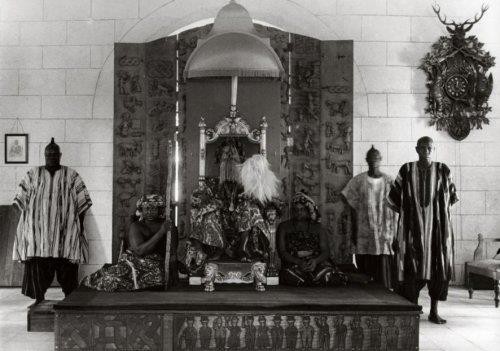
  133. Old photograph of the Alaafin of Oyo seated with his chiefs in the palace

    Story 112 of 147 · The post-classical era

    Africa

    Oyo Empire

    The Yoruba kingdom of Oyo built its power on cavalry. By 1680 it covered over 150,000 square kilometres and made neighbours such as Dahomey pay tribute. Civil strife and the Ilorin revolt ended it, and its capital fell in 1835.

    Next story14th century · Purépecha Empire
  134. The stepped stone yácata platforms at Tzintzuntzan, Michoacán

    Story 113 of 147 · The post-classical era

    Americas

    Purépecha Empire

    From Tzintzuntzan on Lake Pátzcuaro, the Purépecha kings ruled Michoacán and parts of nearby states from the early 14th century. They were rivals of the Aztecs and fought them many times, and were the second-largest state in Mesoamerica when the Spanish arrived.

    Next storyc. 1320 · Māori of Aotearoa
  135. A Māori man in a feather cloak holding a carved staff

    Story 114 of 147 · The post-classical era

    Oceania

    Māori of Aotearoa

    Polynesian voyagers arrived in Aotearoa in canoes around 1320 to 1350. Over the centuries they built a distinct culture, with its own language, carving and fortified villages. The Treaty of Waitangi of 1840 began a long struggle over land and rights.

    Next story1336 · Vijayanagara Empire
  136. The stone chariot shrine at Hampi, built under the Vijayanagara Empire

    Story 115 of 147 · The post-classical era

    South and Southeast Asia

    Vijayanagara Empire

    Founded in 1336 by the brothers Harihara and Bukka, this Hindu empire ruled most of southern India. Its great capital, Vijayanagara near today's Hampi, dazzled visitors, but its army was crushed at Talikota in 1565.

    Next story1351 · Ayutthaya Kingdom
  137. A stone Buddha head held in the roots of a tree at Wat Mahathat, Ayutthaya

    Story 116 of 147 · The post-classical era

    South and Southeast Asia

    Ayutthaya Kingdom

    On an island in the Chao Phraya river, Ayutthaya became a rich trading kingdom. In the early 1500s European travellers counted it among the three great powers of Asia. Burmese armies destroyed the city in 1767.

    Next story1368 · Ming dynasty
  138. The Hall of Supreme Harmony in the Forbidden City, Beijing

    Story 117 of 147 · The post-classical era

    East Asia

    Ming dynasty

    The Ming emperors drove out the Mongols, rebuilt much of the Great Wall in the form seen today, and built the Forbidden City in Beijing. Admiral Zheng He's fleets sailed as far as East Africa.

    Next story1370 · Timurid Empire
  139. The blue-domed Gur-e Amir mausoleum of Timur in Samarkand

    Story 118 of 147 · The post-classical era

    Middle East and Central Asia

    Timurid Empire

    Timur, a Turco-Mongol warlord, built an empire from Samarkand across Iran, Iraq and Central Asia. His heirs made Samarkand and Herat centres of science, poetry and architecture, until Uzbek forces took them in 1507.

    Next storyc. 1390 · Kingdom of Kongo
  140. Engraving of the royal residence at São Salvador, capital of the Kingdom of Kongo

    Story 119 of 147 · The post-classical era

    Africa

    Kingdom of Kongo

    Ruled by a king called the manikongo, Kongo covered parts of today's Angola, Congo and Gabon. Its kings turned Christian in 1491 and dealt with Portugal as equals. The slave trade slowly drained it, and Portugal ended the monarchy in 1914.

    Next story1392 · Joseon
  141. Geunjeongjeon, the throne hall of Gyeongbokgung Palace in Seoul

    Story 120 of 147 · The post-classical era

    East Asia

    Joseon

    Founded in 1392, Joseon lasted 505 years. It adopted Neo-Confucian ideals, and King Sejong's court devised the Korean alphabet, Hangul, in the 1440s. Japan invaded in the 1590s, and the kingdom became the Korean Empire in 1897.

    Next storyc. 1400 · Malacca Sultanate
  142. A wooden replica of the Malacca sultan's palace with steep layered roofs

    Story 121 of 147 · The post-classical era

    South and Southeast Asia

    Malacca Sultanate

    Parameswara, a king of Singapura, founded Malacca around 1400. Commanding the Strait of Malacca, it became a busy international port and a centre of Islamic learning until the Portuguese took it in 1511.

    Next story15th century · Mutapa Empire
  143. A 1746 European map of the Monomotapa empire in south-east Africa

    Story 122 of 147 · The post-classical era

    Africa

    Mutapa Empire

    A Shona state on the north of the Zimbabwean Plateau grew rich on the gold trade along the Zambezi. Tradition names Mutota as its founder; the Portuguese called its ruler Monomotapa. It broke up after a king was killed around 1760.

    Next story1428 · Aztec Empire
  144. Excavated remains of the Templo Mayor in Mexico City

    Story 123 of 147 · The post-classical era

    Americas

    Aztec Empire

    The Mexica built their capital, Tenochtitlan, on an island in Lake Texcoco, and through an alliance of three cities came to dominate central Mexico. Spanish conquistadors and their Indigenous allies took the city in 1521.

    Next story1438 · Inca Empire
  145. The Macchu Picchu , a UNESCO World Heritage Site near Cusco in Peru , at twilight

    Story 124 of 147 · The post-classical era

    Americas

    Inca Empire

    From Cusco, the Incas built the largest empire in the Americas, along the Andes from Ecuador to Chile, joined by thousands of kilometres of roads. They kept records on knotted cords called quipu.

    Next storyc. 1450 · Haudenosaunee Confederacy
  146. A wampum belt commemorating the Iroquois Confederacy

    Story 125 of 147 · The post-classical era

    Americas

    Haudenosaunee Confederacy

    Five nations of the north-eastern woodlands joined under the Great Law of Peace, a constitution kept in memory and wampum belts. They later became six nations, grew powerful in the fur trade, and the Confederacy still meets today.

    Next storyc. 1464 · Songhai Empire
  147. The mud-brick Tomb of Askia in Gao, Mali

    Story 126 of 147 · The post-classical era

    Africa

    Songhai Empire

    Under Sunni Ali and Askia Muhammad, Songhai became one of the largest empires in African history, ruling the trading cities of Gao, Timbuktu and Djenné. It fell to a Moroccan army armed with guns.

    Next story1492 · Spanish Empire
  148. World map of the Spanish Empire at its greatest extent, 1783

    Story 127 of 147 · The post-classical era

    Europe

    Spanish Empire

    After Columbus's 1492 voyage Spain claimed much of the Americas, then Pacific islands and parts of Africa. At its largest it covered about 13.7 million square kilometres. Its last colony, Western Sahara, was given up in 1976.

    Next story1501 · Safavid Iran
  149. Chapter V

    The early modern era

    14 stories in this chapter

  150. Naqsh-e Jahan Square in Isfahan, built by Shah Abbas I, with its mosques and palace

    Story 128 of 147 · The early modern era

    Middle East and Central Asia

    Safavid Iran

    In 1501 Shah Ismail I made Twelver Shia Islam the state religion, setting Iran apart from its Sunni neighbours. Under Shah Abbas I the capital Isfahan was rebuilt with grand mosques and gardens. The dynasty ended in 1736.

    Next story1521 · New Spain
  151. Map of the Viceroyalty of New Spain in 1794

    Story 129 of 147 · The early modern era

    Americas

    New Spain

    After Cortés beat the Aztecs, Spain ruled Mexico, Central America, the Caribbean, the south-west of today's United States and even the Philippines from Mexico City, until Mexico's independence in 1821.

    Next story1526 · Habsburg monarchy
  152. Schönbrunn Palace in Vienna, the Habsburg summer residence, seen across a fountain

    Story 130 of 147 · The early modern era

    Europe

    Habsburg monarchy

    From 1526, when they gained Bohemia and Hungary, the Austrian Habsburgs built a realm of many peoples along the Danube. It became the Austrian Empire in 1804 and Austria-Hungary in 1867, and broke apart in 1918.

    Next story1526 · Mughal Empire
  153. The Taj Mahal in Agra

    Story 131 of 147 · The early modern era

    South and Southeast Asia

    Mughal Empire

    Babur, descended from both Genghis Khan and Timur, founded the empire, which at its height covered almost all of South Asia. Shah Jahan built the Taj Mahal as a tomb for his wife.

    Next storyc. 1583 · British Empire
  154. World map of the British Empire in 1921, with its territories shaded dark red

    Story 132 of 147 · The early modern era

    Europe

    British Empire

    From trading posts and colonies founded in the late 1500s and 1600s, the empire grew to be the largest in history. Around 1920 it covered about a quarter of the world's land and ruled roughly a quarter of its people. The Hong Kong handover of 1997 closed the era.

    Next storyc. 1600 · Kingdom of Dahomey
  155. A low royal palace building at Abomey, Benin, with decorated walls

    Story 133 of 147 · The early modern era

    Africa

    Kingdom of Dahomey

    The Fon kingdom grew on the Abomey Plateau in the early 1600s and in the 1700s took the coast, including Whydah. It became a major supplier to the Atlantic slave trade and was known for an all-female army and Vodun religion.

    Next story1603 · Tokugawa shogunate
  156. Portrait of Tokugawa Ieyasu, founder of the Tokugawa shogunate

    Story 134 of 147 · The early modern era

    East Asia

    Tokugawa shogunate

    After winning at Sekigahara, Tokugawa Ieyasu ended Japan's civil wars and ruled from Edo. For 265 years peace, a strict class system and near-closure to foreigners let cities, theatre and art thrive. Foreign pressure helped end it in 1868.

    Next story1636 · Qing dynasty
  157. Painting of the Qianlong Emperor in ceremonial armour on horseback

    Story 135 of 147 · The early modern era

    East Asia

    Qing dynasty

    Manchu rulers proclaimed the Qing dynasty in 1636 and took Beijing in 1644. They stretched China from Mongolia to Tibet and Xinjiang, but lost wars to Britain and Japan, and the last emperor gave up the throne in 1912.

    Next story1674 · Maratha Empire
  158. The walls and towers of Raigad Fort, the Maratha capital where Shivaji was crowned

    Story 136 of 147 · The early modern era

    South and Southeast Asia

    Maratha Empire

    After rebelling against the Mughals, the warrior Shivaji had himself crowned king in 1674. In the 1700s his successors and their prime ministers, the peshwas, pushed across India, until the British broke the Maratha confederacy in 1818.

    Next story1701 · Asante Empire
  159. A small brass weight shaped like a fish, used by the Asante to weigh gold dust

    Story 137 of 147 · The early modern era

    Africa

    Asante Empire

    Osei Tutu united the Akan peoples around the Golden Stool. After beating Denkyira in 1701 the Asante reached the coast and grew rich on gold, farm goods and the slave trade. The British took over their land in 1901 and 1902.

    Next story1721 · Russian Empire
  160. Aerial view of the Winter Palace, the imperial residence in Saint Petersburg

    Story 138 of 147 · The early modern era

    Europe

    Russian Empire

    Peter the Great took the title of emperor in 1721, and the empire grew until it covered about one-sixth of the world's land. Ruled by tsars from St Petersburg, it industrialized late and fell in the revolutions of 1917.

    Next storyc. 1750 · Comancheria
  161. Quanah Parker, a Comanche leader, on horseback with a lance and feather headdress

    Story 139 of 147 · The early modern era

    Americas

    Comancheria

    Mounted on horses, the Comanche built a domain across today's Texas, New Mexico and nearby states, trading, raiding and demanding tribute. Some historians call it an empire. Epidemics and US campaigns brought it down by 1875.

    Next story1795 · Kingdom of Hawaiʻi
  162. Portrait of King Kamehameha I, who united the Hawaiian Islands

    Story 140 of 147 · The early modern era

    Oceania

    Kingdom of Hawaiʻi

    Kamehameha I united the Hawaiian Islands by conquest in 1795 and 1810. The kingdom won recognition from Europe and the United States, but foreign diseases devastated its people, and in 1893 Queen Liliʻuokalani was overthrown.

    Next story1799 · Sikh Empire
  163. Portrait of Maharaja Ranjit Singh, founder of the Sikh Empire

    Story 141 of 147 · The early modern era

    South and Southeast Asia

    Sikh Empire

    Ranjit Singh captured Lahore in 1799 and built a state in the Punjab that included Sikhs, Hindus and Muslims in its rule. After his death it lost two wars to the British East India Company and was annexed in 1849.

    Next story1804 · Sokoto Caliphate
  164. Chapter VI

    The modern world

    6 stories in this chapter

  165. Engraving of the walled city of Sokoto seen from its outskirts

    Story 142 of 147 · The modern world

    Africa

    Sokoto Caliphate

    The scholar Usman dan Fodio led a jihad against the Hausa kings and founded a caliphate in 1804. By 1837 it held 10 to 20 million people, the most populous empire in West Africa, until Britain, France and Germany conquered it in 1903.

    Next story1816 · Zulu Kingdom
  166. The Spirit of eMakhosini monument, with its curved horns, in KwaZulu-Natal

    Story 143 of 147 · The modern world

    Africa

    Zulu Kingdom

    From 1816 Shaka turned a small clan into a large kingdom with a standing army. The Zulu beat a British column at Isandlwana in 1879 but lost the war that year, and Britain absorbed their land into Natal in 1897.

    Next story1822 · Empire of Brazil
  167. Old photograph of the Imperial Palace square in Rio de Janeiro, with soldiers in front of it

    Story 144 of 147 · The modern world

    Americas

    Empire of Brazil

    Pedro I declared Brazil independent from Portugal in 1822 and became its first emperor. His son Pedro II ruled from 1831 until a military coup in 1889 ended the monarchy.

    Next story1858 · British Raj
  168. Map of the British Indian Empire from the Imperial Gazetteer of India

    Story 145 of 147 · The modern world

    South and Southeast Asia

    British Raj

    After the 1857 rebellion, the British Crown took over India from the East India Company in 1858. Railways, a civil service and cash crops tied India to the world economy, but famines and harsh rule fed a growing independence movement.

    Next story1868 · Empire of Japan
  169. Emperor Meiji on horseback, photographed in 1872

    Story 146 of 147 · The modern world

    East Asia

    Empire of Japan

    After the Meiji Restoration of 1868 Japan modernized at great speed and became an industrial and imperial power, ruling Taiwan and Korea. Its wars across Asia ended in defeat in 1945, and the empire formally ended with a new constitution in 1947.

    Next story1922 · Soviet Union
  170. Lenin's Mausoleum on Red Square in Moscow, photographed in 1989

    Story 147 of 147 · The modern world

    Europe

    Soviet Union

    Formed after the Russian Revolution and civil war, the USSR was the world's first communist state and the largest country on Earth. It was the main rival of the United States in the Cold War, and dissolved in December 1991.

    NextJourney's end

Journey complete

You travelled 52,025 years

147 stories, c. 50,000 BC to present. More civilizations are being researched and added.

Choose another journeyBack to the start