This posthumous portrait of Wolfgang Amadeus Mozart was painted by Barbara Krafft at the request of Joseph Sonnleithner in 1819, long after Mozart died

All countries

Austria

Hallstatt salt-miners, Roman Noricum, the Babenbergs and the Habsburgs, a vast empire ruled from Vienna, the Anschluss of 1938, and a neutral republic since 1955.

A republic since 1918; fully independent again since the State Treaty of 1955

Stories
22
Distance
3,294 years
Route
c. 1300 BC to 1995
  1. Celts and Romans4 stories
  2. Babenbergs and Habsburgs6 stories
  3. Austrian Empire and Austria-Hungary5 stories
  4. The Republic6 stories
Begin the journey

Mozart dies in Vienna, 1791. Image: Barbara Krafft · Public domain, via Wikimedia Commons

  1. Distribution map of the Urnfield culture (Late Bronze Age) in Europe

    Story 1 of 22

    Culture and faith

    The Urnfield culture

    Across central Europe, the Urnfield people cremated their dead and buried the ashes in urns between about 1300 and 750 BC. By the end of the second millennium BC the tradition reached the Pyrenees and northern Italy.

    Next storyc. 800 BC · The Hallstatt culture
  2. About 500 years later

    c. 1300 BC to c. 800 BC

  3. Chapter I

    Celts and Romans

    4 stories in this chapter

  4. The Hallstatt culture

    Story 2 of 22 · Celts and Romans

    Culture and faith

    The Hallstatt culture

    Salt miners in the Alps grew rich on the trade in salt. They gave their name to the early Iron Age in Europe.

    Next storyc. 500 BC · La Tène
  5. About 300 years later

    c. 800 BC to c. 500 BC

  6. DO NOT USE THIS MAP It was made in 2005 as a first draft and doesn't remotely satisfy inclusion criteria for Wikipedia

    Story 3 of 22 · Celts and Romans

    Culture and faith

    La Tène

    A site on Lake Neuchâtel gave its name to the later Iron Age culture of the Celts.

    Next storyc. 400 BC · The kingdom of Noricum
  7. Map of Roman province Noricum

    Story 4 of 22 · Celts and Romans

    States and rulers

    The kingdom of Noricum

    Around 400 BC a federation of Celtic tribes formed the kingdom of Noricum, covering most of today's Austria and a part of Slovenia. Its royal seat was Virunum, below the Magdalensberg, and Rome made it a province in the first century AD.

    Next storyc. 650 · Carantania
  8. About 1,000 years later

    c. 400 BC to c. 650

  9. Carantania (Karantanija) at 800 AD; for approximate borders: look at Inzko Valentin (1978): Zgodovina Slovencev do leta 1918

    Story 5 of 22 · Celts and Romans

    States and rulers

    Carantania

    A Slavic principality arose in the second half of the 600s in what is now southern Austria and north-eastern Slovenia. From the middle of the 700s it sided with Bavaria against the Avars, and in time it came under Frankish overlordship.

    Next story976 · The Margraviate of Austria
  10. About 330 years later

    c. 650 to 976

  11. Chapter II

    Babenbergs and Habsburgs

    6 stories in this chapter

  12. The Margraviate of Austria (picture from the Wikipedia article)

    Story 6 of 22 · Babenbergs and Habsburgs

    States and rulers

    The Margraviate of Austria

    The emperor gave the Babenbergs a frontier march on the Danube.

    Next story1278 · The battle on the Marchfeld
  13. About 300 years later

    976 to 1278

  14. Bitva na Moravském poli (1278) v rukopisu Ehrenspiegel des Hauses Österreich (Buch I - VI)

    Story 7 of 22 · Babenbergs and Habsburgs

    War and conflict

    The battle on the Marchfeld

    Rudolf of Habsburg defeated Ottokar II of Bohemia and took Austria, starting 640 years of Habsburg rule.

    Next story1529 · The first siege of Vienna
  15. About 250 years later

    1278 to 1529

  16. en:Engraving of the Siege of Vienna (1529)

    Story 8 of 22 · Babenbergs and Habsburgs

    War and conflict

    The first siege of Vienna

    Suleiman the Magnificent besieged Vienna and withdrew after weeks.

    Next story1683 · The battle of Vienna
  17. About 150 years later

    1529 to 1683

  18. Battle of Vienna

    Story 9 of 22 · Babenbergs and Habsburgs

    War and conflict

    The battle of Vienna

    A relief army led by John III Sobieski of Poland broke the Ottoman siege and ended the Ottoman threat.

    Next story1740 · Maria Theresa inherits the Habsburg lands
  19. "Meytens painted this portrait on the occasion of the opening of the new building of the Academy in 1759 (Husslein-Arco/Lechner 2014) vanaf 1759" [1]

    Story 10 of 22 · Babenbergs and Habsburgs

    States and rulers

    Maria Theresa inherits the Habsburg lands

    A woman ruled the Habsburg domains for 40 years, against expectations, and modernised them.

    Next story1791 · Mozart dies in Vienna
  20. This posthumous portrait of Wolfgang Amadeus Mozart was painted by Barbara Krafft at the request of Joseph Sonnleithner in 1819, long after Mozart died

    Story 11 of 22 · Babenbergs and Habsburgs

    Culture and faith

    Mozart dies in Vienna

    The composer died aged 35 in the city where he wrote his last operas and the Requiem.

    Next story1804 · The Austrian Empire
  21. Chapter III

    Austrian Empire and Austria-Hungary

    5 stories in this chapter

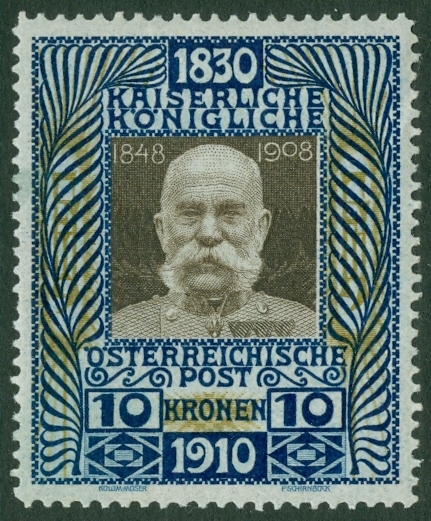
  22. 10 kroner stamp showing Emperor Franz Josef, issued in 1910 by Austria to mark the 80th birthday of the emperor

    Story 12 of 22 · Austrian Empire and Austria-Hungary

    States and rulers

    The Austrian Empire

    Francis II took the title of Emperor of Austria as the Holy Roman Empire collapsed.

    Next story1806 · The Holy Roman Empire ends
  23. Holy Roman Empire 1789

    Story 13 of 22 · Austrian Empire and Austria-Hungary

    States and rulers

    The Holy Roman Empire ends

    Under pressure from Napoleon, Francis II gave up the imperial crown after more than 800 years.

    Next story1821 · The Metternich era
  24. The Metternich era

    Story 14 of 22 · Austrian Empire and Austria-Hungary

    States and rulers

    The Metternich era

    Austria's chancellor led conservative Europe against revolution, and hosted the Congress of Vienna.

    Next story1848 · The revolution of 1848
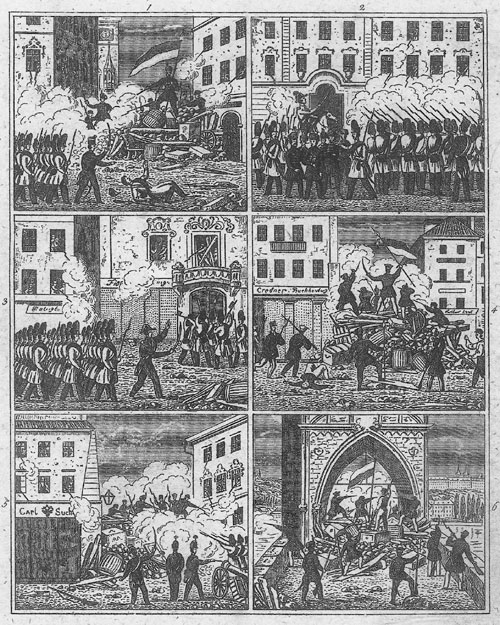
  25. The revolution of 1848

    Story 15 of 22 · Austrian Empire and Austria-Hungary

    States and rulers

    The revolution of 1848

    Revolutions in Vienna forced Metternich to flee. The empire's rulers regained control.

    Next story1867 · Austria-Hungary
  26. Österreich-Ungarn Cisleithanien Transleithanien Bosnien und Herzegowina

    Story 16 of 22 · Austrian Empire and Austria-Hungary

    States and rulers

    Austria-Hungary

    The Compromise gave Hungary equal status within a dual monarchy.

    Next story1918 · The republic
  27. Chapter IV

    The Republic

    6 stories in this chapter

  28. 25 Schilling from austria, year: 1926, head: eagle of the federal republic austria, designer: Arnold Hartig , material: gold 900/1000

    Story 17 of 22 · The Republic

    States and rulers

    The republic

    Austria-Hungary collapsed after the First World War and Austria became a republic.

    Next story1934 · The Austrian civil war
  29. Title : Wien, Februarkämpfe, Bundesheer Extra information : Wien.- Österreichischer Bürgerkrieg, Soldaten des Bundesheeres vor dem Bahnhof

    Story 18 of 22 · The Republic

    War and conflict

    The Austrian civil war

    A short civil war between the government and the socialists ended with Austria as a one-party state.

    Next story1938 · The Anschluss
  30. Hundreds of thousands on Heldenplatz in Vienna on March 15, 1938

    Story 19 of 22 · The Republic

    States and rulers

    The Anschluss

    German troops entered Austria to cheering crowds, and it was annexed by Nazi Germany.

    Next story1955 · The State Treaty
  31. Map of the allied occupation zones in Austria from 1945 to 1955

    Story 20 of 22 · The Republic

    States and rulers

    The State Treaty

    The Allies ended their occupation and Austria became independent, neutral and free.

    Next story1989 · The Pan-European Picnic
  32. Gedenkstätte Paneuropäisches Picknick: Grenzübergang St.Margarethen (Bgld) / Sopronköhida - Blick nach Österreich

    Story 21 of 22 · The Republic

    States and rulers

    The Pan-European Picnic

    Hundreds of East Germans crossed the border gate into Austria during a picnic, the first mass escape.

    Next story1995 · Austria joins the EU
  33. European Union (EU 15)

    Story 22 of 22 · The Republic

    States and rulers

    Austria joins the EU

    Three prosperous, formerly neutral countries ended decades outside the club and joined the Union after referendums.

    NextJourney's end

Journey complete

You travelled 3,294 years

22 stories, c. 1300 BC to 1995. More events are being researched and added.

Choose another countryBack to the start