

Culture and faith
Tiwanaku
A city near Lake Titicaca ruled an Andean state for 500 years with great stone gateways and temples.
- Lasted
- About 500 years
- Where
- Tiwanaku

Tiwanaku's stone city, Potosí's silver mountain, the first cry for independence, a lost seacoast, the revolution of 1952 and Evo Morales as the first Indigenous president.
Independent from Spain since 6 August 1825
Tiwanaku, c. 500. Image: Mhwater · Public domain, via Wikimedia Commons
Chapter I

Story 1 of 17 · Tiwanaku and the Incas
Culture and faith
A city near Lake Titicaca ruled an Andean state for 500 years with great stone gateways and temples.
About 500 years later
c. 500 to c. 1000

Story 2 of 17 · Tiwanaku and the Incas
People and rights
The Guaraní farmed the river valleys. Their language is still widely spoken and is an official language today.
About 440 years later
c. 1000 to c. 1438

Story 3 of 17 · Tiwanaku and the Incas
States and rulers
After beating the Chancas, Pachacuti turned Cusco's small state into an empire that eventually ran from Colombia to Chile.
Chapter II

Story 4 of 17 · Spanish Upper Peru
Science, trade and industry
The mountain Cerro Rico yielded silver that made Potosí one of the largest cities in the world. Indigenous workers died in the mines in huge numbers.
About 240 years later
1545 to 1781

Story 5 of 17 · Spanish Upper Peru
War and conflict
An Aymara leader laid siege to La Paz for months in one of the largest Indigenous rebellions against Spain.

Story 6 of 17 · Spanish Upper Peru
War and conflict
Creoles in Sucre deposed the Spanish president, in what many call the first cry for independence in Spanish America.
Chapter III

Story 7 of 17 · Republic of Bolivia
States and rulers
A congress declared the new republic, named after Bolívar, with Sucre as its second president.

Story 8 of 17 · Republic of Bolivia
War and conflict
Chile fought Peru and Bolivia over nitrate deserts. Chilean troops occupied Lima, and Peru lost its southern provinces.
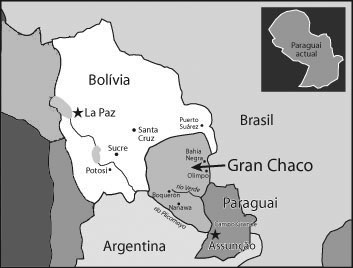
Story 9 of 17 · Republic of Bolivia
War and conflict
Bolivia and Paraguay fought over a dry lowland thought to hold oil. Paraguay won, and about 100,000 died.

Story 10 of 17 · Republic of Bolivia
States and rulers
Miners and peasants helped the MNR seize power, nationalised the tin mines, gave Indigenous Bolivians the vote and carried out land reform.

Story 11 of 17 · Republic of Bolivia
War and conflict
The guerrilla campaign Che Guevara led in the south was tracked by Bolivian troops and the CIA. He was captured and shot.

Story 12 of 17 · Republic of Bolivia
States and rulers
Hugo Banzer led a coup and ruled for seven years.

Story 13 of 17 · Republic of Bolivia
War and conflict
Protests in Cochabamba forced the government to cancel the privatisation of the city's water supply.

Story 14 of 17 · Republic of Bolivia
States and rulers
A coca farmer and union leader became Bolivia's first Indigenous president.

Story 15 of 17 · Republic of Bolivia
States and rulers
Voters approved a constitution that renamed the country the Plurinational State of Bolivia.

Story 16 of 17 · Republic of Bolivia
States and rulers
After a disputed election and weeks of unrest, the army urged Morales to go. He fled to Mexico.

Story 17 of 17 · Republic of Bolivia
States and rulers
Rodrigo Paz won the presidency in a run-off with about 55 per cent, after the governing party collapsed during an economic crisis. He took office on 8 November.
Journey complete
17 stories, c. 500 to 2025. More events are being researched and added.
Culture and faith
A city near Lake Titicaca ruled an Andean state for 500 years with great stone gateways and temples.

People and rights
The Guaraní farmed the river valleys. Their language is still widely spoken and is an official language today.

States and rulers
After beating the Chancas, Pachacuti turned Cusco's small state into an empire that eventually ran from Colombia to Chile.

Science, trade and industry
The mountain Cerro Rico yielded silver that made Potosí one of the largest cities in the world. Indigenous workers died in the mines in huge numbers.

War and conflict
An Aymara leader laid siege to La Paz for months in one of the largest Indigenous rebellions against Spain.

War and conflict
Creoles in Sucre deposed the Spanish president, in what many call the first cry for independence in Spanish America.

States and rulers
A congress declared the new republic, named after Bolívar, with Sucre as its second president.

War and conflict
Chile fought Peru and Bolivia over nitrate deserts. Chilean troops occupied Lima, and Peru lost its southern provinces.
Admiral Miguel Grau, killed at sea, is Peru's great naval hero.
War and conflict
Bolivia and Paraguay fought over a dry lowland thought to hold oil. Paraguay won, and about 100,000 died.

States and rulers
Miners and peasants helped the MNR seize power, nationalised the tin mines, gave Indigenous Bolivians the vote and carried out land reform.

War and conflict
The guerrilla campaign Che Guevara led in the south was tracked by Bolivian troops and the CIA. He was captured and shot.

States and rulers
Hugo Banzer led a coup and ruled for seven years.

War and conflict
Protests in Cochabamba forced the government to cancel the privatisation of the city's water supply.

States and rulers
A coca farmer and union leader became Bolivia's first Indigenous president.

States and rulers
Voters approved a constitution that renamed the country the Plurinational State of Bolivia.

States and rulers
After a disputed election and weeks of unrest, the army urged Morales to go. He fled to Mexico.

States and rulers
Rodrigo Paz won the presidency in a run-off with about 55 per cent, after the governing party collapsed during an economic crisis. He took office on 8 November.