The last spike

All countries

Canada

First Nations and Inuit, Norse sailors, New France and British North America, and the country that grew out of them.

Confederation on 1 July 1867; fully independent in law since 1982

Stories
37
Distance
5,724 years
Route
c. 3700 BC to 2025
  1. First peoples4 stories
  2. New France and British North America13 stories
  3. Confederation and growth10 stories
  4. Modern Canada10 stories
Begin the journey

The last spike, 1885. Image: David R. Spencer · CC BY-SA 3.0, via Wikimedia Commons

  1. Chapter I

    First peoples

    4 stories in this chapter

  2. The view north along the top of the cliffs at Head-Smashed-In Buffalo Jump , a World Heritage Site in Alberta , Canada

    Story 1 of 37 · First peoples

    Science, trade and industry

    Head-Smashed-In Buffalo Jump

    Plains peoples drove herds of bison over a cliff in the foothills of the Rockies, then butchered them in a camp below. The site was used for about 5,700 years.

    Next storyc. 3200 BC · The Pre-Dorset people
  3. About 500 years later

    c. 3700 BC to c. 3200 BC

  4. Sermermiut, a Paleo-Eskimo site in Greenland

    Story 2 of 37 · First peoples

    Culture and faith

    The Pre-Dorset people

    From about 3200 to 850 BC the Pre-Dorset, a Paleo-Eskimo culture, lived in the eastern Canadian Arctic. They came before the Dorset culture.

    Next story500 BC · The Dorset culture
  5. About 2,700 years later

    c. 3200 BC to 500 BC

  6. The Dorset culture

    Story 3 of 37 · First peoples

    Culture and faith

    The Dorset culture

    The Dorset, a Paleo-Eskimo culture of the North American Arctic, began about 500 BC and lasted until some time between 1000 and 1500 AD. They followed the Pre-Dorset and came before the Thule, and are named after Cape Dorset.

    Next story1021 · The Norse at L'Anse aux Meadows
  7. About 1,500 years later

    500 BC to 1021

  8. Authentic Viking recreation, Newfoundland, Canada July 17 - 30, 2003

    Story 4 of 37 · First peoples

    People and rights

    The Norse at L'Anse aux Meadows

    Norse explorers from Greenland built turf houses and worked iron at the tip of Newfoundland. Tree rings show they were cutting wood there in 1021.

    Next story1497 · John Cabot reaches North America
  9. About 480 years later

    1021 to 1497

  10. Chapter II

    New France and British North America

    13 stories in this chapter

  11. Giovanni Caboto /John Caboto, explorer (~1450 - ~1498)

    Story 5 of 37 · New France and British North America

    Science, trade and industry

    John Cabot reaches North America

    The Italian navigator John Cabot, sailing for England's Henry VII, landed on the coast of North America and reported seas thick with cod.

    Next story1608 · Champlain founds Quebec
  12. Buildings and Roads of Old Quebec City, Quebec, Canada

    Story 6 of 37 · New France and British North America

    States and rulers

    Champlain founds Quebec

    Samuel de Champlain built a trading post on the St. Lawrence River, allied with the Wendat and Innu.

    Next story1663 · New France becomes a royal colony
  13. Painted portrait of Jean Talon, the first intendant of New France, holding a rolled document

    Story 7 of 37 · New France and British North America

    States and rulers

    New France becomes a royal colony

    Louis XIV took the colony from the company that had run it and governed it through a governor, an intendant and a Sovereign Council.

    Next story1670 · The Hudson's Bay Company
  14. Furs being delivered to the Hudson's Bay Company at Lower Fort Garry, Manitoba, in 1913

    Story 8 of 37 · New France and British North America

    Science, trade and industry

    The Hudson's Bay Company

    King Charles II granted a company of merchants the fur trade of all lands draining into Hudson Bay, nearly half of today's Canada.

    Next story1755 · The Great Upheaval
  15. The Great Upheaval

    Story 9 of 37 · New France and British North America

    People and rights

    The Great Upheaval

    British authorities deported about 11,500 French-speaking Acadians from their farms in the Maritimes. Many died; some later settled in Louisiana as Cajuns.

    Next story1759 · The Plains of Abraham
  16. The Plains of Abraham

    Story 10 of 37 · New France and British North America

    War and conflict

    The Plains of Abraham

    A British army under James Wolfe defeated the French under Montcalm outside Quebec; both generals were killed.

    Next story1763 · France gives up New France
  17. Locator map of the competing sides of the Seven Years War before outset of the war (mid-1750s)

    Story 11 of 37 · New France and British North America

    States and rulers

    France gives up New France

    At the end of the Seven Years' War, France handed Canada to Britain. New France became the Province of Quebec.

    Next story1774 · The Quebec Act
  18. Province of Quebec 1774

    Story 12 of 37 · New France and British North America

    States and rulers

    The Quebec Act

    Britain let Quebec keep French civil law and the Catholic church and extended its borders west. Many American colonists were angered by it.

    Next story1791 · The two Canadas
  19. The royal coat of arms of Great Britain used from 1714 to 1801

    Story 13 of 37 · New France and British North America

    States and rulers

    The two Canadas

    Britain split Quebec into Upper Canada, mostly English-speaking, and Lower Canada, mostly French-speaking. Each got an elected assembly with limited power.

    Next story1812 · Queenston Heights
  20. Sir Isaac Brock's death at the Battle of Queenston Heights, 1812

    Story 14 of 37 · New France and British North America

    War and conflict

    Queenston Heights

    British soldiers, Canadian militia and Haudenosaunee warriors threw back an American invasion across the Niagara River during the War of 1812.

    Next story1837 · Rebellions in both Canadas
  21. A print of the Patriotes at the Battle of Saint-Eustache

    Story 15 of 37 · New France and British North America

    States and rulers

    Rebellions in both Canadas

    Rebels in Lower and Upper Canada took up arms against governors who ignored their elected assemblies. Both revolts were crushed.

    Next story1841 · The Province of Canada
  22. Engraved portrait of Charles Poulett Thomson, Lord Sydenham, the first governor general of the united Province of Canada

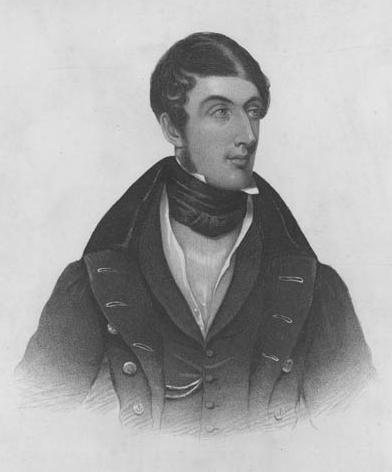
    Story 16 of 37 · New France and British North America

    States and rulers

    The Province of Canada

    Britain joined Upper and Lower Canada into one province with a single legislature.

    Next story1848 · Responsible government
  23. Photograph of Louis-Hippolyte La Fontaine, who led the first responsible ministry, seated in a dark coat

    Story 17 of 37 · New France and British North America

    States and rulers

    Responsible government

    Following the elections in the Province of Canada, the governor general asked LaFontaine and Baldwin to form a ministry that answered to the elected assembly.

    Next story1867 · Confederation
  24. Chapter III

    Confederation and growth

    10 stories in this chapter

  25. Map of the provinces of Canada as they were from 1867 to 1870

    Story 18 of 37 · Confederation and growth

    States and rulers

    Confederation

    Ontario, Quebec, Nova Scotia and New Brunswick united as the Dominion of Canada, with John A. Macdonald as prime minister.

    Next story1873 · The Pacific Scandal
  26. "Whither are we drifting?" Cartoonist Bengough satirizes Prime Minister John A

    Story 19 of 37 · Confederation and growth

    States and rulers

    The Pacific Scandal

    Sir John A. Macdonald resigned as prime minister after it emerged that railway investors had paid his party for a contract. Alexander Mackenzie's Liberals took over.

    Next story1876 · The Indian Act
  27. Students in front of the Brandon Indian Residential School, Manitoba, in 1946

    Story 20 of 37 · Confederation and growth

    People and rights

    The Indian Act

    Parliament passed a law controlling almost every aspect of First Nations life, from who counted as 'Indian' to bans on ceremonies. It enabled residential schools that took children from their families.

    Next story1885 · The North-West Rebellion
  28. The North-West Rebellion

    Story 21 of 37 · Confederation and growth

    War and conflict

    The North-West Rebellion

    Métis led by Louis Riel, with some Cree allies, rose to defend their land rights. The government crushed the rising and hanged Riel.

    Next story1885 · The last spike
  29. The last spike

    Story 22 of 37 · Confederation and growth

    Science, trade and industry

    The last spike

    The last spike of the Canadian Pacific Railway was driven in the mountains of British Columbia, linking the east to the Pacific coast.

    Next story1896 · The Klondike Gold Rush
  30. Miners awaiting their turn to register their claim

    Story 23 of 37 · Confederation and growth

    Science, trade and industry

    The Klondike Gold Rush

    Gold in the Yukon drew about 100,000 prospectors north, though only some 30,000 reached Dawson City after brutal journeys over the mountain passes.

    Next story1917 · The Halifax Explosion
  31. This photograph was purportedly taken 15-20 seconds after the explosion

    Story 24 of 37 · Confederation and growth

    Disasters and epidemics

    The Halifax Explosion

    A French cargo ship packed with explosives collided with another vessel and blew up in Halifax harbour, killing about 2,000 people.

    Next story1921 · Insulin is discovered
  32. Insulin is discovered

    Story 25 of 37 · Confederation and growth

    Science, trade and industry

    Insulin is discovered

    At the University of Toronto, Frederick Banting, Charles Best, James Collip and John Macleod isolated insulin and first used it to treat a dying diabetic boy in January 1922.

    Next story1929 · The Persons Case
  33. The Famous Five monument on Parliament Hill, Ottawa

    Story 26 of 37 · Confederation and growth

    People and rights

    The Persons Case

    Five Alberta women won a ruling that women were 'persons' under the law and could sit in the Senate.

    Next story1931 · Canada gains legislative independence
  34. King George V seated with the dominion prime ministers at the 1926 Imperial Conference, which agreed that the dominions were equal in status

    Story 27 of 37 · Confederation and growth

    States and rulers

    Canada gains legislative independence

    Britain gave up the power to make laws for Canada and the other dominions, which became equal members of the Commonwealth.

    Next story1949 · Newfoundland joins Canada
  35. Chapter IV

    Modern Canada

    10 stories in this chapter

  36. Newfoundland and Labrador Province within Canada

    Story 28 of 37 · Modern Canada

    States and rulers

    Newfoundland joins Canada

    After two referendums, Newfoundland gave up its status as a separate dominion and became Canada's tenth province.

    Next story1957 · The Liberals lose after 22 years
  37. Portrait of John Diefenbaker

    Story 29 of 37 · Modern Canada

    States and rulers

    The Liberals lose after 22 years

    John Diefenbaker's Progressive Conservatives won the most seats and formed a minority government.

    Next story1967 · Expo 67
  38. Expo67: USA Pavilion, geodesic sphere design by Buckminster Fuller, with minirail running through it

    Story 30 of 37 · Modern Canada

    Culture and faith

    Expo 67

    Montreal held a world's fair for Canada's centenary, drawing some 50 million visits.

    Next story1970 · The October Crisis
  39. Prime Minister Pierre Trudeau around 1970

    Story 31 of 37 · Modern Canada

    War and conflict

    The October Crisis

    The separatist Front de libération du Québec kidnapped a British diplomat and murdered a Quebec minister. Pierre Trudeau's government sent in troops and suspended civil liberties.

    Next story1982 · Canada's own constitution
  40. Pierre Trudeau, the prime minister who brought the constitution home, in 1975

    Story 32 of 37 · Modern Canada

    States and rulers

    Canada's own constitution

    Canada brought its constitution home from Britain and added a Charter of Rights and Freedoms. Quebec never agreed to it.

    Next story1993 · The Conservatives collapse
  41. Jean Chrétien talking with Bill Clinton at the 1993 APEC summit

    Story 33 of 37 · Modern Canada

    States and rulers

    The Conservatives collapse

    The governing Progressive Conservatives fell from 151 seats to two. The Bloc Québécois became the official opposition.

    Next story1995 · Quebec votes to stay
  42. Map of the 1995 referendum result by riding, No in red and Yes in blue

    Story 34 of 37 · Modern Canada

    States and rulers

    Quebec votes to stay

    Quebec voters rejected independence by 50.6 per cent to 49.4 per cent.

    Next story1999 · Nunavut is created
  43. Tongue of a glacier in the Remote Peninsula; western shoreline of Sam Ford Fjord about 15 km (9.3 mi) from its mouth

    Story 35 of 37 · Modern Canada

    States and rulers

    Nunavut is created

    A new territory, governed by and for its mostly Inuit population, was carved out of the Northwest Territories.

    Next story2015 · Trudeau's Liberals win
  44. Justin Trudeau and Benigno Aquino III at the APEC Philippines 2015 (cropped for use in election infoboxes)

    Story 36 of 37 · Modern Canada

    States and rulers

    Trudeau's Liberals win

    Justin Trudeau led the Liberals from third place to a majority, ending nearly ten years of Conservative government.

    Next story2025 · Carney wins
  45. Portrait of Mark Carney in a navy suit against a plain dark background

    Story 37 of 37 · Modern Canada

    States and rulers

    Carney wins

    Mark Carney, who had replaced Trudeau as Liberal leader and prime minister weeks earlier, won an election dominated by tensions with the United States.

    NextJourney's end

Journey complete

You travelled 5,724 years

37 stories, c. 3700 BC to 2025. More events are being researched and added.

Choose another countryBack to the start