

Culture and faith
Choirokoitia
The Neolithic village on a hillside is one of the best-preserved prehistoric settlements in the Mediterranean.
- Where
- Choirokoitia

The copper island, birthplace of Aphrodite, Phoenician and Greek cities, Roman, Byzantine, Crusader and Venetian rule, Ottoman and British colony, and a divided state since 1974.
Independent from Britain since 16 August 1960; divided since 1974
Choirokoitia, c. 7000 BC. Image: Ophelia2 · CC BY-SA 3.0, via Wikimedia Commons
Chapter I

Story 1 of 24 · Ancient Cyprus
Culture and faith
The Neolithic village on a hillside is one of the best-preserved prehistoric settlements in the Mediterranean.
About 3,200 years later
c. 7000 BC to c. 3800 BC

Story 2 of 24 · Ancient Cyprus
Culture and faith
Lempa, north of Paphos, is one of the oldest villages of Cyprus, first settled in the Chalcolithic period, about 3800 to 2500 BC. Carved stone figurines in the shape of a cross have been found there.
About 1,400 years later
c. 3800 BC to c. 2450 BC

Story 3 of 24 · Ancient Cyprus
Culture and faith
Between 2450 and 2200 BC the Philia culture marked the passage from the Copper Age to the Bronze Age on Cyprus. It is linked with groups who came from Anatolia, and is named after a place in Morphou.
About 900 years later
c. 2450 BC to c. 1550 BC

Story 4 of 24 · Ancient Cyprus
Culture and faith
From about 1550 to 1050 BC Cypriots and their trading partners wrote in Cypro-Minoan, a syllabic script thought to derive from the Linear A of Crete. It has never been deciphered.
About 150 years later
c. 1550 BC to c. 1400 BC

Story 5 of 24 · Ancient Cyprus
States and rulers
Alashiya, a Bronze Age kingdom on Cyprus, shipped copper to Egypt and other Near Eastern states. Its name turns up in Egyptian, Hittite, Akkadian, Ugaritic and Linear B texts, and its king wrote to the pharaoh in the Amarna letters of about 1350 BC.
About 400 years later
c. 1400 BC to c. 1000 BC

Story 6 of 24 · Ancient Cyprus
Science, trade and industry
Phoenicians founded the city-kingdom of Kition on Cyprus's southern coast, in present-day Larnaca, at the beginning of the 10th century BC.
About 590 years later
c. 1000 BC to 411 BC
Story 7 of 24 · Ancient Cyprus
States and rulers
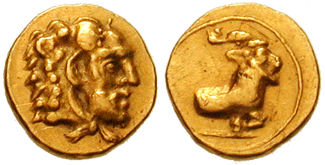
Evagoras won back the throne of Salamis from Phoenician control in 411 BC with a small band of followers and ruled until 374 BC. The Athenian writer Isocrates held him up as a model king.
About 350 years later
411 BC to 58 BC

Story 8 of 24 · Ancient Cyprus
States and rulers
Rome took Cyprus and made it part of the province of Cilicia.
About 710 years later
58 BC to 649
Chapter II
About 320 years later
649 to 965
220 years later
965 to 1185

Story 11 of 24 · Byzantine to Ottoman Cyprus
States and rulers
Isaac Komnenos, a member of the Byzantine imperial family, ruled Cyprus from 1185 and was called its emperor. He lost the island in 1191 to Richard I of England, who was on his way to the Third Crusade.

Story 12 of 24 · Byzantine to Ottoman Cyprus
States and rulers
Richard the Lionheart took Cyprus on his way to the Holy Land and sold it to the Templars.

Story 13 of 24 · Byzantine to Ottoman Cyprus
States and rulers
The Lusignan family ruled Cyprus as a Crusader kingdom for three centuries.
About 380 years later
1192 to 1570

Story 14 of 24 · Byzantine to Ottoman Cyprus
War and conflict
The Ottomans took Cyprus from Venice after the sieges of Nicosia and Famagusta.
About 310 years later
1570 to 1878
Chapter III

Story 15 of 24 · British Cyprus
States and rulers
The Ottoman sultan let Britain occupy and administer Cyprus.

Story 16 of 24 · British Cyprus
War and conflict
EOKA, the Greek Cypriot guerrilla group, fought for union with Greece.
Chapter IV

Story 17 of 24 · Independent Cyprus
States and rulers
Archbishop Makarios became first president of a state shared between Greek and Turkish Cypriots.

Story 18 of 24 · Independent Cyprus
War and conflict
The constitutional order broke down, and the two communities separated.
Story 19 of 24 · Independent Cyprus
War and conflict
Greek officers overthrew Makarios in a coup supported by Greece's junta.

Story 20 of 24 · Independent Cyprus
War and conflict
Turkey invaded and took the north. About 200,000 Greek Cypriots fled south.

Story 21 of 24 · Independent Cyprus
States and rulers
Turkish Cypriot leaders proclaimed a republic in the north, recognised only by Turkey.

Story 22 of 24 · Independent Cyprus
States and rulers
Turkish Cypriots voted for a UN reunification plan and Greek Cypriots against it.

Story 23 of 24 · Independent Cyprus
States and rulers
Cyprus joined the EU with nine other countries, although the north was left outside.

Story 24 of 24 · Independent Cyprus
Science, trade and industry
Cyprus got a bailout and savers in its largest banks lost money.
Journey complete
24 stories, c. 7000 BC to 2013. More events are being researched and added.
Culture and faith
The Neolithic village on a hillside is one of the best-preserved prehistoric settlements in the Mediterranean.

Culture and faith
Lempa, north of Paphos, is one of the oldest villages of Cyprus, first settled in the Chalcolithic period, about 3800 to 2500 BC. Carved stone figurines in the shape of a cross have been found there.

Culture and faith
Between 2450 and 2200 BC the Philia culture marked the passage from the Copper Age to the Bronze Age on Cyprus. It is linked with groups who came from Anatolia, and is named after a place in Morphou.

Culture and faith
From about 1550 to 1050 BC Cypriots and their trading partners wrote in Cypro-Minoan, a syllabic script thought to derive from the Linear A of Crete. It has never been deciphered.

States and rulers
Alashiya, a Bronze Age kingdom on Cyprus, shipped copper to Egypt and other Near Eastern states. Its name turns up in Egyptian, Hittite, Akkadian, Ugaritic and Linear B texts, and its king wrote to the pharaoh in the Amarna letters of about 1350 BC.

Science, trade and industry
Phoenicians founded the city-kingdom of Kition on Cyprus's southern coast, in present-day Larnaca, at the beginning of the 10th century BC.
States and rulers
Evagoras won back the throne of Salamis from Phoenician control in 411 BC with a small band of followers and ruled until 374 BC. The Athenian writer Isocrates held him up as a model king.

States and rulers
Rome took Cyprus and made it part of the province of Cilicia.
War and conflict
In 649 the new navy of Mu'awiya, governor of Syria, attacked Byzantine Cyprus and took its capital, Constantia. A second campaign followed, and the island stayed under Muslim control for three decades.
States and rulers
After about three centuries shared between the Byzantine Empire and the Arab caliphate, Cyprus was retaken by the Byzantine navy in 965 and became a province, with Nicosia, Limassol and Famagusta among its towns.

States and rulers
Isaac Komnenos, a member of the Byzantine imperial family, ruled Cyprus from 1185 and was called its emperor. He lost the island in 1191 to Richard I of England, who was on his way to the Third Crusade.

States and rulers
Richard the Lionheart took Cyprus on his way to the Holy Land and sold it to the Templars.

States and rulers
The Lusignan family ruled Cyprus as a Crusader kingdom for three centuries.

War and conflict
The Ottomans took Cyprus from Venice after the sieges of Nicosia and Famagusta.

States and rulers
The Ottoman sultan let Britain occupy and administer Cyprus.

War and conflict
EOKA, the Greek Cypriot guerrilla group, fought for union with Greece.

States and rulers
Archbishop Makarios became first president of a state shared between Greek and Turkish Cypriots.

War and conflict
The constitutional order broke down, and the two communities separated.
War and conflict
Greek officers overthrew Makarios in a coup supported by Greece's junta.

War and conflict
Turkey invaded and took the north. About 200,000 Greek Cypriots fled south.
States and rulers
Turkish Cypriot leaders proclaimed a republic in the north, recognised only by Turkey.

States and rulers
Turkish Cypriots voted for a UN reunification plan and Greek Cypriots against it.

States and rulers
Cyprus joined the EU with nine other countries, although the north was left outside.

Science, trade and industry
Cyprus got a bailout and savers in its largest banks lost money.