The churches of Lalibela

All countries

Ethiopia

Lucy and the earliest Homo sapiens, Aksum and Lalibela, emperors who defeated colonial invasion, revolution, famine and war.

Never colonised; occupied by Italy from 1936 to 1941

Stories
42
Distance
3,202,025 years
Route
c. 3,200,000 BC to 2026
  1. Early humans4 stories
  2. Aksum and the Zagwe5 stories
  3. The Solomonic empire5 stories
  4. Modern Ethiopia14 stories
  5. Revolution and after14 stories
Begin the journey

The churches of Lalibela, c. 1200. Image: Sailko · CC BY 3.0, via Wikimedia Commons

  1. Chapter I

    Early humans

    4 stories in this chapter

  2. « Lucy » skeleton (AL 288-1) Australopithecus afarensis , cast from Museum national d'histoire naturelle , Paris

    Story 1 of 42 · Early humans

    People and rights

    Lucy

    A small Australopithecus afarensis woman lived and died in the Afar region about 3.2 million years ago. Her skeleton, found in 1974, is about 40 per cent complete.

    Next storyc. 231,000 BC · The Omo skulls
  3. About 2,969,000 years later

    c. 3,200,000 BC to c. 231,000 BC

  4. Reproduction du crâne de l'Homme de Kibish

    Story 2 of 42 · Early humans

    People and rights

    The Omo skulls

    Fossils found by the Omo River in 1967 belong to some of the earliest known Homo sapiens, now dated to about 233,000 years ago.

    Next storyc. 2500 BC · The man of Mota Cave
  5. About 228,500 years later

    c. 231,000 BC to c. 2500 BC

  6. Story 3 of 42 · Early humans

    People and rights

    The man of Mota Cave

    In Mota Cave in the Gamo highlands, people began burying their dead about 4,500 years ago, under a cairn. The genome of one of them shows how the ancestors of the region's people adapted and moved.

    Next storyc. 1470 BC · The Land of Punt
  7. About 1,000 years later

    c. 2500 BC to c. 1470 BC

  8. Map of the Middle East 1450 BC (by ArdadN)

    Story 4 of 42 · Early humans

    Culture and faith

    The Land of Punt

    Egyptian ships sailed down the Red Sea to Punt for incense, gold and ivory. Queen Hatshepsut's expedition was recorded on her temple.

    Next storyc. 800 BC · The kingdom of Dʿmt
  9. About 670 years later

    c. 1470 BC to c. 800 BC

  10. Chapter II

    Aksum and the Zagwe

    5 stories in this chapter

  11. The D'mt culture at its height

    Story 5 of 42 · Aksum and the Zagwe

    States and rulers

    The kingdom of Dʿmt

    Dʿmt was a kingdom in Eritrea and northern Tigray, dated to about 800 or 700 to 400 BC. Its capital may have been Yeha, where a Sabaean-style temple tower from about 700 BC is the oldest standing structure in Ethiopia.

    Next story1st century · The Kingdom of Aksum
  12. About 800 years later

    c. 800 BC to 1st century

  13. King Endybis Ethiopia 227-235 A.D

    Story 6 of 42 · Aksum and the Zagwe

    States and rulers

    The Kingdom of Aksum

    The kingdom of Aksum grew out of Dʿmt in the first century. By the 3rd century the prophet Mani counted it among the four great powers, with Persia, Rome and China.

    Next storyc. 330 · Aksum becomes Christian
  14. About 330 years later

    1st century to c. 330

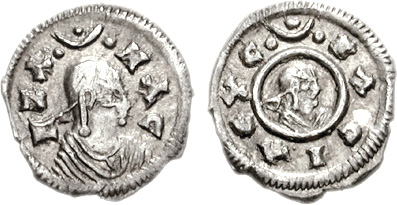
  15. Coin of the Axumite king Ezana

    Story 7 of 42 · Aksum and the Zagwe

    Culture and faith

    Aksum becomes Christian

    King Ezana of Aksum adopted Christianity, and his coins began to show the cross instead of the crescent and disc.

    Next storyc. 1137 · The Zagwe take the throne
  16. About 810 years later

    c. 330 to c. 1137

  17. The rock-hewn church of Saint George at Lalibela, built under the Zagwe kings

    Story 8 of 42 · Aksum and the Zagwe

    States and rulers

    The Zagwe take the throne

    The Zagwe, from the Agaw people, replaced the old Aksumite line. Under them the rock churches of Lalibela were carved.

    Next storyc. 1200 · The churches of Lalibela
  18. The churches of Lalibela

    Story 9 of 42 · Aksum and the Zagwe

    Culture and faith

    The churches of Lalibela

    King Lalibela of the Zagwe dynasty had eleven churches carved down into the solid rock, as a new Jerusalem.

    Next story1270 · The Solomonic dynasty
  19. Chapter III

    The Solomonic empire

    5 stories in this chapter

  20. A medieval church painting of Emperor Yekuno Amlak

    Story 10 of 42 · The Solomonic empire

    States and rulers

    The Solomonic dynasty

    Yekuno Amlak overthrew the Zagwe kings and founded a dynasty claiming descent from King Solomon and the Queen of Sheba.

    Next story1415 · The Adal Sultanate
  21. Extent of awdal per ottomans

    Story 11 of 42 · The Solomonic empire

    States and rulers

    The Adal Sultanate

    A sultanate that ran from the Red Sea coast into the Horn's highlands, it fought Christian Ethiopia in long wars and traded across the sea.

    Next story1529 · The war with Ethiopia
  22. Yagbea Sion Battling the sultan of Adem(Adal)

    Story 12 of 42 · The Solomonic empire

    War and conflict

    The war with Ethiopia

    Ahmad Gran led the armies of Adal across the Ethiopian highlands. Ethiopia won with Portuguese help.

    Next story1636 · The castles of Gondar
  23. Fasilides' castle at Gondar

    Story 13 of 42 · The Solomonic empire

    Culture and faith

    The castles of Gondar

    Emperor Fasilides founded Gondar as his capital and built a walled compound of castles.

    Next story1769 · The Era of the Princes
  24. Ethiopian warriors during the Zemene Mesafint

    Story 14 of 42 · The Solomonic empire

    States and rulers

    The Era of the Princes

    Emperors kept their thrones but regional lords held the real power and fought over the throne. Tewodros ended the era.

    Next story1855 · Tewodros reunites Ethiopia
  25. Chapter IV

    Modern Ethiopia

    14 stories in this chapter

  26. Emperor Theodore of Ethiopia

    Story 15 of 42 · Modern Ethiopia

    States and rulers

    Tewodros reunites Ethiopia

    Kassa Hailu ended the 'Era of the Princes', when regional lords ruled, and was crowned Emperor Tewodros II.

    Next story1868 · The fall of Magdala
  27. Sentry gate above Koket-Bir gate at the Fortress of Magdala in April 1868

    Story 16 of 42 · Modern Ethiopia

    War and conflict

    The fall of Magdala

    A British army stormed Tewodros's mountain fortress to free European hostages. The emperor shot himself rather than surrender, and the British looted Magdala.

    Next story1886 · Addis Ababa is founded
  28. Partial view of Addis Ababa skyline from Sheger park

    Story 17 of 42 · Modern Ethiopia

    States and rulers

    Addis Ababa is founded

    Menelik, then king of Shewa, and Empress Taytu founded Addis Ababa, 'new flower', near hot springs.

    Next story1889 · Menelik II becomes emperor
  29. Emperor Menelik II photographed on the throne in coronation garb

    Story 18 of 42 · Modern Ethiopia

    States and rulers

    Menelik II becomes emperor

    Menelik of Shewa was crowned after Emperor Yohannes IV was killed fighting the Mahdists. He expanded the empire south and built a modern state.

    Next story1894 · The railway to Addis Ababa
  30. The Addis Ababa–Djibouti Railway, near Dasbiyo

    Story 19 of 42 · Modern Ethiopia

    Science, trade and industry

    The railway to Addis Ababa

    A railway gave landlocked Ethiopia its outlet to the sea and made Djibouti a port town.

    Next story1896 · The Battle of Adwa
  31. The Battle of Adwa

    Story 20 of 42 · Modern Ethiopia

    War and conflict

    The Battle of Adwa

    Menelik II's army defeated an invading Italian force, killing thousands.

    Next story1916 · Iyasu is deposed
  32. Lij Iyasu, uncrowned emperor of Ethiopia (1913–1916)

    Story 21 of 42 · Modern Ethiopia

    States and rulers

    Iyasu is deposed

    Nobles and church leaders removed the young emperor, whom they distrusted. Zewditu became empress, with Ras Tafari, later Haile Selassie, as regent.

    Next story1930 · Haile Selassie is crowned
  33. His Imperial Majesty Emperor Haile Selassie I

    Story 22 of 42 · Modern Ethiopia

    States and rulers

    Haile Selassie is crowned

    Ras Tafari Makonnen was crowned Emperor Haile Selassie in Addis Ababa before guests from around the world.

    Next story1931 · Ethiopia's first constitution
  34. First page of 1931 Constitution of Ethiopia

    Story 23 of 42 · Modern Ethiopia

    States and rulers

    Ethiopia's first constitution

    Haile Selassie granted a written constitution with a two-chamber parliament, and made the emperor's power firmer.

    Next story1935 · Italy invades
  35. Cover of "La Domenica del Corriere" of December 27, 1936, Italian victory of the war in Ethiopia

    Story 24 of 42 · Modern Ethiopia

    War and conflict

    Italy invades

    Mussolini's armies invaded, using poison gas, and took Addis Ababa in 1936. Haile Selassie appealed in vain to the League of Nations.

    Next story1936 · Italy rules Ethiopia
  36. Italian troops marching in a military parade through Addis Ababa in 1936

    Story 25 of 42 · Modern Ethiopia

    States and rulers

    Italy rules Ethiopia

    Italy took Addis Ababa and merged Ethiopia with Eritrea and Somalia as Italian East Africa. Haile Selassie went into exile.

    Next story1941 · Haile Selassie returns
  37. His Imperial Majesty Emperor Haile Selassie I

    Story 26 of 42 · Modern Ethiopia

    States and rulers

    Haile Selassie returns

    Five years to the day after the Italians arrived, the emperor re-entered Addis Ababa with British and Ethiopian forces.

    Next story1960 · A coup attempt while the emperor is abroad
  38. Haile Selassie I of Ethiopia

    Story 27 of 42 · Modern Ethiopia

    States and rulers

    A coup attempt while the emperor is abroad

    The Imperial Guard seized the capital while Haile Selassie was in Brazil. Loyal army and air force units crushed it in days.

    Next story1963 · The OAU is founded
  39. Africa Hall in Addis Ababa, where the OAU was founded

    Story 28 of 42 · Modern Ethiopia

    States and rulers

    The OAU is founded

    Thirty-two independent African states founded the Organisation of African Unity in Addis Ababa.

    Next story1974 · The Derg takes power
  40. Chapter V

    Revolution and after

    14 stories in this chapter

  41. Mengistu Haile Mariam giving a speech in 1979

    Story 29 of 42 · Revolution and after

    States and rulers

    The Derg takes power

    Amid famine and protest, a committee of army officers deposed Haile Selassie and set up a Marxist military government under Mengistu Haile Mariam.

    Next story1977 · Mengistu takes charge of the Derg
  42. Mengistu Haile Mariam, ruler of Ethiopia from 1977 to 1991

    Story 30 of 42 · Revolution and after

    States and rulers

    Mengistu takes charge of the Derg

    A shoot-out within the Derg's leadership left Mengistu Haile Mariam in sole command. He intensified the Red Terror against his opponents.

    Next story1977 · The Ogaden War
  43. Map of Ethiopia (in German language) with the Somali region, Ogaden and the Haud – the Provinces prior to 1995 in grey, the contemporary regions in red

    Story 31 of 42 · Revolution and after

    War and conflict

    The Ogaden War

    Somalia invaded Ethiopia to take the Somali-inhabited Ogaden, but the Soviet Union and Cuba backed Ethiopia and Somalia lost.

    Next story1983 · The famine of 1983 to 1985
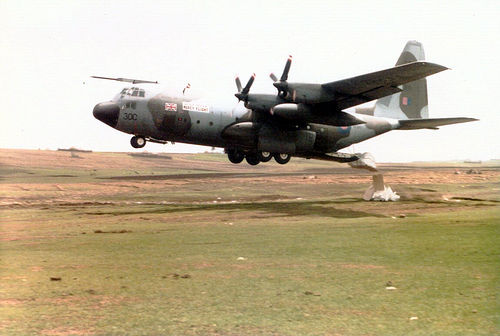
  44. Photo i took whilst serving with 47 Air Despatch Squadron RCT in Ethiopia in 1985

    Story 32 of 42 · Revolution and after

    Disasters and epidemics

    The famine of 1983 to 1985

    Drought, war and government policy caused a famine in which hundreds of thousands, perhaps a million, died.

    Next story1991 · The Derg falls
  45. Local residents walk past a T-62 main battle tank stranded outside the Presidential Palace following a battle between rebel forces and the government

    Story 33 of 42 · Revolution and after

    States and rulers

    The Derg falls

    Rebel armies led by the Tigray People's Liberation Front entered Addis Ababa as Mengistu fled to Zimbabwe.

    Next story1995 · A federation of peoples
  46. Colour-coded map of the regional states of the Ethiopian federation, from Tigray in the north to Somali in the east

    Story 34 of 42 · Revolution and after

    States and rulers

    A federation of peoples

    A new constitution divided Ethiopia into regions on ethnic lines and gave each people the right to self-determination.

    Next story1998 · The border war with Eritrea
  47. The border war with Eritrea

    Story 35 of 42 · Revolution and after

    War and conflict

    The border war with Eritrea

    A dispute over the border town of Badme became a trench war in which tens of thousands of soldiers died.

    Next story2005 · A contested election
  48. Ethiopian Prime Minister Meles Zenawi, public domain image from defenselink.mil

    Story 36 of 42 · Revolution and after

    States and rulers

    A contested election

    The opposition won seats on a scale never seen before, then disputed the count. Police shot dozens of protesters and jailed opposition leaders.

    Next story2011 · The Renaissance Dam
  49. Grand Ethiopian Renaissance Dam aerial view

    Story 37 of 42 · Revolution and after

    Science, trade and industry

    The Renaissance Dam

    Ethiopia began building Africa's largest hydroelectric dam on the Blue Nile, paid for largely by its own people. Its first turbines produced power in 2022.

    Next story2011 · The famine of 2011
  50. The FEWS projection of the 2011 East Africa drought for October-December, using the IPC scale

    Story 38 of 42 · Revolution and after

    Disasters and epidemics

    The famine of 2011

    The worst drought in 60 years and war in the south caused famine. Some 260,000 people died, half of them children.

    Next story2012 · Meles dies and Hailemariam succeeds him
  51. Meles Zenawi at the World Economic Forum in 2012

    Story 39 of 42 · Revolution and after

    States and rulers

    Meles dies and Hailemariam succeeds him

    Prime Minister Meles Zenawi, in power since 1991, died in Brussels. Hailemariam Desalegn replaced him.

    Next story2018 · Abiy Ahmed becomes prime minister
  52. Official portrait of Ethiopian Prime Minister Abiy Ahmed, 2025

    Story 40 of 42 · Revolution and after

    States and rulers

    Abiy Ahmed becomes prime minister

    After protests forced Hailemariam to resign, Abiy Ahmed became the first prime minister from the Oromo people. He freed prisoners and made peace with Eritrea.

    Next story2020 · The Tigray war
  53. A destroyed armored vehicle in one of the main streets of Hawzen on 6 June 2021

    Story 41 of 42 · Revolution and after

    War and conflict

    The Tigray war

    War between the federal government, with Eritrean troops, and the Tigray People's Liberation Front brought massacres, sexual violence and famine.

    Next story2026 · The Prosperity Party wins again
  54. Abiy Ahmed, prime minister of Ethiopia

    Story 42 of 42 · Revolution and after

    States and rulers

    The Prosperity Party wins again

    Abiy Ahmed's party took 438 of the 501 contested seats. There was no vote in Tigray, and polling was suspended in parts of Amhara because of fighting.

    NextJourney's end

Journey complete

You travelled 3,202,025 years

42 stories, c. 3,200,000 BC to 2026. More events are being researched and added.

Choose another countryBack to the start