

Culture and faith
The Minoans
A sea-trading civilisation on Crete built the palace of Knossos and painted fine frescoes.
- Where
- Knossos

Minoans and Mycenaeans, the Olympic Games, Athenian democracy and Spartan power, Alexander's Macedonia, Byzantium, Ottoman rule, the War of Independence and a modern European republic.
Independent from the Ottoman Empire since 1830; a republic since 1974
The Parthenon, 447 BC. Image: Steve Swayne · CC BY 2.0, via Wikimedia Commons
Chapter I

Story 1 of 29 · Bronze Age Greece
Culture and faith
A sea-trading civilisation on Crete built the palace of Knossos and painted fine frescoes.
About 400 years later
c. 2000 BC to c. 1600 BC

Story 2 of 29 · Bronze Age Greece
Culture and faith
Warlords fortified hilltops at Mycenae and Tiryns and buried their kings with gold masks.
Story 3 of 29 · Bronze Age Greece
Culture and faith
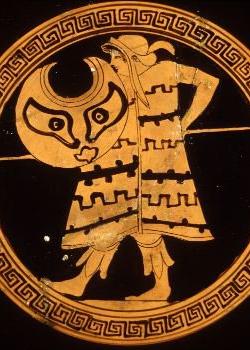
The Thracians were Indo-European peoples of south-eastern Europe, living in what is now Bulgaria, Romania, North Macedonia, northern Greece and European Turkey, famed for their horsemen and gold.
About 720 years later
c. 1500 BC to 776 BC
Chapter II

Story 4 of 29 · Classical Greece
Culture and faith
The ancient Greeks held athletic games at Olympia in honour of Zeus. They were held every four years.
About 270 years later
776 BC to 508 BC

Story 5 of 29 · Classical Greece
States and rulers
Cleisthenes reorganised Athens into new tribes and began the world's first democracy.

Story 6 of 29 · Classical Greece
War and conflict
The Athenians beat a Persian army on the plain of Marathon.

Story 7 of 29 · Classical Greece
War and conflict
The Greek fleet beat Xerxes' much larger Persian fleet in the straits of Salamis.

Story 8 of 29 · Classical Greece
Culture and faith
Pericles ordered the building of the temple to Athena on the Acropolis.

Story 9 of 29 · Classical Greece
War and conflict
Athens and Sparta fought for 27 years until Athens fell.

Story 10 of 29 · Classical Greece
Culture and faith
Athens put the philosopher on trial and he was sentenced to drink hemlock.

Story 11 of 29 · Classical Greece
States and rulers
The Macedonian king conquered the Persian Empire and spread Greek culture across Asia.
190 years later
336 BC to 146 BC
Chapter III

Story 12 of 29 · Roman and Byzantine Greece
War and conflict
The Romans destroyed Corinth and made Greece a Roman province.
About 1,600 years later
146 BC to 1453
Chapter IV

Story 13 of 29 · Ottoman rule
States and rulers
The Ottomans took Constantinople and gradually all of Greece. They ruled for almost four centuries.

Story 14 of 29 · Ottoman rule
War and conflict
A Christian fleet destroyed the Ottoman navy in the Gulf of Patras.
About 250 years later
1571 to 1821
Chapter V

Story 15 of 29 · Modern Greece
War and conflict
Greeks rose against Ottoman rule. Britain, France and Russia ended up helping them.

Story 16 of 29 · Modern Greece
States and rulers
The great powers made Greece a kingdom under a Bavarian prince, Otto.

Story 17 of 29 · Modern Greece
War and conflict
The Balkan states drove the Ottomans out of Europe and then fought over the spoils.
Story 18 of 29 · Modern Greece
War and conflict
Macedonia was divided among Serbia, Greece and Bulgaria after the Second Balkan War.

Story 19 of 29 · Modern Greece
War and conflict
Greece invaded Anatolia and was beaten. About a million Greeks left Turkey.

Story 20 of 29 · Modern Greece
War and conflict
Greece beat back the Italian invasion on Ohi Day. Germany attacked in April 1941.

Story 21 of 29 · Modern Greece
Disasters and epidemics
The German occupation and an Allied blockade caused a famine that killed some 300,000 people.

Story 22 of 29 · Modern Greece
War and conflict
Communists and the government fought a bitter civil war with US and British support for the government.

Story 23 of 29 · Modern Greece
States and rulers
A group of army officers seized power and ruled for seven years.

Story 24 of 29 · Modern Greece
States and rulers
The junta collapsed after the coup in Cyprus. Karamanlis returned to restore democracy.

Story 25 of 29 · Modern Greece
States and rulers
Greece became the tenth member of the European Communities.

Story 26 of 29 · Modern Greece
States and rulers
Greece lifted its embargo in exchange for a change of the flag. The name dispute went on for years.

Story 27 of 29 · Modern Greece
Culture and faith
The Olympic Games returned to Athens, where the modern Games began in 1896.

Story 28 of 29 · Modern Greece
Science, trade and industry
Greece revealed larger deficits than reported and needed three bailouts.

Story 29 of 29 · Modern Greece
States and rulers
Greece and Macedonia agreed that the country would be called North Macedonia.
Journey complete
29 stories, c. 2000 BC to 2018. More events are being researched and added.
Culture and faith
A sea-trading civilisation on Crete built the palace of Knossos and painted fine frescoes.

Culture and faith
Warlords fortified hilltops at Mycenae and Tiryns and buried their kings with gold masks.
People: Heinrich Schliemann
Culture and faith
The Thracians were Indo-European peoples of south-eastern Europe, living in what is now Bulgaria, Romania, North Macedonia, northern Greece and European Turkey, famed for their horsemen and gold.

Culture and faith
The ancient Greeks held athletic games at Olympia in honour of Zeus. They were held every four years.

States and rulers
Cleisthenes reorganised Athens into new tribes and began the world's first democracy.

War and conflict
The Athenians beat a Persian army on the plain of Marathon.

War and conflict
The Greek fleet beat Xerxes' much larger Persian fleet in the straits of Salamis.

Culture and faith
Pericles ordered the building of the temple to Athena on the Acropolis.

War and conflict
Athens and Sparta fought for 27 years until Athens fell.

Culture and faith
Athens put the philosopher on trial and he was sentenced to drink hemlock.

States and rulers
The Macedonian king conquered the Persian Empire and spread Greek culture across Asia.

War and conflict
The Romans destroyed Corinth and made Greece a Roman province.

States and rulers
The Ottomans took Constantinople and gradually all of Greece. They ruled for almost four centuries.

War and conflict
A Christian fleet destroyed the Ottoman navy in the Gulf of Patras.

War and conflict
Greeks rose against Ottoman rule. Britain, France and Russia ended up helping them.

States and rulers
The great powers made Greece a kingdom under a Bavarian prince, Otto.

War and conflict
The Balkan states drove the Ottomans out of Europe and then fought over the spoils.
War and conflict
Macedonia was divided among Serbia, Greece and Bulgaria after the Second Balkan War.

War and conflict
Greece invaded Anatolia and was beaten. About a million Greeks left Turkey.
War and conflict
Greece beat back the Italian invasion on Ohi Day. Germany attacked in April 1941.

Disasters and epidemics
The German occupation and an Allied blockade caused a famine that killed some 300,000 people.

War and conflict
Communists and the government fought a bitter civil war with US and British support for the government.

States and rulers
A group of army officers seized power and ruled for seven years.

States and rulers
The junta collapsed after the coup in Cyprus. Karamanlis returned to restore democracy.

States and rulers
Greece became the tenth member of the European Communities.

States and rulers
Greece lifted its embargo in exchange for a change of the flag. The name dispute went on for years.
Culture and faith
The Olympic Games returned to Athens, where the modern Games began in 1896.

Science, trade and industry
Greece revealed larger deficits than reported and needed three bailouts.
States and rulers
Greece and Macedonia agreed that the country would be called North Macedonia.