Naghsh-i Jahan Square, Isfahan, Iran (Edited version)

All countries

Iran

Early herders and Elamite temples, the Persian empires, Islamic Iran and its poets, oil, revolution and protest.

An Islamic Republic since 1979

Stories
50
Distance
10,025 years
Route
c. 8000 BC to 2026
  1. Early Iran14 stories
  2. Persian empires6 stories
  3. Islamic Iran7 stories
  4. Safavid and Qajar Iran6 stories
  5. Modern Iran17 stories
Begin the journey

Isfahan's great square, 1598. Image: Arad Mojtahedi · CC BY-SA 3.0, via Wikimedia Commons

  1. Chapter I

    Early Iran

    14 stories in this chapter

  2. Ganj Dareh site

    Story 1 of 50 · Early Iran

    Science, trade and industry

    Goats are domesticated

    Villagers at Ganj Dareh in the Zagros mountains were already herding goats about 10,000 years ago, culling young males as herders do.

    Next storyc. 7500 BC · Ali Kosh
  3. About 500 years later

    c. 8000 BC to c. 7500 BC

  4. Map showing location of Ganj Dareh in Iran

    Story 2 of 50 · Early Iran

    Culture and faith

    Ali Kosh

    At Ali Kosh, a small mound in Ilam in the Zagros, early Neolithic villagers lived from about 7500 BC, herding sheep and goats, hunting and gathering wild plants. Three phases of building show the village growing over about a thousand years.

    Next storyc. 6000 BC · Tepe Sialk
  5. About 1,500 years later

    c. 7500 BC to c. 6000 BC

  6. Teppe Sialk, from my old slides

    Story 3 of 50 · Early Iran

    Culture and faith

    Tepe Sialk

    Near Kashan, the oldest settlement at Tepe Sialk dates to about 6000 to 5500 BC. People went on living on its mounds for thousands of years, and a large stepped platform was built there around 3000 BC.

    Next storyc. 5300 BC · Wine in a Neolithic village
  7. About 700 years later

    c. 6000 BC to c. 5300 BC

  8. Wine in a Neolithic village

    Story 4 of 50 · Early Iran

    Culture and faith

    Wine in a Neolithic village

    In the village of Hajji Firuz Tepe in north-western Iran, archaeologists found wine residue in a clay jar from the second half of the sixth millennium BC. It is some of the oldest evidence of grape wine.

    Next storyc. 4200 BC · Susa is founded
  9. About 1,100 years later

    c. 5300 BC to c. 4200 BC

  10. The Apadana, a large hypostyle room of 36 columns in the Palace of Darius, Susa, capital of Elam and of the Achaemenid Empire, Iran

    Story 5 of 50 · Early Iran

    States and rulers

    Susa is founded

    Susa in south-western Iran was settled as early as 4200 BC. It is one of the oldest known settlements of its region, and it appears in the earliest Sumerian records.

    Next storyc. 4000 BC · The Kura–Araxes culture
  11. About 200 years later

    c. 4200 BC to c. 4000 BC

  12. Pottery jar, Tepeyatagi, Khudat district, Kur-Araz culture

    Story 6 of 50 · Early Iran

    Culture and faith

    The Kura–Araxes culture

    From about 4000 to 2000 BC, farming and herding villages of the Kura–Araxes culture spread across the southern Caucasus and beyond, leaving distinctive burnished pottery.

    Next storyc. 3550 BC · The Burnt City
  13. About 450 years later

    c. 4000 BC to c. 3550 BC

  14. The burnt palace, the burnt city

    Story 7 of 50 · Early Iran

    States and rulers

    The Burnt City

    Shahr-e Sukhteh, the Burnt City in south-eastern Iran, was a sizeable Bronze Age town from about 3550 to 2300 BC. Fire destroyed much of it around 3000 BC, and in later phases large buildings rose behind encircling walls.

    Next storyc. 3100 BC · The Proto-Elamite period
  15. About 450 years later

    c. 3550 BC to c. 3100 BC

  16. Proto-Elamite; Pendant; Metalwork-Ornaments

    Story 8 of 50 · Early Iran

    Culture and faith

    The Proto-Elamite period

    Between about 3100 and 2700 BC the Proto-Elamite culture of south-western Iran used an early script, found on clay tablets at Susa.

    Next story3rd millennium BC · The Jiroft culture
  17. This is a photo of a monument in Iran identified by the ID

    Story 9 of 50 · Early Iran

    Culture and faith

    The Jiroft culture

    In the Halil River valley of south-eastern Iran, an early Bronze Age culture of the 3rd millennium BC built mounds at Konar Sandal, near Jiroft, one of them topped by a two-storey citadel.

    Next storyc. 2700 BC · Elam
  18. About 300 years later

    3rd millennium BC to c. 2700 BC

  19. English map of Elam

    Story 10 of 50 · Early Iran

    States and rulers

    Elam

    Elam, a civilisation in the south-west of today's Iran, left written records from about 3000 BC. Its kingdoms, first around Anshan and later around Susa, lasted until the Persians took over in 539 BC.

    Next storyc. 2100 BC · The Shimashki kings
  20. About 600 years later

    c. 2700 BC to c. 2100 BC

  21. Story 11 of 50 · Early Iran

    States and rulers

    The Shimashki kings

    The Shimashki dynasty ruled in Elam from about 2100 to 1900 BC. An Elamite king list from Susa names twelve of its kings, and an inscription of Puzur-Inshushinak of Awan shows a king of Shimashki submitting to him.

    Next storyc. 1900 BC · The Sukkalmah dynasty
  22. About 200 years later

    c. 2100 BC to c. 1900 BC

  23. Story 12 of 50 · Early Iran

    States and rulers

    The Sukkalmah dynasty

    Named after the title sukkalmah, grand regent, that many of its rulers took, this Elamite dynasty followed the Shimashki kings and ruled from about 1900 to 1500 BC.

    Next storyc. 1250 BC · The ziggurat of Chogha Zanbil
  24. About 650 years later

    c. 1900 BC to c. 1250 BC

  25. The ziggurat of Chogha Zanbil

    Story 13 of 50 · Early Iran

    Culture and faith

    The ziggurat of Chogha Zanbil

    The Elamite king Untash-Napirisha built a great stepped temple to the god Inshushinak near Susa.

    Next storyc. 900 BC · The Mannaeans
  26. About 350 years later

    c. 1250 BC to c. 900 BC

  27. Lake Urmija during 10-7 c

    Story 14 of 50 · Early Iran

    States and rulers

    The Mannaeans

    The Mannaeans were an ancient kingdom south of Lake Urmia, on the edge of what is now Iranian Azerbaijan. They fought and traded with Assyria and Urartu before the Medes took over.

    Next story550 BC · Cyrus overthrows the Medes
  28. About 350 years later

    c. 900 BC to 550 BC

  29. Chapter II

    Persian empires

    6 stories in this chapter

  30. An engraving of Cyrus the Great from a nineteenth-century history book

    Story 15 of 50 · Persian empires

    States and rulers

    Cyrus overthrows the Medes

    Cyrus of Anshan defeated Astyages and took over the Median empire. It was the start of the Achaemenid Persian Empire.

    Next storyc. 518 BC · Persepolis
  31. Gate of All Nations, Persepolis

    Story 16 of 50 · Persian empires

    Culture and faith

    Persepolis

    Darius the Great began a ceremonial capital whose stairways show people from across the Achaemenid Empire bringing gifts. Alexander the Great burned it in 330 BC.

    Next story330 BC · Alexander ends the Achaemenid empire
  32. About 190 years later

    c. 518 BC to 330 BC

  33. The Alexander Mosaic, dating from circa 100 BC, is a Roman floor mosaic originally from the House of the Faun in Pompeii

    Story 17 of 50 · Persian empires

    States and rulers

    Alexander ends the Achaemenid empire

    After beating Darius III in Iraq, Alexander took Persepolis and burned its palace. Darius was killed by his own officers that summer.

    Next storyc. 323 BC · Atropatene
  34. Map depicting Atropatene in a close-up view, with territories surrounding it as well as a zoomed-out view, showing all of the empire and neighboring countries

    Story 18 of 50 · Persian empires

    States and rulers

    Atropatene

    After Alexander's conquest of Persia, the Persian satrap Atropates kept his own kingdom in north-western Iran, and it was named Atropatene after him. Its old Persian name is the direct ancestor of the name Azerbaijan.

    Next storyc. 247 BC · The Parthians take over
  35. Map of the Parthian Empire under Mithridates II

    Story 19 of 50 · Persian empires

    States and rulers

    The Parthians take over

    Arsaces led the Parni tribe to power in the north-east, replacing the Seleucids. The dynasty fought Rome for centuries.

    Next story224 · The Sasanian Empire
  36. About 470 years later

    c. 247 BC to 224

  37. Rock relief of Shapur I's triumph over the Roman emperor Valerian at Naqsh-e Rostam

    Story 20 of 50 · Persian empires

    States and rulers

    The Sasanian Empire

    Ardashir I overthrew the Parthians and founded the Sasanian Empire, which rivalled Rome and Byzantium for four centuries and made Zoroastrianism the state religion.

    Next story642 · The Battle of Nahavand
  38. About 420 years later

    224 to 642

  39. Chapter III

    Islamic Iran

    7 stories in this chapter

  40. The Battle of Nahavand

    Story 21 of 50 · Islamic Iran

    War and conflict

    The Battle of Nahavand

    Arab Muslim armies defeated the last great Sasanian army.

    Next story819 · The Samanid Empire
  41. About 180 years later

    642 to 819

  42. Map of the Samanid amirate at the death of Nasr II

    Story 22 of 50 · Islamic Iran

    States and rulers

    The Samanid Empire

    The Samanids ruled Central Asia and Persia from Bukhara and Samarkand and revived Persian culture.

    Next story962 · The Ghaznavid dynasty
  43. Map of Ghaznavid Empire in 1030 AD under Mahmud of Ghazni including vassals and tributaries

    Story 23 of 50 · Islamic Iran

    States and rulers

    The Ghaznavid dynasty

    From Ghazni the sultans raided India and made their court a centre of Persian poetry and learning.

    Next story1010 · The Shahnameh
  44. The Shahnameh

    Story 24 of 50 · Islamic Iran

    Culture and faith

    The Shahnameh

    After some 30 years of work, the poet Ferdowsi completed the Book of Kings, an epic of about 50,000 couplets telling Iran's history from creation to the Arab conquest.

    Next story1037 · The Seljuk Empire
  45. The Seljuk Empire (picture from the Wikipedia article)

    Story 25 of 50 · Islamic Iran

    States and rulers

    The Seljuk Empire

    The Seljuks, a Turkmen dynasty, took Merv, then Persia and Baghdad. Alp Arslan ruled from Merv.

    Next story1219 · The Mongol invasion
  46. About 180 years later

    1037 to 1219

  47. Khwarezmian Empire (1190-1220)

    Story 26 of 50 · Islamic Iran

    War and conflict

    The Mongol invasion

    Genghis Khan's armies destroyed the Khwarazmian Empire, massacring the people of cities such as Nishapur.

    Next story1256 · The Mongol Ilkhanate
  48. Gonbad Soltaniye Summer 2016

    Story 27 of 50 · Islamic Iran

    States and rulers

    The Mongol Ilkhanate

    Hulagu Khan, a grandson of Genghis, founded a Mongol state in Iran. Its rulers converted to Islam and patronised Persian art and science.

    Next story1501 · The Safavids
  49. About 250 years later

    1256 to 1501

  50. Chapter IV

    Safavid and Qajar Iran

    6 stories in this chapter

  51. Portrait of Shah Ismail I, after Behzad

    Story 28 of 50 · Safavid and Qajar Iran

    States and rulers

    The Safavids

    Ismail I founded the Safavid dynasty and made Twelver Shia Islam the state religion.

    Next story1598 · Isfahan's great square
  52. Naghsh-i Jahan Square, Isfahan, Iran (Edited version)

    Story 29 of 50 · Safavid and Qajar Iran

    Culture and faith

    Isfahan's great square

    Shah Abbas I made Isfahan his capital and built a vast square lined with mosques, a palace and a bazaar.

    Next story1736 · Nader Shah ends the Safavids
  53. Contemporary portrait of Nader Shah

    Story 30 of 50 · Safavid and Qajar Iran

    States and rulers

    Nader Shah ends the Safavids

    A general who had driven out Afghan and Ottoman invaders had himself crowned shah. He then invaded India and took the Peacock Throne.

    Next story1796 · The Qajars take the throne
  54. Painted portrait of Agha Mohammad Khan Qajar, the dynasty's founder, in a red robe and tall crown, sitting on a carpet

    Story 31 of 50 · Safavid and Qajar Iran

    States and rulers

    The Qajars take the throne

    Agha Mohammad Khan was crowned shah after defeating the Zands. His dynasty ruled from Tehran for 129 years.

    Next story1905 · The Constitutional Revolution
  55. The Constitutional Revolution

    Story 32 of 50 · Safavid and Qajar Iran

    States and rulers

    The Constitutional Revolution

    Merchants, clerics and reformers forced the shah to accept a constitution and an elected parliament, the Majlis.

    Next story1908 · Oil at Masjed Soleyman
  56. The very first oil resource found and drilled in Naftoun in Masjed Solayman Iran

    Story 33 of 50 · Safavid and Qajar Iran

    Science, trade and industry

    Oil at Masjed Soleyman

    A British-backed team struck oil at Masjed Soleyman, the first commercial oil find in the Middle East.

    Next story1925 · Reza Shah
  57. Chapter V

    Modern Iran

    17 stories in this chapter

  58. Picture of Reza Shah, emperor of Iran in the early 30's in uniform

    Story 34 of 50 · Modern Iran

    States and rulers

    Reza Shah

    Army officer Reza Khan made himself shah, founded the Pahlavi dynasty and pushed modernisation, including banning the veil. The Allies forced him to abdicate in 1941.

    Next story1941 · The Allies occupy Iran
  59. British troops at the Abadan oil refinery during the invasion of Iran in 1941

    Story 35 of 50 · Modern Iran

    States and rulers

    The Allies occupy Iran

    British and Soviet troops invaded to secure oil and a supply route to Russia. Reza Shah abdicated in favour of his son Mohammad Reza.

    Next story1951 · Mosaddegh becomes prime minister
  60. Mohammad Mosaddeq (1882 - 1967), Iranian Prime Minister

    Story 36 of 50 · Modern Iran

    States and rulers

    Mosaddegh becomes prime minister

    Parliament chose the nationalist leader weeks after voting to nationalise the Anglo-Iranian Oil Company.

    Next story1953 · The 1953 coup
  61. Tanks in the streets of Tehran, 1953

    Story 37 of 50 · Modern Iran

    States and rulers

    The 1953 coup

    After Prime Minister Mohammad Mosaddegh nationalised Iran's oil, a coup organised with the CIA and British intelligence removed him and restored the shah's power.

    Next story1979 · The Islamic Revolution
  62. Revolutionaries on Shahreza Avenue, Tehran, in 1979

    Story 38 of 50 · Modern Iran

    States and rulers

    The Islamic Revolution

    A year of mass protests drove out the shah. Ayatollah Ruhollah Khomeini returned from exile and an Islamic Republic was declared.

    Next story1979 · Iranians vote for an Islamic Republic
  63. Ballot paper for Iran's referendum for establishment of Government of the Islamic Republic of Iran after 1979 Iranian Revolution

    Story 39 of 50 · Modern Iran

    States and rulers

    Iranians vote for an Islamic Republic

    Voters were asked a single yes-or-no question on an Islamic Republic. A reported 98 percent said yes.

    Next story1979 · The hostage crisis
  64. Iran hostage crisis - Iranian students climb up U.S

    Story 40 of 50 · Modern Iran

    War and conflict

    The hostage crisis

    Students seized the US embassy in Tehran and held 52 Americans for 444 days.

    Next story1980 · The Iran–Iraq War
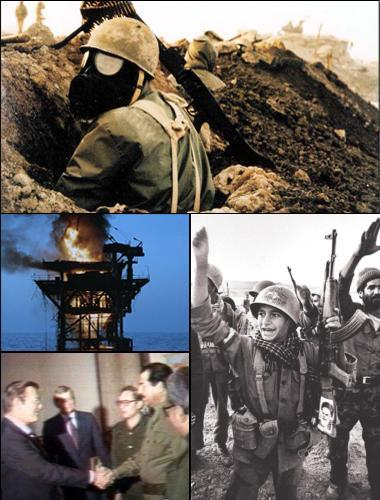
  65. Montage of Iran-Iraq War

    Story 41 of 50 · Modern Iran

    War and conflict

    The Iran–Iraq War

    Iraq invaded Iran. Eight years of trench warfare, missile attacks on cities and Iraqi chemical weapons killed hundreds of thousands and ended with no gain for either side.

    Next story1981 · Iran's first president is removed
  66. Abū l-Hasan Banīsadr , erster gewählter Präsident des Iran in der Universität Hamburg

    Story 42 of 50 · Modern Iran

    States and rulers

    Iran's first president is removed

    Parliament declared Banisadr unfit for office. He fled to France, and the clerics' Islamic Republican Party took full control.

    Next story1989 · Khomeini dies and Khamenei succeeds him
  67. Ali Khamenei, Supreme Leader of Iran

    Story 43 of 50 · Modern Iran

    States and rulers

    Khomeini dies and Khamenei succeeds him

    The Assembly of Experts chose President Ali Khamenei as the new Supreme Leader. He held the post for decades.

    Next story1997 · A reformist wins by a landslide
  68. Mohammad Khatami receiving Supreme Leader Ali Khamenei's endorsement on a stage beneath a portrait of Ayatollah Khomeini at his 1997 inauguration

    Story 44 of 50 · Modern Iran

    States and rulers

    A reformist wins by a landslide

    Mohammad Khatami won about 70 percent of the vote against the establishment's candidate and promised a 'dialogue of civilisations'.

    Next story2003 · The Bam earthquake
  69. The 2000 year old Citadel, the worlds largest mud fortress, is destroyed by the earthquake in Bam, Iran

    Story 45 of 50 · Modern Iran

    Disasters and epidemics

    The Bam earthquake

    An earthquake destroyed the city of Bam and its ancient mud-brick citadel, killing about 26,000 people.

    Next story2009 · The Green Movement
  70. The Green Movement

    Story 46 of 50 · Modern Iran

    People and rights

    The Green Movement

    Millions protested against the disputed re-election of Mahmoud Ahmadinejad. Security forces killed dozens and arrested thousands.

    Next story2022 · Woman, Life, Freedom
  71. Students of Amirkabir University protesting

    Story 47 of 50 · Modern Iran

    People and rights

    Woman, Life, Freedom

    The death in morality police custody of Mahsa Amini, a 22-year-old Kurdish woman arrested over her headscarf, set off months of protests led by women.

    Next story2024 · Pezeshkian is elected after Raisi's death
  72. Masoud Pezeshkian speaking at a campaign meeting

    Story 48 of 50 · Modern Iran

    States and rulers

    Pezeshkian is elected after Raisi's death

    President Ebrahim Raisi died in a helicopter crash in May. In an early election the reformist Masoud Pezeshkian won the run-off.

    Next story2025 · The Twelve-Day War
  73. The Israeli Air Force attacked parts of Tehran at dawn on Friday, June 13, 2025

    Story 49 of 50 · Modern Iran

    War and conflict

    The Twelve-Day War

    Israel attacked Iran's nuclear sites and senior commanders, Iran fired missiles at Israel, and the United States bombed the Fordow enrichment plant before a ceasefire was agreed.

    Next story2026 · The US–Israeli war on Iran
  74. Simplified map of the 2026 Iran war as of 14 March 2026

    Story 50 of 50 · Modern Iran

    War and conflict

    The US–Israeli war on Iran

    The United States and Israel attacked Iran and killed Supreme Leader Ali Khamenei, and Iran fired at Israel and at Gulf states that host US bases. His son Mojtaba Khamenei was chosen as successor. A shaky ceasefire and talks followed from April.

    NextJourney's end

Journey complete

You travelled 10,025 years

50 stories, c. 8000 BC to 2026. More events are being researched and added.

Choose another countryBack to the start