Inner Gate and Five-storied Pagoda of Hōryū-ji are Japan's National Treasures

All countries

Japan

Some of the world's oldest pottery, emperors and shoguns, two centuries of isolation, rapid modernisation, war, and recovery.

Present constitution since 1947

Stories
47
Distance
16,525 years
Route
c. 14,500 BC to 2025
  1. Jōmon and Yayoi8 stories
  2. Emperors and shoguns18 stories
  3. Edo Japan3 stories
  4. Modern Japan18 stories
Begin the journey

Hōryū-ji, 607. Image: 663highland · CC BY 2.5, via Wikimedia Commons

  1. Chapter I

    Jōmon and Yayoi

    8 stories in this chapter

  2. A Middle Jōmon clay cooking vessel, about 4,500 years old

    Story 1 of 47 · Jōmon and Yayoi

    Culture and faith

    Jōmon pottery

    Hunter-gatherers in Japan made some of the world's oldest pottery, later decorated with cord-pressed patterns that give the Jōmon period its name.

    Next storyc. 7500 BC · The Uenohara settlement
  3. About 7,000 years later

    c. 14,500 BC to c. 7500 BC

  4. Restored Jōmon period Village of Uenohara Remains in Kagoshima, Japan

    Story 2 of 47 · Jōmon and Yayoi

    Culture and faith

    The Uenohara settlement

    On a plateau above Kagoshima Bay, 52 pit dwellings and 16 storage pits lie beneath a layer of pumice that fell about 9,500 years ago. Uenohara is one of the oldest permanent settlements found in Japan.

    Next storyc. 5300 BC · The Kikai-Akahoya eruption
  5. About 2,200 years later

    c. 7500 BC to c. 5300 BC

  6. The Kikai-Akahoya eruption

    Story 3 of 47 · Jōmon and Yayoi

    Disasters and epidemics

    The Kikai-Akahoya eruption

    Between 7,200 and 7,300 years ago a volcano in the sea south of Kyūshū blew up in one of the largest eruptions of the Holocene. Its flows reached the coast of southern Kyūshū and its ash fell as far as Hokkaido, hitting the Jōmon people of the south.

    Next storyc. 3900 BC · Sannai-Maruyama
  7. About 1,400 years later

    c. 5300 BC to c. 3900 BC

  8. Sannai-Maruyama_site in Aomori , Aomori prefecture , Japan

    Story 4 of 47 · Jōmon and Yayoi

    Culture and faith

    Sannai-Maruyama

    At Sannai-Maruyama in Aomori, the largest Jōmon settlement found in Japan, people lived from about 3900 to 2200 BC. It has 648 pit dwellings, and its people settled there for good around 2900 BC.

    Next storyc. 900 BC · Rice farming arrives
  9. About 3,000 years later

    c. 3900 BC to c. 900 BC

  10. Rice farming arrives

    Story 5 of 47 · Jōmon and Yayoi

    Science, trade and industry

    Rice farming arrives

    Newcomers from the Korean peninsula brought wet-rice farming, bronze and iron to Kyushu, and the new ways spread east.

    Next storyc. 400 BC · Yoshinogari
  11. About 500 years later

    c. 900 BC to c. 400 BC

  12. Yoshinogari

    Story 6 of 47 · Jōmon and Yayoi

    Culture and faith

    Yoshinogari

    Yoshinogari in Saga is one of the largest Yayoi sites, a settlement later ringed by a double moat, the outer one about 2.5 km long. Radiocarbon dates put its first Yayoi phase before 400 BC.

    Next story57 · The gold seal of the King of Na
  13. About 460 years later

    c. 400 BC to 57

  14. The King of Na gold seal , bestowed by Han Dynasty Emperor Guangwu

    Story 7 of 47 · Jōmon and Yayoi

    States and rulers

    The gold seal of the King of Na

    In 57 AD the Han emperor Guangwu is believed to have given a solid gold seal to an envoy from Na, a Yayoi state in Kyūshū, marking it as a tributary of China. The seal turned up on Shikanoshima island in 1784.

    Next storyc. 239 · Queen Himiko of Yamatai
  15. About 180 years later

    57 to c. 239

  16. Story 8 of 47 · Jōmon and Yayoi

    States and rulers

    Queen Himiko of Yamatai

    Chinese histories say the people of Wa chose the shaman queen Himiko to rule after decades of war between their kings. She ruled Yamatai, exchanged envoys with the Wei kingdom and was named Ruler of Wa, Friend of Wei.

    Next story5th century · The great keyhole tomb
  17. About 160 years later

    c. 239 to 5th century

  18. Chapter II

    Emperors and shoguns

    18 stories in this chapter

  19. The wooded keyhole-shaped mound of the Daisen Kofun, surrounded by its moat

    Story 9 of 47 · Emperors and shoguns

    Culture and faith

    The great keyhole tomb

    A ruler was buried in a keyhole-shaped mound about 486 metres long, surrounded by moats. It is traditionally the tomb of Emperor Nintoku.

    Next story538 · Buddhism reaches Japan
  20. Goma ceremony at a Shingon temple in Nara

    Story 10 of 47 · Emperors and shoguns

    Culture and faith

    Buddhism reaches Japan

    A king of Baekje in Korea sent a statue of the Buddha and scriptures to the Japanese court.

    Next story607 · Hōryū-ji
  21. Inner Gate and Five-storied Pagoda of Hōryū-ji are Japan's National Treasures

    Story 11 of 47 · Emperors and shoguns

    Culture and faith

    Hōryū-ji

    Prince Shōtoku founded a Buddhist temple at Ikaruga. Rebuilt after a fire later in the century, its buildings survive.

    Next story645 · The Taika Reform
  22. Japanese painting of the assassination of Soga no Iruka in the palace in 645, the coup that led to the Taika Reform

    Story 12 of 47 · Emperors and shoguns

    States and rulers

    The Taika Reform

    Prince Naka no Ōe and Nakatomi no Kamatari killed the powerful Soga leader. Reforms followed that copied China's state, with land held by the throne, taxes and officials.

    Next story710 · Nara, the first capital
  23. Heijō-kyō ruins in Nara , Nara prefecture , Japan

    Story 13 of 47 · Emperors and shoguns

    States and rulers

    Nara, the first capital

    Japan's first permanent capital was laid out at Nara on the grid plan of China's Tang capital.

    Next story794 · Kyoto becomes the capital
  24. Daidairi of Heiankyo , Ancient Japanese Capital

    Story 14 of 47 · Emperors and shoguns

    States and rulers

    Kyoto becomes the capital

    Emperor Kanmu moved the capital to Heian-kyō, today's Kyoto.

    Next story858 · The Fujiwara take control of the court
  25. Portrait of Fujiwara no Yoshifusa, the first of the great Fujiwara regents

    Story 15 of 47 · Emperors and shoguns

    States and rulers

    The Fujiwara take control of the court

    Fujiwara no Yoshifusa became regent for a child emperor, the first non-royal to hold the post. Fujiwara men then ruled from behind the throne for two centuries.

    Next storyc. 1008 · The Tale of Genji
  26. About 150 years later

    858 to c. 1008

  27. Fragment of an emaki from the 12th century Genji Monogatari

    Story 16 of 47 · Emperors and shoguns

    Culture and faith

    The Tale of Genji

    Murasaki Shikibu, a lady-in-waiting at the imperial court, wrote a long story of the loves of a prince, Genji.

    Next story1167 · Taira no Kiyomori becomes chancellor
  28. About 160 years later

    c. 1008 to 1167

  29. Taira no Kiyomori (1118-1181), realist portrait or nise-e

    Story 17 of 47 · Emperors and shoguns

    States and rulers

    Taira no Kiyomori becomes chancellor

    The first warrior to reach the court's highest office, he placed his family in the top posts before the Genpei War destroyed it.

    Next story1185 · The first shogunate
  30. Portrait traditionally said to show Minamoto no Yoritomo, the first Kamakura shogun

    Story 18 of 47 · Emperors and shoguns

    States and rulers

    The first shogunate

    After winning the Genpei War, Minamoto no Yoritomo set up a military government at Kamakura and was named shogun in 1192.

    Next story1274 · The Mongol invasions
  31. The samurai Takezaki Suenaga charging Mongol archers, from a scroll painted around 1293

    Story 19 of 47 · Emperors and shoguns

    War and conflict

    The Mongol invasions

    Kublai Khan twice sent huge fleets against Japan. Samurai defences and typhoons, later called kamikaze, 'divine wind', destroyed them.

    Next story1333 · Emperor Go-Daigo takes back power
  32. Portrait of Emperor Go-Daigo seated in ceremonial robes and a tall crown

    Story 20 of 47 · Emperors and shoguns

    States and rulers

    Emperor Go-Daigo takes back power

    After the Kamakura shogunate fell, Go-Daigo tried to rule directly. A revolt by Ashikaga Takauji ended it in three years.

    Next story1336 · The Ashikaga shogunate
  33. Portrait of Ashikaga Takauji seated in black formal robes with a tall black cap

    Story 21 of 47 · Emperors and shoguns

    States and rulers

    The Ashikaga shogunate

    Ashikaga Takauji set up a new shogun's government at Kyoto. Its power faded and the country slid into civil war.

    Next story1467 · The Ōnin War
  34. The Battle of Onin during the Onin War (1467-1477) by Utagawa Yoshitora

    Story 22 of 47 · Emperors and shoguns

    War and conflict

    The Ōnin War

    A succession dispute between powerful families burned much of Kyoto.

    Next story1543 · Guns arrive
  35. Antique Japanese (samurai) tanegashima (matchlocks), Himeji castle

    Story 23 of 47 · Emperors and shoguns

    Science, trade and industry

    Guns arrive

    Portuguese traders shipwrecked on the island of Tanegashima sold matchlock guns, which local smiths quickly copied.

    Next story1573 · Nobunaga expels the last Ashikaga shogun
  36. A photograph of a portrait of Oda Nobunaga

    Story 24 of 47 · Emperors and shoguns

    States and rulers

    Nobunaga expels the last Ashikaga shogun

    Oda Nobunaga drove Ashikaga Yoshiaki out of Kyoto, ending 237 years of Ashikaga rule. He was killed in 1582 before finishing his conquests.

    Next story1590 · Hideyoshi unifies Japan
  37. The keep of Odawara Castle, the Hōjō stronghold that fell to Hideyoshi

    Story 25 of 47 · Emperors and shoguns

    States and rulers

    Hideyoshi unifies Japan

    The fall of the Hōjō family's castle left Toyotomi Hideyoshi master of the whole country after a century of war.

    Next story1600 · The Battle of Sekigahara
  38. The Battle of Sekigahara

    Story 26 of 47 · Emperors and shoguns

    War and conflict

    The Battle of Sekigahara

    Tokugawa Ieyasu defeated a coalition of rival lords in one of the largest battles in Japanese history.

    Next story1603 · Tokugawa Ieyasu becomes shogun
  39. Chapter III

    Edo Japan

    3 stories in this chapter

  40. Japan in Provinces in the time of Tokugawa Ieyasu (1542-1651, note: Ieyasu lived from 1543 till 1616)

    Story 27 of 47 · Edo Japan

    States and rulers

    Tokugawa Ieyasu becomes shogun

    Three years after Sekigahara Ieyasu took the title and set up his government at Edo. His family ruled for 265 years.

    Next story1639 · The closed country
  41. The closed country

    Story 28 of 47 · Edo Japan

    States and rulers

    The closed country

    The shogunate expelled the Portuguese, banned Christianity and allowed trade only with the Dutch and Chinese at Nagasaki.

    Next story1853 · The black ships
  42. About 220 years later

    1639 to 1853

  43. Japanese 1854 print relating Perry's visit

    Story 29 of 47 · Edo Japan

    States and rulers

    The black ships

    American warships under Commodore Matthew Perry steamed into Edo Bay and demanded that Japan open its ports.

    Next story1868 · The Meiji Restoration
  44. Chapter IV

    Modern Japan

    18 stories in this chapter

  45. The palanquin and procession of Emperor Meiji moving from Kyoto to Tokyo through the Tokaido road

    Story 30 of 47 · Modern Japan

    States and rulers

    The Meiji Restoration

    Samurai from the south-west overthrew the shogun and restored power to the young Emperor Meiji.

    Next story1889 · Japan gets a constitution
  46. Meiji Constitution (page 3)

    Story 31 of 47 · Modern Japan

    States and rulers

    Japan gets a constitution

    The emperor 'granted' a constitution that created an elected lower house. The emperor held sovereignty and the army answered only to him.

    Next story1923 · The Great Kantō earthquake
  47. The 1923 Great Kanto earthquake (view from Kotobuki Junior School in Yokohama)

    Story 32 of 47 · Modern Japan

    Disasters and epidemics

    The Great Kantō earthquake

    An earthquake and the fires that followed destroyed much of Tokyo and Yokohama and killed about 105,000 people. Mobs then murdered thousands of Koreans.

    Next story1932 · Naval officers kill the prime minister
  48. The May 15 Incident in 1932

    Story 33 of 47 · Modern Japan

    States and rulers

    Naval officers kill the prime minister

    Young officers assassinated Prime Minister Inukai. The party governments that had ruled since the 1920s gave way to cabinets dominated by the military.

    Next story1941 · General Tōjō becomes prime minister
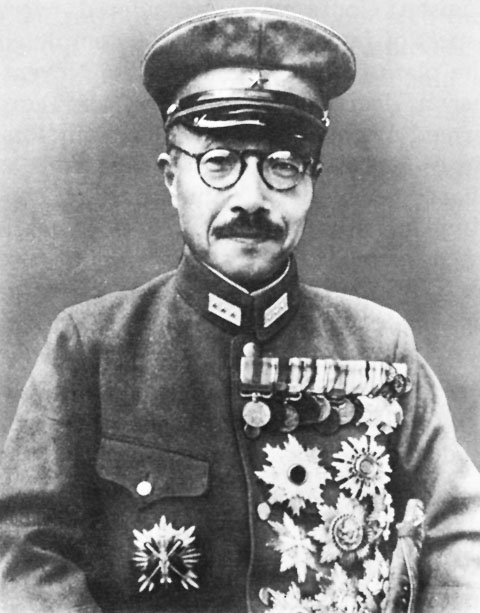
  49. Portrait of Hideki Tōjō

    Story 34 of 47 · Modern Japan

    States and rulers

    General Tōjō becomes prime minister

    The army minister took the premiership and led Japan into war with the United States and Britain seven weeks later.

    Next story1945 · The firebombing of Tokyo
  50. Photo taken by Ishikawa Kōyō(1904-1989) around 10 March, 1945

    Story 35 of 47 · Modern Japan

    War and conflict

    The firebombing of Tokyo

    American B-29s dropped incendiary bombs on Tokyo's wooden neighbourhoods in a single night, killing about 100,000 people.

    Next story1945 · Hiroshima and Nagasaki
  51. Hiroshima and Nagasaki

    Story 36 of 47 · Modern Japan

    War and conflict

    Hiroshima and Nagasaki

    The United States dropped atomic bombs on Hiroshima and Nagasaki, killing more than 100,000 people at once and many more from injuries and radiation.

    Next story1945 · The Allied occupation
  52. General Douglas MacArthur in an open-necked uniform standing beside Emperor Hirohito in a morning coat

    Story 37 of 47 · Modern Japan

    States and rulers

    The Allied occupation

    General Douglas MacArthur ran Japan through its own officials. The occupiers broke up the big conglomerates, redistributed land and oversaw a new constitution.

    Next story1947 · The post-war constitution
  53. The original of "The Constitution of the State of Japan" This constitution was promulgated in 1946, and it was taken effect in 1947

    Story 38 of 47 · Modern Japan

    States and rulers

    The post-war constitution

    Under American occupation, Japan adopted a constitution that made the emperor a symbol, gave women the vote and renounced war.

    Next story1952 · Japan regains its sovereignty
  54. Japanese Prime Minister Shigeru Yoshida (1878–1967, in office 1946–47 and 48–54) and members of the Japanese envoy sign the Treaty of San Francisco

    Story 39 of 47 · Modern Japan

    States and rulers

    Japan regains its sovereignty

    The peace treaty came into force. The same day a security treaty let American troops stay.

    Next story1955 · The Liberal Democrats are founded
  55. Prime Minister Ichirō Hatoyama with leaders of the new Liberal Democratic Party at Otowa Mansion

    Story 40 of 47 · Modern Japan

    States and rulers

    The Liberal Democrats are founded

    Two conservative parties merged to stop the socialists. The LDP then governed alone for 38 years.

    Next story1964 · The bullet train
  56. The bullet train

    Story 41 of 47 · Modern Japan

    Science, trade and industry

    The bullet train

    The world's first high-speed railway opened between Tokyo and Osaka, days before the Tokyo Olympics.

    Next story1993 · The LDP loses power
  57. Kiichi Miyazawa was inaugurated as Prime Minister on November 5, 1991

    Story 42 of 47 · Modern Japan

    States and rulers

    The LDP loses power

    After 38 years the LDP lost its majority when members defected. A coalition under Morihiro Hosokawa took office.

    Next story1995 · The Kobe earthquake
  58. Great Hanshin-Awaji Earthquake (in front of Topos, Minatogawa-cho)

    Story 43 of 47 · Modern Japan

    Disasters and epidemics

    The Kobe earthquake

    An earthquake struck the port city of Kobe before dawn, killing more than 6,400 people.

    Next story2009 · The Democratic Party wins
  59. Portrait of Prime minister of Japan

    Story 44 of 47 · Modern Japan

    States and rulers

    The Democratic Party wins

    A landslide gave the Democratic Party of Japan, led by Yukio Hatoyama, its chance to govern. It lost power three years later.

    Next story2011 · The Tōhoku earthquake and tsunami
  60. The Tōhoku earthquake and tsunami

    Story 45 of 47 · Modern Japan

    Disasters and epidemics

    The Tōhoku earthquake and tsunami

    The strongest earthquake recorded in Japan sent a tsunami over the north-east coast, killing about 18,000 people and causing meltdowns at the Fukushima Daiichi nuclear plant.

    Next story2012 · Abe returns
  61. Portrait of Shinzō Abe in 2012

    Story 46 of 47 · Modern Japan

    States and rulers

    Abe returns

    The LDP won and Shinzo Abe became prime minister again. He served until 2020, longer than anyone before him.

    Next story2025 · Japan's first woman prime minister
  62. Sanae Takaichi , Prime Minister of Japan

    Story 47 of 47 · Modern Japan

    States and rulers

    Japan's first woman prime minister

    The Diet elected Sanae Takaichi after the Liberal Democratic Party lost its long-time partner, Komeito, and made a deal with the Japan Innovation Party.

    NextJourney's end

Journey complete

You travelled 16,525 years

47 stories, c. 14,500 BC to 2025. More events are being researched and added.

Choose another countryBack to the start