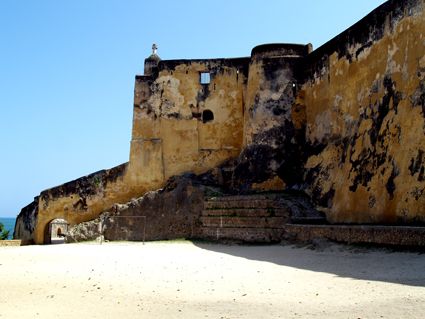
Fort Jesus, Mombasa

All countries

Kenya

Some of the oldest traces of our ancestors, the Swahili towns of the coast, British settlers and the Mau Mau, and an independent republic.

Independent from Britain since 12 December 1963

Stories
31
Distance
3,302,022 years
Route
c. 3,300,000 BC to 2022
  1. Early humans2 stories
  2. Peoples of the coast and interior8 stories
  3. British East Africa5 stories
  4. Independent Kenya16 stories
Begin the journey

Fort Jesus, 1593. Image: Chris huh · CC BY-SA 4.0, via Wikimedia Commons

  1. Chapter I

    Early humans

    2 stories in this chapter

  2. Lake Turkana , Kenya and Ethiopia

    Story 1 of 31 · Early humans

    Science, trade and industry

    The oldest stone tools

    Near Lake Turkana, early relatives of humans struck sharp flakes from stones about 3.3 million years ago.

    Next storyc. 1,500,000 BC · Turkana Boy
  3. About 1,800,000 years later

    c. 3,300,000 BC to c. 1,500,000 BC

  4. Skeleton of the “Turkana Boy” or “Nariokotome Boy,” collection of the National Museum of Kenya, Nairobi

    Story 2 of 31 · Early humans

    People and rights

    Turkana Boy

    A Homo erectus boy of about eight to twelve died by Lake Turkana. His skeleton, found in 1984, is the most complete of any early human.

    Next storyc. 8000 BC · The Nataruk massacre
  5. About 1,492,000 years later

    c. 1,500,000 BC to c. 8000 BC

  6. Chapter II

    Peoples of the coast and interior

    8 stories in this chapter

  7. Excavations at Nataruk

    Story 3 of 31 · Peoples of the coast and interior

    War and conflict

    The Nataruk massacre

    At Nataruk, west of Lake Turkana, archaeologists found the remains of 27 people from about 10,000 years ago. Many show wounds, which may be the earliest evidence of fighting between groups of hunter-gatherers.

    Next storyc. 3000 BC · The Lothagam pillar cemetery
  8. About 5,000 years later

    c. 8000 BC to c. 3000 BC

  9. The Lothagam pillar cemetery

    Story 4 of 31 · Peoples of the coast and interior

    Culture and faith

    The Lothagam pillar cemetery

    As rains failed and Lake Turkana shrank, the region's first herders built a great communal cemetery at Lothagam between about 3000 and 2300 BC, marked by stone pillars. It is the earliest and largest monumental cemetery known in eastern Africa.

    Next storyc. 3000 BC · The first herders of the Rift Valley
  10. Story 5 of 31 · Peoples of the coast and interior

    Culture and faith

    The first herders of the Rift Valley

    Herders who probably spoke Cushitic languages brought cattle, sheep and goats south into Kenya. They first lived in the lowlands, then moved into the Kenyan and Tanzanian highlands about 3,300 years ago, burying their dead in cairns and grinding food in stone bowls.

    Next storyc. 60 · The Periplus describes the East African coast
  11. About 3,100 years later

    c. 3000 BC to c. 60

  12. This map depicts the Periplus of the Erythraen Sea

    Story 6 of 31 · Peoples of the coast and interior

    Science, trade and industry

    The Periplus describes the East African coast

    A Greek-speaking merchant wrote a first-century guide to sea trade across the Red Sea, the Gulf of Aden, the Persian Gulf and the Indian Ocean. It names Rhapta, in Azania, as the farthest market down the African coast.

    Next story7th century · The Swahili coast
  13. About 540 years later

    c. 60 to 7th century

  14. Fishermen on their traditional boats near Shimoni (Kenya)

    Story 7 of 31 · Peoples of the coast and interior

    Science, trade and industry

    The Swahili coast

    The Swahili coast runs from Mombasa and Lamu to Dar es Salaam and Kilwa. Greeks and Romans called it Azania, and Arab, Indian and Chinese writers from the 7th to the 14th century called it Zanj.

    Next story12th century · The Swahili town of Gede
  15. About 500 years later

    7th century to 12th century

  16. Ruins of the Great Mosque in Gede, Kenya

    Story 8 of 31 · Peoples of the coast and interior

    Culture and faith

    The Swahili town of Gede

    A Swahili town of coral-stone houses, mosques and a palace grew on the coast, trading with Arabia, India and China. It was abandoned in the 17th century.

    Next story1593 · Fort Jesus
  17. About 490 years later

    12th century to 1593

  18. Fort Jesus, Mombasa

    Story 9 of 31 · Peoples of the coast and interior

    States and rulers

    Fort Jesus

    The Portuguese built a great fort to control Mombasa and the Indian Ocean trade.

    Next story1696 · The siege of Fort Jesus
  19. Vlasništvo (poklon suradnice Branke France)

    Story 10 of 31 · Peoples of the coast and interior

    War and conflict

    The siege of Fort Jesus

    Omani Arab forces besieged Fort Jesus for nearly three years until the last Portuguese defenders fell.

    Next story1895 · British East Africa
  20. About 200 years later

    1696 to 1895

  21. Chapter III

    British East Africa

    5 stories in this chapter

  22. Scottish missionaries with an official of the Imperial British East Africa Company in Mombasa, 1891

    Story 11 of 31 · British East Africa

    States and rulers

    British East Africa

    Britain declared a protectorate over the interior, and white settlers took over the fertile highlands, the 'White Highlands', from the Kikuyu, Maasai and other peoples.

    Next story1896 · The 'Lunatic Express'
  23. Uganda Railways Corporation locomotives at Kampala Railway Station, Uganda, 23 November 2006

    Story 12 of 31 · British East Africa

    Science, trade and industry

    The 'Lunatic Express'

    Workers, most of them brought from British India, built a railway from Mombasa to Lake Victoria. At Tsavo, two lions killed many of them.

    Next story1914 · The war in East Africa
  24. Germans on the left, British on the right

    Story 13 of 31 · British East Africa

    War and conflict

    The war in East Africa

    A small German force under Lettow-Vorbeck tied down far larger British, Indian, Belgian and Portuguese forces for four years.

    Next story1920 · Kenya Colony
  25. Portrait of General Sir Edward Northey, the governor of Kenya when it became a colony in 1920

    Story 14 of 31 · British East Africa

    States and rulers

    Kenya Colony

    Britain made the interior a Crown colony and kept a coastal strip as a protectorate. White settlers held the best farmland and much of the political power.

    Next story1952 · The Mau Mau uprising
  26. Troops of the King's African Rifles carry supplies while on watch for Mau Mau fighters

    Story 15 of 31 · British East Africa

    War and conflict

    The Mau Mau uprising

    Kikuyu fighters rose against colonial rule and land theft. Britain declared an emergency, held tens of thousands in camps where many were tortured, and hanged more than 1,000 people.

    Next story1963 · Independence
  27. Chapter IV

    Independent Kenya

    16 stories in this chapter

  28. Jomo Kenyatta in 1978

    Story 16 of 31 · Independent Kenya

    States and rulers

    Independence

    Kenya became independent with Jomo Kenyatta, once jailed by the British, as prime minister. It became a republic a year later.

    Next story1964 · Kenya becomes a republic
  29. Kenyan National Youth Service march during the 2011 Jamhuri Day

    Story 17 of 31 · Independent Kenya

    States and rulers

    Kenya becomes a republic

    A year after independence Kenya dropped the Queen as head of state. Jomo Kenyatta became its first president.

    Next story1977 · The Green Belt Movement
  30. Wangari Maathai, founder of the Green Belt Movement, in 2001

    Story 18 of 31 · Independent Kenya

    People and rights

    The Green Belt Movement

    Wangari Maathai encouraged rural women to plant trees to restore land, firewood and water. They have planted tens of millions.

    Next story1978 · Kenyatta dies and Moi takes over
  31. Prime Minister Levi Eshkol and Kenya President Jomo Kenyatta at State House in Nairobi, Kenya

    Story 19 of 31 · Independent Kenya

    States and rulers

    Kenyatta dies and Moi takes over

    Jomo Kenyatta died in Mombasa. Vice-president Daniel arap Moi took over and ruled for 24 years.

    Next story1982 · KANU becomes the only legal party
  32. Black-and-white close-up portrait of Daniel arap Moi in 1979

    Story 20 of 31 · Independent Kenya

    States and rulers

    KANU becomes the only legal party

    Parliament amended the constitution to make Kenya a one-party state. Weeks later air force officers tried to overthrow Moi.

    Next story1982 · The 1982 coup attempt
  33. President Daniel arap Moi in 1979

    Story 21 of 31 · Independent Kenya

    War and conflict

    The 1982 coup attempt

    Air force officers seized the radio station and tried to overthrow President Daniel arap Moi, but loyal troops crushed the attempt within hours.

    Next story1992 · The first multi-party election in a generation
  34. Results by province of the 1992 Kenyan presidential election

    Story 22 of 31 · Independent Kenya

    States and rulers

    The first multi-party election in a generation

    After a decade of one-party rule Moi won against a divided opposition. Violence in the Rift Valley killed many.

    Next story1998 · The US embassy bombing
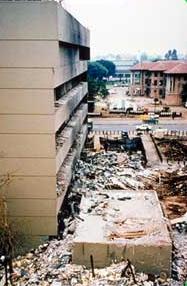
  35. Aftermath of the 1998 U.S

    Story 23 of 31 · Independent Kenya

    War and conflict

    The US embassy bombing

    Al-Qaeda truck bombs struck the US embassies in Nairobi and Dar es Salaam. Over 200 people were killed in Nairobi, most of them Kenyans.

    Next story2002 · Moi steps down
  36. President Mwai Kibaki in 2008

    Story 24 of 31 · Independent Kenya

    States and rulers

    Moi steps down

    Opposition parties united behind Mwai Kibaki, who defeated the ruling party's candidate.

    Next story2007 · Post-election violence
  37. Recreation ground in Nairobi has been turned into a "Millitary Barracks" now

    Story 25 of 31 · Independent Kenya

    War and conflict

    Post-election violence

    Disputed election results set off ethnic violence that killed about 1,100 people and drove hundreds of thousands from their homes.

    Next story2010 · The 2010 constitution
  38. The Parliament Buildings in Nairobi, 2010

    Story 26 of 31 · Independent Kenya

    States and rulers

    The 2010 constitution

    Voters approved a new constitution that limited presidential power, created county governments and added a bill of rights.

    Next story2011 · The famine of 2011
  39. The FEWS projection of the 2011 East Africa drought for October-December, using the IPC scale

    Story 27 of 31 · Independent Kenya

    Disasters and epidemics

    The famine of 2011

    The worst drought in 60 years and war in the south caused famine. Some 260,000 people died, half of them children.

    Next story2013 · Uhuru Kenyatta wins
  40. Results by province of the 2002 Kenyan presidential election

    Story 28 of 31 · Independent Kenya

    States and rulers

    Uhuru Kenyatta wins

    Uhuru Kenyatta, son of the first president, won while facing charges at the International Criminal Court that were later dropped.

    Next story2013 · The Westgate attack
  41. Taken of and around the 2013 Westgate shopping mall incident in Nairobi, Kenya

    Story 29 of 31 · Independent Kenya

    War and conflict

    The Westgate attack

    Gunmen from the Somali group al-Shabaab attacked a Nairobi shopping mall, killing 67 people.

    Next story2017 · The court annuls a presidential election
  42. County level map of the 2017 Presidential Elections

    Story 30 of 31 · Independent Kenya

    States and rulers

    The court annuls a presidential election

    The Supreme Court cancelled Kenyatta's win over irregularities and ordered a new vote, a first for Africa. The opposition boycotted the rerun.

    Next story2022 · Ruto becomes president
  43. 2022 Kenyan presidential election results by county

    Story 31 of 31 · Independent Kenya

    States and rulers

    Ruto becomes president

    William Ruto won a narrow victory over Raila Odinga, whom the outgoing president had backed.

    NextJourney's end

Journey complete

You travelled 3,302,022 years

31 stories, c. 3,300,000 BC to 2022. More events are being researched and added.

Choose another countryBack to the start