

People and rights
The Niah Caves
A skull about 40,000 years old was found in caves in Sarawak, among the oldest modern humans in Southeast Asia.
- Where
- Niah

Malay sultanates and the spice port of Malacca, Portuguese, Dutch and British rule, tin and rubber, the Emergency, independence in 1957 and the formation of Malaysia in 1963.
Independent from Britain since 31 August 1957; Malaysia formed on 16 September 1963
The Đông Sơn drums, c. 1000 BC. Image: user:snowyowls · CC BY-SA 2.5, via Wikimedia Commons
Chapter I

Story 1 of 23 · Early peoples and sultanates
People and rights
A skull about 40,000 years old was found in caves in Sarawak, among the oldest modern humans in Southeast Asia.
About 37,000 years later
c. 40,000 BC to c. 3000 BC

Story 2 of 23 · Early peoples and sultanates
Science, trade and industry
Austronesian peoples spread by sea out of Taiwan between about 3000 and 1500 BC. They reached the Batanes Islands in the northern Philippines by about 2200 BC and later settled Island Southeast Asia, Polynesia and Madagascar.
About 2,000 years later
c. 3000 BC to c. 1000 BC

Story 3 of 23 · Early peoples and sultanates
Culture and faith
Bronze Age farmers in the Red River valley cast great bronze drums decorated with boats, birds and dancers.
About 1,100 years later
c. 1000 BC to c. 110

Story 4 of 23 · Early peoples and sultanates
States and rulers
In the Bujang Valley in Kedah, digs at Sungai Batu found a jetty, iron-smelting sites and a brick monument dated to about 110 AD. Over the following centuries the valley grew into a Hindu-Buddhist complex with more than 50 temples.
About 540 years later
c. 110 to c. 650

Story 5 of 23 · Early peoples and sultanates
States and rulers
A maritime kingdom based in Sumatra controlled the Strait of Malacca and became a great centre of Buddhist learning.
About 750 years later
c. 650 to 1402

Story 6 of 23 · Early peoples and sultanates
States and rulers
Parameswara founded a port city on the Strait of Malacca. It became the main spice market in Asia and spread Islam in the region.

Story 7 of 23 · Early peoples and sultanates
Science, trade and industry
The admiral Zheng He led seven great fleets of treasure ships across the Indian Ocean as far as East Africa.
Chapter II

Story 8 of 23 · Colonial Malaya, Sarawak and Sabah
War and conflict
Afonso de Albuquerque stormed the city. The Portuguese were the first Europeans to take a major Southeast Asian port.
About 280 years later
1511 to 1786

Story 9 of 23 · Colonial Malaya, Sarawak and Sabah
States and rulers
The British East India Company got an island on the strait as a naval base, and founded George Town.

Story 10 of 23 · Colonial Malaya, Sarawak and Sabah
States and rulers
Britain and the Netherlands divided Southeast Asia. Malaya went to Britain and Sumatra to the Dutch.

Story 11 of 23 · Colonial Malaya, Sarawak and Sabah
States and rulers
James Brooke, an Englishman, became Rajah of Sarawak, and his family ruled it for a hundred years.

Story 12 of 23 · Colonial Malaya, Sarawak and Sabah
States and rulers
A Malay sultan accepted a British Resident. Britain drew Malay states into its control one by one.

Story 13 of 23 · Colonial Malaya, Sarawak and Sabah
War and conflict
The Japanese army swept down the peninsula on bicycles and took Singapore.
Story 14 of 23 · Colonial Malaya, Sarawak and Sabah
War and conflict
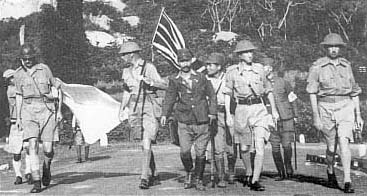
The Japanese took Singapore with a smaller force, in the biggest British surrender in history.

Story 15 of 23 · Colonial Malaya, Sarawak and Sabah
War and conflict
Britain fought communist guerrillas for twelve years in the jungle.
Chapter III

Story 16 of 23 · Independent Malaysia
States and rulers
Tunku Abdul Rahman announced independence in a stadium in Kuala Lumpur.

Story 17 of 23 · Independent Malaysia
States and rulers
Malaya, Singapore, Sarawak and North Borneo joined in a federation. Singapore left in 1965.

Story 18 of 23 · Independent Malaysia
States and rulers
After two years in the federation, Malaysia expelled Singapore. Lee Kuan Yew announced independence in tears.

Story 19 of 23 · Independent Malaysia
War and conflict
Ethnic riots between Malays and Chinese killed hundreds and led to policies favouring Malays.

Story 20 of 23 · Independent Malaysia
States and rulers
He led Malaysia for 22 years and returned in 2018.

Story 21 of 23 · Independent Malaysia
Science, trade and industry
Thailand floated its currency and set off a financial crisis that spread across Asia.

Story 22 of 23 · Independent Malaysia
Disasters and epidemics
A Boeing 777 vanished on a flight to Beijing. It was never found.

Story 23 of 23 · Independent Malaysia
States and rulers
Voters ended the National Front's 61 years in power. Mahathir became prime minister again.
Journey complete
23 stories, c. 40,000 BC to 2018. More events are being researched and added.
People and rights
A skull about 40,000 years old was found in caves in Sarawak, among the oldest modern humans in Southeast Asia.

Science, trade and industry
Austronesian peoples spread by sea out of Taiwan between about 3000 and 1500 BC. They reached the Batanes Islands in the northern Philippines by about 2200 BC and later settled Island Southeast Asia, Polynesia and Madagascar.

Culture and faith
Bronze Age farmers in the Red River valley cast great bronze drums decorated with boats, birds and dancers.
The drums are a symbol of early Vietnamese civilisation.

States and rulers
In the Bujang Valley in Kedah, digs at Sungai Batu found a jetty, iron-smelting sites and a brick monument dated to about 110 AD. Over the following centuries the valley grew into a Hindu-Buddhist complex with more than 50 temples.

States and rulers
A maritime kingdom based in Sumatra controlled the Strait of Malacca and became a great centre of Buddhist learning.
Its trade network linked China, India and the Arab world.

States and rulers
Parameswara founded a port city on the Strait of Malacca. It became the main spice market in Asia and spread Islam in the region.

Science, trade and industry
The admiral Zheng He led seven great fleets of treasure ships across the Indian Ocean as far as East Africa.
China then turned inward and ended the voyages.

War and conflict
Afonso de Albuquerque stormed the city. The Portuguese were the first Europeans to take a major Southeast Asian port.

States and rulers
The British East India Company got an island on the strait as a naval base, and founded George Town.
States and rulers
Britain and the Netherlands divided Southeast Asia. Malaya went to Britain and Sumatra to the Dutch.

States and rulers
James Brooke, an Englishman, became Rajah of Sarawak, and his family ruled it for a hundred years.

States and rulers
A Malay sultan accepted a British Resident. Britain drew Malay states into its control one by one.

War and conflict
The Japanese army swept down the peninsula on bicycles and took Singapore.
War and conflict
The Japanese took Singapore with a smaller force, in the biggest British surrender in history.

War and conflict
Britain fought communist guerrillas for twelve years in the jungle.
States and rulers
Tunku Abdul Rahman announced independence in a stadium in Kuala Lumpur.

States and rulers
Malaya, Singapore, Sarawak and North Borneo joined in a federation. Singapore left in 1965.

States and rulers
After two years in the federation, Malaysia expelled Singapore. Lee Kuan Yew announced independence in tears.

War and conflict
Ethnic riots between Malays and Chinese killed hundreds and led to policies favouring Malays.

States and rulers
He led Malaysia for 22 years and returned in 2018.

Science, trade and industry
Thailand floated its currency and set off a financial crisis that spread across Asia.

Disasters and epidemics
A Boeing 777 vanished on a flight to Beijing. It was never found.

States and rulers
Voters ended the National Front's 61 years in power. Mahathir became prime minister again.