

States and rulers
The Xiongnu
A nomad confederation united by Modu Chanyu raided and extorted China, which built the Great Wall partly against it.
- Lasted
- About 300 years
- Where
- Mongolia
Xiongnu and Turkic khaganates, Genghis Khan's empire, Manchu rule, independence in 1911, seventy years of communism and a democracy since 1990.
Independence declared in 1911; a democracy since 1990
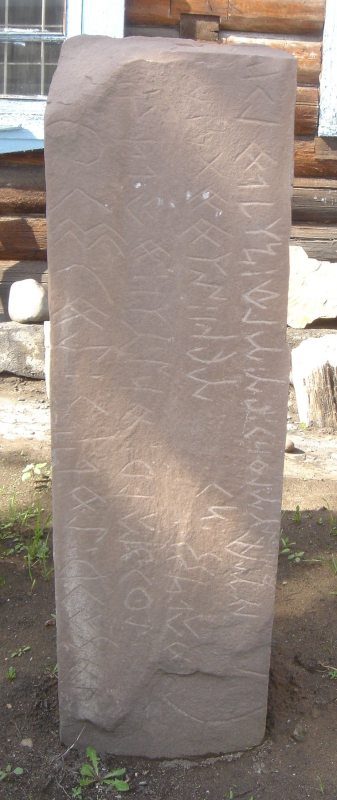
The Orkhon inscriptions, 732. Image: Philipp Roelli · CC BY-SA 3.0, via Wikimedia Commons
Chapter I

Story 1 of 15 · Steppe empires
States and rulers
A nomad confederation united by Modu Chanyu raided and extorted China, which built the Great Wall partly against it.
760 years later
209 BC to 552

Story 2 of 15 · Steppe empires
States and rulers
The Ashina clan of the Göktürks founded the First Turkic Khaganate under Bumin Qaghan, who died in 552. It began as a power of medieval Inner Asia.
180 years later
552 to 732
Story 3 of 15 · Steppe empires
Culture and faith
Turkic khans left carved stones with the earliest known writing in a Turkic language.
About 470 years later
732 to 1206
Chapter II

Story 4 of 15 · The Mongol Empire
States and rulers
An assembly of Mongol chiefs named Temüjin Genghis Khan. He built the largest land empire in history.


Story 6 of 15 · The Mongol Empire
States and rulers
The Mongol khan took a Chinese dynastic name and made Beijing his capital. He finished conquering the Song in 1279.
About 310 years later
1271 to 1578
Chapter III
Story 7 of 15 · After the empire
States and rulers
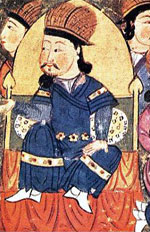
The Mongol prince gave the title of Dalai Lama to the Tibetan Buddhist leader, and Buddhism spread among the Mongols.

Story 8 of 15 · After the empire
States and rulers
The northern Mongol princes accepted Manchu rule.
About 220 years later
1691 to 1911
Chapter IV

Story 9 of 15 · Modern Mongolia
States and rulers
After the Qing dynasty fell, Mongolia declared independence with the Bogd Khan as ruler.

Story 10 of 15 · Modern Mongolia
War and conflict
With Soviet help, a revolutionary army took power.

Story 11 of 15 · Modern Mongolia
States and rulers
The second communist state in the world was founded after the Bogd Khan died.

Story 13 of 15 · Modern Mongolia
War and conflict
The Soviet and Mongol army defeated Japan.

Story 14 of 15 · Modern Mongolia
States and rulers
Peaceful protests ended communist rule without a shot.

Story 15 of 15 · Modern Mongolia
Disasters and epidemics
A summer drought was followed by severe winter. Nearly a fifth of the livestock died.
Journey complete
15 stories, 209 BC to 2010. More events are being researched and added.
States and rulers
A nomad confederation united by Modu Chanyu raided and extorted China, which built the Great Wall partly against it.

States and rulers
The Ashina clan of the Göktürks founded the First Turkic Khaganate under Bumin Qaghan, who died in 552. It began as a power of medieval Inner Asia.
Culture and faith
Turkic khans left carved stones with the earliest known writing in a Turkic language.

States and rulers
An assembly of Mongol chiefs named Temüjin Genghis Khan. He built the largest land empire in history.

Culture and faith
Ögedei built a capital on the steppe.

States and rulers
The Mongol khan took a Chinese dynastic name and made Beijing his capital. He finished conquering the Song in 1279.
It was the first time all of China was ruled by foreigners.
States and rulers
The Mongol prince gave the title of Dalai Lama to the Tibetan Buddhist leader, and Buddhism spread among the Mongols.

States and rulers
The northern Mongol princes accepted Manchu rule.

States and rulers
After the Qing dynasty fell, Mongolia declared independence with the Bogd Khan as ruler.

War and conflict
With Soviet help, a revolutionary army took power.

States and rulers
The second communist state in the world was founded after the Bogd Khan died.
War and conflict
Soviet-style purges killed about 30,000 people, including most of the monks.

War and conflict
The Soviet and Mongol army defeated Japan.

States and rulers
Peaceful protests ended communist rule without a shot.

Disasters and epidemics
A summer drought was followed by severe winter. Nearly a fifth of the livestock died.