

Culture and faith
The Apollo 11 Cave slabs
Painted stone slabs found in a cave in the Huns mountains are among the oldest known art in Africa.
- Where
- Huns Mountains

San rock art, the Herero, Nama and Ovambo peoples, German South West Africa and the genocide of 1904, South African rule, and independence in 1990.
Independent from South Africa since 21 March 1990
The Twyfelfontein engravings, c. 4000 BC. Image: Thomas Schoch · CC BY-SA 3.0, via Wikimedia Commons
Chapter I
Story 1 of 16 · Early peoples
Culture and faith
Painted stone slabs found in a cave in the Huns mountains are among the oldest known art in Africa.
About 21,000 years later
c. 25,000 BC to c. 4000 BC

Story 2 of 16 · Early peoples
Culture and faith
Thousands of engravings of animals and footprints cover rocks in the valley of Twyfelfontein, made by hunter-gatherers over many thousands of years.
About 3,900 years later
c. 4000 BC to 1st century BC

Story 3 of 16 · Early peoples
Culture and faith
The Brandberg, Namibia's highest mountain, holds more than 1,000 rock shelters and over 45,000 rock paintings made by San hunter-gatherers. The best known, the White Lady, is thought to be at least 2,000 years old.
About 200 years later
1st century BC to c. 100

Story 4 of 16 · Early peoples
Culture and faith
Around two thousand years ago, Khoekhoe herders began to keep sheep and cattle in southern Africa, living beside the San hunter-gatherers who were already there.
About 1,400 years later
c. 100 to 1485

Story 5 of 16 · Early peoples
Science, trade and industry
The Portuguese navigator Diogo Cão sailed down the African coast in the 1480s and set up stone pillars as claims. One stands at Cape Cross, the first European mark on Namibia.
Story 6 of 16 · Early peoples
Culture and faith
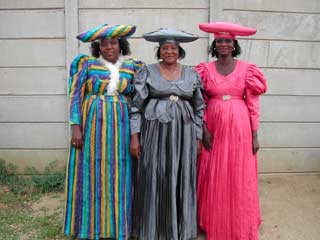
The Herero, Bantu-speaking cattle herders, entered the Kaokoveld in what is now north-west Namibia around 1550 by one account; others say the 15th or the 17th century. By about 1750 they had spread south as far as today's Windhoek.
About 340 years later
c. 1550 to 1884
Chapter II

Story 7 of 16 · German South West Africa
States and rulers
Germany took the coast and then the interior, and settlers took cattle land from the Herero and Nama.

Story 8 of 16 · German South West Africa
War and conflict
Germany's army crushed a Herero revolt, drove survivors into the desert and held captives in camps. Perhaps 80 per cent of the Herero died. Germany recognised it as genocide in 2021.
Chapter III

Story 9 of 16 · South African rule
War and conflict
South African forces took the German colony in the First World War. The League of Nations gave South Africa a mandate over it.

Story 10 of 16 · South African rule
War and conflict
Police shot protesters resisting the forced removal of Windhoek's Old Location. At least eleven people died.

Story 11 of 16 · South African rule
States and rulers
The South West Africa People's Organisation grew from workers' and students' groups to lead the independence struggle.

Story 12 of 16 · South African rule
War and conflict
SWAPO's guerrillas fought South Africa, which was also fighting in Angola. It ended in a UN-led plan.

Story 13 of 16 · South African rule
States and rulers
In an election supervised by the UN, SWAPO won a majority and wrote a constitution.
Chapter IV
Story 14 of 16 · Independent Namibia
States and rulers
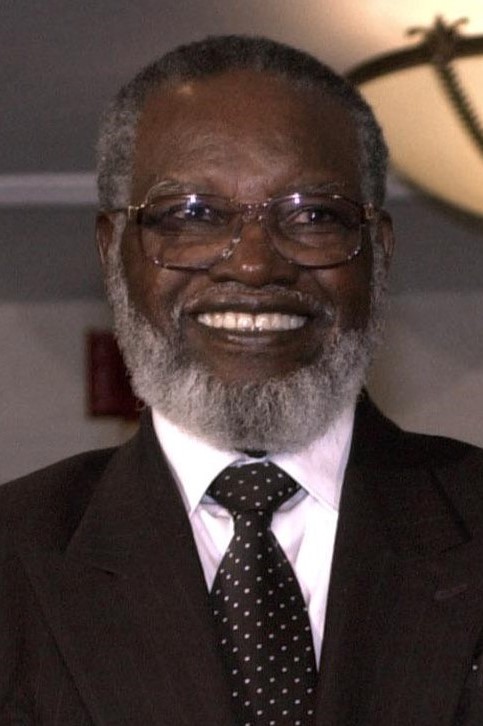
Nujoma became the first president as Namibia became the last African colony to win independence.

Story 15 of 16 · Independent Namibia
States and rulers
The deep-water port was the last piece of Namibia held by South Africa.

Story 16 of 16 · Independent Namibia
States and rulers
A veteran of the liberation struggle won the election and became Namibia's first female president.
Journey complete
16 stories, c. 25,000 BC to 2025. More events are being researched and added.
Culture and faith
Painted stone slabs found in a cave in the Huns mountains are among the oldest known art in Africa.

Culture and faith
Thousands of engravings of animals and footprints cover rocks in the valley of Twyfelfontein, made by hunter-gatherers over many thousands of years.

Culture and faith
The Brandberg, Namibia's highest mountain, holds more than 1,000 rock shelters and over 45,000 rock paintings made by San hunter-gatherers. The best known, the White Lady, is thought to be at least 2,000 years old.

Culture and faith
Around two thousand years ago, Khoekhoe herders began to keep sheep and cattle in southern Africa, living beside the San hunter-gatherers who were already there.
Science, trade and industry
The Portuguese navigator Diogo Cão sailed down the African coast in the 1480s and set up stone pillars as claims. One stands at Cape Cross, the first European mark on Namibia.
Culture and faith
The Herero, Bantu-speaking cattle herders, entered the Kaokoveld in what is now north-west Namibia around 1550 by one account; others say the 15th or the 17th century. By about 1750 they had spread south as far as today's Windhoek.

States and rulers
Germany took the coast and then the interior, and settlers took cattle land from the Herero and Nama.

War and conflict
Germany's army crushed a Herero revolt, drove survivors into the desert and held captives in camps. Perhaps 80 per cent of the Herero died. Germany recognised it as genocide in 2021.
It was the first genocide of the 20th century.

War and conflict
South African forces took the German colony in the First World War. The League of Nations gave South Africa a mandate over it.

War and conflict
Police shot protesters resisting the forced removal of Windhoek's Old Location. At least eleven people died.

States and rulers
The South West Africa People's Organisation grew from workers' and students' groups to lead the independence struggle.
War and conflict
SWAPO's guerrillas fought South Africa, which was also fighting in Angola. It ended in a UN-led plan.

States and rulers
In an election supervised by the UN, SWAPO won a majority and wrote a constitution.
States and rulers
Nujoma became the first president as Namibia became the last African colony to win independence.

States and rulers
The deep-water port was the last piece of Namibia held by South Africa.

States and rulers
A veteran of the liberation struggle won the election and became Namibia's first female president.