Sculpture of the Benin Kingdom

All countries

Nigeria

From the Nok sculptors and the kingdoms of Ife, Benin, Oyo and Bornu, through the slave trade and British rule, to Africa's most populous nation.

Independent from Britain since 1 October 1960

Stories
42
Distance
13,025 years
Route
c. 11,000 BC to present
  1. Early peoples5 stories
  2. Kingdoms and caliphates5 stories
  3. Colonial Nigeria7 stories
  4. Independent Nigeria25 stories
Begin the journey

The Kingdom of Benin, c. 1180. Image: Unknown artist · Public domain, via Wikimedia Commons

  1. Chapter I

    Early peoples

    5 stories in this chapter

  2. The Iwo Eleru skull

    Story 1 of 42 · Early peoples

    People and rights

    The Iwo Eleru skull

    A skull buried in a rock shelter in south-western Nigeria about 13,000 years ago is the oldest human fossil found in West Africa. Its unusually ancient shape suggests old and newer human populations long lived side by side in Africa.

    Next storyc. 6500 BC · The Dufuna canoe
  3. About 4,500 years later

    c. 11,000 BC to c. 6500 BC

  4. The "Dufuna Canoe", which is the oldest boat in Africa (left) and a scene from its excavation (right)

    Story 2 of 42 · Early peoples

    Science, trade and industry

    The Dufuna canoe

    Diggers near Dufuna in north-eastern Nigeria found a dugout canoe more than 8,000 years old, carved from a single tree trunk. It is the oldest boat known in Africa.

    Next storyc. 1500 BC · The Nok culture
  5. About 5,000 years later

    c. 6500 BC to c. 1500 BC

  6. Nok Kultur, Nigeria

    Story 3 of 42 · Early peoples

    Culture and faith

    The Nok culture

    Farmers on the Jos Plateau made striking terracotta figures with elaborate hairstyles and pierced eyes, and were among the first in West Africa to smelt iron.

    Next storyc. 500 BC · The Bantu expansion
  7. About 1,000 years later

    c. 1500 BC to c. 500 BC

  8. Spread of the "Early Iron Age" in Eastern, Central and Southern Africa, a proxy for the Bantu migrations

    Story 4 of 42 · Early peoples

    People and rights

    The Bantu expansion

    Bantu-speaking farmers spread out from an original home around the highlands between Cameroon and Nigeria. By about 500 BC the western stream had reached central Angola and the eastern stream had reached west of Lake Victoria.

    Next story9th century · The Igbo-Ukwu bronzes
  9. About 1,300 years later

    c. 500 BC to 9th century

  10. 9th century bronze staff head in form of a coiled snake found in Igbo-Ukwu, Anambra State, Nigeria

    Story 5 of 42 · Early peoples

    Culture and faith

    The Igbo-Ukwu bronzes

    At Igbo-Ukwu, metalworkers cast bronzes of astonishing detail by the lost-wax method and buried a dignitary with tens of thousands of glass beads, some brought across the Sahara.

    Next storyc. 1180 · The Kingdom of Benin
  11. About 380 years later

    9th century to c. 1180

  12. Chapter II

    Kingdoms and caliphates

    5 stories in this chapter

  13. Sculpture of the Benin Kingdom

    Story 6 of 42 · Kingdoms and caliphates

    States and rulers

    The Kingdom of Benin

    Ruled by the Oba from Benin City, the kingdom built vast earthen walls and a royal guild of brass casters whose plaques recorded court life. It traded with Portugal from the 1480s.

    Next storyc. 1300 · The heads of Ife
  14. British Museum reference Af1939,34.1 Detailed description The Ife Head Location Room 25

    Story 7 of 42 · Kingdoms and caliphates

    Culture and faith

    The heads of Ife

    Artists at Ile-Ife, the sacred city of the Yoruba, made naturalistic portrait heads in copper alloy and terracotta, thought to show kings and court officials.

    Next storyc. 1300 · The Oyo Empire
  15. Palace of Alaafin of Oyo circa mid-1900s

    Story 8 of 42 · Kingdoms and caliphates

    States and rulers

    The Oyo Empire

    From the savanna north of the forest, the Yoruba state of Oyo built a cavalry army and became one of the largest powers in West Africa, before civil war and invasion broke it apart in the 1830s.

    Next storyc. 1380 · The Bornu Empire
  16. A Bornu cavalryman in quilted armour, around 1900

    Story 9 of 42 · Kingdoms and caliphates

    States and rulers

    The Bornu Empire

    Moving west from Kanem, the Sayfawa dynasty rebuilt its state around Lake Chad, with a capital at Ngazargamu. Under Idris Alooma in the 16th century it armed its troops with muskets.

    Next story1804 · The Sokoto Caliphate
  17. About 420 years later

    c. 1380 to 1804

  18. View of Sokoto from its outskirts

    Story 10 of 42 · Kingdoms and caliphates

    States and rulers

    The Sokoto Caliphate

    The scholar Usman dan Fodio led a jihad against the Hausa kings and founded a caliphate that united much of northern Nigeria under a single Islamic state.

    Next story1851 · Britain bombards Lagos
  19. Chapter III

    Colonial Nigeria

    7 stories in this chapter

  20. Engraving of British steamships and warships firing on Lagos, with smoke and flames rising from the shore

    Story 11 of 42 · Colonial Nigeria

    War and conflict

    Britain bombards Lagos

    Britain shelled Lagos, deposed its king and installed a rival who agreed to end the slave trade through the port. Ten years later Britain annexed Lagos as a colony.

    Next story1861 · Britain annexes Lagos
  21. Painting of British warships under fire from the shore at Lagos, with palm trees along the waterfront

    Story 12 of 42 · Colonial Nigeria

    States and rulers

    Britain annexes Lagos

    Britain pressed King Dosunmu into ceding Lagos. It became a Crown colony, the first piece of what grew into British Nigeria.

    Next story1897 · The sack of Benin City
  22. British officers in the burnt Oba's compound in Benin City in 1897, with looted bronzes on the ground

    Story 13 of 42 · Colonial Nigeria

    War and conflict

    The sack of Benin City

    A British force burned Benin City, exiled the Oba and carried off thousands of brass plaques, ivories and sculptures. Most were sold and scattered among museums in Europe and America.

    Next story1900 · The Crown takes over from the Niger Company
  23. Sepia portrait of Frederick Lugard, the first high commissioner of Northern Nigeria, with a moustache and a dark suit

    Story 14 of 42 · Colonial Nigeria

    States and rulers

    The Crown takes over from the Niger Company

    Britain bought out the Royal Niger Company and ended company rule. The north became a protectorate under Frederick Lugard.

    Next story1914 · Northern and Southern Nigeria joined
  24. Frederick Lugard at work in an office in the Kano palace in 1903

    Story 15 of 42 · Colonial Nigeria

    States and rulers

    Northern and Southern Nigeria joined

    Governor Frederick Lugard merged the protectorates of Northern and Southern Nigeria into a single colony, ruling the north through its emirs.

    Next story1929 · The Women's War
  25. Somorika Women of Akoko Edo, Nigeria in the first half of 20th century

    Story 16 of 42 · Colonial Nigeria

    People and rights

    The Women's War

    Thousands of Igbo and Ibibio women protested against taxes and corrupt colonial chiefs, using a traditional practice of 'sitting on' a man to shame him. Colonial troops killed more than 50.

    Next story1956 · Oil is found at Oloibiri
  26. The abandoned first oil well at Oloibiri

    Story 17 of 42 · Colonial Nigeria

    Science, trade and industry

    Oil is found at Oloibiri

    Shell-BP struck oil in commercial quantities at Oloibiri in the Niger Delta. Exports began in 1958.

    Next story1960 · Independence
  27. Chapter IV

    Independent Nigeria

    25 stories in this chapter

  28. Princess Alexandra, Governor-General James Robertson and Abubakar Tafawa Balewa at the independence ceremony in Lagos

    Story 18 of 42 · Independent Nigeria

    States and rulers

    Independence

    Nigeria became independent from Britain, with Abubakar Tafawa Balewa as prime minister. It became a republic three years later.

    Next story1963 · Nigeria becomes a republic
  29. Statue of Nnamdi Azikiwe, Nigeria's first president, standing on a plinth in Owerri

    Story 19 of 42 · Independent Nigeria

    States and rulers

    Nigeria becomes a republic

    Three years after independence Nigeria dropped the British monarch as head of state. Nnamdi Azikiwe became president and Abubakar Tafawa Balewa stayed prime minister.

    Next story1966 · The first military coup
  30. Portrait of Major General Johnson Aguiyi-Ironsi in a peaked cap, captioned as Nigeria's first military head of state

    Story 20 of 42 · Independent Nigeria

    States and rulers

    The first military coup

    Young army officers killed Prime Minister Balewa and other leaders. General Aguiyi-Ironsi took charge, ending civilian rule after five years.

    Next story1966 · A counter-coup puts Gowon in charge
  31. Portrait of General Yakubu Gowon in a red-banded cap and uniform, captioned as military head of state from 1966 to 1975

    Story 21 of 42 · Independent Nigeria

    States and rulers

    A counter-coup puts Gowon in charge

    Northern officers killed Ironsi and made Lieutenant Colonel Yakubu Gowon head of state.

    Next story1967 · Biafra secedes
  32. Statue of Odumegwu Ojukwu in military uniform on a plinth painted in green and white

    Story 22 of 42 · Independent Nigeria

    States and rulers

    Biafra secedes

    Colonel Odumegwu Ojukwu declared the Eastern Region an independent republic. The federal government refused to accept it, and war followed.

    Next story1967 · The Biafran War
  33. Map of the secessionist state of the Republic of Biafra (1967 – 1970) as in May 1967

    Story 23 of 42 · Independent Nigeria

    War and conflict

    The Biafran War

    After coups and massacres of Igbo people in the north, the south-east declared itself the Republic of Biafra. Federal forces blockaded it, and as many as a million or more people died, many from starvation.

    Next story1975 · Gowon is deposed
  34. Black-and-white portrait of Murtala Mohammed in a peaked cap and uniform

    Story 24 of 42 · Independent Nigeria

    States and rulers

    Gowon is deposed

    While Gowon was at a summit in Kampala, officers led by Murtala Mohammed removed him without bloodshed.

    Next story1977 · FESTAC 77
  35. Grand Durbar in Kaduna State in the occasion of Black and African Festival of Arts and Culture, 15

    Story 25 of 42 · Independent Nigeria

    Culture and faith

    FESTAC 77

    For a month, about 17,000 musicians, dancers, writers and artists from more than 50 countries in Africa and the diaspora gathered in Lagos for a festival of Black culture, staged in a new National Theatre.

    Next story1979 · Civilians return under Shagari
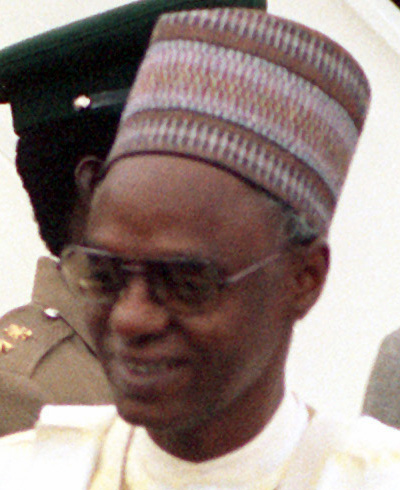
  36. Shehu Shagari in a patterned cap and glasses, photographed in 1980

    Story 26 of 42 · Independent Nigeria

    States and rulers

    Civilians return under Shagari

    Obasanjo handed power to the elected president Shehu Shagari under a new constitution modelled on the American one.

    Next story1983 · Buhari ends the Second Republic
  37. Portrait of Muhammadu Buhari in a patterned cap and glasses, in front of Nigerian flags, taken decades after the 1983 coup

    Story 27 of 42 · Independent Nigeria

    States and rulers

    Buhari ends the Second Republic

    Soldiers led by Major General Muhammadu Buhari overthrew Shagari after disputed elections and an economic collapse.

    Next story1985 · Babangida takes over
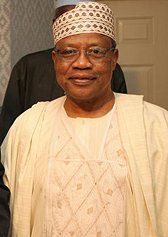
  38. Portrait of Ibrahim Babangida, head of state of Nigeria

    Story 28 of 42 · Independent Nigeria

    States and rulers

    Babangida takes over

    Ibrahim Babangida removed Buhari in a palace coup. He ruled for eight years, promising a transition he kept delaying.

    Next story1986 · Wole Soyinka wins the Nobel Prize
  39. Wole Soyinka at the Comissão de Direitos Humanos e Legislação Participativa (Brasil), 24 Aug

    Story 29 of 42 · Independent Nigeria

    Culture and faith

    Wole Soyinka wins the Nobel Prize

    The playwright and poet Wole Soyinka became the first African to win the Nobel Prize in Literature.

    Next story1991 · Abuja becomes the capital
  40. The National Assembly building in Abuja, Nigeria is the highest seat of law making in the country representing the legislative arm of the government

    Story 30 of 42 · Independent Nigeria

    States and rulers

    Abuja becomes the capital

    The government moved from crowded Lagos to Abuja, a new city planned in the centre of the country on land chosen to belong to no single ethnic group.

    Next story1992 · Nollywood is born
  41. A crew shooting a Nollywood film in Awka

    Story 31 of 42 · Independent Nigeria

    Culture and faith

    Nollywood is born

    Living in Bondage, a thriller shot cheaply on video and sold on cassettes, became a huge hit and launched a booming home-video film industry.

    Next story1993 · The 12 June election is annulled
  42. Results by state of the 1993 Nigerian presidential election

    Story 32 of 42 · Independent Nigeria

    States and rulers

    The 12 June election is annulled

    Moshood Abiola appeared to win a fair vote. Babangida annulled the result, protests followed, and he stepped aside in August for an interim government.

    Next story1993 · Abacha seizes power
  43. Map showing Nigeria's location in Africa

    Story 33 of 42 · Independent Nigeria

    States and rulers

    Abacha seizes power

    Defence minister Sani Abacha pushed out the interim government and ruled as a dictator until his death.

    Next story1995 · The Ogoni Nine are hanged
  44. A steel sculpture of a bus in London, a memorial to Ken Saro-Wiwa

    Story 34 of 42 · Independent Nigeria

    People and rights

    The Ogoni Nine are hanged

    The military government of Sani Abacha hanged the writer Ken Saro-Wiwa and eight other Ogoni activists who had campaigned against oil pollution in the Niger Delta, after a trial widely condemned as unfair.

    Next story1998 · Abacha dies and the road to civilian rule opens
  45. Abdulsalami Abubakar, in white, and his wife stepping off an aircraft at Andrews Air Force Base in September 1998

    Story 35 of 42 · Independent Nigeria

    States and rulers

    Abacha dies and the road to civilian rule opens

    Abacha died suddenly. General Abdulsalami Abubakar took over, freed political prisoners and set a short timetable for elections.

    Next story1999 · Return to civilian rule
  46. President Olusegun Obasanjo in 2001

    Story 36 of 42 · Independent Nigeria

    States and rulers

    Return to civilian rule

    After 16 years of military rule, Olusegun Obasanjo was sworn in as an elected president.

    Next story2007 · One elected civilian follows another
  47. Umaru Musa Yar'Adua at the World Economic Forum in 2008

    Story 37 of 42 · Independent Nigeria

    States and rulers

    One elected civilian follows another

    Umaru Musa Yar'Adua succeeded Olusegun Obasanjo after an election that observers called seriously flawed.

    Next story2009 · The Boko Haram insurgency
  48. A truck displaying the #BringBackOurGirls campaign in 2014

    Story 38 of 42 · Independent Nigeria

    War and conflict

    The Boko Haram insurgency

    The jihadist group Boko Haram took up arms in the north-east. Its attacks, including the kidnapping of 276 schoolgirls from Chibok in 2014, have killed tens of thousands and displaced millions.

    Next story2010 · Yar'Adua dies and Jonathan takes over
  49. Goodluck Jonathan at the World Economic Forum in 2013

    Story 39 of 42 · Independent Nigeria

    States and rulers

    Yar'Adua dies and Jonathan takes over

    After months of illness Yar'Adua died. His deputy, Goodluck Jonathan, was sworn in and won a term of his own in 2011.

    Next story2015 · An incumbent loses
  50. An incumbent loses

    Story 40 of 42 · Independent Nigeria

    States and rulers

    An incumbent loses

    Muhammadu Buhari defeated President Goodluck Jonathan, who conceded defeat peacefully.

    Next story2020 · The #EndSARS protests
  51. Protesters at the endSARS protest in Lagos, Nigeria

    Story 41 of 42 · Independent Nigeria

    People and rights

    The #EndSARS protests

    Young Nigerians marched against police brutality by the Special Anti-Robbery Squad. On 20 October soldiers opened fire on protesters at the Lekki toll gate in Lagos.

    Next story2023 · Tinubu succeeds Buhari
  52. Official portrait of Bola Tinubu smiling, in a blue embroidered robe and cap

    Story 42 of 42 · Independent Nigeria

    States and rulers

    Tinubu succeeds Buhari

    Bola Tinubu took office after a close election that was challenged in court. Buhari stepped down after two terms.

    NextJourney's end

Journey complete

You travelled 13,025 years

42 stories, c. 11,000 BC to present. More events are being researched and added.

Choose another countryBack to the start