

People and rights
Jericho's tower
Early farmers at Jericho built a stone tower 8.5 metres high and a wall around their settlement.
- Where
- Jericho
Why it matters
Jericho is among the oldest continuously inhabited towns in the world.

The West Bank, East Jerusalem and Gaza: Jericho and Bethlehem, empires and crusaders, Ottoman and British rule, the Nakba, occupation and the struggle for a state.
Declared a state in 1988; recognised by most UN members, under Israeli occupation since 1967
The Dome of the Rock, 691. Image: Godot13 · CC BY-SA 4.0, via Wikimedia Commons
Chapter I

Story 1 of 47 · Early peoples
People and rights
Early farmers at Jericho built a stone tower 8.5 metres high and a wall around their settlement.
About 3,600 years later
c. 8000 BC to c. 4400 BC

Story 2 of 47 · Early peoples
Culture and faith
The Ghassulian culture of the Chalcolithic Levant is named after Teleilat Ghassul in the Jordan Valley. Its farming villages smelted copper, and some of their houses were covered in many-coloured wall paintings, such as the Ghassulian Star.
About 900 years later
c. 4400 BC to c. 3500 BC

Story 3 of 47 · Early peoples
States and rulers
Canaan was the name of the land between the Jordan and the Mediterranean in the Bronze Age, with walled city-states, trade and its own alphabet-writing culture, before and during the time of Egypt's empire.
About 1,500 years later
c. 3500 BC to c. 2000 BC
Chapter II

Story 4 of 47 · Canaan, Israel and Judah
States and rulers
Just south of Gaza, at the mouth of Wadi Gaza, a fortified Bronze Age city grew up at Tell el-Ajjul from about 2000 BC. Its excavators found three gold hoards, and some scholars identify it with Sharuhen, the last Hyksos stronghold.
About 650 years later
c. 2000 BC to c. 1350 BC

Story 5 of 47 · Canaan, Israel and Judah
States and rulers
A cache of clay tablets in Akhetaten, Egypt's capital, holds letters from the rulers of Canaanite city-states and other kings to the pharaoh. They show a land of small rival cities under Egyptian control.
About 180 years later
c. 1350 BC to c. 1175 BC

Story 6 of 47 · Canaan, Israel and Judah
States and rulers
After the collapse of the Late Bronze Age, the Philistines settled the southern coast of Canaan, in cities such as Gaza, Ashkelon and Ashdod, and became rivals of the Israelites.
About 230 years later
c. 1175 BC to c. 950 BC

Story 7 of 47 · Canaan, Israel and Judah
Culture and faith
According to the Hebrew Bible, King Solomon built a temple in Jerusalem to house the Ark of the Covenant. Little archaeological evidence of it survives.
About 230 years later
c. 950 BC to c. 722 BC

Story 8 of 47 · Canaan, Israel and Judah
States and rulers
The Assyrian army took Samaria, capital of the kingdom of Israel, and deported many of its people. The southern kingdom of Judah survived.
Chapter III

Story 9 of 47 · Empires and revolts
War and conflict
Nebuchadnezzar II's Babylonian army captured Jerusalem, destroyed the Temple and deported much of Judah's population to Babylon.

Story 10 of 47 · Empires and revolts
States and rulers
Cyrus the Great took Babylon. Exiles from Judah were allowed to go home to Jerusalem and rebuild their temple under Persian rule.
About 400 years later
539 BC to 140 BC

Story 11 of 47 · Empires and revolts
States and rulers
After the Maccabean revolt, Simon Maccabeus was confirmed as high priest and ruler. The state he founded was independent until Rome arrived.

Story 12 of 47 · Empires and revolts
States and rulers
Pompey stormed the Temple Mount after a siege of three months. Judea became a Roman dependency and later a province.

Story 13 of 47 · Empires and revolts
Culture and faith
Jesus of Nazareth, a Jewish preacher from Galilee, was crucified by the Roman governor Pontius Pilate in Jerusalem. His followers proclaimed that he had risen from the dead.

Story 14 of 47 · Empires and revolts
War and conflict
Roman legions under Titus crushed a Jewish revolt, captured Jerusalem and destroyed the Second Temple.

Story 15 of 47 · Empires and revolts
War and conflict
Simon bar Kokhba led a last great Jewish revolt against Rome. Hadrian crushed it, banned Jews from Jerusalem and renamed the province Syria Palaestina.
About 210 years later
132 to c. 339

Story 16 of 47 · Empires and revolts
Culture and faith
Emperor Constantine had a church built over the cave in Bethlehem where Christian tradition places the birth of Jesus.
About 300 years later
c. 339 to 637
Chapter IV

Story 17 of 47 · Caliphs, crusaders and sultans
War and conflict
After a siege, Jerusalem's patriarch Sophronius surrendered the city to the Caliph Umar, who guaranteed the safety of its Christians.

Story 18 of 47 · Caliphs, crusaders and sultans
Culture and faith
The Umayyad caliph Abd al-Malik built a golden-domed shrine over the rock on the Temple Mount, where Muslims believe Muhammad ascended to heaven.
About 410 years later
691 to 1099

Story 19 of 47 · Caliphs, crusaders and sultans
War and conflict
Knights of the First Crusade stormed Jerusalem and massacred many of its Muslim and Jewish inhabitants.

Story 20 of 47 · Caliphs, crusaders and sultans
States and rulers
After taking the city, the crusaders chose Godfrey of Bouillon as ruler. His brother Baldwin took the title of king the next year.
About 160 years later
1099 to 1260

Story 21 of 47 · Caliphs, crusaders and sultans
States and rulers
In Galilee the Mamluks of Egypt stopped the Mongol advance. They then ruled Palestine and Syria for more than 250 years.
About 260 years later
1260 to 1516

Story 22 of 47 · Caliphs, crusaders and sultans
States and rulers
Sultan Selim I defeated the Mamluks at Marj Dabiq and took Syria and Palestine. Ottoman rule lasted 400 years.

Story 23 of 47 · Caliphs, crusaders and sultans
Culture and faith
The Ottoman sultan Suleiman the Magnificent rebuilt the walls and gates around Jerusalem's Old City.
About 380 years later
1535 to 1917
Chapter V

Story 24 of 47 · British Mandate
States and rulers
Britain's foreign secretary promised support for 'a national home for the Jewish people' in Palestine, as long as the rights of other communities were respected.

Story 25 of 47 · British Mandate
War and conflict
British forces under General Allenby captured Jerusalem from the Ottomans, weeks after Britain's Balfour Declaration promised support for a Jewish national home in Palestine.

Story 26 of 47 · British Mandate
States and rulers
The League of Nations confirmed British rule over Palestine, with the Balfour pledge written into its terms.

Story 27 of 47 · British Mandate
War and conflict
Palestinian Arabs rose against British rule and Jewish immigration with a general strike and armed revolt. Britain crushed it, killing thousands.

Story 28 of 47 · British Mandate
Culture and faith
Bedouin shepherds found ancient scrolls in caves at Qumran. They include the oldest known manuscripts of the Hebrew Bible, about 2,000 years old.

Story 29 of 47 · British Mandate
People and rights
About 700,000 Palestinian Arabs, more than half the Arab population of Palestine, fled or were expelled from their homes during the war of 1947 to 1949. Hundreds of villages were destroyed and they were not allowed to return.

Story 30 of 47 · British Mandate
States and rulers
The General Assembly voted 33 to 13 to divide the land into a Jewish state and an Arab state, with Jerusalem under international rule. Jewish leaders accepted. Arab leaders rejected it, and fighting began the next day.
Chapter VI

Story 31 of 47 · Nakba and occupation
War and conflict
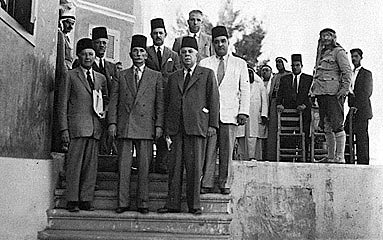
Israel fought the armies of Egypt, Jordan, Syria and Iraq. When it ended, Israel held more land than the UN partition plan had proposed; Jordan held the West Bank and East Jerusalem, and Egypt the Gaza Strip.
Story 32 of 47 · Nakba and occupation
States and rulers
The Arab League set up a government under Egyptian protection in Gaza. It governed little and faded away.

Story 33 of 47 · Nakba and occupation
States and rulers
Jordan took the West Bank, including East Jerusalem, and gave its residents citizenship. Few countries recognised the annexation.

Story 34 of 47 · Nakba and occupation
States and rulers
The Arab League created the Palestine Liberation Organization at a congress in East Jerusalem. Yasser Arafat's Fatah took it over in 1969.

Story 35 of 47 · Nakba and occupation
War and conflict
Israel struck Egypt's air force and in six days took Sinai and Gaza from Egypt, the West Bank and East Jerusalem from Jordan, and the Golan Heights from Syria.

Story 36 of 47 · Nakba and occupation
War and conflict
Palestinians in the occupied territories rose up against Israeli rule with strikes, boycotts and stone-throwing, met by Israeli force. Hamas was founded at the start of it.

Story 37 of 47 · Nakba and occupation
States and rulers
The Palestinian National Council, meeting in Algiers, proclaimed an independent state with Jerusalem as its capital. Dozens of countries recognised it within weeks.

Story 38 of 47 · Nakba and occupation
States and rulers
Under the Oslo Accords, signed after secret talks in Norway, Israel withdrew from Gaza City and Jericho and handed them to a new Palestinian Authority. Arafat returned to Gaza in July.

Story 39 of 47 · Nakba and occupation
War and conflict
After peace talks failed, a second uprising brought suicide bombings in Israeli cities and Israeli military incursions into the West Bank and Gaza. About 3,000 Palestinians and 1,000 Israelis were killed.
Story 40 of 47 · Nakba and occupation
States and rulers
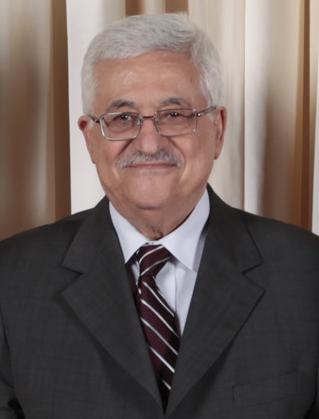
The PLO chairman, who had led Palestinians since 1969, died in a French hospital. Mahmoud Abbas succeeded him.
Story 41 of 47 · Nakba and occupation
States and rulers
Mahmoud Abbas won around 62 percent of the vote.

Story 42 of 47 · Nakba and occupation
States and rulers
Israel removed its settlers and soldiers from the Gaza Strip but kept control of its borders, sea and air.

Story 43 of 47 · Nakba and occupation
States and rulers
Hamas won a majority of the legislature, to the surprise of many. Western donors cut aid, and relations with Fatah turned violent.

Story 44 of 47 · Nakba and occupation
War and conflict
After winning elections in 2006, Hamas fought its rival Fatah and seized control of the Gaza Strip.

Story 45 of 47 · Nakba and occupation
States and rulers
The General Assembly voted 138 to 9 to raise Palestine's status to 'non-member observer state'.

Story 46 of 47 · Nakba and occupation
War and conflict
Israel's military campaign in Gaza killed tens of thousands of Palestinians, displaced most of the population and destroyed much of the territory, with famine declared in parts of it. A ceasefire took effect in October 2025.

Story 47 of 47 · Nakba and occupation
War and conflict
A US-backed ceasefire took effect, and Hamas freed the last 20 living hostages. Israeli strikes and the displacement of Gazans went on, and the later stages of the plan stalled.
Journey complete
47 stories, c. 8000 BC to 2025. More events are being researched and added.
People and rights
Early farmers at Jericho built a stone tower 8.5 metres high and a wall around their settlement.
Jericho is among the oldest continuously inhabited towns in the world.

Culture and faith
The Ghassulian culture of the Chalcolithic Levant is named after Teleilat Ghassul in the Jordan Valley. Its farming villages smelted copper, and some of their houses were covered in many-coloured wall paintings, such as the Ghassulian Star.

States and rulers
Canaan was the name of the land between the Jordan and the Mediterranean in the Bronze Age, with walled city-states, trade and its own alphabet-writing culture, before and during the time of Egypt's empire.

States and rulers
Just south of Gaza, at the mouth of Wadi Gaza, a fortified Bronze Age city grew up at Tell el-Ajjul from about 2000 BC. Its excavators found three gold hoards, and some scholars identify it with Sharuhen, the last Hyksos stronghold.
States and rulers
A cache of clay tablets in Akhetaten, Egypt's capital, holds letters from the rulers of Canaanite city-states and other kings to the pharaoh. They show a land of small rival cities under Egyptian control.

States and rulers
After the collapse of the Late Bronze Age, the Philistines settled the southern coast of Canaan, in cities such as Gaza, Ashkelon and Ashdod, and became rivals of the Israelites.

Culture and faith
According to the Hebrew Bible, King Solomon built a temple in Jerusalem to house the Ark of the Covenant. Little archaeological evidence of it survives.
The Temple Mount remains the holiest site in Judaism.

States and rulers
The Assyrian army took Samaria, capital of the kingdom of Israel, and deported many of its people. The southern kingdom of Judah survived.

War and conflict
Nebuchadnezzar II's Babylonian army captured Jerusalem, destroyed the Temple and deported much of Judah's population to Babylon.
The exile shaped Jewish scripture and identity; Cyrus of Persia let the exiles return.

States and rulers
Cyrus the Great took Babylon. Exiles from Judah were allowed to go home to Jerusalem and rebuild their temple under Persian rule.
People: Hormuzd Rassam
States and rulers
After the Maccabean revolt, Simon Maccabeus was confirmed as high priest and ruler. The state he founded was independent until Rome arrived.

States and rulers
Pompey stormed the Temple Mount after a siege of three months. Judea became a Roman dependency and later a province.

Culture and faith
Jesus of Nazareth, a Jewish preacher from Galilee, was crucified by the Roman governor Pontius Pilate in Jerusalem. His followers proclaimed that he had risen from the dead.
Christianity, which grew from his followers, is the world's largest religion.
War and conflict
Roman legions under Titus crushed a Jewish revolt, captured Jerusalem and destroyed the Second Temple.
Judaism was reshaped around the synagogue and the rabbis; the Western Wall remains.

War and conflict
Simon bar Kokhba led a last great Jewish revolt against Rome. Hadrian crushed it, banned Jews from Jerusalem and renamed the province Syria Palaestina.
The name Palestine for the land dates from this time.

Culture and faith
Emperor Constantine had a church built over the cave in Bethlehem where Christian tradition places the birth of Jesus.
It is one of the oldest churches in continuous use.

War and conflict
After a siege, Jerusalem's patriarch Sophronius surrendered the city to the Caliph Umar, who guaranteed the safety of its Christians.
Jerusalem became a holy city of Islam, and Arabic gradually the language of the land.

Culture and faith
The Umayyad caliph Abd al-Malik built a golden-domed shrine over the rock on the Temple Mount, where Muslims believe Muhammad ascended to heaven.
It is the oldest surviving great work of Islamic architecture.

War and conflict
Knights of the First Crusade stormed Jerusalem and massacred many of its Muslim and Jewish inhabitants.
They founded the Kingdom of Jerusalem, which lasted in some form for nearly two centuries.

States and rulers
After taking the city, the crusaders chose Godfrey of Bouillon as ruler. His brother Baldwin took the title of king the next year.

States and rulers
In Galilee the Mamluks of Egypt stopped the Mongol advance. They then ruled Palestine and Syria for more than 250 years.

States and rulers
Sultan Selim I defeated the Mamluks at Marj Dabiq and took Syria and Palestine. Ottoman rule lasted 400 years.

Culture and faith
The Ottoman sultan Suleiman the Magnificent rebuilt the walls and gates around Jerusalem's Old City.
They still enclose the Old City today.

States and rulers
Britain's foreign secretary promised support for 'a national home for the Jewish people' in Palestine, as long as the rights of other communities were respected.
Zionists see it as a founding document. Palestinians see it as the root of their loss.

War and conflict
British forces under General Allenby captured Jerusalem from the Ottomans, weeks after Britain's Balfour Declaration promised support for a Jewish national home in Palestine.
Britain ruled Palestine under a League of Nations mandate until 1948.
States and rulers
The League of Nations confirmed British rule over Palestine, with the Balfour pledge written into its terms.

War and conflict
Palestinian Arabs rose against British rule and Jewish immigration with a general strike and armed revolt. Britain crushed it, killing thousands.
Britain then limited Jewish immigration, just as Jews were fleeing Nazi Europe.

Culture and faith
Bedouin shepherds found ancient scrolls in caves at Qumran. They include the oldest known manuscripts of the Hebrew Bible, about 2,000 years old.
They transformed the study of the Bible and of early Judaism.

People and rights
About 700,000 Palestinian Arabs, more than half the Arab population of Palestine, fled or were expelled from their homes during the war of 1947 to 1949. Hundreds of villages were destroyed and they were not allowed to return.
Palestinians call it the Nakba, the catastrophe; millions of refugees and their descendants remain.
States and rulers
The General Assembly voted 33 to 13 to divide the land into a Jewish state and an Arab state, with Jerusalem under international rule. Jewish leaders accepted. Arab leaders rejected it, and fighting began the next day.

War and conflict
Israel fought the armies of Egypt, Jordan, Syria and Iraq. When it ended, Israel held more land than the UN partition plan had proposed; Jordan held the West Bank and East Jerusalem, and Egypt the Gaza Strip.
The armistice lines, the Green Line, are still the reference for a future border.
States and rulers
The Arab League set up a government under Egyptian protection in Gaza. It governed little and faded away.
States and rulers
Jordan took the West Bank, including East Jerusalem, and gave its residents citizenship. Few countries recognised the annexation.

States and rulers
The Arab League created the Palestine Liberation Organization at a congress in East Jerusalem. Yasser Arafat's Fatah took it over in 1969.
It became the internationally recognised representative of the Palestinian people.

War and conflict
Israel struck Egypt's air force and in six days took Sinai and Gaza from Egypt, the West Bank and East Jerusalem from Jordan, and the Golan Heights from Syria.
Israel's occupation of the West Bank and Gaza began; it is still at the heart of the conflict.

War and conflict
Palestinians in the occupied territories rose up against Israeli rule with strikes, boycotts and stone-throwing, met by Israeli force. Hamas was founded at the start of it.
It led to the Oslo peace talks.

States and rulers
The Palestinian National Council, meeting in Algiers, proclaimed an independent state with Jerusalem as its capital. Dozens of countries recognised it within weeks.

States and rulers
Under the Oslo Accords, signed after secret talks in Norway, Israel withdrew from Gaza City and Jericho and handed them to a new Palestinian Authority. Arafat returned to Gaza in July.
It was meant to lead to a Palestinian state within five years; it did not.

War and conflict
After peace talks failed, a second uprising brought suicide bombings in Israeli cities and Israeli military incursions into the West Bank and Gaza. About 3,000 Palestinians and 1,000 Israelis were killed.
Israel began building a separation barrier through the West Bank.
States and rulers
The PLO chairman, who had led Palestinians since 1969, died in a French hospital. Mahmoud Abbas succeeded him.
States and rulers
Mahmoud Abbas won around 62 percent of the vote.

States and rulers
Israel removed its settlers and soldiers from the Gaza Strip but kept control of its borders, sea and air.
Hamas took over Gaza in 2007, and Israel and Egypt tightened a blockade.

States and rulers
Hamas won a majority of the legislature, to the surprise of many. Western donors cut aid, and relations with Fatah turned violent.

War and conflict
After winning elections in 2006, Hamas fought its rival Fatah and seized control of the Gaza Strip.
Palestinians have been divided between Hamas in Gaza and the Palestinian Authority in the West Bank ever since.

States and rulers
The General Assembly voted 138 to 9 to raise Palestine's status to 'non-member observer state'.

War and conflict
Israel's military campaign in Gaza killed tens of thousands of Palestinians, displaced most of the population and destroyed much of the territory, with famine declared in parts of it. A ceasefire took effect in October 2025.
It caused one of the gravest humanitarian crises of the century.

War and conflict
A US-backed ceasefire took effect, and Hamas freed the last 20 living hostages. Israeli strikes and the displacement of Gazans went on, and the later stages of the plan stalled.