

Science, trade and industry
The land bridge forms
The rise of the isthmus joined North and South America. Animals and plants moved both ways in the Great American Interchange.
- Where
- Isthmus of Panama
People: Alfred Russel Wallace

An isthmus that joined two continents, Balboa and the Pacific, the Spanish treasure road, the canal, Noriega and the US invasion, and the canal under Panamanian control.
Independent from Colombia since 3 November 1903
El Caño, c. 200 BC. Image: Melissa Wong Zhang · CC BY-SA 2.0, via Wikimedia Commons
Chapter I

Story 1 of 19 · First peoples and Spanish Panama
Science, trade and industry
The rise of the isthmus joined North and South America. Animals and plants moved both ways in the Great American Interchange.
About 2,997,500 years later
c. 3,000,000 BC to c. 2500 BC
About 2,300 years later
c. 2500 BC to c. 200 BC

Story 3 of 19 · First peoples and Spanish Panama
Culture and faith
El Caño in Coclé was lived in from about 100 to 400 BC until the Spanish came. Its carved stone columns, mounds and a burial ground of high-status people with gold objects belong to the Gran Coclé culture.
About 650 years later
c. 200 BC to c. 450

Story 4 of 19 · First peoples and Spanish Panama
Culture and faith
Sitio Conte, in central Panama, is a cemetery of the Coclé culture. Its chiefs' graves held gold, pottery and jewels, which show a wealthy society before Europeans came.
About 1,100 years later
c. 450 to 1502

Story 5 of 19 · First peoples and Spanish Panama
States and rulers
Columbus reached the Bay Islands and the mainland on his fourth voyage and held a Mass on the mainland coast.

Story 6 of 19 · First peoples and Spanish Panama
States and rulers
The Spanish explorer crossed the isthmus with Indigenous guides and saw the Pacific Ocean from a mountain.

Story 7 of 19 · First peoples and Spanish Panama
States and rulers
The Spanish founded a city on the Pacific coast, the start of the route that carried Peruvian silver across the isthmus.
About 150 years later
1519 to 1671

Story 8 of 19 · First peoples and Spanish Panama
War and conflict
The pirate Henry Morgan crossed the isthmus and burned the city. It was rebuilt at a new site.

Story 9 of 19 · First peoples and Spanish Panama
States and rulers
Spain made Bogotá the capital of a viceroyalty that included Colombia, Panama, Venezuela and Ecuador.

Story 10 of 19 · First peoples and Spanish Panama
States and rulers
Bolívar's republic joined Colombia, Venezuela and Ecuador. It fell apart by 1831.
Chapter II

Story 11 of 19 · Part of Colombia
States and rulers
Panama broke from Spain and joined Gran Colombia.
Chapter III

Story 12 of 19 · Independent Panama
States and rulers
With US naval support, Panama declared itself independent, and gave the US the right to build a canal.

Story 13 of 19 · Independent Panama
Science, trade and industry
American engineers built the canal across the isthmus. Tens of thousands of workers died of disease and accidents.

Story 14 of 19 · Independent Panama
War and conflict
Riots broke out over the flying of the Panamanian flag in the Canal Zone. About 20 Panamanians were killed.

Story 15 of 19 · Independent Panama
States and rulers
The US agreed to hand the canal to Panama at the end of 1999.
Story 16 of 19 · Independent Panama
States and rulers
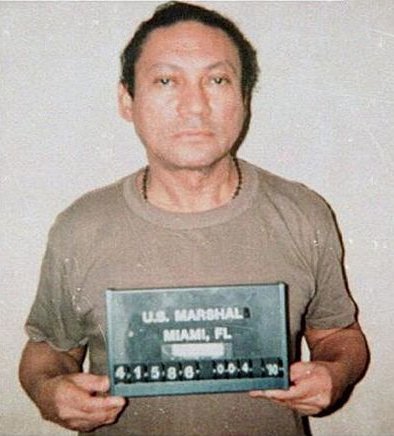
General Noriega took control of the Panamanian Defence Forces and ruled as a dictator.

Story 17 of 19 · Independent Panama
States and rulers
American forces invaded and arrested Noriega on drug charges.

Story 18 of 19 · Independent Panama
People and rights
A leak of millions of documents from a Panamanian law firm revealed how the rich hide wealth offshore.

Story 19 of 19 · Independent Panama
Science, trade and industry
A third set of locks opened and allowed much larger ships to cross.
Journey complete
19 stories, c. 3,000,000 BC to 2016. More events are being researched and added.
Science, trade and industry
The rise of the isthmus joined North and South America. Animals and plants moved both ways in the Great American Interchange.
People: Alfred Russel Wallace
Culture and faith
At Monagrillo on Parita Bay, people lived from about 2500 to 1200 BC. The site has the earliest known pottery in Central America and some of the region's earliest evidence of maize.

Culture and faith
El Caño in Coclé was lived in from about 100 to 400 BC until the Spanish came. Its carved stone columns, mounds and a burial ground of high-status people with gold objects belong to the Gran Coclé culture.

Culture and faith
Sitio Conte, in central Panama, is a cemetery of the Coclé culture. Its chiefs' graves held gold, pottery and jewels, which show a wealthy society before Europeans came.

States and rulers
Columbus reached the Bay Islands and the mainland on his fourth voyage and held a Mass on the mainland coast.

States and rulers
The Spanish explorer crossed the isthmus with Indigenous guides and saw the Pacific Ocean from a mountain.

States and rulers
The Spanish founded a city on the Pacific coast, the start of the route that carried Peruvian silver across the isthmus.

War and conflict
The pirate Henry Morgan crossed the isthmus and burned the city. It was rebuilt at a new site.

States and rulers
Spain made Bogotá the capital of a viceroyalty that included Colombia, Panama, Venezuela and Ecuador.

States and rulers
Bolívar's republic joined Colombia, Venezuela and Ecuador. It fell apart by 1831.

States and rulers
Panama broke from Spain and joined Gran Colombia.

States and rulers
With US naval support, Panama declared itself independent, and gave the US the right to build a canal.

Science, trade and industry
American engineers built the canal across the isthmus. Tens of thousands of workers died of disease and accidents.

War and conflict
Riots broke out over the flying of the Panamanian flag in the Canal Zone. About 20 Panamanians were killed.

States and rulers
The US agreed to hand the canal to Panama at the end of 1999.
States and rulers
General Noriega took control of the Panamanian Defence Forces and ruled as a dictator.

States and rulers
American forces invaded and arrested Noriega on drug charges.

People and rights
A leak of millions of documents from a Panamanian law firm revealed how the rich hide wealth offshore.
People: OjoPúblico, CONNECTAS, Efecto Cocuyo, Premium Times, International Consortium of Investigative Journalists, Fusion, CommonWealth Magazine, Trinidad Express Newspapers, Organized Crime and Corruption Reporting Project, Journalism and Media Studies Centre, University of Hong Kong, El Confidencial, Ciper, Aristegui, The Charlotte Observer, El Faro, Center for Investigative Reporting, Búsqueda, Malaysiakini, Al Nahar, Tempo, Delo, TVI 24, Proceso, Knack, SonntagsZeitung, Mondiaal Nieuws, ABC Color, The Indian Express, The Australian Financial Review, La Prensa, Kyiv Post, Trouw, Universo Online, Daily Nation, Miami Herald, The McClatchy Company, O Estado de S. Paulo, La Nación, Tunis Afrique Presse, Falter, Expresso, Panorama, De Tijd, La Sexta, DR, The Irish Times, RedeTV!, Toronto Star, El Trece, El Universo, El Comercio, Mmegi, Australian Broadcasting Corporation, Kyodo News, Gazeta Wyborcza, Univision, Le Soir, Het Financieele Dagblad, The Namibian, Canadian Broadcasting Corporation, Aftenposten, Daily Monitor, Politiken, L'Espresso, Österreichischer Rundfunk, 24 Chasa, Haaretz, Sveriges Television, Westdeutscher Rundfunk, Norddeutscher Rundfunk, 15min, Novaya Gazeta, Süddeutsche Zeitung, Yle, Al-Alam News Network, Le Monde, The Guardian

Science, trade and industry
A third set of locks opened and allowed much larger ships to cross.