Kraków, Collegium Maius Uniwersytetu Jagiellońskiego

All countries

Poland

The Piast dukes and Mieszko I, the Polish–Lithuanian Commonwealth, three partitions, independence in 1918, the Second World War, Solidarity and the EU.

Independent since 1918; a democracy since 1989

Stories
31
Distance
3,303 years
Route
c. 1300 BC to 2004
  1. Piasts9 stories
  2. The Commonwealth5 stories
  3. Partitions2 stories
  4. The Second Republic and the war8 stories
  5. People's Poland2 stories
  6. The Third Republic4 stories
Begin the journey

The Jagiellonian University, 1364. Image: Robert Rachwał · CC BY 3.0, via Wikimedia Commons

  1. The Lusatian culture (green area) by Z

    Story 1 of 31

    Culture and faith

    The Lusatian culture

    From about 1300 to 500 BC the Lusatian culture of the late Bronze and early Iron Age spread over most of today's Poland and into Czechia, Slovakia, eastern Germany and western Ukraine.

    Next storyc. 740 BC · Biskupin
  2. About 560 years later

    c. 1300 BC to c. 740 BC

  3. Chapter I

    Piasts

    9 stories in this chapter

  4. Bronze gate and wall in Biskupin - reconstructed Lusatian culture settlement from Bronze Age

    Story 2 of 31 · Piasts

    Culture and faith

    Biskupin

    A fortified settlement of the Lusatian culture was built on an island in a lake.

    Next story3rd century BC · The Przeworsk culture
  5. About 440 years later

    c. 740 BC to 3rd century BC

  6. The Przeworsk culture

    Story 3 of 31 · Piasts

    Culture and faith

    The Przeworsk culture

    From the 3rd century BC to the 5th century AD, the Iron Age Przeworsk culture covered central and southern Poland and later spread beyond the Carpathians. It is often linked with the Vandals, and classical writers knew the peoples here as the Lugii.

    Next story1st century · The Wielbark culture
  7. About 300 years later

    3rd century BC to 1st century

  8. Story 4 of 31 · Piasts

    Culture and faith

    The Wielbark culture

    From the 1st to the 5th century the Wielbark culture of northern Poland took part in the Amber Road trade with the south. It is linked with the Rugii and the Gutones, possible ancestors of the Goths.

    Next story9th century · The Bavarian Geographer
  9. About 800 years later

    1st century to 9th century

  10. Story 5 of 31 · Piasts

    States and rulers

    The Bavarian Geographer

    A short 9th-century Latin text, kept at Reichenau Abbey, lists 58 tribes east of the Elbe and north of the Danube, most of them Slavic. It is one of the earliest written sources for the peoples of today's Poland and its neighbours.

    Next story966 · The baptism of Poland
  11. About 170 years later

    9th century to 966

  12. The baptism of Poland

    Story 6 of 31 · Piasts

    States and rulers

    The baptism of Poland

    Mieszko I accepted Christianity, which brought Poland into the Latin Christian world.

    Next story1025 · The first king
  13. The first king

    Story 7 of 31 · Piasts

    States and rulers

    The first king

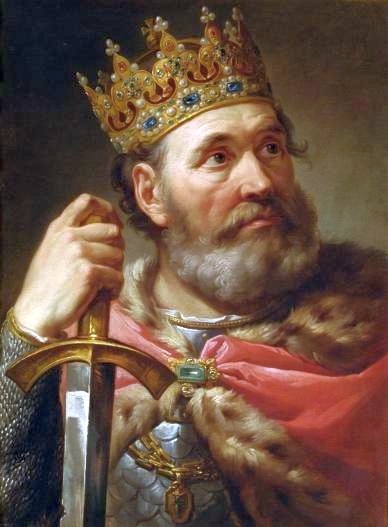
    Bolesław the Brave was crowned the first king of Poland.

    Next story1236 · The Grand Duchy of Lithuania
  14. About 210 years later

    1025 to 1236

  15. Martynas Mažvydas' book CATECHISMVSA PRAsty Szadei (in Lithuanian language ), published in Königsberg, 1547

    Story 8 of 31 · Piasts

    States and rulers

    The Grand Duchy of Lithuania

    Belarusian lands made up most of the Grand Duchy, where Ruthenian was the official language.

    Next story1241 · The battle of Legnica
  16. Bitwa pod Legnicą na miedziorycie Matthäusa Meriana Starszego z 1630 roku pod tytułem „Wielka klęska chrześcijan pobitych przez Tatarów”

    Story 9 of 31 · Piasts

    War and conflict

    The battle of Legnica

    A Polish and German army was beaten by Mongols near Legnica.

    Next story1364 · The Jagiellonian University
  17. Kraków, Collegium Maius Uniwersytetu Jagiellońskiego

    Story 10 of 31 · Piasts

    Culture and faith

    The Jagiellonian University

    Casimir the Great founded the second oldest university in central Europe, in Kraków.

    Next story1385 · The Union of Krewo
  18. Chapter II

    The Commonwealth

    5 stories in this chapter

  19. The Union of Krewo

    Story 11 of 31 · The Commonwealth

    States and rulers

    The Union of Krewo

    Grand Duke Jogaila agreed to marry the queen of Poland, convert to Christianity and unite the two countries.

    Next story1410 · The battle of Grunwald
  20. Fragment of Battle of Grunwald, Vytautas the Great

    Story 12 of 31 · The Commonwealth

    War and conflict

    The battle of Grunwald

    Polish and Lithuanian armies crushed the Teutonic Knights.

    Next story1569 · The Union of Lublin
  21. About 160 years later

    1410 to 1569

  22. The Union of Lublin

    Story 13 of 31 · The Commonwealth

    States and rulers

    The Union of Lublin

    Poland and Lithuania merged in a Commonwealth. Belarus lost its political independence.

    Next story1772 · The partitions
  23. About 200 years later

    1569 to 1772

  24. The partitions

    Story 14 of 31 · The Commonwealth

    States and rulers

    The partitions

    Russia, Prussia and Austria divided Poland-Lithuania in three partitions. The last gave Russia most of the Lithuanian lands.

    Next story1791 · The Constitution of 3 May
  25. Manuscript of the Constitution of the 3rd May 1791

    Story 15 of 31 · The Commonwealth

    States and rulers

    The Constitution of 3 May

    Europe's first modern written constitution was adopted by the Polish–Lithuanian Commonwealth.

    Next story1830 · The November Uprising
  26. Chapter III

    Partitions

    2 stories in this chapter

  27. The November Uprising

    Story 16 of 31 · Partitions

    War and conflict

    The November Uprising

    Poles rose against Russian rule and were crushed.

    Next story1863 · The January Uprising
  28. Tytuł : Album Grottgera

    Story 17 of 31 · Partitions

    War and conflict

    The January Uprising

    Poles, Lithuanians and Belarusians rose against Russia. Kastus Kalinouski became a national hero.

    Next story1918 · Independence
  29. Chapter IV

    The Second Republic and the war

    8 stories in this chapter

  30. Polonia Tryumphans by Stanisław Kaczor-Batowski, 1929

    Story 18 of 31 · The Second Republic and the war

    States and rulers

    Independence

    Poland regained its independence after 123 years of partition.

    Next story1920 · The Miracle on the Vistula
  31. The Miracle on the Vistula

    Story 19 of 31 · The Second Republic and the war

    War and conflict

    The Miracle on the Vistula

    Poland turned back the Red Army at the gates of Warsaw.

    Next story1921 · The Peace of Riga
  32. Document of Riga Peace Treaty, ending Polish-Soviet war (1919-1920)

    Story 20 of 31 · The Second Republic and the war

    States and rulers

    The Peace of Riga

    Poland and Soviet Russia divided Belarus and Ukraine along a border that cut through them.

    Next story1939 · The Molotov–Ribbentrop Pact
  33. For documentary purposes the German Federal Archive often retained the original image captions , which may be erroneous, biased, obsolete or politically extreme

    Story 21 of 31 · The Second Republic and the war

    States and rulers

    The Molotov–Ribbentrop Pact

    Germany and the Soviet Union secretly agreed to divide eastern Europe, which put the Baltic states in the Soviet sphere.

    Next story1939 · The invasion of Poland
  34. Polish soldiers from anti-aircraft artillery unit during the Siege of Warsaw by the Germans in September 1939

    Story 22 of 31 · The Second Republic and the war

    War and conflict

    The invasion of Poland

    Germany invaded Poland on 1 September, followed by the Soviet Union on 17 September. Britain and France declared war.

    Next story1940 · Auschwitz
  35. The gatehouse of Auschwitz II , also known as Auschwitz II-Birkenau, a Nazi German extermination camp in occupied Poland during the Holocaust

    Story 23 of 31 · The Second Republic and the war

    War and conflict

    Auschwitz

    The Nazis built a camp at Oświęcim. About 1.1 million people, mostly Jews, were murdered there.

    Next story1943 · The Warsaw Ghetto Uprising
  36. Original or archival image caption, which may be erroneous, biased, obsolete or politically extreme

    Story 24 of 31 · The Second Republic and the war

    War and conflict

    The Warsaw Ghetto Uprising

    Jewish fighters in the ghetto resisted the Germans for almost a month.

    Next story1944 · The Warsaw Uprising
  37. Grave of insurgents from battalion "Chrobry I" killed on August 31th, 1944 in wing of Simons' department store at Wyjazd street

    Story 25 of 31 · The Second Republic and the war

    War and conflict

    The Warsaw Uprising

    The Home Army rose against the Germans while the Red Army waited across the river. The city was destroyed.

    Next story1980 · Solidarity
  38. Chapter V

    People's Poland

    2 stories in this chapter

  39. Widok z góry na Bramę nr 2 Stoczni Gdańskiej im

    Story 26 of 31 · People's Poland

    States and rulers

    Solidarity

    Strikes at the Gdańsk shipyard led to the founding of a free trade union, the first in the Soviet bloc.

    Next story1981 · Martial law
  40. Obwieszczenie Rady Państwa o wprowadzeniu stanu wojennego

    Story 27 of 31 · People's Poland

    States and rulers

    Martial law

    General Jaruzelski declared martial law to crush Solidarity.

    Next story1989 · The Round Table talks
  41. Chapter VI

    The Third Republic

    4 stories in this chapter

  42. The Round Table displayed in the Round Table Hall at the Presidential Palace in Warsaw

    Story 28 of 31 · The Third Republic

    States and rulers

    The Round Table talks

    The communists and Solidarity agreed on semi-free elections.

    Next story1989 · The election of 4 June
  43. The election of 4 June

    Story 29 of 31 · The Third Republic

    States and rulers

    The election of 4 June

    Solidarity won almost all the seats it could contest. The communists lost power.

    Next story1999 · Poland joins NATO
  44. Poland joins NATO

    Story 30 of 31 · The Third Republic

    States and rulers

    Poland joins NATO

    Poland, Hungary and the Czech Republic joined NATO.

    Next story2004 · Cyprus joins the EU
  45. Map showing the states which joined the EU in 2004, along side those already members

    Story 31 of 31 · The Third Republic

    States and rulers

    Cyprus joins the EU

    Cyprus joined the EU with nine other countries, although the north was left outside.

    NextJourney's end

Journey complete

You travelled 3,303 years

31 stories, c. 1300 BC to 2004. More events are being researched and added.

Choose another countryBack to the start