

Culture and faith
The Côa Valley engravings
Hunters engraved thousands of animals on the rocks of the Côa Valley. It is one of the biggest open-air Ice Age sites in Europe.
- Where
- Côa Valley

Lusitanian tribes and Roman Iberia, a kingdom founded in 1139, the Age of Discovery and a global empire, the Lisbon earthquake, a long dictatorship and the Carnation Revolution.
Independent since 1143 (recognised 1179); a republic since 1910
The Côa Valley engravings, c. 20,000 BC. Image: Reino Baptista · CC BY-SA 4.0, via Wikimedia Commons
Chapter I

Story 1 of 27 · Early Portugal
Culture and faith
Hunters engraved thousands of animals on the rocks of the Côa Valley. It is one of the biggest open-air Ice Age sites in Europe.
About 14,000 years later
c. 20,000 BC to c. 6000 BC

Story 2 of 27 · Early Portugal
Culture and faith
Pots impressed with cockle shells spread from Greece in the seventh millennium BC. By about 5500 BC the Cardial culture had spread 2,000 km, from the Gulf of Genoa to Portugal, in perhaps 100 to 200 years.
About 1,000 years later
c. 6000 BC to c. 5000 BC

Story 3 of 27 · Early Portugal
Culture and faith
The Almendres Cromlech is the largest group of structured menhirs on the Iberian Peninsula and one of the largest in Europe. Its three building phases date from about 6000, 5000 and 4000 BC.
About 2,200 years later
c. 5000 BC to c. 2800 BC

Story 4 of 27 · Early Portugal
Culture and faith
From as early as 2800 BC, people across Europe, from Iberia to the British Isles and beyond, made inverted-bell drinking cups, used at the start of the European Bronze Age.
About 1,500 years later
c. 2800 BC to c. 1300 BC

Story 5 of 27 · Early Portugal
Culture and faith
Atlantic Bronze Age is a loose label for the period from about 1300 to 700 BC along the Atlantic coast of Britain, France, Ireland, Portugal and Spain. The term has never been formally defined.
About 400 years later
c. 1300 BC to c. 900 BC

Story 6 of 27 · Early Portugal
Culture and faith
The Castro culture of north-western Iberia, from about the 9th century BC until Roman rule, is known for its walled hillforts, called castros.
About 750 years later
c. 900 BC to 147 BC

Story 7 of 27 · Early Portugal
War and conflict
The Lusitanian leader Viriathus fought Rome in guerrilla warfare for eight years until he was murdered.
About 440 years later
27 BC to c. 409

Story 10 of 27 · Early Portugal
States and rulers
Driven out of Gaul by the Franks, the Visigoths made Hispania their kingdom. They ruled from Toledo until the Muslim conquest.
About 200 years later
507 to 711

Story 11 of 27 · Early Portugal
War and conflict
An army led by Tariq ibn Ziyad crossed from North Africa and defeated the Visigothic king Roderic. Gibraltar is named after Tariq.
About 160 years later
711 to 868

Story 13 of 27 · Early Portugal
States and rulers
The emir took the title of caliph in defiance of Baghdad and Cairo. Córdoba became one of the largest cities in Europe.
About 210 years later
929 to 1139
Chapter II

Story 14 of 27 · Kingdom and empire
States and rulers
Afonso Henriques defeated the Moors and was proclaimed king of Portugal by his troops.

Story 15 of 27 · Kingdom and empire
States and rulers
A reforming Berber movement from the Atlas overthrew the Almoravids and ruled Morocco and Muslim Spain from Marrakesh.
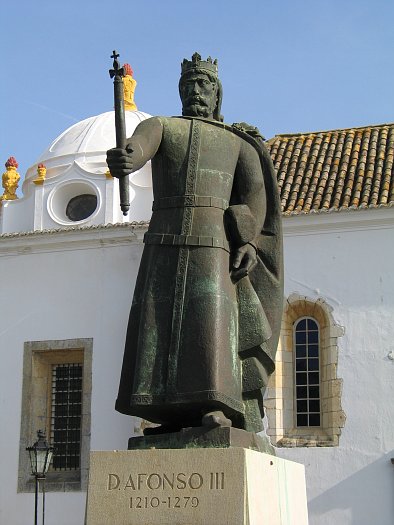
Story 16 of 27 · Kingdom and empire
States and rulers
Afonso III took Faro, the last Moorish town, and completed the Portuguese Reconquista.

Story 17 of 27 · Kingdom and empire
War and conflict
Portuguese archers and knights beat a much larger Castilian army and secured Portuguese independence.

Story 18 of 27 · Kingdom and empire
Science, trade and industry
Prince Henry sponsored voyages down the African coast, which began the Age of Discovery.

Story 19 of 27 · Kingdom and empire
States and rulers
Portugal and Spain divided the newly found lands of the world between them along a line in the Atlantic.
About 260 years later
1494 to 1755
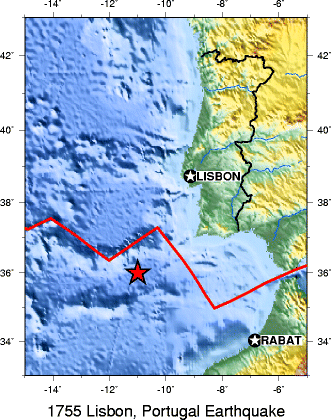
Story 20 of 27 · Kingdom and empire
Disasters and epidemics
An earthquake and tsunami destroyed Lisbon and killed up to 50,000. It shook the faith of the Enlightenment.

Story 21 of 27 · Kingdom and empire
War and conflict
Napoleon invaded Portugal, and the royal family fled to Brazil. British help freed the country.

Story 22 of 27 · Kingdom and empire
States and rulers
An uprising in Porto forced the king in Brazil to return and accept a constitution.
Chapter III

Story 23 of 27 · The Republic
States and rulers
A republican revolution overthrew the monarchy.

Story 24 of 27 · The Republic
States and rulers
A military coup ended the unstable First Republic and led to the dictatorship.

Story 25 of 27 · The Republic
States and rulers
António de Oliveira Salazar built an authoritarian state that lasted until 1974.

Story 26 of 27 · The Republic
States and rulers
Portugal and Spain joined the European Communities.

Story 27 of 27 · The Republic
Disasters and epidemics
Forest fires in central Portugal killed 66 people.
Journey complete
27 stories, c. 20,000 BC to 2017. More events are being researched and added.
Culture and faith
Hunters engraved thousands of animals on the rocks of the Côa Valley. It is one of the biggest open-air Ice Age sites in Europe.

Culture and faith
Pots impressed with cockle shells spread from Greece in the seventh millennium BC. By about 5500 BC the Cardial culture had spread 2,000 km, from the Gulf of Genoa to Portugal, in perhaps 100 to 200 years.

Culture and faith
The Almendres Cromlech is the largest group of structured menhirs on the Iberian Peninsula and one of the largest in Europe. Its three building phases date from about 6000, 5000 and 4000 BC.

Culture and faith
From as early as 2800 BC, people across Europe, from Iberia to the British Isles and beyond, made inverted-bell drinking cups, used at the start of the European Bronze Age.

Culture and faith
Atlantic Bronze Age is a loose label for the period from about 1300 to 700 BC along the Atlantic coast of Britain, France, Ireland, Portugal and Spain. The term has never been formally defined.

Culture and faith
The Castro culture of north-western Iberia, from about the 9th century BC until Roman rule, is known for its walled hillforts, called castros.

War and conflict
The Lusitanian leader Viriathus fought Rome in guerrilla warfare for eight years until he was murdered.
States and rulers
Rome fought the Lusitanian tribes from 155 to 139 BC and made Lusitania a province in 27 BC. It took in most of Portugal south of the Douro and part of western Spain, and its capital was Emerita Augusta, today's Mérida.
States and rulers
Around 409 the Germanic Suebi set up one of the first kingdoms to break away from Rome, in Gallaecia and northern Lusitania, with Braga as their capital. It stayed independent until the Visigoths annexed it in 585.

States and rulers
Driven out of Gaul by the Franks, the Visigoths made Hispania their kingdom. They ruled from Toledo until the Muslim conquest.

War and conflict
An army led by Tariq ibn Ziyad crossed from North Africa and defeated the Visigothic king Roderic. Gibraltar is named after Tariq.
Al-Andalus, Muslim Spain, lasted nearly 800 years.
States and rulers
In 868 Vímara Peres took back Portus Cale, today's Porto, for the king of Asturias, and the county of Portugal grew up around Porto and Guimarães. It was in this county that a Portuguese identity formed.

States and rulers
The emir took the title of caliph in defiance of Baghdad and Cairo. Córdoba became one of the largest cities in Europe.
The caliphate broke into rival 'taifa' kingdoms in 1031.

States and rulers
Afonso Henriques defeated the Moors and was proclaimed king of Portugal by his troops.

States and rulers
A reforming Berber movement from the Atlas overthrew the Almoravids and ruled Morocco and Muslim Spain from Marrakesh.
They built the Koutoubia Mosque and the Giralda of Seville.
States and rulers
Afonso III took Faro, the last Moorish town, and completed the Portuguese Reconquista.

War and conflict
Portuguese archers and knights beat a much larger Castilian army and secured Portuguese independence.

Science, trade and industry
Prince Henry sponsored voyages down the African coast, which began the Age of Discovery.

States and rulers
Portugal and Spain divided the newly found lands of the world between them along a line in the Atlantic.
Disasters and epidemics
An earthquake and tsunami destroyed Lisbon and killed up to 50,000. It shook the faith of the Enlightenment.

War and conflict
Napoleon invaded Portugal, and the royal family fled to Brazil. British help freed the country.

States and rulers
An uprising in Porto forced the king in Brazil to return and accept a constitution.

States and rulers
A republican revolution overthrew the monarchy.

States and rulers
A military coup ended the unstable First Republic and led to the dictatorship.

States and rulers
António de Oliveira Salazar built an authoritarian state that lasted until 1974.

States and rulers
Portugal and Spain joined the European Communities.

Disasters and epidemics
Forest fires in central Portugal killed 66 people.