

States and rulers
Portuguese explorers find the islands
Navigators found empty volcanic islands in the Gulf of Guinea. Settlement began in the 1480s with convicts and enslaved Africans.
- Where
- São Tomé

Uninhabited islands on the equator settled by Portugal in the 1400s, a sugar and then cocoa colony, and Africa's second smallest country.
Independent from Portugal since 12 July 1975
Sugar and the slave trade, 1485. Image: wsrolim · CC BY-SA 4.0, via Wikimedia Commons
Chapter I

Story 1 of 12 · Settlement and sugar
States and rulers
Navigators found empty volcanic islands in the Gulf of Guinea. Settlement began in the 1480s with convicts and enslaved Africans.

Story 2 of 12 · Settlement and sugar
Science, trade and industry
The island became one of the first plantation colonies and a depot for the slave trade, until competition from Brazil.

Story 3 of 12 · Settlement and sugar
War and conflict
A leader of the Angolares, descendants of runaways, led a revolt that nearly took the island's main town.
About 310 years later
1595 to 1900
Chapter II

Story 4 of 12 · Cocoa colony
Science, trade and industry
Cocoa made the colony wealthy. Workers brought from Angola were treated as slaves, prompting a British boycott.

Story 5 of 12 · Cocoa colony
War and conflict
Portuguese forces and settlers attacked and killed hundreds of local people accused of plotting against the colony.

Story 6 of 12 · Cocoa colony
People and rights
An exile group formed to demand independence for the islands.
Story 7 of 12 · Cocoa colony
States and rulers
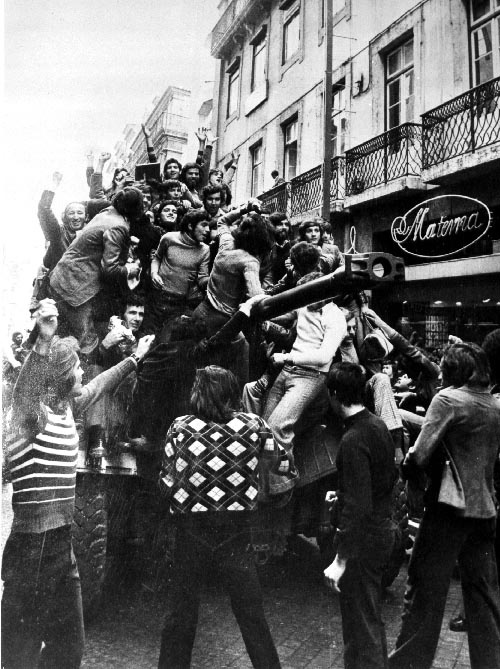
Officers in Lisbon overthrew Portugal's dictatorship, tired of colonial wars. Within a year its African colonies were independent.
Chapter III

Story 8 of 12 · Independent São Tomé and Príncipe
States and rulers
Manuel Pinto da Costa became the first president of the new state.

Story 9 of 12 · Independent São Tomé and Príncipe
States and rulers
The one-party state gave way to multi-party democracy, and the opposition won.

Story 10 of 12 · Independent São Tomé and Príncipe
States and rulers
Soldiers seized the president and handed power back after mediation by Angola.

Story 11 of 12 · Independent São Tomé and Príncipe
Science, trade and industry
São Tomé and Nigeria agreed to share oil from a zone between their waters.
Story 12 of 12 · Independent São Tomé and Príncipe
States and rulers
Soldiers took power while the president was abroad and gave it back after talks.
Journey complete
12 stories, 1470 to 2003. More events are being researched and added.
States and rulers
Navigators found empty volcanic islands in the Gulf of Guinea. Settlement began in the 1480s with convicts and enslaved Africans.

Science, trade and industry
The island became one of the first plantation colonies and a depot for the slave trade, until competition from Brazil.

War and conflict
A leader of the Angolares, descendants of runaways, led a revolt that nearly took the island's main town.

Science, trade and industry
Cocoa made the colony wealthy. Workers brought from Angola were treated as slaves, prompting a British boycott.

War and conflict
Portuguese forces and settlers attacked and killed hundreds of local people accused of plotting against the colony.
People and rights
An exile group formed to demand independence for the islands.
States and rulers
Officers in Lisbon overthrew Portugal's dictatorship, tired of colonial wars. Within a year its African colonies were independent.

States and rulers
Manuel Pinto da Costa became the first president of the new state.

States and rulers
The one-party state gave way to multi-party democracy, and the opposition won.
States and rulers
Soldiers seized the president and handed power back after mediation by Angola.

Science, trade and industry
São Tomé and Nigeria agreed to share oil from a zone between their waters.
States and rulers
Soldiers took power while the president was abroad and gave it back after talks.