

Culture and faith
Lepenski Vir
At Lepenski Vir on the Danube, fishers and hunters built a village of trapezoid houses and carved heads of boulders into fish-faced figures, long before the Vinča culture.
- Where
- Iron Gates

Vinča farmers, the Nemanjić kingdom and Dušan's empire, the battle of Kosovo, Ottoman rule, the uprisings that created modern Serbia, Yugoslavia and the wars of the 1990s.
Independent from the Ottoman Empire since 1878; as Serbia alone since 2006
The Vinča culture, c. 5700 BC. Image: Michel wal (travail personnel (own work)) · CC BY-SA 3.0, via Wikimedia Commons

Story 1 of 28
Culture and faith
At Lepenski Vir on the Danube, fishers and hunters built a village of trapezoid houses and carved heads of boulders into fish-faced figures, long before the Vinča culture.
About 1,300 years later
c. 7000 BC to c. 5700 BC
Chapter I

Story 2 of 28 · Early Serbia
Culture and faith
Farmers near Belgrade built large villages, made figurines and used some of the earliest symbols of writing.
About 2,700 years later
c. 5700 BC to c. 3000 BC

Story 3 of 28 · Early Serbia
Culture and faith
The Vučedol culture, centred on the Danube in today's Croatia and Serbia, was a Copper Age people who built hilltop settlements and made richly decorated pottery.
About 1,000 years later
c. 3000 BC to c. 2000 BC

Story 4 of 28 · Early Serbia
Culture and faith
Named after the village of Vatin in Vojvodina, the Vatin culture of the middle Bronze Age lasted from about 2000 to 1500 BC, some say into the 13th century BC. It is linked with the Mycenaean world of Greece.
About 1,600 years later
c. 2000 BC to 376 BC

Story 6 of 28 · Early Serbia
States and rulers
From the 3rd to the 1st century BC the Scordisci held the land where the Sava meets the Danube, with Singidunum, today's Belgrade, as their main settlement. Ancient writers tied them to the Gauls who attacked Delphi in 279 BC.
About 310 years later
3rd century BC to 6

Story 7 of 28 · Early Serbia
War and conflict
From AD 6 to 9 the native peoples of Dalmatia and Pannonia rose against Rome. Suetonius called it Rome's hardest war since the Punic Wars, and Tiberius needed whole armies and four years to put it down.
About 290 years later
6 to 293

Story 8 of 28 · Early Serbia
States and rulers
Under the Tetrarchy, Sirmium, now Sremska Mitrovica, was one of the capitals of the Roman Empire, and several emperors were born or lived there.
About 540 years later
293 to c. 830

Story 9 of 28 · Early Serbia
States and rulers
Vlastimir, one of the first Serbian princes known by name, ruled from about 830 to 851. When Presian of Bulgaria invaded in 839, three years of war ended with the Bulgarian army beaten and driven out.
About 340 years later
c. 830 to 1166

Story 10 of 28 · Early Serbia
States and rulers
Stefan Nemanja united Serbian lands. His family ruled Serbia for two centuries.
180 years later
1166 to 1346
Story 11 of 28 · Early Serbia
States and rulers
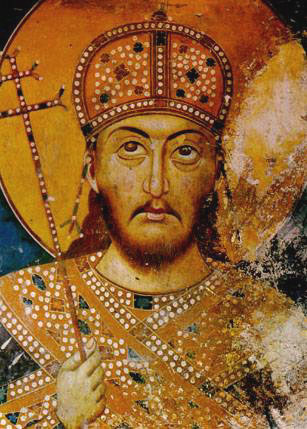
Stefan Dušan took Macedonia and Thessaly and had himself crowned emperor. His law code is famous.
Chapter II

Story 12 of 28 · Ottoman rule
War and conflict
The Serbs and the Ottomans fought a battle at Kosovo Polje. Both leaders died.

Story 13 of 28 · Ottoman rule
States and rulers
The Ottomans took Smederevo, and the last Serbian state fell.
About 350 years later
1459 to 1804

Story 14 of 28 · Ottoman rule
War and conflict
Karađorđe led Serbs against Ottoman rule in the first national revolution in the Balkans.
Chapter III

Story 15 of 28 · Principality and kingdom
War and conflict
Miloš Obrenović led a second revolt and won autonomy for Serbia.

Story 16 of 28 · Principality and kingdom
States and rulers
The great powers authorised Austria-Hungary to occupy Bosnia and Herzegovina.

Story 17 of 28 · Principality and kingdom
War and conflict
The Balkan states drove the Ottomans out of Europe and then fought over the spoils.
Story 18 of 28 · Principality and kingdom
War and conflict
Macedonia was divided among Serbia, Greece and Bulgaria after the Second Balkan War.

Story 19 of 28 · Principality and kingdom
War and conflict
Serbia defeated Austria-Hungary but lost a quarter of its population to the war and disease.
Chapter IV

Story 20 of 28 · Yugoslavia
States and rulers
Croatia joined a kingdom of South Slavs under the Serbian dynasty.

Story 21 of 28 · Yugoslavia
War and conflict
Germany invaded and occupied Yugoslavia in less than two weeks.

Story 22 of 28 · Yugoslavia
States and rulers
Tito, a Croat, led partisans to victory and made Yugoslavia a federation of six republics.

Story 23 of 28 · Yugoslavia
States and rulers
Tito, who had ruled Yugoslavia since 1945, died. The federation unravelled within a decade.

Story 24 of 28 · Yugoslavia
War and conflict
A series of wars broke up Yugoslavia and killed over 130,000.

Story 25 of 28 · Yugoslavia
War and conflict
NATO bombed Yugoslavia for 78 days until Serbia withdrew.

Story 26 of 28 · Yugoslavia
States and rulers
Mass protests in Belgrade forced Milošević from power after he lost an election.

Story 27 of 28 · Yugoslavia
States and rulers
The remaining federation of Yugoslavia was renamed as a loose union.

Story 28 of 28 · Yugoslavia
States and rulers
Prime Minister Zoran Đinđić was shot by gangsters and security men.
Journey complete
28 stories, c. 7000 BC to 2006. More events are being researched and added.
Culture and faith
At Lepenski Vir on the Danube, fishers and hunters built a village of trapezoid houses and carved heads of boulders into fish-faced figures, long before the Vinča culture.

Culture and faith
Farmers near Belgrade built large villages, made figurines and used some of the earliest symbols of writing.

Culture and faith
The Vučedol culture, centred on the Danube in today's Croatia and Serbia, was a Copper Age people who built hilltop settlements and made richly decorated pottery.

Culture and faith
Named after the village of Vatin in Vojvodina, the Vatin culture of the middle Bronze Age lasted from about 2000 to 1500 BC, some say into the 13th century BC. It is linked with the Mycenaean world of Greece.
War and conflict
The Triballi lived between the Thracians, Illyrians and Celts, in today's south-east Serbia and northern Bulgaria. In 376 BC a large band under King Hales crossed the Haemus and threatened Abdera, until an Athenian fleet arranged a truce.
States and rulers
From the 3rd to the 1st century BC the Scordisci held the land where the Sava meets the Danube, with Singidunum, today's Belgrade, as their main settlement. Ancient writers tied them to the Gauls who attacked Delphi in 279 BC.

War and conflict
From AD 6 to 9 the native peoples of Dalmatia and Pannonia rose against Rome. Suetonius called it Rome's hardest war since the Punic Wars, and Tiberius needed whole armies and four years to put it down.

States and rulers
Under the Tetrarchy, Sirmium, now Sremska Mitrovica, was one of the capitals of the Roman Empire, and several emperors were born or lived there.

States and rulers
Vlastimir, one of the first Serbian princes known by name, ruled from about 830 to 851. When Presian of Bulgaria invaded in 839, three years of war ended with the Bulgarian army beaten and driven out.

States and rulers
Stefan Nemanja united Serbian lands. His family ruled Serbia for two centuries.
States and rulers
Stefan Dušan took Macedonia and Thessaly and had himself crowned emperor. His law code is famous.

War and conflict
The Serbs and the Ottomans fought a battle at Kosovo Polje. Both leaders died.

States and rulers
The Ottomans took Smederevo, and the last Serbian state fell.

War and conflict
Karađorđe led Serbs against Ottoman rule in the first national revolution in the Balkans.

War and conflict
Miloš Obrenović led a second revolt and won autonomy for Serbia.

States and rulers
The great powers authorised Austria-Hungary to occupy Bosnia and Herzegovina.

War and conflict
The Balkan states drove the Ottomans out of Europe and then fought over the spoils.
War and conflict
Macedonia was divided among Serbia, Greece and Bulgaria after the Second Balkan War.

War and conflict
Serbia defeated Austria-Hungary but lost a quarter of its population to the war and disease.

States and rulers
Croatia joined a kingdom of South Slavs under the Serbian dynasty.

War and conflict
Germany invaded and occupied Yugoslavia in less than two weeks.

States and rulers
Tito, a Croat, led partisans to victory and made Yugoslavia a federation of six republics.

States and rulers
Tito, who had ruled Yugoslavia since 1945, died. The federation unravelled within a decade.

War and conflict
A series of wars broke up Yugoslavia and killed over 130,000.

War and conflict
NATO bombed Yugoslavia for 78 days until Serbia withdrew.

States and rulers
Mass protests in Belgrade forced Milošević from power after he lost an election.
States and rulers
The remaining federation of Yugoslavia was renamed as a loose union.

States and rulers
Prime Minister Zoran Đinđić was shot by gangsters and security men.