

Culture and faith
The Bangudae whale carvings
On a cliff by a river, Neolithic people carved whales, deer, tigers and hunters in boats.
- Where
- Ulsan
Why it matters
They are among the earliest known images of whaling.

Neolithic whale hunters, the kingdom of Silla, five centuries of Joseon, Japanese rule, war, and a hard-won democracy.
The Republic of Korea since 15 August 1948
Seokguram and Bulguksa, 774. Image: by eimoberg · CC BY 2.0, via Wikimedia Commons
Chapter I

Story 1 of 44 · Early Korea
Culture and faith
On a cliff by a river, Neolithic people carved whales, deer, tigers and hunters in boats.
About 3,500 years later
c. 5000 BC to c. 1500 BC
About 650 years later
c. 1500 BC to c. 850 BC
About 750 years later
c. 850 BC to 1st century BC

Story 4 of 44 · Early Korea
States and rulers
In the 1st century BC three confederacies, Mahan, Jinhan and Byeonhan, arose in the centre and south of the Korean peninsula. They later merged into the kingdoms of Baekje and Silla and the Gaya confederacy.
Chapter II

Story 5 of 44 · Silla and Goryeo
States and rulers
Tradition dates the kingdom of Silla to 57 BC. It later united most of the Korean peninsula in 668, with help from Tang China.

Story 6 of 44 · Silla and Goryeo
States and rulers
A warlike kingdom controlled northern Korea and Manchuria, defeating Chinese invasions, and left painted tombs.
About 700 years later
37 BC to 668

Story 7 of 44 · Silla and Goryeo
States and rulers
With Tang China's help Silla defeated Baekje and Goguryeo, then drove out the Tang by 676.

Story 8 of 44 · Silla and Goryeo
Culture and faith
Silla craftsmen completed an artificial cave temple housing a serene granite Buddha, above the temple of Bulguksa.

Story 9 of 44 · Silla and Goryeo
States and rulers
A general overthrew a rebel king and founded Goryeo, the kingdom from which the name Korea comes.
About 320 years later
918 to 1237

Story 10 of 44 · Silla and Goryeo
Culture and faith
To seek protection from the invading Mongols, the Goryeo court had the Buddhist scriptures carved on more than 81,000 wooden printing blocks.
About 160 years later
1237 to 1392
Chapter III

Story 11 of 44 · Joseon
States and rulers
General Yi Seong-gye founded the Joseon dynasty and in 1394 made Hanyang, today's Seoul, its capital.

Story 12 of 44 · Joseon
Culture and faith
King Sejong the Great and his scholars created a simple alphabet so that ordinary people could read and write. It was published in 1446.

Story 13 of 44 · Joseon
War and conflict
Japan invaded Korea twice. Admiral Yi Sun-sin's 'turtle ships' won famous sea battles, and Ming China sent armies to help.
About 300 years later
1592 to 1894

Story 14 of 44 · Joseon
People and rights
Followers of the Donghak religion and poor farmers rose against corrupt officials. Chinese and Japanese troops came in to crush them.

Story 15 of 44 · Joseon
States and rulers
King Gojong declared himself emperor to show independence from China and Japan.

Story 16 of 44 · Joseon
States and rulers
Under pressure Korean ministers signed a treaty giving Japan control of Korea's foreign affairs. Emperor Gojong never signed.
Chapter IV

Story 17 of 44 · Japanese rule
States and rulers
Japan annexed Korea and ruled it as a colony for 35 years, suppressing the Korean language and forcing many into labour and military brothels.

Story 18 of 44 · Japanese rule
People and rights
Korean leaders read a declaration of independence, and peaceful demonstrations spread across the country. Japanese forces killed thousands.

Story 19 of 44 · Japanese rule
States and rulers
After the March First Movement activists set up a provisional government in Shanghai. It carried on until 1945.
Chapter V

Story 20 of 44 · Republic of Korea
States and rulers
When Japan surrendered, the Soviet Union and the United States split Korea along the 38th parallel.

Story 21 of 44 · Republic of Korea
States and rulers
After Japan's surrender the United States and the Soviet Union divided Korea at the 38th parallel. The US ran the south.

Story 22 of 44 · Republic of Korea
People and rights
A left-wing uprising on Jeju was crushed by government forces and anti-communist militias who killed perhaps 14,000 to 30,000 islanders.

Story 23 of 44 · Republic of Korea
States and rulers
Korea was divided by the Soviet Union and the United States in 1945. In the south, the Republic of Korea was founded with Syngman Rhee as president.

Story 24 of 44 · Republic of Korea
War and conflict
North Korea invaded the south. UN forces led by the United States, and later Chinese troops, joined a war that killed millions and ended in an armistice, not peace.

Story 25 of 44 · Republic of Korea
States and rulers
The fighting ended but no peace treaty was ever signed.
Story 26 of 44 · Republic of Korea
People and rights
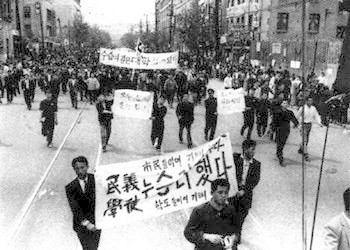
Students led mass protests against a rigged election. Police killed nearly 200, but Syngman Rhee was forced to resign.

Story 27 of 44 · Republic of Korea
States and rulers
After police shot student protesters over a rigged election, the 85-year-old president stepped down. A short-lived parliamentary republic followed.

Story 28 of 44 · Republic of Korea
States and rulers
General Park Chung Hee seized power and ruled until his assassination in 1979, driving rapid industrial growth under authoritarian rule.

Story 29 of 44 · Republic of Korea
States and rulers
Park Chung Hee suspended the constitution, dissolved parliament and rewrote the rules so that he could rule indefinitely.

Story 30 of 44 · Republic of Korea
States and rulers
KCIA director Kim Jae-gyu shot the president at a dinner after weeks of unrest.
Story 31 of 44 · Republic of Korea
States and rulers
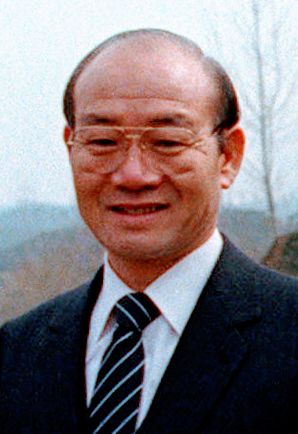
Major General Chun arrested the army chief of staff and took control of the military, setting up his rise to the presidency.
Story 32 of 44 · Republic of Korea
People and rights
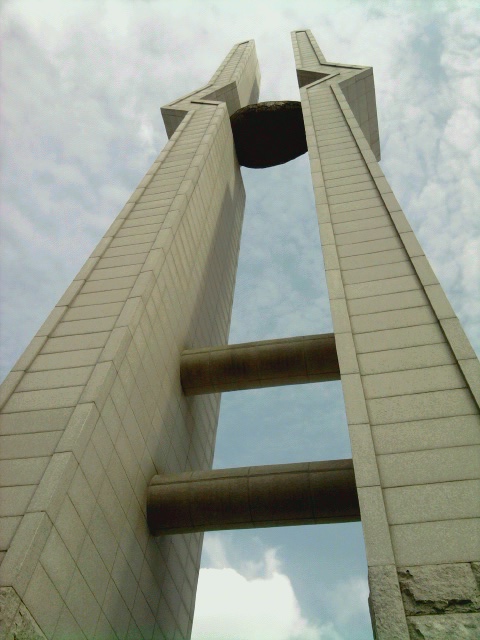
Citizens of Gwangju rose against martial law under General Chun Doo-hwan. Paratroopers killed hundreds before retaking the city.

Story 33 of 44 · Republic of Korea
People and rights
Millions marched against military rule until the government agreed to direct presidential elections.

Story 34 of 44 · Republic of Korea
States and rulers
Roh Tae-woo won because the two main opposition candidates split the vote.

Story 35 of 44 · Republic of Korea
Culture and faith
Seoul hosted the Olympic Games, which showed the world a newly democratic and prosperous country.

Story 36 of 44 · Republic of Korea
States and rulers
Kim Young-sam, a former dissident, became president. He later prosecuted two former presidents, Chun and Roh.

Story 37 of 44 · Republic of Korea
Science, trade and industry
Thailand floated its currency and set off a financial crisis that spread across Asia.

Story 38 of 44 · Republic of Korea
States and rulers
Kim Dae-jung, once sentenced to death, won during the Asian financial crisis.

Story 39 of 44 · Republic of Korea
Disasters and epidemics
An overloaded ferry capsized; 304 people died, most of them high-school students told to stay in their cabins.

Story 40 of 44 · Republic of Korea
States and rulers
After mass candlelight protests over a corruption scandal, the Constitutional Court upheld her impeachment. Moon Jae-in was elected in May.

Story 41 of 44 · Republic of Korea
States and rulers
President Yoon Suk Yeol declared martial law. Lawmakers climbed fences into the National Assembly and voted it down within hours.

Story 42 of 44 · Republic of Korea
States and rulers
The Constitutional Court unanimously upheld parliament's impeachment of the president over his martial-law declaration.

Story 43 of 44 · Republic of Korea
States and rulers
An early election after Yoon's removal was won by Lee Jae-myung of the Democratic Party.
Story 44 of 44 · Republic of Korea
States and rulers
A court found the former president guilty of leading an insurrection by declaring martial law in December 2024, and sentenced him to life in prison. He has appealed.
Journey complete
44 stories, c. 5000 BC to 2026. More events are being researched and added.
Culture and faith
On a cliff by a river, Neolithic people carved whales, deer, tigers and hunters in boats.
They are among the earliest known images of whaling.
Culture and faith
From about 1500 to 300 BC, in the Mumun or plain-pottery period, intensive farming and more complex societies began on the Korean peninsula. The name comes from the undecorated pots used for cooking and storage.
Culture and faith
At Songguk-ri in Buyeo, a Mumun village of about 850 to 300 BC had a palisade and a high-status stone-cist grave with a bronze dagger. Its people seem to have turned to growing rice in paddies.

States and rulers
In the 1st century BC three confederacies, Mahan, Jinhan and Byeonhan, arose in the centre and south of the Korean peninsula. They later merged into the kingdoms of Baekje and Silla and the Gaya confederacy.

States and rulers
Tradition dates the kingdom of Silla to 57 BC. It later united most of the Korean peninsula in 668, with help from Tang China.
Its capital, Gyeongju, is full of royal tombs and temples.

States and rulers
A warlike kingdom controlled northern Korea and Manchuria, defeating Chinese invasions, and left painted tombs.

States and rulers
With Tang China's help Silla defeated Baekje and Goguryeo, then drove out the Tang by 676.

Culture and faith
Silla craftsmen completed an artificial cave temple housing a serene granite Buddha, above the temple of Bulguksa.
They are masterpieces of Buddhist art in East Asia.

States and rulers
A general overthrew a rebel king and founded Goryeo, the kingdom from which the name Korea comes.

Culture and faith
To seek protection from the invading Mongols, the Goryeo court had the Buddhist scriptures carved on more than 81,000 wooden printing blocks.
The blocks survive at the temple of Haeinsa.

States and rulers
General Yi Seong-gye founded the Joseon dynasty and in 1394 made Hanyang, today's Seoul, its capital.
Joseon ruled Korea for five centuries.

Culture and faith
King Sejong the Great and his scholars created a simple alphabet so that ordinary people could read and write. It was published in 1446.
Hangul is Korea's writing system today, celebrated every 9 October.

War and conflict
Japan invaded Korea twice. Admiral Yi Sun-sin's 'turtle ships' won famous sea battles, and Ming China sent armies to help.
The war devastated Korea; Yi Sun-sin is a national hero.

People and rights
Followers of the Donghak religion and poor farmers rose against corrupt officials. Chinese and Japanese troops came in to crush them.
It led to the First Sino-Japanese War and Japanese dominance.

States and rulers
King Gojong declared himself emperor to show independence from China and Japan.
States and rulers
Under pressure Korean ministers signed a treaty giving Japan control of Korea's foreign affairs. Emperor Gojong never signed.

States and rulers
Japan annexed Korea and ruled it as a colony for 35 years, suppressing the Korean language and forcing many into labour and military brothels.
15 August, the day of liberation, is a national holiday.

People and rights
Korean leaders read a declaration of independence, and peaceful demonstrations spread across the country. Japanese forces killed thousands.
A Korean government in exile was founded weeks later.

States and rulers
After the March First Movement activists set up a provisional government in Shanghai. It carried on until 1945.

States and rulers
When Japan surrendered, the Soviet Union and the United States split Korea along the 38th parallel.

States and rulers
After Japan's surrender the United States and the Soviet Union divided Korea at the 38th parallel. The US ran the south.

People and rights
A left-wing uprising on Jeju was crushed by government forces and anti-communist militias who killed perhaps 14,000 to 30,000 islanders.
The government apologised in 2003.

States and rulers
Korea was divided by the Soviet Union and the United States in 1945. In the south, the Republic of Korea was founded with Syngman Rhee as president.
The north became a separate communist state weeks later.

War and conflict
North Korea invaded the south. UN forces led by the United States, and later Chinese troops, joined a war that killed millions and ended in an armistice, not peace.
Korea remains divided along the demilitarised zone.

States and rulers
The fighting ended but no peace treaty was ever signed.
People and rights
Students led mass protests against a rigged election. Police killed nearly 200, but Syngman Rhee was forced to resign.
It was the first popular overthrow of a government in South Korea.

States and rulers
After police shot student protesters over a rigged election, the 85-year-old president stepped down. A short-lived parliamentary republic followed.

States and rulers
General Park Chung Hee seized power and ruled until his assassination in 1979, driving rapid industrial growth under authoritarian rule.
The 'Miracle on the Han River' made South Korea an industrial power.

States and rulers
Park Chung Hee suspended the constitution, dissolved parliament and rewrote the rules so that he could rule indefinitely.

States and rulers
KCIA director Kim Jae-gyu shot the president at a dinner after weeks of unrest.
States and rulers
Major General Chun arrested the army chief of staff and took control of the military, setting up his rise to the presidency.
People and rights
Citizens of Gwangju rose against martial law under General Chun Doo-hwan. Paratroopers killed hundreds before retaking the city.
It became the founding memory of South Korea's democracy movement.

People and rights
Millions marched against military rule until the government agreed to direct presidential elections.
South Korea became a democracy.

States and rulers
Roh Tae-woo won because the two main opposition candidates split the vote.

Culture and faith
Seoul hosted the Olympic Games, which showed the world a newly democratic and prosperous country.
Soviet bloc teams took part, and the Cold War boycotts ended.

States and rulers
Kim Young-sam, a former dissident, became president. He later prosecuted two former presidents, Chun and Roh.

Science, trade and industry
Thailand floated its currency and set off a financial crisis that spread across Asia.

States and rulers
Kim Dae-jung, once sentenced to death, won during the Asian financial crisis.

Disasters and epidemics
An overloaded ferry capsized; 304 people died, most of them high-school students told to stay in their cabins.
Public anger contributed to the impeachment of President Park Geun-hye.

States and rulers
After mass candlelight protests over a corruption scandal, the Constitutional Court upheld her impeachment. Moon Jae-in was elected in May.

States and rulers
President Yoon Suk Yeol declared martial law. Lawmakers climbed fences into the National Assembly and voted it down within hours.
Yoon was impeached and removed from office in April 2025.

States and rulers
The Constitutional Court unanimously upheld parliament's impeachment of the president over his martial-law declaration.

States and rulers
An early election after Yoon's removal was won by Lee Jae-myung of the Democratic Party.
States and rulers
A court found the former president guilty of leading an insurrection by declaring martial law in December 2024, and sentenced him to life in prison. He has appealed.