The Alhambra, detail

All countries

Spain

Early humans at Atapuerca, Altamira's painters, Phoenicians and Romans, al-Andalus and the Reconquista, empire, civil war and democracy.

United under one crown from 1479; a democracy since 1978

Stories
56
Distance
1,202,017 years
Route
c. 1,200,000 BC to 2018
  1. Early peoples9 stories
  2. Phoenicians, Romans and Visigoths10 stories
  3. Al-Andalus and the Reconquista8 stories
  4. The Spanish Empire7 stories
  5. Modern Spain22 stories
Begin the journey

The Alhambra, 1238. Image: Jebulon · CC0, via Wikimedia Commons

  1. Chapter I

    Early peoples

    9 stories in this chapter

  2. Excavations at the site of Gran Dolina, in Atapuerca (Spain), during 2008

    Story 1 of 56 · Early peoples

    People and rights

    The people of Atapuerca

    Caves in the Atapuerca hills hold human remains about 1.2 million years old, and a pit containing bones of at least 28 later humans.

    Next storyc. 15,000 BC · Altamira
  3. About 1,185,000 years later

    c. 1,200,000 BC to c. 15,000 BC

  4. Réplica del techo de la cueva de Altamira, expuesta en los jardines del Museo Arqueológico Nacional de España

    Story 2 of 56 · Early peoples

    Culture and faith

    Altamira

    Ice Age artists painted bison in red and black across the ceiling of the cave of Altamira. When it was found in 1879, experts at first refused to believe it was so old.

    Next storyc. 8000 BC · Rock paintings of eastern Spain
  5. About 7,000 years later

    c. 15,000 BC to c. 8000 BC

  6. Rock paintings of eastern Spain

    Story 3 of 56 · Early peoples

    Culture and faith

    Rock paintings of eastern Spain

    More than 700 sites in eastern Spain hold prehistoric paintings in the Levantine style, made from about 8000 to 3500 BC. They became a World Heritage Site in 1998.

    Next storyc. 6000 BC · Cardial pottery along the Mediterranean
  7. About 2,000 years later

    c. 8000 BC to c. 6000 BC

  8. Cardium pottery of Tajos de Cacín cave ( Granada , Spain )

    Story 4 of 56 · Early peoples

    Culture and faith

    Cardial pottery along the Mediterranean

    Pots impressed with cockle shells spread from Greece in the seventh millennium BC. By about 5500 BC the Cardial culture had spread 2,000 km, from the Gulf of Genoa to Portugal, in perhaps 100 to 200 years.

    Next storyc. 3750 BC · The Dolmen of Menga
  9. About 2,300 years later

    c. 6000 BC to c. 3750 BC

  10. Dolmen de Menga, vista exterior

    Story 5 of 56 · Early peoples

    Culture and faith

    The Dolmen of Menga

    Near Antequera, the Dolmen of Menga is a large megalithic burial chamber under a mound, built between about 3750 and 3650 BC. With two other monuments it forms the Antequera Dolmens World Heritage Site, listed in 2016.

    Next storyc. 3025 BC · Los Millares
  11. About 730 years later

    c. 3750 BC to c. 3025 BC

  12. Pintura situada en el centro de recepción de visitantes de los Millares

    Story 6 of 56 · Early peoples

    Science, trade and industry

    Los Millares

    Los Millares, north of Almería, was a Copper Age settlement in use from about 3025 to 2000 BC. It probably supported around 1,000 people.

    Next storyc. 2800 BC · The Bell Beaker culture
  13. About 230 years later

    c. 3025 BC to c. 2800 BC

  14. Bell Beaker artefacts, Spain

    Story 7 of 56 · Early peoples

    Culture and faith

    The Bell Beaker culture

    From as early as 2800 BC, people across Europe, from Iberia to the British Isles and beyond, made inverted-bell drinking cups, used at the start of the European Bronze Age.

    Next storyc. 2200 BC · The Argaric culture
  15. About 600 years later

    c. 2800 BC to c. 2200 BC

  16. Ajuar funerario de la cultura de El Argar , Bronce Pleno en el sur de España

    Story 8 of 56 · Early peoples

    States and rulers

    The Argaric culture

    At El Argar in Almería, a Bronze Age society flourished from about 2200 to 1500 BC. Its main town held around 5,000 people, among the largest of its age on the peninsula, and rich graves held items such as a diadem.

    Next storyc. 1300 BC · The Atlantic Bronze Age
  17. About 900 years later

    c. 2200 BC to c. 1300 BC

  18. Bronze age hut reproduction, in Campo Lameiro , Galicia

    Story 9 of 56 · Early peoples

    Culture and faith

    The Atlantic Bronze Age

    Atlantic Bronze Age is a loose label for the period from about 1300 to 700 BC along the Atlantic coast of Britain, France, Ireland, Portugal and Spain. The term has never been formally defined.

    Next storyc. 1100 BC · The Phoenicians found Gadir
  19. About 200 years later

    c. 1300 BC to c. 1100 BC

  20. Chapter II

    Phoenicians, Romans and Visigoths

    10 stories in this chapter

  21. Foto aérea de Cádiz (España)

    Story 10 of 56 · Phoenicians, Romans and Visigoths

    Science, trade and industry

    The Phoenicians found Gadir

    Phoenician traders from Tyre founded a trading post at Gadir, beyond the Strait of Gibraltar.

    Next storyc. 1000 BC · Tartessos
  22. Centro de Interpretación del Yacimiento de Cancho Roano

    Story 11 of 56 · Phoenicians, Romans and Visigoths

    States and rulers

    Tartessos

    Tartessos, in southern Spain, was a civilisation from the late Bronze Age until the 5th century BC. It had its own writing, the Southwest script, and is mentioned in Greek and Near Eastern sources.

    Next storyc. 900 BC · The Castro culture
  23. Keltensiedlung Castro de Coana in Asturien

    Story 12 of 56 · Phoenicians, Romans and Visigoths

    Culture and faith

    The Castro culture

    The Castro culture of north-western Iberia, from about the 9th century BC until Roman rule, is known for its walled hillforts, called castros.

    Next story134 BC · The siege of Numantia
  24. About 770 years later

    c. 900 BC to 134 BC

  25. The siege of Numantia

    Story 13 of 56 · Phoenicians, Romans and Visigoths

    War and conflict

    The siege of Numantia

    Scipio Aemilianus besieged the Celtiberian town of Numantia. Starving, most of its people died or killed themselves rather than surrender.

    Next story29 BC · The Cantabrian Wars
  26. The Cantabrian Wars

    Story 14 of 56 · Phoenicians, Romans and Visigoths

    War and conflict

    The Cantabrian Wars

    From 29 to 19 BC Augustus fought the Cantabri, Astures and Gallaeci of the north-west, the last peoples of Hispania still holding out. The bloody war ended two centuries of Roman conquest of the peninsula.

    Next story27 BC · Rome creates Lusitania
  27. Story 15 of 56 · Phoenicians, Romans and Visigoths

    States and rulers

    Rome creates Lusitania

    Rome fought the Lusitanian tribes from 155 to 139 BC and made Lusitania a province in 27 BC. It took in most of Portugal south of the Douro and part of western Spain, and its capital was Emerita Augusta, today's Mérida.

    Next story1st century · The Aqueduct of Segovia
  28. Aqueduct of Segovia , located in the city of Segovia , Spain

    Story 16 of 56 · Phoenicians, Romans and Visigoths

    Science, trade and industry

    The Aqueduct of Segovia

    Roman engineers of about the 1st century AD led spring water from the hills 17 km into Segovia. The town's water ran through it until 1973, and its high stone arcade still has all 167 of its arches.

    Next story260 · The Gallic Empire
  29. About 260 years later

    1st century to 260

  30. Story 17 of 56 · Phoenicians, Romans and Visigoths

    States and rulers

    The Gallic Empire

    In 260, in the crisis of the third century, the general Postumus set up a breakaway state that at its height held Gaul, Germania, Britain and Hispania. Emperor Aurelian took it back after the battle of Châlons in 274.

    Next storyc. 409 · The kingdom of the Suebi
  31. Story 18 of 56 · Phoenicians, Romans and Visigoths

    States and rulers

    The kingdom of the Suebi

    Around 409 the Germanic Suebi set up one of the first kingdoms to break away from Rome, in Gallaecia and northern Lusitania, with Braga as their capital. It stayed independent until the Visigoths annexed it in 585.

    Next story507 · The Visigoths rule Hispania
  32. Map of the Visigothic kingdom

    Story 19 of 56 · Phoenicians, Romans and Visigoths

    States and rulers

    The Visigoths rule Hispania

    Driven out of Gaul by the Franks, the Visigoths made Hispania their kingdom. They ruled from Toledo until the Muslim conquest.

    Next story711 · The Muslim conquest
  33. About 200 years later

    507 to 711

  34. Chapter III

    Al-Andalus and the Reconquista

    8 stories in this chapter

  35. The Muslim conquest

    Story 20 of 56 · Al-Andalus and the Reconquista

    War and conflict

    The Muslim conquest

    An army led by Tariq ibn Ziyad crossed from North Africa and defeated the Visigothic king Roderic. Gibraltar is named after Tariq.

    Next story756 · Abd al-Rahman founds an emirate
  36. The ornate arches and decorated walls inside the Mosque-Cathedral of Córdoba, begun under Abd al-Rahman I

    Story 21 of 56 · Al-Andalus and the Reconquista

    States and rulers

    Abd al-Rahman founds an emirate

    The last survivor of the Umayyad family fled Damascus and set up a state in Córdoba.

    Next story785 · The Great Mosque of Córdoba
  37. The Mezquita of Córdoba seen from the air (Córdoba, Spain)

    Story 22 of 56 · Al-Andalus and the Reconquista

    Culture and faith

    The Great Mosque of Córdoba

    Abd al-Rahman I began a mosque with a forest of columns and striped arches in Córdoba, soon one of the largest cities in Europe.

    Next story929 · Abd al-Rahman III declares a caliphate
  38. Statue of Abd ar-Rahman I , Plaza San Cristóbal ( streetcam ), Almuñécar , Spain

    Story 23 of 56 · Al-Andalus and the Reconquista

    States and rulers

    Abd al-Rahman III declares a caliphate

    The emir took the title of caliph in defiance of Baghdad and Cairo. Córdoba became one of the largest cities in Europe.

    Next story1212 · Las Navas de Tolosa
  39. About 280 years later

    929 to 1212

  40. Las Navas de Tolosa

    Story 24 of 56 · Al-Andalus and the Reconquista

    War and conflict

    Las Navas de Tolosa

    The kings of Castile, Aragon and Navarre defeated the Almohad caliph's army.

    Next story1238 · The Alhambra
  41. The Alhambra, detail

    Story 25 of 56 · Al-Andalus and the Reconquista

    Culture and faith

    The Alhambra

    The Nasrid sultans of Granada built a palace fortress of courtyards, fountains and intricate stucco on a hill above the city.

    Next story1479 · Aragon and Castile are joined
  42. About 240 years later

    1238 to 1479

  43. Wedding portrait of King Ferdinand of Aragon and Queen Isabella of Castile

    Story 26 of 56 · Al-Andalus and the Reconquista

    States and rulers

    Aragon and Castile are joined

    When Ferdinand inherited Aragon, he and his wife Isabella ruled both crowns together, though each kingdom kept its own laws.

    Next story1492 · The fall of Granada
  44. The fall of Granada

    Story 27 of 56 · Al-Andalus and the Reconquista

    War and conflict

    The fall of Granada

    The last Muslim kingdom in Spain surrendered to Ferdinand and Isabella. Months later they expelled Spain's Jews.

    Next story1492 · Columbus sets sail
  45. Chapter IV

    The Spanish Empire

    7 stories in this chapter

  46. Emanuel Leutze's painting of Columbus departing from Palos in 1492

    Story 28 of 56 · The Spanish Empire

    Science, trade and industry

    Columbus sets sail

    Christopher Columbus sailed from Palos with three ships, backed by Isabella, hoping to reach Asia by sailing west.

    Next story1494 · The Treaty of Tordesillas
  47. Original page from the Tratado de Tordesilhas

    Story 29 of 56 · The Spanish Empire

    States and rulers

    The Treaty of Tordesillas

    Portugal and Spain divided the newly found lands of the world between them along a line in the Atlantic.

    Next story1516 · The Habsburgs inherit Spain
  48. Portrait of Charles V, formerly attributed to Titian

    Story 30 of 56 · The Spanish Empire

    States and rulers

    The Habsburgs inherit Spain

    On Ferdinand's death, his grandson Charles inherited the crowns of Aragon and Castile. He soon became Holy Roman Emperor.

    Next story1605 · Don Quixote
  49. Portada de la primera edición de la primera parte de El ingenioso hidalgo Don Quixote de la Mancha , libro de Miguel de Cervantes

    Story 31 of 56 · The Spanish Empire

    Culture and faith

    Don Quixote

    Miguel de Cervantes published the story of a man who reads too many tales of chivalry and sets out as a knight.

    Next story1659 · The Treaty of the Pyrenees
  50. Traité des Pyrénées signé par le cardinal Mazarin et Luis de Haro et mettant fin à la guerre entre la France et l'Espagne

    Story 32 of 56 · The Spanish Empire

    States and rulers

    The Treaty of the Pyrenees

    France and Spain divided Catalonia. Andorra stayed on the border, with France inheriting the Count of Foix's role.

    Next story1700 · The Bourbons take over
  51. This is an official portrait of Philip V (1683-1746), the first Bourbon king of Spain

    Story 33 of 56 · The Spanish Empire

    States and rulers

    The Bourbons take over

    Charles II died childless and left his realm to a French prince. The war over the succession ended with Philip V keeping the crown and Spain losing its European possessions.

    Next story1807 · The Peninsular War
  52. The Peninsular War

    Story 34 of 56 · The Spanish Empire

    War and conflict

    The Peninsular War

    Napoleon invaded Portugal, and the royal family fled to Brazil. British help freed the country.

    Next story1808 · The Second of May
  53. Chapter V

    Modern Spain

    22 stories in this chapter

  54. The Second of May

    Story 35 of 56 · Modern Spain

    War and conflict

    The Second of May

    The people of Madrid rose against Napoleon's occupying troops and were brutally put down, as Goya painted.

    Next story1808 · Napoleon puts his brother on the throne
  55. Portrait of Joseph Bonaparte

    Story 36 of 56 · Modern Spain

    States and rulers

    Napoleon puts his brother on the throne

    After tricking the royal family into abdicating, Napoleon made his brother Joseph king. Spaniards rose against him.

    Next story1812 · The Cádiz Constitution
  56. Constitución de Cádiz

    Story 37 of 56 · Modern Spain

    States and rulers

    The Cádiz Constitution

    Meeting in besieged Cádiz, the Cortes approved one of the most liberal constitutions of its time.

    Next story1814 · Ferdinand VII scraps the constitution
  57. Retrato del rey Fernando VII de España (1784–1833), que aparece vestido con el uniforme de capitán general del ejército español

    Story 38 of 56 · Modern Spain

    States and rulers

    Ferdinand VII scraps the constitution

    Returning from exile, the king abolished the Cádiz constitution and arrested the liberals who had written it.

    Next story1868 · Isabella II is overthrown
  58. A Spanish satirical cartoon of 1874 on the stages of the revolutionary years after 1868

    Story 39 of 56 · Modern Spain

    States and rulers

    Isabella II is overthrown

    A revolt by generals and liberals drove the queen into exile in France.

    Next story1873 · Spain's first republic
  59. Engraving of deputies cheering in the chamber as the Spanish National Assembly proclaims the republic in 1873

    Story 40 of 56 · Modern Spain

    States and rulers

    Spain's first republic

    After King Amadeo abdicated, parliament proclaimed a republic. It had four presidents in eleven months and ended in a coup. The monarchy returned the next year.

    Next story1923 · Primo de Rivera seizes power
  60. Retrato de Miguel Primo de Rivera

    Story 41 of 56 · Modern Spain

    States and rulers

    Primo de Rivera seizes power

    With the king's blessing, General Primo de Rivera dissolved parliament and ruled as dictator for nearly seven years.

    Next story1931 · The Second Republic is proclaimed
  61. Crowds packed on a Madrid tram celebrating the proclamation of the Second Spanish Republic in April 1931

    Story 42 of 56 · Modern Spain

    States and rulers

    The Second Republic is proclaimed

    After republicans won in the big cities in local elections, Alfonso XIII left Spain. The new republic gave women the vote and separated church and state.

    Next story1936 · The Spanish Civil War
  62. Soldados republicanos en las calles de Teruel, durante la conquista de la ciudad

    Story 43 of 56 · Modern Spain

    War and conflict

    The Spanish Civil War

    A military uprising led by Francisco Franco against the Republic became a civil war. Nazi Germany and Fascist Italy aided Franco; volunteers from many countries fought for the Republic.

    Next story1937 · Guernica
  63. For documentary purposes the German Federal Archive often retained the original image captions , which may be erroneous, biased, obsolete or politically extreme

    Story 44 of 56 · Modern Spain

    War and conflict

    Guernica

    German and Italian aircraft bombed the Basque town of Guernica on market day.

    Next story1939 · Franco's dictatorship
  64. Francisco Franco and his ministers seated around a table at the first meeting of his government in 1939

    Story 45 of 56 · Modern Spain

    States and rulers

    Franco's dictatorship

    After winning the civil war Francisco Franco ruled as Caudillo for 36 years, banning other parties and the use of regional languages in public life.

    Next story1975 · The transition to democracy
  65. The transition to democracy

    Story 46 of 56 · Modern Spain

    States and rulers

    The transition to democracy

    After Franco died, King Juan Carlos and Prime Minister Adolfo Suárez led Spain to free elections and a democratic constitution in 1978.

    Next story1978 · Spain approves a democratic constitution
  66. Ejemplar de la constitución española de 1978 en el Congreso

    Story 47 of 56 · Modern Spain

    States and rulers

    Spain approves a democratic constitution

    Voters approved the constitution by almost 88 percent. It made Spain a parliamentary monarchy and gave regions the right to self-government.

    Next story1981 · The 23-F coup attempt
  67. Antonio Tejero el 23F

    Story 48 of 56 · Modern Spain

    States and rulers

    The 23-F coup attempt

    Civil guards led by Antonio Tejero burst into parliament firing shots. The king went on television to defend democracy, and the coup collapsed.

    Next story1982 · The socialists win in a landslide
  68. Felipe González in 1983

    Story 49 of 56 · Modern Spain

    States and rulers

    The socialists win in a landslide

    Felipe González's Socialists won an absolute majority, the first time the left had governed since the Civil War. It showed that the new democracy had taken root.

    Next story1986 · Portugal joins the EC
  69. European Community (EC 12)

    Story 50 of 56 · Modern Spain

    States and rulers

    Portugal joins the EC

    Portugal and Spain joined the European Communities.

    Next story1992 · The Barcelona Olympics
  70. Barcelona AUGUST 1992 the Olympic Games (Juegos Olímpicos de Barcelona 1992)

    Story 51 of 56 · Modern Spain

    Culture and faith

    The Barcelona Olympics

    Barcelona hosted the Olympics, rebuilding its seafront for the Games.

    Next story2004 · The Madrid train bombings
  71. Restes d'un tren de rodalies després de l'atemptat de l'11 de març de 2004

    Story 52 of 56 · Modern Spain

    War and conflict

    The Madrid train bombings

    Islamist bombs on four commuter trains killed 193 people.

    Next story2004 · Voters oust Aznar after the bombings
  72. José Luis Rodríguez Zapatero speaking at a podium in front of a dark backdrop

    Story 53 of 56 · Modern Spain

    States and rulers

    Voters oust Aznar after the bombings

    Three days after the Madrid train bombings the governing party lost to José Luis Rodríguez Zapatero's Socialists. Many voters blamed the government's handling of the attack.

    Next story2014 · Juan Carlos abdicates
  73. Juan Carlos I y Felipe

    Story 54 of 56 · Modern Spain

    States and rulers

    Juan Carlos abdicates

    After scandals and falling support the king handed the throne to his son, who became Felipe VI.

    Next story2017 · The Catalan referendum
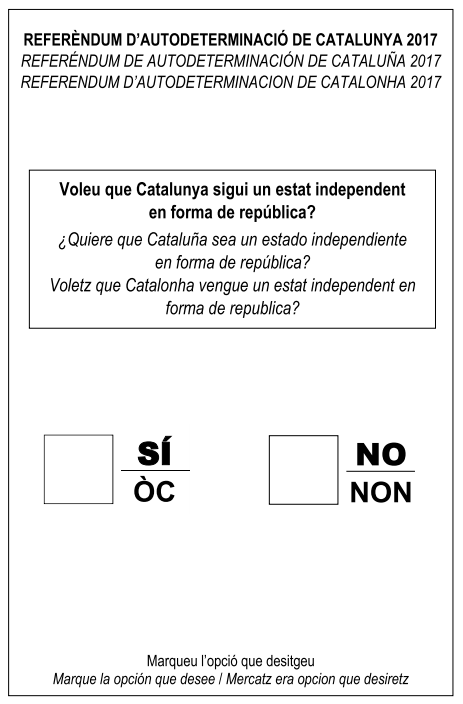
  74. Facsímil de la cèdula de votació que es farà servir al referèndum d'autodeterminació de Catalunya de 2017

    Story 55 of 56 · Modern Spain

    States and rulers

    The Catalan referendum

    Catalonia's government held an independence referendum ruled illegal by Spain's courts. Police tried to stop the vote, and parliament later declared independence, which Spain suspended.

    Next story2018 · Rajoy is ousted
  75. Portrait of Mariano Rajoy in a dark suit and tie

    Story 56 of 56 · Modern Spain

    States and rulers

    Rajoy is ousted

    Parliament removed the prime minister after a court found his party had benefited from a corruption network. Pedro Sánchez took over, the first successful no-confidence vote since 1978.

    NextJourney's end

Journey complete

You travelled 1,202,017 years

56 stories, c. 1,200,000 BC to 2018. More events are being researched and added.

Choose another countryBack to the start