

People and rights
The Laetoli footprints
Early human relatives walked upright across fresh volcanic ash, and their footprints were preserved. They are the oldest such tracks yet found.
- Where
- Laetoli
Footprints and fossils of our earliest ancestors, the Swahili city-states, Zanzibar's spice and slave trade, German and British rule, Nyerere's ujamaa, and the union of Tanganyika and Zanzibar.
Tanganyika independent 9 December 1961; united with Zanzibar as Tanzania in 1964
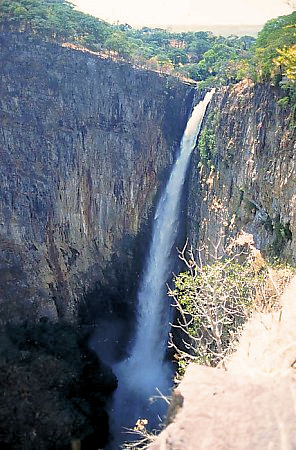
Kalambo Falls, c. 474,000 BC. Image: Worldtraveller at English Wikipedia · CC BY-SA 3.0, via Wikimedia Commons
Chapter I
Story 1 of 27 · Human origins and the Swahili coast
People and rights
Early human relatives walked upright across fresh volcanic ash, and their footprints were preserved. They are the oldest such tracks yet found.
About 1,800,000 years later
c. 3,600,000 BC to c. 1,800,000 BC

Story 2 of 27 · Human origins and the Swahili coast
People and rights
Louis and Mary Leakey found stone tools and fossils of early humans in the gorge. It became a key site for the study of human origins.
About 1,326,000 years later
c. 1,800,000 BC to c. 474,000 BC
Story 3 of 27 · Human origins and the Swahili coast
Culture and faith
At Kalambo Falls, on the Zambia–Tanzania border, two logs were worked and fitted together into a structure about 476,000 years ago, older than our own species. People went on living at the falls from the Stone Age to modern times.
About 471,000 years later
c. 474,000 BC to c. 3000 BC
About 1,800 years later
c. 3000 BC to c. 1200 BC
About 700 years later
c. 1200 BC to c. 500 BC

Story 6 of 27 · Human origins and the Swahili coast
People and rights
Bantu-speaking farmers spread out from an original home around the highlands between Cameroon and Nigeria. By about 500 BC the western stream had reached central Angola and the eastern stream had reached west of Lake Victoria.
About 560 years later
c. 500 BC to c. 60

Story 7 of 27 · Human origins and the Swahili coast
Science, trade and industry
A Greek-speaking merchant wrote a first-century guide to sea trade across the Red Sea, the Gulf of Aden, the Persian Gulf and the Indian Ocean. It names Rhapta, in Azania, as the farthest market down the African coast.
About 540 years later
c. 60 to 7th century

Story 8 of 27 · Human origins and the Swahili coast
Science, trade and industry
The Swahili coast runs from Mombasa and Lamu to Dar es Salaam and Kilwa. Greeks and Romans called it Azania, and Arab, Indian and Chinese writers from the 7th to the 14th century called it Zanj.
About 400 years later
7th century to c. 1000

Story 9 of 27 · Human origins and the Swahili coast
Science, trade and industry
A sultanate on an island off the coast controlled the gold trade from Zimbabwe and built great stone mosques and palaces.
About 400 years later
c. 1000 to 15th century

Story 10 of 27 · Human origins and the Swahili coast
Science, trade and industry
In the 15th century an Iron Age farming community in the Rift Valley of northern Tanzania built a large village at Engaruka, with stone terraces and channels that irrigated its fields.
About 400 years later
15th century to 1800

Story 11 of 27 · Human origins and the Swahili coast
Science, trade and industry
Tens of thousands of enslaved Africans were sold each year at Zanzibar. Britain pressed the sultan to close the market in 1873.

Story 12 of 27 · Human origins and the Swahili coast
States and rulers
The sultan built an empire that ruled the East African coast and Zanzibar, and spent most of his time there.

Story 13 of 27 · Human origins and the Swahili coast
States and rulers
The Omani sultans ruled from Zanzibar over the East African coast, and made the island rich on cloves, ivory and enslaved people.
Chapter II

Story 14 of 27 · German and British rule
States and rulers
Germany claimed a vast colony and put down resistance with force. It lost it after the First World War.

Story 15 of 27 · German and British rule
War and conflict
A British fleet bombarded the palace of a usurper sultan for about forty minutes, and he fled.

Story 16 of 27 · German and British rule
War and conflict
Villagers rose against forced cotton growing, believing that a medicine would turn bullets to water. Germany's reprisals killed perhaps 200,000.

Story 17 of 27 · German and British rule
War and conflict
A small German force under Lettow-Vorbeck tied down far larger British, Indian, Belgian and Portuguese forces for four years.

Story 18 of 27 · German and British rule
States and rulers
Julius Nyerere turned an association into a party that won independence peacefully.
Chapter III

Story 19 of 27 · Independent Tanzania
States and rulers
Nyerere became prime minister, and in 1962 the first president. He was called Mwalimu, the teacher.

Story 20 of 27 · Independent Tanzania
War and conflict
African revolutionaries overthrew the sultan and the Arab elite, and thousands of Arabs and Indians were killed or fled.

Story 21 of 27 · Independent Tanzania
States and rulers
The two states formed the United Republic of Tanzania, with Nyerere as president.

Story 22 of 27 · Independent Tanzania
States and rulers
Nyerere announced ujamaa, a policy of African socialism, with villagisation and nationalised industry.

Story 23 of 27 · Independent Tanzania
Science, trade and industry
China built a railway to carry copper to the sea at Dar es Salaam, avoiding white-ruled routes.

Story 24 of 27 · Independent Tanzania
War and conflict
After Amin's troops seized a border area, Tanzania counter-attacked and took Kampala.
Story 25 of 27 · Independent Tanzania
War and conflict
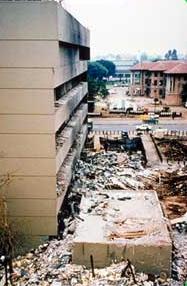
Al-Qaeda truck bombs struck the US embassies in Nairobi and Dar es Salaam. Over 200 people were killed in Nairobi, most of them Kenyans.

Story 26 of 27 · Independent Tanzania
States and rulers
Samia Suluhu Hassan took office after the death of John Magufuli.

Story 27 of 27 · Independent Tanzania
States and rulers
Samia Suluhu Hassan was declared winner with almost 98 per cent after her two main challengers were barred. Protests were met with force and an internet shutdown, and the UN believes hundreds died.
Journey complete
27 stories, c. 3,600,000 BC to 2025. More events are being researched and added.
People and rights
Early human relatives walked upright across fresh volcanic ash, and their footprints were preserved. They are the oldest such tracks yet found.

People and rights
Louis and Mary Leakey found stone tools and fossils of early humans in the gorge. It became a key site for the study of human origins.
Culture and faith
At Kalambo Falls, on the Zambia–Tanzania border, two logs were worked and fitted together into a structure about 476,000 years ago, older than our own species. People went on living at the falls from the Stone Age to modern times.
Culture and faith
Herders who probably spoke Cushitic languages brought cattle, sheep and goats south into Kenya. They first lived in the lowlands, then moved into the Kenyan and Tanzanian highlands about 3,300 years ago, burying their dead in cairns and grinding food in stone bowls.
Culture and faith
Found in 2012 in Babati District, Luxmanda is the largest and southernmost known settlement of the Savanna Pastoral Neolithic herders. Radiocarbon dates show people lived there between 3,200 and 2,900 years ago.

People and rights
Bantu-speaking farmers spread out from an original home around the highlands between Cameroon and Nigeria. By about 500 BC the western stream had reached central Angola and the eastern stream had reached west of Lake Victoria.
Farming, pottery and iron probably helped them move into new lands.

Science, trade and industry
A Greek-speaking merchant wrote a first-century guide to sea trade across the Red Sea, the Gulf of Aden, the Persian Gulf and the Indian Ocean. It names Rhapta, in Azania, as the farthest market down the African coast.

Science, trade and industry
The Swahili coast runs from Mombasa and Lamu to Dar es Salaam and Kilwa. Greeks and Romans called it Azania, and Arab, Indian and Chinese writers from the 7th to the 14th century called it Zanj.

Science, trade and industry
A sultanate on an island off the coast controlled the gold trade from Zimbabwe and built great stone mosques and palaces.

Science, trade and industry
In the 15th century an Iron Age farming community in the Rift Valley of northern Tanzania built a large village at Engaruka, with stone terraces and channels that irrigated its fields.

Science, trade and industry
Tens of thousands of enslaved Africans were sold each year at Zanzibar. Britain pressed the sultan to close the market in 1873.

States and rulers
The sultan built an empire that ruled the East African coast and Zanzibar, and spent most of his time there.

States and rulers
The Omani sultans ruled from Zanzibar over the East African coast, and made the island rich on cloves, ivory and enslaved people.

States and rulers
Germany claimed a vast colony and put down resistance with force. It lost it after the First World War.

War and conflict
A British fleet bombarded the palace of a usurper sultan for about forty minutes, and he fled.

War and conflict
Villagers rose against forced cotton growing, believing that a medicine would turn bullets to water. Germany's reprisals killed perhaps 200,000.

War and conflict
A small German force under Lettow-Vorbeck tied down far larger British, Indian, Belgian and Portuguese forces for four years.

States and rulers
Julius Nyerere turned an association into a party that won independence peacefully.

States and rulers
Nyerere became prime minister, and in 1962 the first president. He was called Mwalimu, the teacher.

War and conflict
African revolutionaries overthrew the sultan and the Arab elite, and thousands of Arabs and Indians were killed or fled.

States and rulers
The two states formed the United Republic of Tanzania, with Nyerere as president.

States and rulers
Nyerere announced ujamaa, a policy of African socialism, with villagisation and nationalised industry.

Science, trade and industry
China built a railway to carry copper to the sea at Dar es Salaam, avoiding white-ruled routes.

War and conflict
After Amin's troops seized a border area, Tanzania counter-attacked and took Kampala.
War and conflict
Al-Qaeda truck bombs struck the US embassies in Nairobi and Dar es Salaam. Over 200 people were killed in Nairobi, most of them Kenyans.
It brought Osama bin Laden to world attention.
States and rulers
Samia Suluhu Hassan took office after the death of John Magufuli.

States and rulers
Samia Suluhu Hassan was declared winner with almost 98 per cent after her two main challengers were barred. Protests were met with force and an internet shutdown, and the UN believes hundreds died.