Hagia Sophia

All countries

Turkey

Göbekli Tepe and Çatalhöyük, Hittites and Greeks, Byzantium and the Ottomans, and the republic Atatürk founded.

A republic since 29 October 1923

Stories
47
Distance
11,522 years
Route
c. 9500 BC to 2023
  1. Early Anatolia11 stories
  2. Classical Anatolia8 stories
  3. Seljuks and Ottomans15 stories
  4. Republic of Turkey13 stories
Begin the journey

Hagia Sophia, 537. Image: Arild Vågen · CC BY-SA 3.0, via Wikimedia Commons

  1. Chapter I

    Early Anatolia

    11 stories in this chapter

  2. Göbekli Tepe, Şanlıurfa

    Story 1 of 47 · Early Anatolia

    Culture and faith

    Göbekli Tepe

    Hunter-gatherers raised circles of carved stone pillars, some over five metres tall, decorated with foxes, boars and vultures.

    Next storyc. 8600 BC · Çayönü
  3. About 900 years later

    c. 9500 BC to c. 8600 BC

  4. Ein Zellplan-Gebäude in Cayönü

    Story 2 of 47 · Early Anatolia

    Culture and faith

    Çayönü

    At Çayönü in south-eastern Turkey, a Pre-Pottery Neolithic village thrived from about 8630 to 6800 BC. Its people began farming in the ninth millennium BC, building on the tradition of Göbekli Tepe.

    Next storyc. 7100 BC · Çatalhöyük
  5. About 1,500 years later

    c. 8600 BC to c. 7100 BC

  6. Çatalhöyük

    Story 3 of 47 · Early Anatolia

    People and rights

    Çatalhöyük

    Thousands of people lived in a town of packed mud-brick houses with no streets, entered through the roofs, and decorated with wall paintings and bull horns.

    Next story6th millennium BC · Yumuktepe
  7. About 1,100 years later

    c. 7100 BC to 6th millennium BC

  8. Yümüktepe tumulus in Mersin, Turkey

    Story 4 of 47 · Early Anatolia

    Culture and faith

    Yumuktepe

    The mound of Yumuktepe in Mersin was lived in from the Neolithic to the Middle Ages. Its oldest layers date to the 8th millennium BC, and nine levels of the 6th millennium BC hold some of its first pottery.

    Next storyc. 4200 BC · Copper at Değirmentepe
  9. About 1,800 years later

    6th millennium BC to c. 4200 BC

  10. Story 5 of 47 · Early Anatolia

    Science, trade and industry

    Copper at Değirmentepe

    At Değirmentepe near Malatya, villagers of the Ubaid period melted and cast copper, with the busiest level dated to about 4166 BC. Some 450 clay sealings show trade and organised production.

    Next storyc. 4000 BC · The Kura–Araxes culture
  11. About 200 years later

    c. 4200 BC to c. 4000 BC

  12. Pottery jar, Tepeyatagi, Khudat district, Kur-Araz culture

    Story 6 of 47 · Early Anatolia

    Culture and faith

    The Kura–Araxes culture

    From about 4000 to 2000 BC, farming and herding villages of the Kura–Araxes culture spread across the southern Caucasus and beyond, leaving distinctive burnished pottery.

    Next storyc. 3300 BC · Arslantepe's temple and palace
  13. About 700 years later

    c. 4000 BC to c. 3300 BC

  14. Arslantepe, prähistorischer Siedlungshügel bei Malatya, Türkei, Wandmalereien

    Story 7 of 47 · Early Anatolia

    States and rulers

    Arslantepe's temple and palace

    Near Malatya, a large temple and palace complex grew up at Arslantepe in the late Uruk period. The settlement was burned about 3000 BC, and the site later became the Neo-Hittite city of Melid.

    Next storyc. 3000 BC · Troy
  15. About 300 years later

    c. 3300 BC to c. 3000 BC

  16. Walls of Troy, Hisarlik, Turkey

    Story 8 of 47 · Early Anatolia

    States and rulers

    Troy

    Settlers first came to the hill of Hisarlık about 3600 BC, and by about 3000 BC it was a small fortified town, the first of many Troys. The city was rebuilt over 4,000 years and is the setting of the Greek myth of the Trojan War.

    Next storyc. 2850 BC · The royal tombs of Alaca Höyük
  17. About 150 years later

    c. 3000 BC to c. 2850 BC

  18. Sphinx Gate, Alaca Höyük, Turkey

    Story 9 of 47 · Early Anatolia

    Culture and faith

    The royal tombs of Alaca Höyük

    At Alaca Höyük in central Anatolia, fourteen shaft graves known as the Royal Tombs date from 2850 to 2450 BC. They belong to the same age as the Royal Tombs of Ur and the second city of Troy.

    Next storyc. 1950 BC · Assyrian merchants at Kaneš
  19. About 900 years later

    c. 2850 BC to c. 1950 BC

  20. Kültepe-Kanes, Bronze Age site in central Turkey, upper town, southwest corner of the palace on the citadel

    Story 10 of 47 · Early Anatolia

    Science, trade and industry

    Assyrian merchants at Kaneš

    At Kültepe, ancient Kaneš, Assyrian merchants ran a trading district from the early second millennium BC. More than 23,000 cuneiform tablets from their homes form the largest private archive of the ancient Near East.

    Next storyc. 1650 BC · Hattusa, the Hittite capital
  21. About 300 years later

    c. 1950 BC to c. 1650 BC

  22. Hattusa, the Hittite capital

    Story 11 of 47 · Early Anatolia

    States and rulers

    Hattusa, the Hittite capital

    The Hittites ruled an empire from Hattusa, whose archives of clay tablets include one of the earliest known peace treaties, with Egypt.

    Next storyc. 800 BC · Midas and Phrygia
  23. About 850 years later

    c. 1650 BC to c. 800 BC

  24. Chapter II

    Classical Anatolia

    8 stories in this chapter

  25. Map of the ancient region of Phrygia, made by User:Astrokey44 , with corrections by User:Amizzoni

    Story 12 of 47 · Classical Anatolia

    States and rulers

    Midas and Phrygia

    Phrygia, in west-central Anatolia, reached its peak in the late 8th century BC under King Midas, who rivalled Assyria and Urartu. Cimmerians sacked its capital, Gordium, about 695 BC.

    Next storyc. 600 BC · The first coins
  26. About 200 years later

    c. 800 BC to c. 600 BC

  27. Lydian electrum coins stamped with lion heads

    Story 13 of 47 · Classical Anatolia

    Science, trade and industry

    The first coins

    The kingdom of Lydia, ruled from Sardis, struck the first coins, from electrum, a natural mix of gold and silver. Its last king, Croesus, became a byword for wealth.

    Next storyc. 550 BC · The Temple of Artemis
  28. The Temple of Artemis

    Story 14 of 47 · Classical Anatolia

    Culture and faith

    The Temple of Artemis

    The Greek city of Ephesus built a vast marble temple to Artemis, rebuilt after an arsonist burned it in 356 BC.

    Next story133 BC · Rome inherits Pergamon
  29. About 420 years later

    c. 550 BC to 133 BC

  30. Map showing the Roman province of Asia in western Anatolia

    Story 15 of 47 · Classical Anatolia

    States and rulers

    Rome inherits Pergamon

    The last king of Pergamon left his kingdom to Rome in his will. It became the Roman province of Asia.

    Next story330 · Constantinople is founded
  31. About 460 years later

    133 BC to 330

  32. Topographical map of Constantinople during the Byzantine period

    Story 16 of 47 · Classical Anatolia

    States and rulers

    Constantinople is founded

    Emperor Constantine refounded the Greek city of Byzantium as his new capital, Constantinople.

    Next story395 · The empire splits for good
  33. A gold coin with the head of Emperor Theodosius I

    Story 17 of 47 · Classical Anatolia

    States and rulers

    The empire splits for good

    After Theodosius died his sons divided the Roman Empire. The eastern half, ruled from Constantinople, outlived the western by nearly a thousand years.

    Next story537 · Hagia Sophia
  34. Hagia Sophia

    Story 18 of 47 · Classical Anatolia

    Culture and faith

    Hagia Sophia

    Emperor Justinian's great church, with a dome that seemed to float on light, was finished in under six years.

    Next story1037 · The Seljuk Empire
  35. About 500 years later

    537 to 1037

  36. The Seljuk Empire (picture from the Wikipedia article)

    Story 19 of 47 · Classical Anatolia

    States and rulers

    The Seljuk Empire

    The Seljuks, a Turkmen dynasty, took Merv, then Persia and Baghdad. Alp Arslan ruled from Merv.

    Next story1071 · The Battle of Manzikert
  37. Chapter III

    Seljuks and Ottomans

    15 stories in this chapter

  38. The Battle of Manzikert

    Story 20 of 47 · Seljuks and Ottomans

    War and conflict

    The Battle of Manzikert

    The Seljuk Turks under Alp Arslan defeated and captured the Byzantine emperor Romanos IV.

    Next story1077 · The Seljuks found the Sultanate of Rum
  39. Map of the Sultanate of Rûm

    Story 21 of 47 · Seljuks and Ottomans

    States and rulers

    The Seljuks found the Sultanate of Rum

    After Manzikert a branch of the Seljuk Turks set up a state in Anatolia. Its capital was first Nicaea and later Konya.

    Next story1204 · Crusaders sack Constantinople
  40. The Taking of Constantinople

    Story 22 of 47 · Seljuks and Ottomans

    States and rulers

    Crusaders sack Constantinople

    Instead of reaching Jerusalem, the Fourth Crusade stormed the Christian city and looted it. It set up a Latin empire that lasted 57 years.

    Next storyc. 1299 · Osman founds the Ottoman state
  41. Osman I , the founder of the Ottoman Empire

    Story 23 of 47 · Seljuks and Ottomans

    States and rulers

    Osman founds the Ottoman state

    A Turkish chieftain on the Byzantine frontier gave his name to a dynasty that ruled for more than six hundred years.

    Next story1453 · The fall of Constantinople
  42. About 150 years later

    c. 1299 to 1453

  43. Le siège de Constantinople (1453) by Jean Le Tavernier after 1455

    Story 24 of 47 · Seljuks and Ottomans

    War and conflict

    The fall of Constantinople

    Sultan Mehmed II's army, with giant cannon, broke through the walls of Constantinople after a 53-day siege. The last Byzantine emperor died fighting.

    Next story1557 · The Süleymaniye Mosque
  44. Süleymaniye Mosque in Istanbul

    Story 25 of 47 · Seljuks and Ottomans

    Culture and faith

    The Süleymaniye Mosque

    The architect Mimar Sinan completed a great mosque for Suleiman the Magnificent on Istanbul's third hill.

    Next story1839 · The Tanzimat reforms
  45. About 280 years later

    1557 to 1839

  46. Edict of Gülhane

    Story 26 of 47 · Seljuks and Ottomans

    States and rulers

    The Tanzimat reforms

    The Ottoman government began a series of reforms promising equality before the law for all subjects, modern schools and a reorganised army.

    Next story1876 · The Ottoman Empire gets a constitution
  47. Meeting of the First Ottoman Parliament, Constantinople, March 1877

    Story 27 of 47 · Seljuks and Ottomans

    States and rulers

    The Ottoman Empire gets a constitution

    Sultan Abdulhamid II proclaimed a constitution and a parliament. He suspended both in 1878.

    Next story1908 · The Young Turks restore the constitution
  48. Young Turk Revolution Declaration - Armenian, Greek Orthodox & Muslim religious leaders

    Story 28 of 47 · Seljuks and Ottomans

    States and rulers

    The Young Turks restore the constitution

    Officers of the Committee of Union and Progress forced the sultan to reinstate the constitution and parliament.

    Next story1913 · The raid on the Sublime Porte
  49. An illustration of the 1913 raid on the Sublime Porte

    Story 29 of 47 · Seljuks and Ottomans

    States and rulers

    The raid on the Sublime Porte

    Armed officers burst into the cabinet room and forced the grand vizier to resign. The three pashas, Enver, Talaat and Cemal, ruled for the next five years.

    Next story1915 · Gallipoli
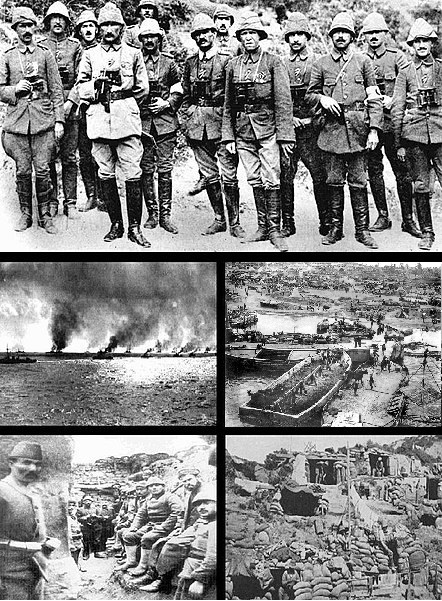
  50. Gallipoli

    Story 30 of 47 · Seljuks and Ottomans

    War and conflict

    Gallipoli

    British, French, Australian and New Zealand forces tried to force the Dardanelles and take Constantinople. Ottoman troops, with Mustafa Kemal among their commanders, held them off.

    Next story1915 · The Armenian genocide
  51. Picture showing Armenians killed during the Armenian Genocide

    Story 31 of 47 · Seljuks and Ottomans

    People and rights

    The Armenian genocide

    The Ottoman government deported and massacred its Armenian subjects. About a million or more Armenians died in killings and death marches into the Syrian desert.

    Next story1919 · The Greco-Turkish War
  52. Greek infantry charge in river Ermos during the Greco-Turkish War (1919-1922)

    Story 32 of 47 · Seljuks and Ottomans

    War and conflict

    The Greco-Turkish War

    Greece invaded Anatolia and was beaten. About a million Greeks left Turkey.

    Next story1920 · A rival government in Ankara
  53. The Grand National Assembly of Turkey, Ankara

    Story 33 of 47 · Seljuks and Ottomans

    States and rulers

    A rival government in Ankara

    While Allied forces occupied Istanbul, nationalists opened a new assembly in Ankara under Mustafa Kemal and organised resistance.

    Next story1922 · The sultanate is abolished
  54. Sultan Vahideddin (Mehmed VI) departing from the backdoor of the Dolmabahçe Palace in Istanbul

    Story 34 of 47 · Seljuks and Ottomans

    States and rulers

    The sultanate is abolished

    The Ankara assembly ended more than 600 years of Ottoman monarchy. The last sultan left for exile on a British ship.

    Next story1923 · The Republic is proclaimed
  55. Chapter IV

    Republic of Turkey

    13 stories in this chapter

  56. Aerial view of the historical peninsula and modern skyline of Istanbul

    Story 35 of 47 · Republic of Turkey

    States and rulers

    The Republic is proclaimed

    After winning the war of independence, the Grand National Assembly proclaimed the Republic of Turkey, with Ankara as capital and Mustafa Kemal as president.

    Next story1924 · The caliphate is abolished
  57. Abolition of the Caliphate, The Last Caliph, Le Petit Journal illustré, 16 March 1924

    Story 36 of 47 · Republic of Turkey

    States and rulers

    The caliphate is abolished

    The assembly also dissolved the caliphate, the religious office the Ottoman sultans had claimed since 1517, and sent the Ottoman family abroad.

    Next story1928 · The new alphabet
  58. The new alphabet

    Story 37 of 47 · Republic of Turkey

    Culture and faith

    The new alphabet

    Turkey replaced the Arabic script with a Latin alphabet, and Atatürk toured the country with a blackboard teaching it.

    Next story1950 · The Democrats end one-party rule
  59. 1957 Turkey general elections

    Story 38 of 47 · Republic of Turkey

    States and rulers

    The Democrats end one-party rule

    The first free election removed the Republican People's Party that had governed alone since 1923. Adnan Menderes became prime minister.

    Next story1960 · The 1960 coup
  60. Millî Birlik Komitesi bayrağı (veya simgesi)

    Story 39 of 47 · Republic of Turkey

    States and rulers

    The 1960 coup

    Army officers overthrew the elected government. Prime Minister Adnan Menderes was hanged the next year.

    Next story1974 · The Turkish invasion
  61. Ethnic distribution svg map of Cyprus in 1973, language neutral (check the source for town names and legend)

    Story 40 of 47 · Republic of Turkey

    War and conflict

    The Turkish invasion

    Turkey invaded and took the north. About 200,000 Greek Cypriots fled south.

    Next story1980 · The army seizes power again
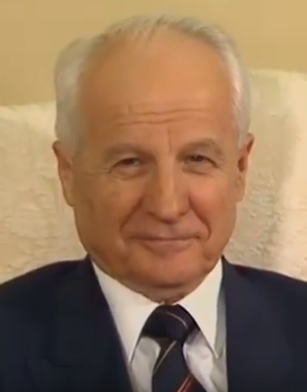
  62. Portrait of Kenan Evren, the general who led the 1980 coup, in a suit and striped tie in later life

    Story 41 of 47 · Republic of Turkey

    States and rulers

    The army seizes power again

    General Kenan Evren led the third military intervention in twenty years. Hundreds of thousands were detained, parties were banned, and a new constitution followed in 1982.

    Next story1999 · The İzmit earthquake
  63. Map showing the epicentre of the 1999 İzmit earthquake

    Story 42 of 47 · Republic of Turkey

    Disasters and epidemics

    The İzmit earthquake

    An earthquake struck the industrial region east of Istanbul, killing about 17,000 people.

    Next story2002 · The AKP wins
  64. 2002 Turkish General Election by Province

    Story 43 of 47 · Republic of Turkey

    States and rulers

    The AKP wins

    A party only a year old won a landslide after an economic crisis. Recep Tayyip Erdoğan became prime minister in 2003.

    Next story2005 · The BTC pipeline
  65. Lage der BTC-Pipeline Licensing Projektionsmethode Flächentreue Azimutalprojektion Kartenbegrenzungen 34 bis 52 Ö.L

    Story 44 of 47 · Republic of Turkey

    Science, trade and industry

    The BTC pipeline

    A pipeline took Caspian oil to Turkey's Mediterranean coast, avoiding Russia.

    Next story2016 · The 2016 coup attempt
  66. Anti-coup protesters after 15 July 2016 Turkish coup d'état attempt in Bağcılar, İstanbul, Turkey

    Story 45 of 47 · Republic of Turkey

    States and rulers

    The 2016 coup attempt

    A faction of the army tried to seize power. Crowds answered President Erdoğan's call to resist, and about 250 people were killed.

    Next story2017 · Turkey votes for a presidential system
  67. Turkish constitutional referendum 2017 geographical results

    Story 46 of 47 · Republic of Turkey

    States and rulers

    Turkey votes for a presidential system

    By a narrow margin voters replaced the parliamentary system with a powerful executive presidency and abolished the post of prime minister.

    Next story2023 · The 2023 earthquakes
  68. 2023 Turkey–Syria earthquake

    Story 47 of 47 · Republic of Turkey

    Disasters and epidemics

    The 2023 earthquakes

    Two huge earthquakes hours apart destroyed towns across south-eastern Turkey and northern Syria. More than 50,000 people died in Turkey.

    NextJourney's end

Journey complete

You travelled 11,522 years

47 stories, c. 9500 BC to 2023. More events are being researched and added.

Choose another countryBack to the start