Stonehenge

All countries

United Kingdom

Early humans, Stonehenge, Romans, Vikings and Normans, then the union of England and Scotland, the Industrial Revolution and modern Britain.

Great Britain united in 1707; the United Kingdom in 1801, in its present form since 1922

Stories
69
Distance
852,024 years
Route
c. 850,000 BC to 2024
  1. Prehistoric Britain16 stories
  2. Roman and medieval Britain16 stories
  3. Tudors, Stuarts and union12 stories
  4. Industry and empire5 stories
  5. Modern Britain20 stories
Begin the journey

Stonehenge, c. 2500 BC. Image: Stefan Kühn · CC BY-SA 3.0, via Wikimedia Commons

  1. Chapter I

    Prehistoric Britain

    16 stories in this chapter

  2. Footprints at Happisburgh

    Story 1 of 69 · Prehistoric Britain

    People and rights

    Footprints at Happisburgh

    Storms on the Norfolk coast exposed footprints left in estuary mud by a small group of early humans, probably Homo antecessor, more than 800,000 years ago. They washed away within weeks.

    Next storyc. 9300 BC · Star Carr
  3. About 840,700 years later

    c. 850,000 BC to c. 9300 BC

  4. The site of the archaeological excavations at Star Carr

    Story 2 of 69 · Prehistoric Britain

    Culture and faith

    Star Carr

    Near Scarborough, hunters lived by a lake at Star Carr from about 9300 to 8500 BC, when Britain was still joined to Europe. They left Britain's oldest known house, antler harpoon points and red deer skull-caps that may have been worn as headdresses.

    Next storyc. 8300 BC · Cheddar Man
  5. About 1,000 years later

    c. 9300 BC to c. 8300 BC

  6. Story 3 of 69 · Prehistoric Britain

    People and rights

    Cheddar Man

    Workmen draining Gough's Cave in Cheddar Gorge in 1903 uncovered the bones of a hunter-gatherer who died in his early twenties some 10,300 years ago. No older human skeleton this complete has been found in Britain.

    Next storyc. 6200 BC · The Storegga tsunami
  7. About 2,100 years later

    c. 8300 BC to c. 6200 BC

  8. Story 4 of 69 · Prehistoric Britain

    Disasters and epidemics

    The Storegga tsunami

    About 6200 BC, a huge stretch of seabed slid off the edge of Norway's continental shelf. The landslides sent a tsunami across the North Atlantic, at a time when rising seas were drowning Doggerland, the land bridge to Europe.

    Next story3807 BC · The Sweet Track
  9. About 2,400 years later

    c. 6200 BC to 3807 BC

  10. The Sweet Track , Somerset Levels

    Story 5 of 69 · Prehistoric Britain

    Science, trade and industry

    The Sweet Track

    Neolithic people laid a timber walkway across the wet Somerset Levels in 3807 BC, a date fixed by tree rings. It is the second-oldest timber trackway found in the British Isles.

    Next storyc. 3180 BC · Skara Brae
  11. About 630 years later

    3807 BC to c. 3180 BC

  12. Neolithic excavations at Skara Brae on Orkney in Scotland

    Story 6 of 69 · Prehistoric Britain

    Culture and faith

    Skara Brae

    On Orkney, a storm uncovered Skara Brae, a stone-built Neolithic village lived in from about 3180 to 2500 BC. With its stone beds, shelves and passages it is Europe's most complete Neolithic village.

    Next storyc. 2800 BC · The Bell Beaker culture
  13. About 380 years later

    c. 3180 BC to c. 2800 BC

  14. Bell Beaker artefacts, Spain

    Story 7 of 69 · Prehistoric Britain

    Culture and faith

    The Bell Beaker culture

    From as early as 2800 BC, people across Europe, from Iberia to the British Isles and beyond, made inverted-bell drinking cups, used at the start of the European Bronze Age.

    Next storyc. 2500 BC · Stonehenge
  15. About 300 years later

    c. 2800 BC to c. 2500 BC

  16. Stonehenge

    Story 8 of 69 · Prehistoric Britain

    Culture and faith

    Stonehenge

    Farming communities raised a circle of huge sarsen stones, aligned with the midsummer sunrise and midwinter sunset, on a site already sacred for centuries. Smaller bluestones were dragged from Wales.

    Next storyc. 2300 BC · The Amesbury Archer
  17. About 200 years later

    c. 2500 BC to c. 2300 BC

  18. The Amesbury Archer

    Story 9 of 69 · Prehistoric Britain

    People and rights

    The Amesbury Archer

    Near Stonehenge, the grave of an early Bronze Age man was found at Amesbury in 2002. He was buried about 2300 BC with many arrowheads, three tiny copper knives and the earliest known gold objects found in England.

    Next storyc. 1550 BC · The Dover Bronze Age boat
  19. About 750 years later

    c. 2300 BC to c. 1550 BC

  20. it's really great! @dover museum

    Story 10 of 69 · Prehistoric Britain

    Culture and faith

    The Dover Bronze Age boat

    Road builders at Dover found a large prehistoric boat in 1992. It dates from about 1575 to 1520 BC and is one of the oldest substantially intact boats in the world.

    Next storyc. 1300 BC · The Atlantic Bronze Age
  21. About 250 years later

    c. 1550 BC to c. 1300 BC

  22. Bronze age hut reproduction, in Campo Lameiro , Galicia

    Story 11 of 69 · Prehistoric Britain

    Culture and faith

    The Atlantic Bronze Age

    Atlantic Bronze Age is a loose label for the period from about 1300 to 700 BC along the Atlantic coast of Britain, France, Ireland, Portugal and Spain. The term has never been formally defined.

    Next storyc. 950 BC · Must Farm, Britain's Pompeii
  23. About 350 years later

    c. 1300 BC to c. 950 BC

  24. Must Farm, Britain's Pompeii

    Story 12 of 69 · Prehistoric Britain

    Culture and faith

    Must Farm, Britain's Pompeii

    At Must Farm in Cambridgeshire, five houses on stilts above a river were built about 950 BC. A sudden fire dropped them into the water, which preserved them so well that the site is called Britain's Pompeii.

    Next storyc. 600 BC · Maiden Castle
  25. About 350 years later

    c. 950 BC to c. 600 BC

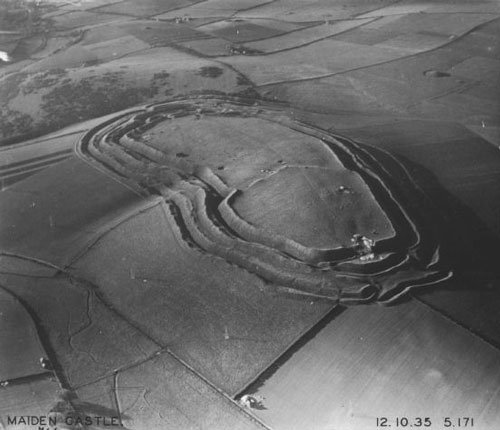
  26. Atlas of Hillforts 3598 An aerial view of Maiden Castle in Dorset

    Story 13 of 69 · Prehistoric Britain

    States and rulers

    Maiden Castle

    Near Dorchester, an Iron Age hillfort was built at Maiden Castle about 600 BC. The hill had been used to grow crops around 1800 BC and was then abandoned.

    Next storyc. 500 BC · La Tène
  27. DO NOT USE THIS MAP It was made in 2005 as a first draft and doesn't remotely satisfy inclusion criteria for Wikipedia

    Story 14 of 69 · Prehistoric Britain

    Culture and faith

    La Tène

    A site on Lake Neuchâtel gave its name to the later Iron Age culture of the Celts.

    Next storyc. 325 BC · Pytheas sails to the north
  28. About 180 years later

    c. 500 BC to c. 325 BC

  29. Statue of Pythéas made by Auguste Ottin (1811-1890) and placed on the facade of the Palais de la Bourse in Marseille

    Story 15 of 69 · Prehistoric Britain

    People and rights

    Pytheas sails to the north

    The Greek explorer Pytheas of Massalia made a voyage to northern Europe about 325 BC and explored the coast of Britain. His own account is lost and survives only in the writings of others.

    Next story55 BC · Caesar invades Britain
  30. About 270 years later

    c. 325 BC to 55 BC

  31. Caesar invades Britain

    Story 16 of 69 · Prehistoric Britain

    War and conflict

    Caesar invades Britain

    In 55 and 54 BC Julius Caesar crossed to Britain during his Gallic Wars. The first landing, with two legions, achieved little beyond a foothold in Kent. The second invasion was larger.

    Next story43 · The Roman invasion
  32. Chapter II

    Roman and medieval Britain

    16 stories in this chapter

  33. Campaigns in the Roman Conquest of Britain, 43 — 84

    Story 17 of 69 · Roman and medieval Britain

    War and conflict

    The Roman invasion

    Emperor Claudius sent four legions across the Channel. Over four decades Rome conquered what is now England and Wales, but never the far north.

    Next storyc. 60 · Boudica's revolt
  34. Bronze statue of Boudica in her chariot at Westminster, London

    Story 18 of 69 · Roman and medieval Britain

    War and conflict

    Boudica's revolt

    Boudica, queen of the Iceni, led a rising against Roman abuses and burned Colchester, London and St Albans before the Romans crushed her army.

    Next story122 · Hadrian's Wall
  35. A section of Hadrian's Wall located in the North of the United Kingdom

    Story 19 of 69 · Roman and medieval Britain

    States and rulers

    Hadrian's Wall

    Emperor Hadrian ordered a stone wall built across northern Britain, 117 kilometres from coast to coast, with forts along its length.

    Next story260 · The Gallic Empire
  36. Story 20 of 69 · Roman and medieval Britain

    States and rulers

    The Gallic Empire

    In 260, in the crisis of the third century, the general Postumus set up a breakaway state that at its height held Gaul, Germania, Britain and Hispania. Emperor Aurelian took it back after the battle of Châlons in 274.

    Next story410 · Rome leaves Britain
  37. 150 years later

    260 to 410

  38. Henry Marriott Paget - Roman soldiers leaving Britain

    Story 21 of 69 · Roman and medieval Britain

    States and rulers

    Rome leaves Britain

    With barbarians at the gates of Italy, Emperor Honorius told Britain's towns to look after their own defence. Roman officials and troops had already gone.

    Next storyc. 625 · The Sutton Hoo ship burial
  39. About 220 years later

    410 to c. 625

  40. The Sutton Hoo ship burial

    Story 22 of 69 · Roman and medieval Britain

    Culture and faith

    The Sutton Hoo ship burial

    An Anglo-Saxon king, probably Rædwald of East Anglia, was buried in a 27-metre ship under a mound, with a magnificent helmet, gold and silver.

    Next story793 · Vikings raid Lindisfarne
  41. About 170 years later

    c. 625 to 793

  42. The ruins of Lindisfarne Priory, on the site of the monastery the Vikings raided

    Story 23 of 69 · Roman and medieval Britain

    War and conflict

    Vikings raid Lindisfarne

    Norse raiders plundered the monastery of Lindisfarne, killing monks and carrying off treasure.

    Next story927 · Æthelstan unites the English
  43. Frontispiece of Bede's Life of St Cuthbert , showing King Æthelstan (924–39) presenting a copy of the book to the saint himself

    Story 24 of 69 · Roman and medieval Britain

    States and rulers

    Æthelstan unites the English

    Æthelstan took the Viking kingdom of York and became the first king to rule all the English peoples. He is often called the first king of England.

    Next story1016 · A Danish king rules England
  44. Canute the Great illustrated in an Initial of a medieval mansucript

    Story 25 of 69 · Roman and medieval Britain

    States and rulers

    A Danish king rules England

    After years of Viking attacks Cnut of Denmark won the throne. England became part of a North Sea empire with Denmark and Norway.

    Next story1066 · The Battle of Hastings
  45. Bayeux Tapestry - Scene 57: the death of King Harold at the Battle of Hastings

    Story 26 of 69 · Roman and medieval Britain

    War and conflict

    The Battle of Hastings

    Duke William of Normandy defeated and killed King Harold II and was crowned on Christmas Day.

    Next story1066 · William is crowned at Westminster
  46. Bayeux Tapestry - Scene 23 (detail): William the Conqueror

    Story 27 of 69 · Roman and medieval Britain

    States and rulers

    William is crowned at Westminster

    Duke William of Normandy was crowned on Christmas Day, weeks after Hastings. Norman lords replaced the English ruling class.

    Next story1154 · The Angevin kings
  47. Portrait of Henry II of England

    Story 28 of 69 · Roman and medieval Britain

    States and rulers

    The Angevin kings

    After a civil war between Stephen and Matilda, Matilda's son Henry took the throne. His lands stretched from the Scottish border to the Pyrenees.

    Next story1215 · Magna Carta
  48. Magna Carta

    Story 29 of 69 · Roman and medieval Britain

    States and rulers

    Magna Carta

    Rebel barons forced King John to seal a charter limiting royal power and promising justice under law.

    Next story1314 · The Battle of Bannockburn
  49. Bannockburn : Bruce Reviewing His Troops Before the Battle

    Story 30 of 69 · Roman and medieval Britain

    War and conflict

    The Battle of Bannockburn

    Robert the Bruce's Scots defeated a much larger English army under Edward II.

    Next story1348 · The Black Death
  50. Small lead crosses placed in English graves in times of plague

    Story 31 of 69 · Roman and medieval Britain

    Disasters and epidemics

    The Black Death

    Plague arrived in a Dorset port and swept through England, killing perhaps 40 to 60 per cent of the people.

    Next story1399 · Henry Bolingbroke deposes Richard II
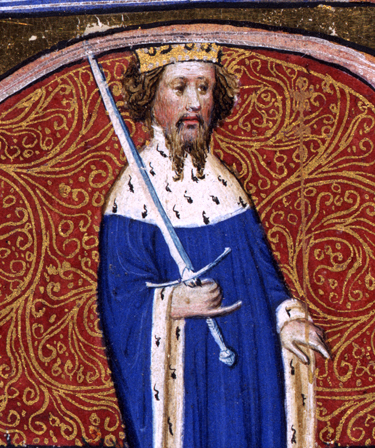
  51. Description: Illuminated initial letter showing Henry IV from the records of the Duchy of Lancaster

    Story 32 of 69 · Roman and medieval Britain

    States and rulers

    Henry Bolingbroke deposes Richard II

    Exiled by Richard II, Henry Bolingbroke came home, captured the king and took the throne with Parliament's backing.

    Next story1485 · The Tudors take the throne
  52. Chapter III

    Tudors, Stuarts and union

    12 stories in this chapter

  53. Battle of Bosworth Field

    Story 33 of 69 · Tudors, Stuarts and union

    States and rulers

    The Tudors take the throne

    Henry Tudor defeated and killed Richard III at Bosworth and became Henry VII. It ended the Wars of the Roses.

    Next story1534 · The break with Rome
  54. Portrait of Henry VIII after Hans Holbein the Younger

    Story 34 of 69 · Tudors, Stuarts and union

    Culture and faith

    The break with Rome

    Denied a divorce by the pope, Henry VIII made himself head of the Church in England and then dissolved the monasteries.

    Next story1603 · A Scottish king inherits England
  55. Seventeenth-century engraved portrait of James VI of Scotland, who also became James I of England

    Story 35 of 69 · Tudors, Stuarts and union

    States and rulers

    A Scottish king inherits England

    When Elizabeth I died without children, her cousin James VI of Scotland became James I of England too. The two kingdoms kept separate parliaments for another century.

    Next story1642 · The Civil Wars
  56. The Civil Wars

    Story 36 of 69 · Tudors, Stuarts and union

    War and conflict

    The Civil Wars

    King Charles I fought Parliament across England, Scotland and Ireland. He was beheaded in 1649, and Oliver Cromwell ruled a republic.

    Next story1649 · Charles I is executed
  57. A seventeenth-century print showing the beheading of Charles I outside the Banqueting House

    Story 37 of 69 · Tudors, Stuarts and union

    States and rulers

    Charles I is executed

    Parliament put the king on trial for treason and had him beheaded outside the Banqueting House. England became a commonwealth, with no king or House of Lords.

    Next story1653 · Cromwell becomes Lord Protector
  58. Portrait miniature of Oliver Cromwell by Samuel Cooper

    Story 38 of 69 · Tudors, Stuarts and union

    States and rulers

    Cromwell becomes Lord Protector

    After dissolving Parliament, Oliver Cromwell took the title Lord Protector under a written constitution. He ruled until he died in 1658.

    Next story1660 · The monarchy is restored
  59. Charles II of England in his coronation robes

    Story 39 of 69 · Tudors, Stuarts and union

    States and rulers

    The monarchy is restored

    Two years after Cromwell's death, Charles II returned to London on his thirtieth birthday and was welcomed with bells and bonfires.

    Next story1666 · The Great Fire of London
  60. "This painting shows the great fire of London as seen from a boat in vicinity of Tower Wharf

    Story 40 of 69 · Tudors, Stuarts and union

    Disasters and epidemics

    The Great Fire of London

    Fire from a bakery in Pudding Lane burned for four days, destroying most of the medieval City of London, including St Paul's Cathedral.

    Next story1688 · William of Orange replaces James II
  61. William of Orange III and his Dutch army land in Brixham

    Story 41 of 69 · Tudors, Stuarts and union

    States and rulers

    William of Orange replaces James II

    William landed in Devon with a Dutch army and James II fled. Parliament offered the crown to William and Mary on terms set out in a Bill of Rights.

    Next story1707 · England and Scotland unite
  62. The Scottish copy of the Treaty of Union of 1707

    Story 42 of 69 · Tudors, Stuarts and union

    States and rulers

    England and Scotland unite

    The parliaments of England and Scotland merged to form the Kingdom of Great Britain.

    Next story1714 · A German prince becomes king
  63. This set of images was gathered by User:Dcoetzee from the National Portrait Gallery, London website using a special tool

    Story 43 of 69 · Tudors, Stuarts and union

    States and rulers

    A German prince becomes king

    Queen Anne died leaving no surviving child. Under the Act of Settlement the crown passed to George, elector of Hanover, who spoke little English.

    Next story1721 · Walpole becomes first minister
  64. Portrait of Sir Robert Walpole

    Story 44 of 69 · Tudors, Stuarts and union

    States and rulers

    Walpole becomes first minister

    Robert Walpole led the government for 21 years. Historians call him Britain's first prime minister, though the title was not yet official.

    Next storyc. 1760 · The Industrial Revolution
  65. Chapter IV

    Industry and empire

    5 stories in this chapter

  66. Philip James de Loutherbourg's Coalbrookdale by Night, with ironworks lighting up the sky, 1801

    Story 45 of 69 · Industry and empire

    Science, trade and industry

    The Industrial Revolution

    Steam engines, coal, iron and cotton mills transformed Britain into the first industrial nation, and its towns into crowded factory cities.

    Next story1801 · The United Kingdom of Great Britain and Ireland
  67. Henry Baker's 1787 drawing of the Irish Parliament House in Dublin, with carriages and pedestrians in front

    Story 46 of 69 · Industry and empire

    States and rulers

    The United Kingdom of Great Britain and Ireland

    After the 1798 Irish rebellion Britain merged the two kingdoms. Irish MPs began sitting at Westminster.

    Next story1807 · The slave trade is abolished
  68. The abolitionists' plan of the slave ship Brookes, showing enslaved Africans packed below deck

    Story 47 of 69 · Industry and empire

    People and rights

    The slave trade is abolished

    After a long campaign by enslaved people, abolitionists and ordinary petitioners, Parliament banned the British slave trade. Slavery itself was abolished in most of the empire from 1834.

    Next story1819 · Peterloo
  69. To Henry Hunt, Esq., as chairman of the meeting assembled in St

    Story 48 of 69 · Industry and empire

    People and rights

    Peterloo

    Cavalry charged a peaceful crowd of about 60,000 gathered to demand reform of Parliament, killing 18 people.

    Next story1830 · The first modern railway
  70. The first modern railway

    Story 49 of 69 · Industry and empire

    Science, trade and industry

    The first modern railway

    The world's first inter-city railway with timetabled steam trains opened between Liverpool and Manchester.

    Next story1918 · Women win the vote
  71. Chapter V

    Modern Britain

    20 stories in this chapter

  72. A suffragette handbill

    Story 50 of 69 · Modern Britain

    People and rights

    Women win the vote

    After decades of campaigning by suffragists and suffragettes, women over 30 who met a property qualification won the vote. Equal voting at 21 followed in 1928.

    Next story1921 · Ireland is partitioned
  73. The island of Éire (Ireland) in Gaeilge (the Irish language)

    Story 51 of 69 · Modern Britain

    States and rulers

    Ireland is partitioned

    Under the Government of Ireland Act six north-eastern counties got their own parliament within the United Kingdom. The rest of Ireland became independent the next year.

    Next story1940 · Churchill becomes prime minister
  74. Winston Churchill with members of his coalition government in 1941

    Story 52 of 69 · Modern Britain

    States and rulers

    Churchill becomes prime minister

    As Germany invaded France and the Low Countries, Neville Chamberlain resigned. Winston Churchill formed a coalition of all the main parties.

    Next story1940 · The Battle of Britain
  75. Operations: A German Luftwaffe Heinkel He 111 bomber flying over Wapping, London at the start of the Luftwaffe's evening raids of 7 September 1940

    Story 53 of 69 · Modern Britain

    War and conflict

    The Battle of Britain

    The Royal Air Force fought off the German air force, ending Hitler's plans to invade. The Blitz bombing of cities went on into 1941.

    Next story1945 · Labour wins in a landslide
  76. Portrait of Attlee , post-WW2

    Story 54 of 69 · Modern Britain

    States and rulers

    Labour wins in a landslide

    Voters dismissed Churchill weeks after victory in Europe. Clement Attlee's Labour government created the National Health Service and nationalised major industries.

    Next story1948 · The Windrush arrives
  77. The troopship HMT Empire Windrush

    Story 55 of 69 · Modern Britain

    People and rights

    The Windrush arrives

    The ship Empire Windrush brought about 1,000 passengers, many from the Caribbean, to help rebuild post-war Britain.

    Next story1948 · The NHS is founded
  78. Aneurin Bevan, the health minister who founded the NHS

    Story 56 of 69 · Modern Britain

    People and rights

    The NHS is founded

    Health minister Aneurin Bevan opened the first hospital of a new national service that paid for doctors, hospitals and medicines out of taxes, so that nobody was charged when they needed care.

    Next story1958 · The Cod Wars
  79. British Trawler Coventry City passes Icelandic Coast Guard Patrol vessel Albert off the Westfjords in 1958 during the first Cod War

    Story 57 of 69 · Modern Britain

    War and conflict

    The Cod Wars

    Iceland extended its fishing limits and sent coast guard vessels against British trawlers.

    Next story1963 · Beatlemania
  80. Beatlemania

    Story 58 of 69 · Modern Britain

    Culture and faith

    Beatlemania

    Four young musicians from Liverpool topped the charts and set off scenes of screaming fan frenzy.

    Next story1968 · The Troubles
  81. Free Derry Corner

    Story 59 of 69 · Modern Britain

    War and conflict

    The Troubles

    Conflict over Northern Ireland's place in the UK and discrimination against Catholics turned to violence between republican and loyalist paramilitaries and British forces. More than 3,500 people died.

    Next story1973 · Denmark joins the EEC
  82. Denmark joins the EEC

    Story 60 of 69 · Modern Britain

    States and rulers

    Denmark joins the EEC

    After years of British vetoes, the Community grew from six to nine members when three northern countries joined it.

    Next story1979 · Thatcher becomes prime minister
  83. Results of the UK General Election, 1979

    Story 61 of 69 · Modern Britain

    States and rulers

    Thatcher becomes prime minister

    After the strikes of the Winter of Discontent the Conservatives won. Margaret Thatcher became Britain's first woman prime minister.

    Next story1990 · Thatcher is forced out
  84. John Major speaking at the White House in 1993; he succeeded Margaret Thatcher as prime minister

    Story 62 of 69 · Modern Britain

    States and rulers

    Thatcher is forced out

    After a revolt over Europe and the poll tax, her cabinet told Margaret Thatcher she could not win a leadership vote. She resigned and John Major succeeded her.

    Next story1997 · New Labour's landslide
  85. Tony Blair in 1997

    Story 63 of 69 · Modern Britain

    States and rulers

    New Labour's landslide

    Tony Blair's Labour won a majority of 179, ending 18 years of Conservative government.

    Next story1998 · The Good Friday Agreement
  86. The Good Friday Agreement

    Story 64 of 69 · Modern Britain

    States and rulers

    The Good Friday Agreement

    Ireland, Britain and parties in Northern Ireland agreed on a peace and power-sharing settlement.

    Next story1999 · Scotland and Wales get their own governments
  87. Queen Elizabeth II in a purple hat laughing with officials at the opening of the Scottish Parliament in 1999

    Story 65 of 69 · Modern Britain

    States and rulers

    Scotland and Wales get their own governments

    After referendums, voters elected the first Scottish Parliament in almost 300 years and the first Welsh Assembly. Each took over many of the powers once held at Westminster.

    Next story2010 · A coalition government
  88. Results of the 2010 general election in the United Kingdom

    Story 66 of 69 · Modern Britain

    States and rulers

    A coalition government

    No party won a majority. The Conservatives and Liberal Democrats formed Britain's first coalition since the Second World War, with David Cameron as prime minister.

    Next story2016 · The Brexit referendum
  89. A sample of the actual ballot paper in the 2016 EU Referendum

    Story 67 of 69 · Modern Britain

    States and rulers

    The Brexit referendum

    Voters chose to leave the European Union by 52 per cent to 48. The UK left on 31 January 2020.

    Next story2022 · Three prime ministers in a year
  90. Official portrait of Liz Truss smiling, in a floral blouse

    Story 68 of 69 · Modern Britain

    States and rulers

    Three prime ministers in a year

    Boris Johnson resigned in July after dozens of ministers quit. His successor Liz Truss lasted 49 days, the shortest premiership ever, and Rishi Sunak replaced her.

    Next story2024 · Labour returns after fourteen years
  91. Result of the election in each constituency

    Story 69 of 69 · Modern Britain

    States and rulers

    Labour returns after fourteen years

    Keir Starmer's Labour won a landslide of 411 seats. The Conservatives had their worst result in their history.

    NextJourney's end

Journey complete

You travelled 852,024 years

69 stories, c. 850,000 BC to 2024. More events are being researched and added.

Choose another countryBack to the start