All journeys

Animal and plant domestication

From Ice Age wolves to pet gerbils of the 1950s: when and where people tamed the animals and plants we still live with, and the wild ancestors they came from.

Stories
131
Distance
15,753 years
Route
c. 13,800 BC to 1954
  1. Before farming2 stories
  2. The first farmers19 stories
  3. Farming spreads33 stories
  4. The ancient world54 stories
  5. The last newcomers23 stories
Begin the journey
  1. Chapter I

    Before farming

    2 stories in this chapter

  2. Husky sled dogs resting in the snow at Kulusuk, Greenland

    Story 1 of 131 · Before farming

    Companions and working animals

    The dog

    Hunter-gatherers tamed dogs from Ice Age wolves long before farming. Ancient genomes show one dog population spread from Anatolia to Britain by 14,300 years ago; a dog from Pınarbaşı in Türkiye is about 15,800 years old, older than the Bonn-Oberkassel burial.

    Next storyc. 11,000 BC · Rye
  3. About 2,800 years later

    c. 13,800 BC to c. 11,000 BC

  4. An ear of rye with long bristles, standing in a field

    Story 2 of 131 · Before farming

    Grains

    Rye

    Villagers at Abu Hureyra in what is now Syria sowed rye about 13,000 years ago, making it one of the first grains anyone grew on purpose. Clearly domesticated rye is rare in finds until the Bronze Age, when it spread across central Europe.

    Next storyc. 9500 BC · Barley
  5. About 1,500 years later

    c. 11,000 BC to c. 9500 BC

  6. Chapter II

    The first farmers

    19 stories in this chapter

  7. A field of ripening barley

    Story 3 of 131 · The first farmers

    Grains

    Barley

    Barley was one of the first crops of the Fertile Crescent, grown for bread, porridge and beer.

    Next storyc. 9500 BC · Wheat
  8. Close-up of ripe ears of wheat

    Story 4 of 131 · The first farmers

    Grains

    Wheat

    Farmers in the Fertile Crescent sowed wild einkorn and emmer and, by choosing seeds that stayed on the stalk, created wheat that could be harvested.

    Next storyc. 9400 BC · The fig
  9. Botanical drawing of a fig branch with fruit

    Story 5 of 131 · The first farmers

    Fruit, vegetables and pulses

    The fig

    Nine sterile fig fruits found at Gilgal I in the Jordan Valley date to about 9400 to 9200 BC, which points to early cultivation of figs.

    Next storyc. 9000 BC · The lentil
  10. About 400 years later

    c. 9400 BC to c. 9000 BC

  11. A botanical drawing of the lentil plant with its pods and seeds

    Story 6 of 131 · The first farmers

    Fruit, vegetables and pulses

    The lentil

    Lentils were among the founder crops of the Fertile Crescent, along with wheat, barley, peas and chickpeas.

    Next storyc. 8500 BC · Cattle
  12. About 500 years later

    c. 9000 BC to c. 8500 BC

  13. A black and white cow in a field

    Story 7 of 131 · The first farmers

    Livestock

    Cattle

    Cattle were tamed from the aurochs, a huge wild ox, in the Near East, and separately as humped zebu in South Asia. The last aurochs died in Poland in 1627.

    Next storyc. 8500 BC · The pig
  14. A sow with her piglet

    Story 8 of 131 · The first farmers

    Livestock

    The pig

    Wild boar were tamed independently in Anatolia and in China. Pigs eat scraps and grow quickly, suiting settled villages.

    Next storyc. 8500 BC · Sheep
  15. A sheep in a pasture

    Story 9 of 131 · The first farmers

    Livestock

    Sheep

    Early farmers in the Fertile Crescent tamed the wild mouflon, first for meat and later for milk and wool.

    Next storyc. 8250 BC · Broad bean
  16. About 250 years later

    c. 8500 BC to c. 8250 BC

  17. Botanical drawing of a broad bean plant with pods

    Story 10 of 131 · The first farmers

    Fruit, vegetables and pulses

    Broad bean

    Radiocarbon dates from ancient remains suggest that the domestication of the broad bean may have begun as early as 8250 BC.

    Next storyc. 8000 BC · Cassava
  18. About 250 years later

    c. 8250 BC to c. 8000 BC

  19. Rows of cassava plants in a field

    Story 11 of 131 · The first farmers

    Fruit, vegetables and pulses

    Cassava

    Cassava was probably first domesticated in west-central Brazil, no more than 10,000 years ago, from a wild subspecies of the same plant.

    Next storyc. 8000 BC · Goats
  20. A billy goat with curved horns

    Story 12 of 131 · The first farmers

    Livestock

    Goats

    Goats were tamed from the bezoar ibex of the Zagros Mountains. The oldest remains of domestic goats, from Ganj Dareh in Iran, are about 10,000 years old, which makes them among the first livestock.

    Next storyc. 8000 BC · Millet
  21. Drooping seed heads of proso millet

    Story 13 of 131 · The first farmers

    Grains

    Millet

    Farmers along the Yellow River grew millet, a hardy grain that survives drought.

    Next storyc. 8000 BC · Squash
  22. Four kinds of squash and pumpkin, all from one species

    Story 14 of 131 · The first farmers

    Fruit, vegetables and pulses

    Squash

    Squash seeds from a cave in Oaxaca, Mexico, about 10,000 years old, are among the oldest traces of farming in the Americas.

    Next storyc. 8000 BC · Taro
  23. Taro plant with broad green leaves

    Story 15 of 131 · The first farmers

    Fruit, vegetables and pulses

    Taro

    Early taro evidence at Kuk Swamp in New Guinea dates to 8250 to 7960 BC, and taro may have been domesticated in several places.

    Next storyc. 7500 BC · The cat
  24. About 500 years later

    c. 8000 BC to c. 7500 BC

  25. A cat grooming itself, licking its paw

    Story 16 of 131 · The first farmers

    Companions and working animals

    The cat

    Wildcats probably moved into early farming villages to hunt mice in stored grain. A cat buried beside a person on Cyprus around 9,500 years ago shows the bond was already close.

    Next storyc. 7500 BC · Chickpea
  26. Chickpea plant with leaves and pods

    Story 17 of 131 · The first farmers

    Fruit, vegetables and pulses

    Chickpea

    The chickpea's closest wild relative grows in a small area of south-east Turkey and northern Syria. Cultivation of domestic crops there dates from about 7500 BC.

    Next storyc. 7000 BC · Flax
  27. About 500 years later

    c. 7500 BC to c. 7000 BC

  28. Flax plants with small blue flowers

    Story 18 of 131 · The first farmers

    Fibre, drink and spice

    Flax

    Flax was grown in the Near East for its seeds and for fibres spun into linen.

    Next storyc. 7000 BC · Maize
  29. A field of maize ready for harvest

    Story 19 of 131 · The first farmers

    Grains

    Maize

    Farmers in southern Mexico turned teosinte, a wild grass with tiny hard kernels, into maize through thousands of years of selection.

    Next storyc. 7000 BC · Rice
  30. White, brown, red and wild rice side by side

    Story 20 of 131 · The first farmers

    Grains

    Rice

    Rice was domesticated along the Yangtze in China, and separately in West Africa as African rice.

    Next storyc. 6500 BC · Prickly pear
  31. About 500 years later

    c. 7000 BC to c. 6500 BC

  32. A prickly pear cactus in dry grassland

    Story 21 of 131 · The first farmers

    Fruit, vegetables and pulses

    Prickly pear

    Prickly pear cactus was domesticated in central Mexico 8,000 to 9,000 years ago. Europeans imported it in the 1500s, and gardeners took it to Australia in the 1800s.

    Next storyc. 6000 BC · Buckwheat
  33. About 500 years later

    c. 6500 BC to c. 6000 BC

  34. Chapter III

    Farming spreads

    33 stories in this chapter

  35. Clusters of white buckwheat flowers on green stems

    Story 22 of 131 · Farming spreads

    Grains

    Buckwheat

    Buckwheat, a grain-like seed, was first cultivated in inland Southeast Asia, possibly around 6000 BC. It later spread west to Central Asia and the Middle East.

    Next storyc. 6000 BC · Coca
  36. A leafy coca shrub with small oval leaves

    Story 23 of 131 · Farming spreads

    Fibre, drink and spice

    Coca

    Coca leaves and the lime chewed with them, found in Peru's Nanchoc valley, are over 8,000 years old. Genetics shows South American peoples domesticated the shrub two or three separate times from one wild species.

    Next storyc. 6000 BC · The common bean
  37. Common bean pods and leaves on a plant

    Story 24 of 131 · Farming spreads

    Fruit, vegetables and pulses

    The common bean

    Around 8,000 years ago, people across the Americas, from Mesoamerica to the Andes, began to tame this bean.

    Next storyc. 6000 BC · Foxtail millet
  38. A green foxtail millet seed head curving over

    Story 25 of 131 · Farming spreads

    Grains

    Foxtail millet

    The oldest foxtail millet grains come from Cishan on the Yellow River in China, about 8,000 years ago. Its wild ancestor is green foxtail grass.

    Next storyc. 6000 BC · The grapevine
  39. A botanical drawing of the grapevine with leaves and bunches of grapes

    Story 26 of 131 · Farming spreads

    Fruit, vegetables and pulses

    The grapevine

    Pottery jars from Georgia with traces of wine show grapes were grown in the South Caucasus around 8,000 years ago.

    Next storyc. 6000 BC · Grass pea
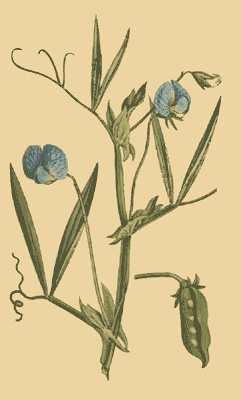
  40. Botanical drawing of a grass pea plant with blue flowers

    Story 27 of 131 · Farming spreads

    Fruit, vegetables and pulses

    Grass pea

    Grass pea is a hardy legume that was most likely domesticated in the Balkans around 6000 BC, although its origin is debated.

    Next storyc. 6000 BC · The potato
  41. A botanical drawing of the potato plant with flowers and tubers

    Story 28 of 131 · Farming spreads

    Fruit, vegetables and pulses

    The potato

    Farmers near Lake Titicaca domesticated the potato from wild tubers, breeding thousands of varieties.

    Next storyc. 6000 BC · Soybean
  42. Soybean pods on a plant stem

    Story 29 of 131 · Farming spreads

    Fruit, vegetables and pulses

    Soybean

    Wild soy grew in north-central China and was tamed there sometime between six and nine thousand years ago.

    Next storyc. 6000 BC · Sugarcane
  43. Bundles of cut sugarcane stems

    Story 30 of 131 · Farming spreads

    Fibre, drink and spice

    Sugarcane

    People in New Guinea grew sugarcane to chew its sweet stems; it later spread to India, where sugar was first crystallised.

    Next storyc. 6000 BC · Zebu cattle
  44. A brown and white zebu bull standing in dry grass

    Story 31 of 131 · Farming spreads

    Livestock

    Zebu cattle

    Zebu cattle were domesticated in the Indus Valley region about 8,000 to 7,500 years ago. Their humped form spread across South Asia and Africa.

    Next storyc. 5600 BC · The peanut
  45. About 400 years later

    c. 6000 BC to c. 5600 BC

  46. Old botanical drawing of a peanut plant with flowers, roots and pods underground

    Story 32 of 131 · Farming spreads

    Fruit, vegetables and pulses

    The peanut

    Peanuts come from a cross of two wild species east of the Andes, probably in north-western Argentina or south-eastern Bolivia. The oldest pods, found in dry Peru, are about 7,600 years old.

    Next storyc. 5500 BC · The date palm
  47. A date palm tree

    Story 33 of 131 · Farming spreads

    Fruit, vegetables and pulses

    The date palm

    Dates were grown in eastern Arabia between 5530 and 5320 BC, and earlier finds come from Mehrgarh in Pakistan. The sweet fruit keeps for months, which made the palm the tree of the Gulf's oases.

    Next storyc. 5000 BC · The banana
  48. About 500 years later

    c. 5500 BC to c. 5000 BC

  49. A bunch of ripe bananas

    Story 34 of 131 · Farming spreads

    Fruit, vegetables and pulses

    The banana

    Farmers at Kuk Swamp in New Guinea grew bananas; seedless kinds were later spread by cuttings.

    Next storyc. 5000 BC · Cotton
  50. Open cotton bolls with white fibre

    Story 35 of 131 · Farming spreads

    Fibre, drink and spice

    Cotton

    Cotton was domesticated at least four times: in the Indus valley, Africa, Mesoamerica and South America.

    Next storyc. 5000 BC · The goose
  51. Two domestic geese standing on a rock by water

    Story 36 of 131 · Farming spreads

    Birds and insects

    The goose

    The oldest evidence of tame geese, about 7,000 years old, comes from the Hemudu culture of China's lower Yangtze, where the swan goose was kept. Further west, geese bred from the greylag were kept in Egypt more than 4,000 years ago.

    Next storyc. 5000 BC · The donkey
  52. A donkey at Clovelly in Devon, England

    Story 37 of 131 · Farming spreads

    Companions and working animals

    The donkey

    Herders in northeast Africa tamed the African wild ass as a pack animal that could carry loads across dry land.

    Next storyc. 5000 BC · Fonio
  53. Slender fonio seed heads ripening in a field in northern Benin

    Story 38 of 131 · Farming spreads

    Grains

    Fonio

    Fonio is a tiny-grained millet of the West African savanna. Its cultivation seems to have begun about 7,000 years ago, which would make it perhaps the oldest crop of West Africa.

    Next storyc. 5000 BC · The guinea pig
  54. A guinea pig in profile

    Story 39 of 131 · Farming spreads

    Livestock

    The guinea pig

    People in the Andes kept guinea pigs for meat, raising them in their homes.

    Next storyc. 5000 BC · The olive
  55. A bowl of green and purple olives

    Story 40 of 131 · Farming spreads

    Fruit, vegetables and pulses

    The olive

    Olive trees were among the first fruit trees to be domesticated, first cultivated in the eastern Mediterranean and the Levant between 6000 and 4000 BC for oil used in food, lamps and medicine.

    Next storyc. 5000 BC · The opium poppy
  56. Red opium poppy flowers

    Story 41 of 131 · Farming spreads

    Fibre, drink and spice

    The opium poppy

    Small botanical remains from the Mediterranean and the area west of the Rhine show that the opium poppy was being domesticated before about 5000 BC.

    Next storyc. 5000 BC · Pea
  57. Green peas in a pod

    Story 42 of 131 · Farming spreads

    Fruit, vegetables and pulses

    Pea

    Seeds with domesticated traits, at least 7,000 years old, have been found at archaeological sites in what is now Turkey.

    Next storyc. 4000 BC · The alpaca
  58. About 1,000 years later

    c. 5000 BC to c. 4000 BC

  59. A group of alpacas standing in a grassy field in Ecuador

    Story 43 of 131 · Farming spreads

    Livestock

    The alpaca

    Alpacas were domesticated from the vicuña in the Andes at least 5,000 to 6,000 years ago, and they were bred for their fleece.

    Next storyc. 4000 BC · Grain amaranth
  60. Tiny pale amaranth grains spread beside a millimetre ruler

    Story 44 of 131 · Farming spreads

    Grains

    Grain amaranth

    Seeds of grain amaranth about 6,000 years old come from a cave in Mexico's Tehuacán Valley. Grain amaranths were domesticated separately in Central and South America, where finds in northern Argentina are 4,500 years old.

    Next storyc. 4000 BC · The chili pepper
  61. A botanical drawing of the chili pepper plant with red pods

    Story 45 of 131 · Farming spreads

    Fibre, drink and spice

    The chili pepper

    Chili peppers were domesticated in Mexico around 6,000 years ago. Genetic, botanical and word-history evidence points to central-east Mexico, from wild peppers that people had gathered for thousands of years before.

    Next storyc. 4000 BC · Fenugreek
  62. Young fenugreek plants growing in a field

    Story 46 of 131 · Farming spreads

    Fibre, drink and spice

    Fenugreek

    Charred fenugreek seeds from Tell Halal in Iraq are carbon-dated to about 4000 BC, when the plant was brought into cultivation in the Near East.

    Next storyc. 4000 BC · The llama
  63. An 1850s lithograph of a train of llamas carrying silver across the Andes near Puno

    Story 47 of 131 · Farming spreads

    Companions and working animals

    The llama

    People in the high Andes tamed the wild guanaco into the llama, a pack animal that also gave wool, meat and dung for fuel.

    Next storyc. 4000 BC · Mustard
  64. Yellow flowers of a mustard plant in a field

    Story 48 of 131 · Farming spreads

    Fibre, drink and spice

    Mustard

    Mustard was domesticated in West Asia or Europe, possibly 6,000 years ago, and many vegetables are cultivated varieties of the same plant.

    Next storyc. 4000 BC · Quince
  65. Quince fruit hanging on a branch

    Story 49 of 131 · Farming spreads

    Fruit, vegetables and pulses

    Quince

    Quince was domesticated roughly between 5000 and 3000 BC, and it then spread to secondary centres from Turkey to Afghanistan.

    Next storyc. 4000 BC · Rapeseed
  66. Flowering rapeseed plant with yellow blooms

    Story 50 of 131 · Farming spreads

    Fibre, drink and spice

    Rapeseed

    Rapeseed was cultivated in India as early as 4000 BC and later spread to China and Japan, around 2,000 years ago.

    Next storyc. 3500 BC · Bali cattle
  67. About 500 years later

    c. 4000 BC to c. 3500 BC

  68. A Bali bull standing on a hillside

    Story 51 of 131 · Farming spreads

    Livestock

    Bali cattle

    Bali cattle were domesticated from the banteng, a wild bovine of Southeast Asia, around 3500 BC. They are classed as a separate domestic species, Bos domesticus.

    Next storyc. 3500 BC · Sesame
  69. Sesame plant (Sesamum indicum) in bloom

    Story 52 of 131 · Farming spreads

    Fibre, drink and spice

    Sesame

    Charred sesame dated to about 3500 to 3050 BC shows that it was domesticated in the Indian subcontinent at least 5,500 years ago.

    Next storyc. 3500 BC · The silkworm
  70. Silkworms eating mulberry leaves on a tray in Da Lat, Vietnam

    Story 53 of 131 · Farming spreads

    Birds and insects

    The silkworm

    Chinese farmers bred the silk moth from a wild species and fed its caterpillars mulberry leaves; the moths can no longer fly.

    Next storyc. 3300 BC · Cacao
  71. About 200 years later

    c. 3500 BC to c. 3300 BC

  72. Cacao pods growing on a tree in the Peruvian Amazon

    Story 54 of 131 · Farming spreads

    Fibre, drink and spice

    Cacao

    Traces of cacao in pots from Ecuador, about 5,300 years old, show it was used in the upper Amazon long before Mesoamerica.

    Next storyc. 3000 BC · Adzuki bean
  73. About 300 years later

    c. 3300 BC to c. 3000 BC

  74. Chapter IV

    The ancient world

    54 stories in this chapter

  75. Reddish-brown adzuki beans

    Story 55 of 131 · The ancient world

    Fruit, vegetables and pulses

    Adzuki bean

    Adzuki beans were probably domesticated in East Asia around 3000 BC from a wild form that still grows across the region.

    Next storyc. 3000 BC · Almond
  76. Almonds in their shells, one cracked open, and shelled ones

    Story 56 of 131 · The ancient world

    Fruit, vegetables and pulses

    Almond

    Almond trees were domesticated in the Middle East during the Early Bronze Age, and their seedlings breed true from seed. Their wild ancestor is still unknown.

    Next storyc. 3000 BC · The pigeon
  77. A grey pigeon standing on a ledge

    Story 57 of 131 · The ancient world

    Birds and insects

    The pigeon

    Cuneiform tablets from Mesopotamia mention domesticated pigeons more than 5,000 years ago, and Egyptian hieroglyphs show them too. Today's pigeons come in more than 350 breeds.

    Next storyc. 3000 BC · Finger millet
  78. Finger millet seed heads with fingers of grain

    Story 58 of 131 · The ancient world

    Grains

    Finger millet

    Finger millet may have been grown in Africa by the 3rd millennium BC, the earliest record of it there. The date is uncertain because the find has not been precisely dated.

    Next storyc. 3000 BC · Pomegranate
  79. Developing pomegranate fruits and red flowers

    Story 59 of 131 · The ancient world

    Fruit, vegetables and pulses

    Pomegranate

    Ancient Iranians first domesticated the pomegranate on the Iranian plateau and nearby lands about 5,000 years ago.

    Next storyc. 3000 BC · Sorghum
  80. A sorghum plant with its red-brown seed head

    Story 60 of 131 · The ancient world

    Grains

    Sorghum

    Sorghum was domesticated in the savannas of eastern Sudan, a grain suited to heat and little rain.

    Next storyc. 3000 BC · Sweet potato
  81. A white sweet potato flower with a purple throat

    Story 61 of 131 · The ancient world

    Fruit, vegetables and pulses

    Sweet potato

    Sweet potatoes were domesticated in Central or South America. Domesticated sweet potatoes were in Central America at least 5,000 years ago, and they had reached the Caribbean by 2500 BC.

    Next storyc. 3000 BC · The water buffalo
  82. A water buffalo in Sri Lanka

    Story 62 of 131 · The ancient world

    Livestock

    The water buffalo

    Water buffalo were tamed in South Asia and, separately, in Southeast Asia, for pulling ploughs through flooded rice fields.

    Next storyc. 2800 BC · Pigeon pea
  83. About 200 years later

    c. 3000 BC to c. 2800 BC

  84. Pigeon peas on a blue background

    Story 63 of 131 · The ancient world

    Fruit, vegetables and pulses

    Pigeon pea

    Pigeon peas were being cultivated in peninsular India by 2800 BC, and seeds in Egyptian tombs show they reached Africa by about 2200 BC.

    Next storyc. 2700 BC · White mulberry
  85. White mulberry fruits, dark red and purple

    Story 64 of 131 · The ancient world

    Fibre, drink and spice

    White mulberry

    Cultivation of white mulberry to feed silkworms began in China more than 4,700 years ago, and the tree has since spread to many countries.

    Next storyc. 2600 BC · The honey bee
  86. A honey bee on a white flower

    Story 65 of 131 · The ancient world

    Birds and insects

    The honey bee

    Tomb pictures from ancient Egypt show beekeepers working clay hives before 2600 BC, the likely start of beekeeping. Honey bees were never fully tamed, but people learned to house them.

    Next storyc. 2600 BC · Little millet at Harappa
  87. Samai (little millet) grains with their husks

    Story 66 of 131 · The ancient world

    Grains

    Little millet at Harappa

    Little millet was a major crop at Harappa in the Indus Valley, where its cultivation peaked around 2600 BC. It made up around 5 per cent of the cereal remains.

    Next storyc. 2500 BC · Elephants in the Indus Valley
  88. An Indus Valley seal carved with an elephant

    Story 67 of 131 · The ancient world

    Companions and working animals

    Elephants in the Indus Valley

    Seals from the Indus Valley civilisation, dated to the 3rd millennium BC, show elephants kept in captivity. They are the earliest sign that people kept and used these animals.

    Next storyc. 2500 BC · The Bactrian camel
  89. A two-humped Bactrian camel at a zoo

    Story 68 of 131 · The ancient world

    Companions and working animals

    The Bactrian camel

    Bactrian camels were domesticated in Inner Asia about 4,500 years ago, and they have carried loads there since ancient times.

    Next storyc. 2500 BC · Guava
  90. A guava fruit on a white background

    Story 69 of 131 · The ancient world

    Fruit, vegetables and pulses

    Guava

    Archaeological sites in Peru show guava cultivation as early as 2500 BC.

    Next storyc. 2500 BC · Hyacinth bean
  91. Hyacinth bean pods and purple flowers

    Story 70 of 131 · The ancient world

    Fruit, vegetables and pulses

    Hyacinth bean

    Hyacinth bean has been cultivated in India since at least 2500 BC. It is a multi-purpose pulse that has been grown in South Asia for more than four thousand years.

    Next storyc. 2500 BC · Pearl millet
  92. Pearl millet heads growing in a field

    Story 71 of 131 · The ancient world

    Grains

    Pearl millet

    Archaeologists have confirmed domesticated pearl millet in the Sahel of northern Mali between 2500 and 2000 BC.

    Next storyc. 2500 BC · Safflower
  93. Safflower flower head, yellow and orange

    Story 72 of 131 · The ancient world

    Fibre, drink and spice

    Safflower

    Safflower was first cultivated in Mesopotamia, and traces of it there possibly date to 2500 BC. Its petals gave dyes and its seeds gave oil.

    Next storyc. 2300 BC · The sunflower
  94. About 200 years later

    c. 2500 BC to c. 2300 BC

  95. A single open sunflower head with yellow petals

    Story 73 of 131 · The ancient world

    Fibre, drink and spice

    The sunflower

    Native American farmers bred the wild sunflower of North America for its oily seeds. The oldest fully domestic sunflower seeds in the United States, from Tennessee, date to about 2300 BC, and genetics points to one domestication in central North America.

    Next storyc. 2250 BC · The coconut
  96. Green and brown coconuts piled for sale at a market

    Story 74 of 131 · The ancient world

    Fruit, vegetables and pulses

    The coconut

    Austronesian seafarers domesticated the Pacific coconut in Island Southeast Asia during their expansion, about 3000 to 1500 BC, choosing round fruit with more flesh and water. They carried it east across the Pacific and west to Madagascar.

    Next storyc. 2200 BC · The horse
  97. Horses grazing on Bianditz mountain in Navarre, Spain

    Story 75 of 131 · The ancient world

    Companions and working animals

    The horse

    Ancient DNA from 273 horses shows that today's horses descend from a lineage bred in the lower Volga-Don region of the western Eurasian steppe. From about 2200 BC it spread across Eurasia with spoke-wheeled chariots and replaced almost every other horse population.

    Next storyc. 2000 BC · The duck
  98. About 200 years later

    c. 2200 BC to c. 2000 BC

  99. Two white domestic ducks on water

    Story 76 of 131 · The ancient world

    Birds and insects

    The duck

    Nearly all tame ducks trace back to the wild mallard, which people in China had tamed by about 2000 BC. The Muscovy added to some breeds.

    Next storyc. 2000 BC · Kale
  100. Curly kale leaves

    Story 77 of 131 · The ancient world

    Fruit, vegetables and pulses

    Kale

    Kale was cultivated for food in the eastern Mediterranean and Anatolia by 2000 BC at the latest. It is closer to wild cabbage than most other domesticated forms of the species.

    Next storyc. 2000 BC · Lima bean
  101. Pale green lima beans

    Story 78 of 131 · The ancient world

    Fruit, vegetables and pulses

    Lima bean

    Lima beans were domesticated twice. The Andean domestication, around 2000 BC, gave large-seeded beans, and the Mesoamerican one, around AD 800, gave small-seeded beans.

    Next storyc. 2000 BC · Pear
  102. Pear blossom and leaves on a dark background

    Story 79 of 131 · The ancient world

    Fruit, vegetables and pulses

    Pear

    Pears were cultivated in China as early as 2000 BC. A second centre of domestication lay near the Caucasus in western Asia.

    Next storyc. 2000 BC · Scarlet runner bean
  103. Scarlet runner bean with red flowers and pods

    Story 80 of 131 · The ancient world

    Fruit, vegetables and pulses

    Scarlet runner bean

    Scarlet runner beans were most likely first grown in the highlands of Mexico and Guatemala around 2000 BC.

    Next storyc. 2000 BC · Ulluco
  104. Botanical drawing of an ulluco plant with yellow flowers

    Story 81 of 131 · The ancient world

    Fruit, vegetables and pulses

    Ulluco

    Ulluco, a tuber of the high Andes, was brought into cultivation more than 4,000 years ago. Starch grains from coastal Peruvian sites point to early domestication.

    Next storyc. 2000 BC · Watermelon
  105. Watermelons growing in a garden

    Story 82 of 131 · The ancient world

    Fruit, vegetables and pulses

    Watermelon

    Watermelon was domesticated in Sudan, and by 2000 BC it was being grown in Egypt. China grows most of the world's watermelons today.

    Next storyc. 1800 BC · Goosefoot and North America's own crops
  106. About 200 years later

    c. 2000 BC to c. 1800 BC

  107. A pitseed goosefoot plant with clusters of small green seed heads

    Story 83 of 131 · The ancient world

    Grains

    Goosefoot and North America's own crops

    By about 1800 BC, people in the eastern woodlands of North America grew pitseed goosefoot, marsh elder, sunflower and squash, known from the Riverton site in Illinois. Larger seeds with thinner coats show the plants had been bred.

    Next storyc. 1500 BC · The chicken
  108. About 300 years later

    c. 1800 BC to c. 1500 BC

  109. Cubalaya chickens in several colours

    Story 84 of 131 · The ancient world

    Birds and insects

    The chicken

    Chickens come from the red junglefowl of Southeast Asia. A review of bones from more than 600 sites found the oldest certain chickens at Ban Non Wat in central Thailand, from about 1650 to 1250 BC, probably drawn to rice and millet fields.

    Next storyc. 1500 BC · The cowpea
  110. Dried black-eyed peas, cream beans each with a dark spot

    Story 85 of 131 · The ancient world

    Fruit, vegetables and pulses

    The cowpea

    The cowpea, or black-eyed pea, was domesticated in Africa. Charred cowpeas from rock shelters in central Ghana date to the 2nd millennium BC, though genetic studies also point to East Africa as a possible homeland.

    Next storyc. 1500 BC · Nile tilapia farming
  111. Line drawing of a Nile tilapia fish

    Story 86 of 131 · The ancient world

    Livestock

    Nile tilapia farming

    The earliest evidence of some control over how Nile tilapia breed in Egypt is dated to about 1500 BC, one of the oldest traces of fish farming.

    Next storyc. 1500 BC · Quinoa
  112. Quinoa plant with branching clusters of seed heads

    Story 87 of 131 · The ancient world

    Grains

    Quinoa

    Quinoa was fed to livestock 5,200 to 7,000 years ago and eaten by people 3,000 to 4,000 years ago, around Lake Titicaca in Bolivia and Peru.

    Next storyc. 1400 BC · The guinea fowl
  113. A wild helmeted guinea fowl in green grass

    Story 88 of 131 · The ancient world

    Birds and insects

    The guinea fowl

    Guinea fowl were domesticated in West Africa between about 1,300 and 5,500 years ago, according to whole-genome data from 129 birds.

    Next storyc. 1350 BC · Melon
  114. Cantaloupe and canary melons, whole and cut

    Story 89 of 131 · The ancient world

    Fruit, vegetables and pulses

    Melon

    Melons were among the first plants domesticated in the Old World. Seeds from Nuragic sacred wells in Sardinia, dated 1350 to 1120 BC, show that melons reached Europe in the Bronze Age.

    Next storyc. 1200 BC · Tobacco
  115. About 150 years later

    c. 1350 BC to c. 1200 BC

  116. Tobacco plant with pink flowers

    Story 90 of 131 · The ancient world

    Fibre, drink and spice

    Tobacco

    Tobacco was grown in Mexico between 1400 and 1000 BC, long before Europeans reached the Americas. It became a major Caribbean cash crop from the 18th century.

    Next storyc. 1000 BC · African rice
  117. About 200 years later

    c. 1200 BC to c. 1000 BC

  118. Three yellow African rice seeds on purple

    Story 91 of 131 · The ancient world

    Grains

    African rice

    African rice was domesticated in West Africa about 3,000 years ago from a wild grass, and it is one of only two cultivated rice species.

    Next storyc. 1000 BC · Breadfruit
  119. A green breadfruit hanging from a tree

    Story 92 of 131 · The ancient world

    Fruit, vegetables and pulses

    Breadfruit

    Austronesian voyagers carried breadfruit into Micronesia, Melanesia and Polynesia around 3,000 years ago, where it was not native. Polynesians later bred mostly seedless varieties.

    Next storyc. 1000 BC · Cabbage
  120. Purple cabbages piled together

    Story 93 of 131 · The ancient world

    Fruit, vegetables and pulses

    Cabbage

    Wild cabbage, a coastal plant of Europe, was probably tamed there before 1000 BC. The exact place and date are unclear.

    Next storyc. 1000 BC · Cucumber
  121. Cucumber plant with leaves, a yellow flower and a fruit

    Story 94 of 131 · The ancient world

    Fruit, vegetables and pulses

    Cucumber

    Indian farmers grew cucumbers for at least 3,000 years before the crop spread widely. Spanish traders carried them to the Americas in 1494.

    Next storyc. 1000 BC · The camel
  122. A camel calf feeding from its mother in the Sahara

    Story 95 of 131 · The ancient world

    Companions and working animals

    The camel

    The one-humped camel was tamed in the Arabian Peninsula; its wild form has since died out.

    Next storyc. 1000 BC · Kava
  123. Kava plant with broad, heart-shaped leaves

    Story 96 of 131 · The ancient world

    Fibre, drink and spice

    Kava

    Kava was domesticated by farmers in northern Vanuatu around 3,000 years ago, from a wild pepper plant.

    Next storyc. 1000 BC · The mule
  124. A mule carrying packs along a dirt road

    Story 97 of 131 · The ancient world

    Companions and working animals

    The mule

    Mules are hybrids of a horse and a donkey, and they cannot breed. Once the ranges of domestic horses and donkeys overlapped, mules were bred in Anatolia and Mesopotamia before 1000 BC.

    Next storyc. 1000 BC · Reindeer herding
  125. Sámi herders with a reindeer herd in northern Sweden

    Story 98 of 131 · The ancient world

    Livestock

    Reindeer herding

    Reindeer are semi-domesticated, and herders have kept them for centuries. Rock art suggests the first herding began in the Sayan Mountains, possibly 2,000 to 3,000 years ago.

    Next storyc. 1000 BC · Teff
  126. Teff grain heads in a field

    Story 99 of 131 · The ancient world

    Grains

    Teff

    Teff, a tiny grain of the Horn of Africa, has been cultivated since at least 1000 BC and possibly as long ago as 4000 BC.

    Next storyc. 600 BC · Broccoli
  127. About 400 years later

    c. 1000 BC to c. 600 BC

  128. Broccoli florets piled on ice

    Story 100 of 131 · The ancient world

    Fruit, vegetables and pulses

    Broccoli

    Broccoli came from breeding landrace Brassica crops in the northern Mediterranean from about the 6th century BC. It reached northern Europe by the 18th century and North America in the 19th.

    Next storyc. 500 BC · Common carp
  129. A carp with its mouth open at the water's surface

    Story 101 of 131 · The ancient world

    Livestock

    Common carp

    Farmers in China have raised common carp for at least 2,500 years. Romans began farming it in Central Europe about 2,000 years ago.

    Next storyc. 500 BC · The yak
  130. A yak on the Annapurna Circuit in Nepal

    Story 102 of 131 · The ancient world

    Livestock

    The yak

    Herders on the Tibetan Plateau tamed the wild yak, which thrives in thin, cold air where cattle struggle. The oldest dated physical evidence of domestic yaks is about 2,500 years old.

    Next storyc. 500 BC · Tepary bean
  131. Two orange-red tepary bean seeds on blue

    Story 103 of 131 · The ancient world

    Fruit, vegetables and pulses

    Tepary bean

    Cultivated tepary beans have been found in the Tehuacán Valley of Mexico, dating to about 500 BC. Genetic evidence suggests a single domestication in northern Mexico.

    Next storyc. 500 BC · The tomato
  132. Small red and green tomatoes on the vine

    Story 104 of 131 · The ancient world

    Fruit, vegetables and pulses

    The tomato

    The tomato comes from wild plants of western South America, but where it was domesticated is unclear. By 500 BC Mesoamerican farmers in southern Mexico were growing it, choosing less bitter fruit.

    Next storyc. 300 BC · The turkey
  133. About 200 years later

    c. 500 BC to c. 300 BC

  134. A male turkey with its tail fanned out

    Story 105 of 131 · The ancient world

    Birds and insects

    The turkey

    Turkeys were tamed in Mexico and, separately, in the American Southwest, for meat and feathers.

    Next story2nd century BC · Tea
  135. Close-up of the leaves of the tea plant

    Story 106 of 131 · The ancient world

    Fibre, drink and spice

    Tea

    Tea plants were grown in southwest China; tea leaves found in a Han emperor's tomb are about 2,100 years old.

    Next storyc. 50 BC · The domestic rabbit
  136. About 150 years later

    2nd century BC to c. 50 BC

  137. A white and brown rabbit sitting on grass

    Story 107 of 131 · The ancient world

    Livestock

    The domestic rabbit

    The Romans were the first to keep rabbits for meat and fur. Every breed of domestic rabbit descends from the European rabbit.

    Next story5th century · Bok choy
  138. About 450 years later

    c. 50 BC to 5th century

  139. Bok choy leaves with pale green stalks

    Story 108 of 131 · The ancient world

    Fruit, vegetables and pulses

    Bok choy

    Bok choy evolved from the mustard plant in China and has been cultivated there since the 5th century CE. It reached Japan and Malaya by the early 19th century, and Europe in the mid-18th century.

    Next storyc. 1000 · The goldfish
  140. About 600 years later

    5th century to c. 1000

  141. Chapter V

    The last newcomers

    23 stories in this chapter

  142. Orange goldfish swimming in a tank

    Story 109 of 131 · The last newcomers

    Companions and working animals

    The goldfish

    Carp kept in Chinese ponds were first bred for colour more than a thousand years ago. By the Song dynasty (960 to 1279) selective breeding was well established.

    Next story12th century · Japanese quail
  143. A Japanese quail on dry grass

    Story 110 of 131 · The last newcomers

    Birds and insects

    Japanese quail

    The Japanese quail has been part of human life since the 12th century. It is now bred in large numbers for eggs and meat, and it is widely used in research.

    Next story1185 · Vanilla
  144. Six vanilla beans

    Story 111 of 131 · The last newcomers

    Fibre, drink and spice

    Vanilla

    The Totonac people of Mexico's Gulf coast were among the first to domesticate vanilla, and they grew it on farms since at least 1185. The Aztecs took it up after invading in 1427.

    Next story13th century · Brussels sprout
  145. Brussels sprouts, close up

    Story 112 of 131 · The last newcomers

    Fruit, vegetables and pulses

    Brussels sprout

    Brussels sprouts were possibly grown as early as the 13th century in what is now Belgium. They became popular in the southern Netherlands in the 16th century.

    Next story15th century · Coffee
  146. About 200 years later

    13th century to 15th century

  147. White coffee flowers on a plantation in Brazil

    Story 113 of 131 · The last newcomers

    Fibre, drink and spice

    Coffee

    Coffee grew wild in the highlands of Ethiopia; Sufi monks in Yemen were drinking it from cultivated plants by the 1400s.

    Next story15th century · Milkfish farming in Java
  148. Silvery milkfish laid out at a market

    Story 114 of 131 · The last newcomers

    Livestock

    Milkfish farming in Java

    Milkfish farming in Java arguably began in the 15th century, in brackish coastal ponds.

    Next story15th century · The Muscovy duck
  149. A dark Muscovy duck swimming on a pond

    Story 115 of 131 · The last newcomers

    Birds and insects

    The Muscovy duck

    Native American peoples had domesticated the Muscovy duck long before Columbus reached the Bahamas in 1492. Europeans soon took it across the Atlantic, and it was known in Europe by the mid-1500s, under a name whose origin is still argued over.

    Next story15th century · Valliculture in Italy
  150. A brick fishing hut beside a shallow lagoon in the Valli di Comacchio

    Story 116 of 131 · The last newcomers

    Livestock

    Valliculture in Italy

    Italians have raised sea bass, sea bream, eels and mullets in enclosed coastal lagoons, called valli, since the 15th century.

    Next story17th century · The canary
  151. About 200 years later

    15th century to 17th century

  152. A yellow canary perched in a cage

    Story 117 of 131 · The last newcomers

    Birds and insects

    The canary

    Canaries were domesticated and prized in 17th-century Europe, and they became popular even in poorer households for their song.

    Next story18th century · Grapefruit
  153. Grapefruit blossom and leaves

    Story 118 of 131 · The last newcomers

    Fruit, vegetables and pulses

    Grapefruit

    Grapefruit originated in Barbados in the 18th century, most likely from a cross between two Asian citrus fruits introduced to the Caribbean in the 17th century.

    Next story1786 · Sugar beet
  154. Two pale sugar beet roots

    Story 119 of 131 · The last newcomers

    Fibre, drink and spice

    Sugar beet

    Andreas Marggraf found sugar in beetroot in 1747, but Franz Achard's plant breeding from 1786 produced the modern sugar beet, in Silesia and near Berlin.

    Next story1800s · Atlantic salmon farming
  155. An Atlantic salmon against a black background

    Story 120 of 131 · The last newcomers

    Livestock

    Atlantic salmon farming

    Salmon farming started in the United Kingdom in the early 19th century. Sea cages were first used in Norway at the end of the 1960s.

    Next story1800s · Koi
  156. Coloured koi carp swimming in a pond

    Story 121 of 131 · The last newcomers

    Companions and working animals

    Koi

    Ornamental koi are carp bred for colour. Breeding began in Niigata, Japan, in the early 19th century, from carp species that had been domesticated in China.

    Next story19th century · The budgerigar
  157. Two budgerigars, one green and yellow, against black

    Story 122 of 131 · The last newcomers

    Birds and insects

    The budgerigar

    Small parakeets from Australia's interior, budgies have been bred in captivity since the 1800s. Today they rank as the third favourite pet worldwide, after dogs and cats.

    Next storyc. 1816 · Cranberry
  158. Cranberries growing in a bog

    Story 123 of 131 · The last newcomers

    Fruit, vegetables and pulses

    Cranberry

    Henry Hall, a veteran of the American Revolutionary War, first cultivated cranberries on Cape Cod around 1816. Growers planted named varieties through the 1840s.

    Next story1870s · Trout farming begins
  159. A person holding a rainbow trout

    Story 124 of 131 · The last newcomers

    Livestock

    Trout farming begins

    Rainbow trout farming started in California in the 1870s, and commercial production has grown sharply since the 1950s.

    Next story1880s · Mink fur farming
  160. An American mink, dark brown, on a grey surface

    Story 125 of 131 · The last newcomers

    Livestock

    Mink fur farming

    Fur farmers began breeding American minks for their pelts in the late 19th century, because wild trapping could not meet demand. Escaped farm minks later formed wild populations in Europe.

    Next storyc. 1880 · Macadamia
  161. Macadamia branch with leaves and nuts

    Story 126 of 131 · The last newcomers

    Fruit, vegetables and pulses

    Macadamia

    Seeds brought from Australia reached Hawaii in the 1880s. For more than a century, Hawaii then led the world in growing this nut.

    Next storyc. 1900 · Blueberry
  162. Blueberries in a white bowl

    Story 127 of 131 · The last newcomers

    Fruit, vegetables and pulses

    Blueberry

    Highbush blueberries were first cultivated in New Jersey around the beginning of the 20th century. Before that, cultivated fruit came from selecting wild bushes with large berries.

    Next story1900s · Kiwifruit
  163. A pile of kiwifruit

    Story 128 of 131 · The last newcomers

    Fruit, vegetables and pulses

    Kiwifruit

    Kiwifruit is native to China, where it has been described since the 12th century. It was taken to New Zealand in the early 20th century, where the first commercial plantings took place.

    Next story1930 · The golden hamster
  164. A golden hamster, brown and white, on a pale surface

    Story 129 of 131 · The last newcomers

    Companions and working animals

    The golden hamster

    In 1930 a zoologist caught a mother hamster and her litter in Aleppo, Syria. Mitochondrial DNA suggests that every domestic golden hamster descends from a single female, probably that one.

    Next story1952 · Tame silver foxes
  165. A tame fox named Adisey lying on a blue blanket

    Story 130 of 131 · The last newcomers

    Companions and working animals

    Tame silver foxes

    Lyudmila Trut began collecting the tamest silver foxes from Soviet fur farms in 1952. Breeding only the friendliest animals for generations changed their behaviour and, over time, their looks.

    Next story1954 · The gerbil
  166. Drawing of a Mongolian gerbil on a black background

    Story 131 of 131 · The last newcomers

    Companions and working animals

    The gerbil

    Gerbils were used in science from the late 19th century, but they became pets in the English-speaking world only after 1954.

    NextJourney's end

Journey complete

You travelled 15,753 years

131 stories, c. 13,800 BC to 1954. More species are being researched and added.

Choose another journeyBack to the start