Battle of Gettysburg

All major events

The American Civil War

Eleven Southern states left the Union to protect slavery, and four years of war followed, the bloodiest in American history. The Union won, slavery was abolished, and the country was remade.

Ended in 1865 with Confederate surrender and, that December, the abolition of slavery by the Thirteenth Amendment.

Stories
29
Distance
16 years
Route
1860 to 1877
  1. Secession3 stories
  2. The early war7 stories
  3. Turning points8 stories
  4. Total war7 stories
  5. Surrender and aftermath4 stories
Begin the journey

Battle of Gettysburg, 1863. Image: Thure de Thulstrup / Adam Cuerden · Public domain, via Wikimedia Commons

  1. Chapter I

    Secession

    3 stories in this chapter

  2. Map of the 1860 US presidential election results by state

    Story 1 of 29 · Secession

    Politics and diplomacy

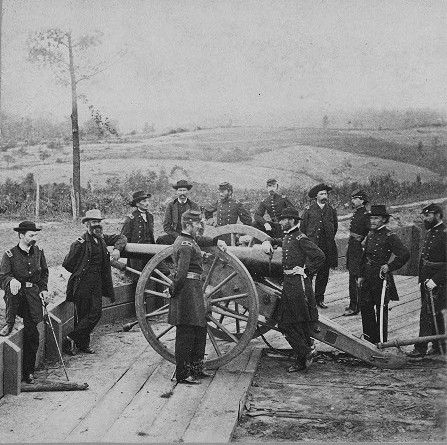
    Lincoln is elected

    Abraham Lincoln, a Republican who opposed the spread of slavery into new territories, won the presidency with about 40 per cent of the vote and no Southern electoral votes. His name was not on the ballot in most Southern states.

    Next story1861 · The Confederacy is formed
  3. Engraving of Jefferson Davis taking the oath as president of the Confederacy at Montgomery in 1861

    Story 2 of 29 · Secession

    Politics and diplomacy

    The Confederacy is formed

    South Carolina left the Union in December 1860, and six more Deep South states followed. Delegates met at Montgomery, Alabama, formed the Confederate States of America and chose Jefferson Davis as president. Four more states joined after Fort Sumter.

    Next story1861 · Fort Sumter
  4. Bombardment of Fort Sumter in 1861, Engraved in 1863 expressly for Abbotts Civil War; print: b&w; 14 x 20 cm

    Story 3 of 29 · Secession

    Battles and campaigns

    Fort Sumter

    Confederate guns bombarded a Union fort in Charleston harbour for 34 hours until it surrendered. No one was killed in the fighting. Lincoln called for 75,000 volunteers, and four more states left the Union.

    Next story1861 · First Battle of Bull Run
  5. Chapter II

    The early war

    7 stories in this chapter

  6. Battle of Bull Run

    Story 4 of 29 · The early war

    Battles and campaigns

    First Battle of Bull Run

    A Union army marching on Richmond was routed after early success, and retreated in disorder to Washington, with civilians who had come to watch caught up in the panic. The war would not be quick.

    Next story1862 · Fort Donelson
  7. Fort Donelson

    Story 5 of 29 · The early war

    Battles and campaigns

    Fort Donelson

    Ulysses S. Grant's army and gunboats captured a Confederate fort on the Cumberland River in Tennessee. Grant told its commander that nothing but an unconditional and immediate surrender would do. Some 12,000 to 15,000 men gave up.

    Next story1862 · The ironclads at Hampton Roads
  8. Battle between the Monitor and Merrimac--fought March 9th 1862 at Hampton Roads, near Norfolk, Va

    Story 6 of 29 · The early war

    Battles and campaigns

    The ironclads at Hampton Roads

    The Confederate ironclad Virginia sank two wooden Union warships in Virginia waters. The next day the Union's ironclad Monitor fought it to a draw. It was the first clash between ironclad warships.

    Next story1862 · Battle of Shiloh
  9. Illustration of the Battle of Shiloh in the American Civil War by L

    Story 7 of 29 · The early war

    Battles and campaigns

    Battle of Shiloh

    Confederates surprised Grant's army in Tennessee and nearly beat it, but Union reinforcements arrived overnight and won the second day. About 23,000 men were killed, wounded or missing in two days, the bloodiest battle in American history up to then.

    Next story1862 · The capture of New Orleans
  10. Panoramic View of New Orleans-Federal Fleet at Anchor in the River, ca

    Story 8 of 29 · The early war

    Battles and campaigns

    The capture of New Orleans

    A Union fleet under David Farragut ran past two forts on the Mississippi at night and anchored off the Confederacy's largest city, which surrendered. The Confederacy lost its biggest port.

    Next story1862 · The Seven Days Battles
  11. Portraits of the opposing commanders, George McClellan and Robert E. Lee

    Story 9 of 29 · The early war

    Battles and campaigns

    The Seven Days Battles

    Robert E. Lee, newly in command, drove the Union army of George McClellan back from the outskirts of Richmond in seven days of fighting. Union losses were heavy, but so were Lee's.

    Next story1862 · Battle of Antietam
  12. "Battle of Antietam" by Kurz & Allison

    Story 10 of 29 · The early war

    Battles and campaigns

    Battle of Antietam

    Lee's first invasion of the North ended in Maryland in the bloodiest single day in American history, with about 22,700 killed, wounded or missing. Lee retreated to Virginia.

    Next story1863 · The Emancipation Proclamation
  13. Chapter III

    Turning points

    8 stories in this chapter

  14. The Emancipation Proclamation

    Story 11 of 29 · Turning points

    Politics and diplomacy

    The Emancipation Proclamation

    Lincoln declared free the enslaved people in areas still in rebellion, and opened the Union army to Black soldiers. It freed few people at once, but it made ending slavery a war aim.

    Next story1863 · Battle of Chancellorsville
  15. Battle of Chancellorsville

    Story 12 of 29 · Turning points

    Battles and campaigns

    Battle of Chancellorsville

    In four days of fighting Lee, badly outnumbered, split his army twice and routed a larger Union force. Stonewall Jackson, who led the flank march, was shot by his own men and died eight days later.

    Next story1863 · The siege of Vicksburg
  16. Title: Siege of Vicksburg--13, 15, & 17 Corps, Commanded by Gen

    Story 13 of 29 · Turning points

    Battles and campaigns

    The siege of Vicksburg

    After several failed assaults on the river fortress, Grant besieged Vicksburg for 47 days until about 29,000 Confederate soldiers surrendered. The garrison and townspeople had been reduced to eating mules.

    Next story1863 · Battle of Gettysburg
  17. Battle of Gettysburg

    Story 14 of 29 · Turning points

    Battles and campaigns

    Battle of Gettysburg

    Lee's second invasion of the North ended in three days of fighting at a Pennsylvania town, finishing with the failed assault known as Pickett's Charge. About 50,000 men were killed, wounded or missing.

    Next story1863 · The New York draft riots
  18. Title: 'New York -- the riot in Lexington Avenue'

    Story 15 of 29 · Turning points

    People and society

    The New York draft riots

    Four days of rioting erupted in New York against Union conscription, which let the wealthy buy their way out. Mobs, many of them working-class and Irish, attacked Black residents, a Black orphanage and abolitionists. At least 100 people died.

    Next story1863 · The 54th Massachusetts at Fort Wagner
  19. The 54th Massachusetts at Fort Wagner

    Story 16 of 29 · Turning points

    Battles and campaigns

    The 54th Massachusetts at Fort Wagner

    The 54th Massachusetts, one of the first Black regiments raised in the North, led an assault on a Confederate fort at Charleston. It failed, with heavy losses, but the regiment's courage was widely reported. About 180,000 Black men served in the Union army.

    Next story1863 · The Gettysburg Address
  20. Abraham Lincoln (in the center) at the dedication of the Soldiers' National Cemetery in Gettysburg , Pennsylvania, on November 19, 1863

    Story 17 of 29 · Turning points

    Ideas and culture

    The Gettysburg Address

    Lincoln spoke for about two minutes at the dedication of a soldiers' cemetery at Gettysburg. His 272 words recast the war as a test of whether a nation founded on equality could survive.

    Next story1863 · The battles for Chattanooga
  21. Coloured lithograph of Union troops storming a wooded ridge at Chattanooga

    Story 18 of 29 · Turning points

    Battles and campaigns Unverified

    The battles for Chattanooga

    After the Union defeat at Chickamauga, Confederates besieged a starving Union army in Chattanooga. Grant took command, opened a supply line, and over 23 to 25 November his troops took Lookout Mountain and charged up Missionary Ridge, routing Bragg's army.

    Next story1864 · The Overland Campaign
  22. Chapter IV

    Total war

    7 stories in this chapter

  23. Photo montage of two Wikipedia images by Hal Jespersen

    Story 19 of 29 · Total war

    Battles and campaigns

    The Overland Campaign

    Grant, now commanding all Union armies, drove south against Lee through the Wilderness, Spotsylvania and Cold Harbor. Each battle was costly and none was decisive, but unlike earlier Union commanders Grant kept advancing.

    Next story1864 · The Atlanta campaign
  24. The Atlanta campaign

    Story 20 of 29 · Total war

    Battles and campaigns

    The Atlanta campaign

    William Tecumseh Sherman's armies fought their way south through the hills of north Georgia, flanking Confederate defences, until they took Atlanta, a key railway and industrial centre.

    Next story1864 · The siege of Petersburg
  25. The "Dictator" siege mortar at Petersburg

    Story 21 of 29 · Total war

    Battles and campaigns

    The siege of Petersburg

    Grant could not take the railway hub that supplied Richmond by assault, so he dug in. For nine months both armies lived in trenches, a grim foretaste of the First World War.

    Next story1864 · Lincoln is re-elected
  26. Map of the 1864 US presidential election results by state

    Story 22 of 29 · Total war

    Politics and diplomacy

    Lincoln is re-elected

    Facing a war-weary North, Lincoln was returned to the White House against General McClellan, whose party's platform called for negotiating peace. Soldiers voted overwhelmingly for him.

    Next story1864 · Sherman's March to the Sea
  27. Engraving depicting Sherman's march to the sea

    Story 23 of 29 · Total war

    Battles and campaigns

    Sherman's March to the Sea

    Sherman's army of 60,000 cut loose from its supplies at Atlanta and marched 300 miles to Savannah, living off the land and wrecking railways, mills and farms. Thousands of enslaved people left their owners to follow it.

    Next story1865 · Reconstruction
  28. Reconstruction Era photograph, two Harpers Weekly Reconstruction related pictures, and a Freedmen's Bureau picture

    Story 24 of 29 · Total war

    Politics and diplomacy

    Reconstruction

    The federal government tried to rebuild the South and secure rights for freed people. Black men voted and held office, and the Fourteenth and Fifteenth Amendments were passed, until white Southern resistance and Northern fatigue ended the effort.

    Next story1865 · Lee surrenders at Appomattox
  29. Photograph of the village of Appomattox Court House, Virginia, where Lee surrendered

    Story 25 of 29 · Total war

    Battles and campaigns

    Lee surrenders at Appomattox

    With Richmond fallen and his army cornered, Lee surrendered to Grant in a farmhouse at Appomattox Court House. Grant allowed Confederate soldiers to go home with their horses and mules. Other Confederate armies surrendered over the next weeks.

    Next story1865 · Lincoln is assassinated
  30. Chapter V

    Surrender and aftermath

    4 stories in this chapter

  31. Title: Assassination of President Lincoln, Ford's Theatre, Washington, April 14, 1865 Physical description: 1 print

    Story 26 of 29 · Surrender and aftermath

    Politics and diplomacy

    Lincoln is assassinated

    Five days after Lee's surrender, John Wilkes Booth, a Confederate sympathiser, shot the president at Ford's Theatre in Washington. Lincoln died the next morning, the first American president to be assassinated.

    Next story1865 · Johnston surrenders at Bennett Place
  32. The reconstructed log farmhouse and kitchen at Bennett Place, North Carolina

    Story 27 of 29 · Surrender and aftermath

    Politics and diplomacy

    Johnston surrenders at Bennett Place

    At a farmhouse near Durham, North Carolina, General Joseph E. Johnston surrendered the largest Confederate army still in the field to Sherman. A first deal with political terms was rejected in Washington, and the second, on military terms only, followed Grant's at Appomattox.

    Next story1865 · Juneteenth
  33. Juneteenth Emancipation Day Celebration, June 19, 1900, Texas

    Story 28 of 29 · Surrender and aftermath

    People and society

    Juneteenth

    Union General Gordon Granger arrived at Galveston, Texas, and announced that all enslaved people were free. It was two and a half years after the Emancipation Proclamation. Black Texans began marking the day as a holiday.

    Next story1865 · The Thirteenth Amendment
  34. The Thirteenth Amendment to the US Constitution, which abolished slavery

    Story 29 of 29 · Surrender and aftermath

    Politics and diplomacy

    The Thirteenth Amendment

    The states ratified an amendment to the Constitution abolishing slavery across the United States, except as punishment for a crime. Nearly four million people had been enslaved in the country in 1860.

    NextJourney's end

Journey complete

You travelled 16 years

29 stories, 1860 to 1877. More turning points are being researched and added.

Choose another eventBack to the start