All journeys

Food journeys

Many of the foods that seem most at home somewhere came from far away: follow wheat, rice, sugar, coffee, chillies, tomatoes, maize and more as they crossed the world.

Stories
141
Distance
8,982 years
Route
c. 7000 BC to 1983
  1. Early farming and trade42 stories
  2. The Columbian exchange41 stories
  3. Plantations and empires37 stories
  4. A global table21 stories
Begin the journey
  1. Chapter I

    Early farming and trade

    42 stories in this chapter

  2. Low mudbrick ruins of the Neolithic village at Mehrgarh, Balochistan

    Story 1 of 141 · Early farming and trade

    Arrived in South Asia

    Wheat and barley farming at Mehrgarh

    At Mehrgarh in Balochistan, early farmers grew six-row barley, einkorn and emmer wheat, and herded sheep, goats and cattle. Their wheat and their farming methods resemble those of the Near East.

    Next storyc. 6500 BC · Wheat reaches Europe
  3. About 500 years later

    c. 7000 BC to c. 6500 BC

  4. Wheat reaches Europe

    Story 2 of 141 · Early farming and trade

    Arrived in Europe

    Wheat reaches Europe

    Farmers from Anatolia crossed into Greece with wheat, barley, sheep and goats. Over the next 2,500 years farming spread up the Danube and along the Mediterranean to Britain.

    Next storyc. 5600 BC · Farming reaches the Nile
  5. About 900 years later

    c. 6500 BC to c. 5600 BC

  6. Lake Qarun in the Faiyum depression of Egypt, a still lake edged by desert

    Story 3 of 141 · Early farming and trade

    Arrived in Africa

    Farming reaches the Nile

    The Faiyum A culture, dated about 5600 to 4400 BC, is the earliest farming culture in the Nile Valley. Its people took up crops and animals from the Near East, adding them slowly to a life of fishing and hunting.

    Next storyc. 5500 BC · Farmers settle central Europe
  7. Linear Band pottery bowls decorated with incised curving lines

    Story 4 of 141 · Early farming and trade

    Arrived in Europe

    Farmers settle central Europe

    Farmers of the Linear Pottery culture, named for the bands on their pots, spread from the middle Danube in Hungary, Bohemia and Moravia some 1,500 km along the rivers in about 360 years, building longhouses and growing crops and herding cattle.

    Next storyc. 4500 BC · Winemaking reaches Greece
  8. About 1,000 years later

    c. 5500 BC to c. 4500 BC

  9. A Neolithic clay vessel from Dikili Tash in northern Greece

    Story 5 of 141 · Early farming and trade

    Arrived in Europe

    Winemaking reaches Greece

    The earliest signs of wine come from Georgia, around 6000 BC, then Iran, about 5000 BC, and Greece, about 4500 BC. Later, Greek colonists took the vine to Italy, Sicily, southern France and Spain.

    Next storyc. 4000 BC · Farming reaches Britain
  10. About 500 years later

    c. 4500 BC to c. 4000 BC

  11. The stone-fronted entrance of West Kennet Long Barrow, a Neolithic burial mound in Wiltshire

    Story 6 of 141 · Early farming and trade

    Arrived in Europe

    Farming reaches Britain

    Around 4000 BC migrants from central Europe came to Britain with domesticated plants and animals. Almost all the hunter-gatherers already there were replaced, and the newcomers began clearing forest for fields.

    Next storyc. 3150 BC · Wine reaches Egypt
  12. About 850 years later

    c. 4000 BC to c. 3150 BC

  13. A tall clay wine jar from ancient Egypt in the Metropolitan Museum of Art

    Story 7 of 141 · Early farming and trade

    Arrived in Africa

    Wine reaches Egypt

    Archaeologists searching the tomb of Scorpion I, one of Egypt's first rulers, found dozens of imported jars with a yellow residue that fits wine, mixed with herbs and tree resin. Egypt's own royal vineyards in the Delta came later.

    Next storyc. 3000 BC · Herding reaches East Africa
  14. About 150 years later

    c. 3150 BC to c. 3000 BC

  15. Cattle grazing on open grassland near the Maasai Mara, Kenya

    Story 8 of 141 · Early farming and trade

    Arrived in Africa

    Herding reaches East Africa

    Herders who had kept cattle, sheep and goats in the Green Sahara moved into the Nile Valley and East Africa as the Sahara dried. By about 5,000 years ago herding had begun around Lake Turkana, the start of the Pastoral Neolithic in Kenya and Tanzania.

    Next storyc. 2500 BC · Rice reaches India
  16. About 500 years later

    c. 3000 BC to c. 2500 BC

  17. Flooded rice paddies at sunrise near Eluru in India

    Story 9 of 141 · Early farming and trade

    Arrived in South Asia

    Rice reaches India

    Japonica rice, domesticated in China, reached India about 4,500 years ago and crossed with a local rice. The cross produced indica rice, the long-grain kind that fills South Asian kitchens.

    Next storyc. 2000 BC · Cinnamon reaches Egypt
  18. About 500 years later

    c. 2500 BC to c. 2000 BC

  19. Cinnamon sticks, powder and flowers laid out together

    Story 10 of 141 · Early farming and trade

    Arrived in Africa

    Cinnamon reaches Egypt

    Traders were bringing cinnamon to Egypt by about 2000 BC, where it was used to embalm mummies and later burned in incense. Its source was kept a trade secret, so Greek and Roman writers repeated tall tales about where it grew.

    Next storyc. 2000 BC · Sesame oil reaches Mesopotamia
  20. A sesame plant with pale tubular flowers and green seed pods

    Story 11 of 141 · Early farming and trade

    Arrived in the Middle East

    Sesame oil reaches Mesopotamia

    Sesame, domesticated in the Indian subcontinent, was traded to Mesopotamia by about 2000 BC. The Sumerian word ilu and Akkadian ellu for its oil may come from the same root as the Dravidian word for the seed.

    Next storyc. 2000 BC · African grains reach India
  21. Sorghum bicolor 2005, sep 4 by pethan Botanical Gardens Utrecht University

    Story 12 of 141 · Early farming and trade

    Arrived in South Asia

    African grains reach India

    Grains first farmed in Africa's savannas crossed the Arabian Sea to the Indian subcontinent, where they grew well in dry lands that suited neither wheat nor rice.

    Next storyc. 1900 BC · Cacao reaches Mesoamerica
  22. Old botanical drawing of a cacao branch with flowers and ridged pods

    Story 13 of 141 · Early farming and trade

    Arrived in the Americas

    Cacao reaches Mesoamerica

    Cacao was first domesticated in the upper Amazon of Ecuador at least 5,300 years ago. It later reached Mesoamerica, where pots with traces of cacao drinks date from the Early Formative period, 1900 to 900 BC.

    Next storyc. 1700 BC · Millet spreads across Europe
  23. About 200 years later

    c. 1900 BC to c. 1700 BC

  24. Dense seed heads of proso millet ripening in a field

    Story 14 of 141 · Early farming and trade

    Arrived in Europe

    Millet spreads across Europe

    Proso millet, first grown in northern China, turns up north of the Black Sea around 1700 BC, in central Europe by about 1450 BC and in northern Europe by about 1200 BC. It makes few demands on the soil.

    Next storyc. 1000 BC · Voyagers carry crops across the Pacific
  25. About 700 years later

    c. 1700 BC to c. 1000 BC

  26. The Hōkūleʻa, a modern voyaging canoe of the kind Polynesians used to cross the Pacific

    Story 15 of 141 · Early farming and trade

    Arrived in East Asia and the Pacific

    Voyagers carry crops across the Pacific

    Austronesian voyagers carried domesticated plants and animals by canoe across the Pacific as they settled the islands of Oceania. The crops they took, among them taro, breadfruit, bananas and coconut, are often called canoe plants.

    Next storyc. 900 BC · Rice reaches Japan
  27. Rice Paddies near Lake Inawashiro in Inawashiro , Fukushima Prefecture, Japan

    Story 16 of 141 · Early farming and trade

    Arrived in East Asia and the Pacific

    Rice reaches Japan

    Newcomers brought wet-rice farming to northern Kyushu, and paddy fields spread across Japan over the following centuries.

    Next storyc. 700 BC · Chickens reach Africa
  28. About 200 years later

    c. 900 BC to c. 700 BC

  29. A male red junglefowl in Thailand, the wild bird from which chickens come

    Story 17 of 141 · Early farming and trade

    Arrived in Africa

    Chickens reach Africa

    The oldest chicken bones in Africa, radiocarbon-dated to 800 to 600 BC, come from pre-Aksumite northern Ethiopia; the birds were probably carried across the Red Sea. Chickens reached Egypt only in the Persian period, about 550 to 330 BC.

    Next storyc. 600 BC · Greek colonists bring wine to Gaul
  30. A silver drachm minted at Massalia

    Story 18 of 141 · Early farming and trade

    Arrived in Europe

    Greek colonists bring wine to Gaul

    Ionian Greeks from Phocaea founded Massalia, now Marseille, around 600 BC. Amphora fragments show they were making wine in Provence soon after settling, and by the time the Romans arrived in 125 BC it was known across the Mediterranean for its quality.

    Next storyc. 500 BC · Bananas reach Africa
  31. Musa acuminata fruit on white background

    Story 19 of 141 · Early farming and trade

    Arrived in Africa

    Bananas reach Africa

    Banana plants, first grown in New Guinea and Southeast Asia, crossed the Indian Ocean to Africa. Traces in Cameroon are about 2,500 years old.

    Next storyc. 500 BC · Saladoid farmers sail into the Caribbean
  32. A pottery animal head from a Saladoid vessel found on Sint Eustatius

    Story 20 of 141 · Early farming and trade

    Arrived in the Americas

    Saladoid farmers sail into the Caribbean

    Farming and potting peoples from the lower Orinoco in Venezuela sailed into the Lesser Antilles, Puerto Rico and Hispaniola from about 500 BC, settling the wetter, fertile islands that could best support their gardens.

    Next storyc. 200 BC · Maize reaches the Eastern Woodlands
  33. About 300 years later

    c. 500 BC to c. 200 BC

  34. Ears of multicoloured flint corn

    Story 21 of 141 · Early farming and trade

    Arrived in the Americas

    Maize reaches the Eastern Woodlands

    Maize from Mexico reached the woodlands of eastern North America after about 200 BC. Farmers there already grew their own crops, such as goosefoot and sunflower, and slowly over centuries switched to maize, until it dominated after about AD 900.

    Next storyc. 126 BC · Zhang Qian opens the road west
  35. A wall painting of Zhang Qian taking leave of the Han emperor Wudi for his journey to Central Asia

    Story 22 of 141 · Early farming and trade

    Arrived in East Asia and the Pacific

    Zhang Qian opens the road west

    On missions west for the Han emperor, Zhang Qian brought back alfalfa seeds for horse fodder, strong horses and news of crops and peoples beyond China. Chinese tradition also credits the routes he opened with bringing grapes and wine to China.

    Next story1st century · Pepper reaches Rome
  36. Black Pepper (Piper nigrum)

    Story 23 of 141 · Early farming and trade

    Arrived in Europe

    Pepper reaches Rome

    Once Rome held Egypt, its merchants sailed with the monsoon to Muziris on India's Malabar Coast and shipped home so much pepper that Pliny complained of gold draining east.

    Next storyc. 300 · Seafarers bring rice to Madagascar
  37. About 300 years later

    1st century to c. 300

  38. A Malagasy meal of fish in coconut sauce with rice, in Mahajanga

    Story 24 of 141 · Early farming and trade

    Arrived in Africa

    Seafarers bring rice to Madagascar

    Seafarers from Borneo first settled Madagascar between about AD 100 and 500, bringing rice and other Southeast Asian and Pacific crops with them. Rice became the cornerstone of the Malagasy diet, though the island lies off the African coast.

    Next story6th century · Sugar reaches Persia
  39. About 200 years later

    c. 300 to 6th century

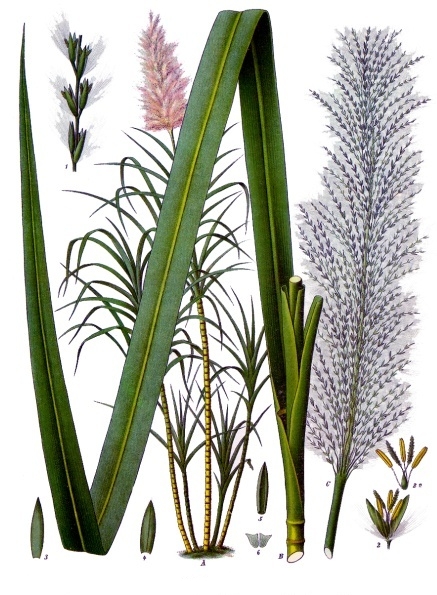
  40. A botanical plate of sugar cane, from Köhler's Medicinal Plants

    Story 25 of 141 · Early farming and trade

    Arrived in the Middle East

    Sugar reaches Persia

    Indians had learned to crystallise sugar from cane juice. The Sasanian Persians took up the craft and grew cane in Khuzestan.

    Next storyc. 650 · Soy sauce comes to Japan
  41. Soy sauce served with sushi

    Story 26 of 141 · Early farming and trade

    Arrived in East Asia and the Pacific

    Soy sauce comes to Japan

    When Buddhism came to Japan from China in the 7th century, it brought vegetarianism and soy products such as soy sauce, called shōyu in Japan. Dutch East India Company records list it as a trade good in 1737, when 75 barrels went from Dejima to Batavia.

    Next storyc. 700 · Lemons reach Persia, Iraq and Egypt
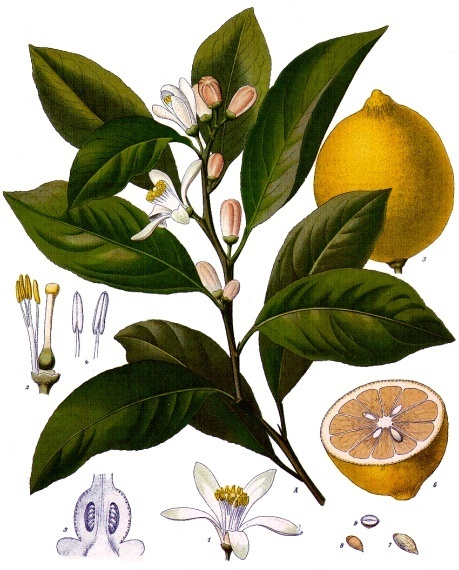
  42. Old botanical drawing of a lemon branch with flowers and a cut fruit

    Story 27 of 141 · Early farming and trade

    Arrived in the Middle East

    Lemons reach Persia, Iraq and Egypt

    Lemons, a citrus of South Asian origin, were brought to Persia and then to Iraq and Egypt around AD 700. The word lemon itself came to Europe from Persian and Arabic, and a 10th-century Arabic farming book is the first text to describe the fruit.

    Next story8th century · Sugar cane reaches the Mediterranean
  43. Venezuelan sugar cane ( Saccharum ) harvested for processing

    Story 28 of 141 · Early farming and trade

    Arrived in Europe

    Sugar cane reaches the Mediterranean

    After the Arab conquests, sugar cane was planted along the Nile, in Sicily and in southern Spain, irrigated with new techniques.

    Next storyc. 750 · Buddhist monks bring tofu to Japan
  44. Silken tofu

    Story 29 of 141 · Early farming and trade

    Arrived in East Asia and the Pacific

    Buddhist monks bring tofu to Japan

    Tofu came to Japan in the Nara period (710–794) with Buddhist monks, who at first called it Chinese curd. There are no clear early records, and it first appears in a document in 965. It was served as an offering at the Kasuga Shrine in Nara in 1183.

    Next storyc. 800 · Crops and farming methods spread across the Islamic world
  45. A foggara, an underground irrigation channel of the kind spread by Muslim farmers

    Story 30 of 141 · Early farming and trade

    Arrived in the Middle East

    Crops and farming methods spread across the Islamic world

    During the Islamic Golden Age, from the 8th to the 13th century, a trading network across the Old World spread crops and farming methods through the Muslim lands, from Persia and India to al-Andalus. Agronomists such as Ibn al-ʿAwwām wrote down how to grow them.

    Next story828 · Tea seeds reach Korea
  46. A tea field in Boseong, South Jeolla province, South Korea

    Story 31 of 141 · Early farming and trade

    Arrived in East Asia and the Pacific

    Tea seeds reach Korea

    Chinese tea bricks first reached Silla in the time of Queen Seondeok, who ruled from 631 to 647. In 828 King Heungdeok received tea seeds from Tang China and had them planted on Jirisan mountain, from where tea spread across Korea.

    Next storyc. 900 · The Moors bring rice to Spain
  47. A paella cooking over an open fire in Spain

    Story 32 of 141 · Early farming and trade

    Arrived in Europe

    The Moors bring rice to Spain

    Arabs in al-Andalus began growing rice around the 10th century. It was a Spanish staple by the 15th century, and paella is traced to farmers around the Albufera lagoon near Valencia, in its modern form to the mid-19th century.

    Next storyc. 900 · Parsi refugees bring Persian dishes to Gujarat
  48. Dhansak, a Parsi dish of lentils and meat

    Story 33 of 141 · Early farming and trade

    Arrived in South Asia

    Parsi refugees bring Persian dishes to Gujarat

    The Parsis, Zoroastrians from Persia, settled on India's west coast, according to tradition between the 8th and 10th centuries. Their cooking blends Persian dishes with Gujarati flavours, and it later took on its own character in Mumbai.

    Next storyc. 900 · Spices, rice and coconut reach the Swahili coast
  49. The spice market in Stone Town, Zanzibar

    Story 34 of 141 · Early farming and trade

    Arrived in Africa

    Spices, rice and coconut reach the Swahili coast

    From the 9th century, Omanis, Yemenis and Persians settled the Swahili coast and brought spices, coconut, mango, citrus and rice. Pilau, with rice, coconut, nuts and spices, shows its Arab origin. The Portuguese later added manioc, maize and pineapple.

    Next story1012 · Fast-ripening rice reaches China
  50. A hand-coloured woodblock print from the Gengzhi tu, the Chinese picture series on rice farming and silk weaving

    Story 35 of 141 · Early farming and trade

    Arrived in East Asia and the PacificUnverified

    Fast-ripening rice reaches China

    Early-ripening champa rice reached Song China around 1012 as a gift from the kingdom of Champa, in Emperor Zhenzong's reign. The court then handed seed to farmers throughout the empire to raise harvests.

    Next storyc. 1100 · Turkic tribes bring new foods to Anatolia
  51. The great kitchens of Topkapı Palace in Istanbul

    Story 36 of 141 · Early farming and trade

    Arrived in the Middle East

    Turkic tribes bring new foods to Anatolia

    The Seljuk Turks moved from the Altay Mountains to Anatolia, bringing foodways shaped by cultures they met on the way, Persian cooking among them. These later mixed with Byzantine, Arab, Balkan and Anatolian traditions to form Ottoman cuisine.

    Next story1154 · Dried pasta in Sicily
  52. A variety of pastas, including fresh and dry pasta

    Story 37 of 141 · Early farming and trade

    Arrived in Europe

    Dried pasta in Sicily

    The geographer al-Idrisi described a town near Palermo making dried strands of dough, itriyya, and shipping them across the Mediterranean.

    Next story1191 · Eisai brings tea to Japan
  53. Zen master Yōsai

    Story 38 of 141 · Early farming and trade

    Arrived in East Asia and the Pacific

    Eisai brings tea to Japan

    Returning from study in China, the Zen monk Eisai brought tea seeds and the custom of drinking powdered green tea, which he praised for health.

    Next storyc. 1300 · Naan reaches India
  54. Naan bread

    Story 39 of 141 · Early farming and trade

    Arrived in South Asia

    Naan reaches India

    Naan spread to South Asia in the time of the Delhi Sultanate. The earliest mention in the region is in the writings of the Indo-Persian poet Amir Khusrau, around 1300, who describes two kinds eaten by Muslim nobles, naan-e-tunuk and naan-e-tanuri.

    Next storyc. 1300 · The samosa reaches India
  55. Green peas filling in samosas with tamrind chutney in center

    Story 40 of 141 · Early farming and trade

    Arrived in South Asia

    The samosa reaches India

    A pastry stuffed with minced meat, known in Persia as sanbosag, came to India with Central Asian cooks. The poet Amir Khusrau mentioned it at the Delhi court.

    Next storyc. 1450 · Coffee reaches Yemen
  56. About 150 years later

    c. 1300 to c. 1450

  57. A botanical plate of the Arabian coffee plant with its flowers and red cherries

    Story 41 of 141 · Early farming and trade

    Arrived in the Middle East

    Coffee reaches Yemen

    Sufi monks in Yemen began roasting and brewing coffee beans from across the Red Sea to stay awake through night prayers.

    Next storyc. 1450 · Jalebi arrives from the Persian world
  58. Jalebi, the spiral of fried batter soaked in syrup

    Story 42 of 141 · Early farming and trade

    Arrived in South Asia

    Jalebi arrives from the Persian world

    The oldest known recipe for jalebi is in a 10th-century Arabic cookbook, where it is called zulabiya. A Jain text from India of about 1450 describes jalebi served at a rich merchant's dinner. In India it became a favourite sweet.

    Next story1493 · Maize reaches Europe
  59. Chapter II

    The Columbian exchange

    41 stories in this chapter

  60. Corn farm ready to produce maize

    Story 43 of 141 · The Columbian exchange

    Arrived in Europe

    Maize reaches Europe

    Columbus brought maize back to Spain from the Caribbean. Within a century it was grown across southern Europe and as far as the Balkans.

    Next story1493 · The pineapple reaches Europe
  61. A pineapple growing on its plant

    Story 44 of 141 · The Columbian exchange

    Arrived in Europe

    The pineapple reaches Europe

    Columbus met the pineapple on Guadeloupe on 4 November 1493 and brought a plant back to Spain, calling it piña de Indes, pine of the Indians. It was not grown successfully in Europe until greenhouse methods were developed near Leiden.

    Next story1493 · Cattle land on Hispaniola
  62. A Texas Longhorn steer beside a highway in Texas

    Story 45 of 141 · The Columbian exchange

    Arrived in the Americas

    Cattle land on Hispaniola

    The first cattle were landed on Hispaniola in 1493, on Columbus's second voyage, to feed the colonists. Cattle shipped from Spain until about 1512 became the ancestors of the Criollo cattle of the Americas and of the Texas Longhorn.

    Next story1493 · Sugar reaches the Caribbean
  63. William Clark's 1823 print of enslaved workers grinding sugar cane at a windmill in Antigua

    Story 46 of 141 · The Columbian exchange

    Arrived in the Americas

    Sugar reaches the Caribbean

    Columbus carried cane cuttings on his second voyage. Plantations spread across the Caribbean and Brazil, worked by millions of enslaved Africans.

    Next storyc. 1500 · Sweet oranges reach Europe
  64. Local orange variety of Kozan (Citrus sinensis var

    Story 47 of 141 · The Columbian exchange

    Arrived in Europe

    Sweet oranges reach Europe

    Europe had bitter oranges from the Arabs, but Portuguese ships brought sweet oranges from Asia. In Greek, Turkish and Arabic the orange is still named after Portugal.

    Next story16th century · Cashews reach India
  65. Cashews reach India

    Story 48 of 141 · The Columbian exchange

    Arrived in South Asia

    Cashews reach India

    The Portuguese planted cashew trees from Brazil along the coast of Goa to stop erosion. Goans learned to distil the fruit into feni.

    Next story16th century · Cassava reaches Africa
  66. This media file was uploaded as a part of the TamilWiki Media Contest

    Story 49 of 141 · The Columbian exchange

    Arrived in Africa

    Cassava reaches Africa

    Portuguese ships brought cassava from Brazil to the Kongo coast as food for slave voyages. Farmers found it thrived in poor soils and survived drought.

    Next story16th century · Chillies reach India
  67. Image showing relative sizes of chillies: green bird's eye, yellow Madame Jeanette, red cayenne

    Story 50 of 141 · The Columbian exchange

    Arrived in South Asia

    Chillies reach India

    Portuguese ships brought chillies from Brazil to Goa. Cheaper and easier to grow than black pepper, they spread across India within a century.

    Next story16th century · Maize reaches Africa
  68. Maize meal ugali and sukuma wiki

    Story 51 of 141 · The Columbian exchange

    Arrived in Africa

    Maize reaches Africa

    Portuguese traders brought maize to West Africa, where it grew faster than sorghum and millet. Over centuries it became a staple across the continent.

    Next story16th century · Peanuts reach Africa
  69. Peanuts reach Africa

    Story 52 of 141 · The Columbian exchange

    Arrived in Africa

    Peanuts reach Africa

    Peanuts, first grown in South America, were taken up by West African farmers, who already grew a similar native bean.

    Next story16th century · Peri-peri chillies spread through Portuguese Africa
  70. African red devil peppers, the chillies called piri piri

    Story 53 of 141 · The Columbian exchange

    Arrived in Africa

    Peri-peri chillies spread through Portuguese Africa

    Portuguese explorers carried chillies from the Americas to their African territories. The African bird's-eye chilli took the name piri piri, from a southern Mozambican word for pepper, and became the base of a fiery sauce that spread through the Portuguese world.

    Next story16th century · Chillies and other American foods reach Thailand
  71. Phrik nam pla, Thai fish sauce with chopped bird's-eye chillies

    Story 54 of 141 · The Columbian exchange

    Arrived in East Asia and the Pacific

    Chillies and other American foods reach Thailand

    Portuguese and Spanish ships brought American foods to Southeast Asia, among them chillies, tomatoes, corn, pineapple and peanuts. The first Portuguese mission reached the court of Ayutthaya in 1511, and the chilli arrived in Thailand in the 16th or 17th century.

    Next story16th century · Goan vindaloo comes from Portuguese pork in vinegar
  72. Vindalho, an Indo-Portuguese dish from Goa

    Story 55 of 141 · The Columbian exchange

    Arrived in South Asia

    Goan vindaloo comes from Portuguese pork in vinegar

    Vindaloo's name comes from carne de vinha d'alhos, a Portuguese pork dish of Goa made with garlic vinegar. Anglo-Indian cooks reworked it from the 19th century, and in Britain it became the fiery curry-house classic.

    Next storyc. 1520 · The turkey crosses the Atlantic to Europe
  73. A male North American turkey

    Story 56 of 141 · The Columbian exchange

    Arrived in Europe

    The turkey crosses the Atlantic to Europe

    The Spanish brought turkeys raised in central Mexico to Europe in the 16th century. English speakers named the bird after Turkey, having confused it with the guineafowl, and William Strickland is credited with introducing it to England.

    Next story1522 · European vines reach the New World
  74. Workers harvesting Mission grapes from an old vineyard in California

    Story 57 of 141 · The Columbian exchange

    Arrived in the Americas

    European vines reach the New World

    Hernán Cortés decreed in 1522 that vines from the Old World be planted in every Spanish settlement, because local grapes made poor sacramental wine. The Mission grape reached New Mexico in the early 1600s and later spread with the missions.

    Next storyc. 1523 · Wheat reaches Mexico
  75. A Black soldier in Cortés's company, from the 16th-century Codex Durán

    Story 58 of 141 · The Columbian exchange

    Arrived in the Americas

    Wheat reaches Mexico

    Tradition credits Juan Garrido, a free African who came with Cortés, with sowing the first wheat in Mexico, from three grains found in a sack of rice.

    Next story1526 · The Mughals bring Persian cooking to India
  76. A page of the Akbarnama showing the Mughal emperor Akbar greeting Rajput rulers and nobles at court

    Story 59 of 141 · The Columbian exchange

    Arrived in South Asia

    The Mughals bring Persian cooking to India

    The Mughals brought Persian cooking to India, introducing stuffed meats, leavened bread, pilau and dried fruits, and methods such as the tandoor oven, braising and marinating meat in yoghurt. They combined these with India's spices and vegetables.

    Next story1544 · Chocolate reaches Spain
  77. Luis Meléndez's still life of a chocolate service, 1770

    Story 60 of 141 · The Columbian exchange

    Arrived in Europe

    Chocolate reaches Spain

    Maya nobles brought by Dominican friars presented beaten chocolate to Prince Philip of Spain. Spaniards soon sweetened it with sugar.

    Next story1548 · Tomatoes reach Italy
  78. Ripe tomatoes on the vine

    Story 61 of 141 · The Columbian exchange

    Arrived in Europe

    Tomatoes reach Italy

    Records from Florence note a basket of tomatoes arriving for Duke Cosimo de' Medici. Italians called them pomi d'oro, golden apples, and long grew them as curiosities.

    Next storyc. 1550 · Chillies reach Syria and Turkey
  79. Aleppo pepper flakes, a seasoning from Syria and Turkey

    Story 62 of 141 · The Columbian exchange

    Arrived in the Middle East

    Chillies reach Syria and Turkey

    Chillies reached the Middle East soon after Columbus. Syria and Turkey developed their own variety, the Aleppo pepper, ripened to burgundy, semi-dried and crushed to flakes. In Turkey, pul biber is the third most used spice, after salt and black pepper.

    Next storyc. 1550 · Portuguese traders bring cake to Nagasaki
  80. A sliced loaf of castella sponge cake

    Story 63 of 141 · The Columbian exchange

    Arrived in East Asia and the Pacific

    Portuguese traders bring cake to Nagasaki

    Portuguese merchants brought a sponge cake to Japan in the 16th century. It became a speciality of Nagasaki and is called castella, from the Portuguese bolo de Castela, cake from Castile.

    Next storyc. 1550 · Chillies become harissa in Tunisia
  81. A bowl of Tunisian harissa

    Story 64 of 141 · The Columbian exchange

    Arrived in Africa

    Chillies become harissa in Tunisia

    Chilli peppers probably reached Tunisia while Spain held parts of it between 1535 and 1574. They became harissa, a hot paste of roasted peppers, garlic, caraway, coriander and olive oil, made above all around Nabeul on the Cape Bon peninsula.

    Next story1554 · Coffee reaches Istanbul
  82. Traditional service of Turkish coffee with Turkish delight and a glass of water (a coffehouse at Bosphorus, Istanbul May 2010)

    Story 65 of 141 · The Columbian exchange

    Arrived in the Middle East

    Coffee reaches Istanbul

    Two Arab merchants, Hakem of Aleppo and Shems of Damascus, opened the first coffee houses in Istanbul. Sultans and clerics later tried and failed to ban them.

    Next story1565 · The Manila galleon links Asia and the Americas
  83. Map of the main Portuguese and Spanish trade routes of the 16th century, including the Manila galleon route

    Story 66 of 141 · The Columbian exchange

    Arrived in East Asia and the Pacific

    The Manila galleon links Asia and the Americas

    From 1565 to 1815 Spanish galleons sailed between Manila and Acapulco. They carried silk and spices east, and American crops such as maize, tomatoes and chillies west across the Pacific, along with sailors, slaves and settlers.

    Next storyc. 1570 · Chilli becomes Hungarian paprika
  84. Sweet paprika powder from Hungary

    Story 67 of 141 · The Columbian exchange

    Arrived in Europe

    Chilli becomes Hungarian paprika

    Peppers reached Europe through Spain and Portugal and were in Italy by 1526, Germany by 1543 and Hungary by 1569. The Ottoman Empire ruled central Hungary for much of the 16th and 17th centuries, and a 1604 dictionary calls the pepper Turkish pepper.

    Next storyc. 1570 · Potatoes reach Europe
  85. Solanum tuberosum L

    Story 68 of 141 · The Columbian exchange

    Arrived in Europe

    Potatoes reach Europe

    Potatoes from the Andes reached Spain and the Canary Islands. Europeans long distrusted them, but by the 1700s they fed the poor across the north.

    Next story1576 · Watermelons reach the Americas
  86. Watermelons growing in a garden

    Story 69 of 141 · The Columbian exchange

    Arrived in the Americas

    Watermelons reach the Americas

    Watermelon, a fruit of African origin, crossed the Atlantic with Europeans and enslaved Africans. Spanish settlers were already growing it in Florida in 1576.

    Next storyc. 1590 · Portuguese missionaries bring frying to Japan
  87. Tempura prawns

    Story 70 of 141 · The Columbian exchange

    Arrived in East Asia and the Pacific

    Portuguese missionaries bring frying to Japan

    Towards the end of the 16th century, Portuguese missionaries in Nagasaki taught the technique of coating food in a flour batter and frying it. The word tempura may come from the Latin tempora, the Lenten periods when Catholics ate fish and vegetables, not meat.

    Next story1591 · Chillies reach China
  88. Kung Pao chicken dish served at a Sichuan restaurant in Shanghai

    Story 71 of 141 · The Columbian exchange

    Arrived in East Asia and the Pacific

    Chillies reach China

    A Chinese writer described chillies as ornamental plants in 1591. Two centuries later they had transformed the cooking of Sichuan and Hunan.

    Next story1594 · Sweet potatoes reach China
  89. Earth100 captured this beautiful shot of Earth100's Purple Sweet potato variety in full bloom, in Earth100's farm, in Hong Kong, on the morning October 27, 2012

    Story 72 of 141 · The Columbian exchange

    Arrived in East Asia and the Pacific

    Sweet potatoes reach China

    Chen Zhenlong smuggled sweet potato vines from Spanish Manila, and his son presented them to the governor of Fujian during a famine.

    Next storyc. 1600 · Chillies reach Korea
  90. Gimchi , a very common side dish in Korea

    Story 73 of 141 · The Columbian exchange

    Arrived in East Asia and the Pacific

    Chillies reach Korea

    Chillies arrived in Korea around the time of the Japanese invasions. By the 18th century they had turned kimchi the red it is today.

    Next storyc. 1600 · Coffee reaches India
  91. Unripe coffee cherries in the Araku Valley, India

    Story 74 of 141 · The Columbian exchange

    Arrived in South Asia

    Coffee reaches India

    Tradition says a Muslim saint, Baba Budan, returned from pilgrimage to Mecca around the start of the 17th century with seven coffee beans smuggled out of Mocha, and planted them in the hills of Mysore. Large British plantations followed from the 1820s.

    Next story17th century · Okra and black-eyed peas cross the Atlantic
  92. Swindler Cove Park

    Story 75 of 141 · The Columbian exchange

    Arrived in the Americas

    Okra and black-eyed peas cross the Atlantic

    Enslaved Africans brought okra, black-eyed peas, sesame and watermelon to the Americas, and grew them in their own garden plots.

    Next story17th century · Potatoes reach India
  93. Potato harvest in Himachal Pradesh, India

    Story 76 of 141 · The Columbian exchange

    Arrived in South Asia

    Potatoes reach India

    Portuguese and British traders brought the potato to India in the early 17th century. Over the following centuries it moved from a foreign curiosity to an everyday ingredient, from aloo gobi to the filling of the samosa.

    Next story1638 · Tea comes to the Tsar
  94. Friends gathered around a samovar, the Russian tea urn

    Story 77 of 141 · The Columbian exchange

    Arrived in Europe

    Tea comes to the Tsar

    In 1638 a Mongolian ruler gave four poods of tea, some 65 to 70 kg, to Tsar Michael. Tea drinking spread from there, and the samovar later became the symbol of Russian tea.

    Next storyc. 1640 · Coffee reaches Western Europe
  95. The entrance of Caffè Florian in Venice, open since 1720

    Story 78 of 141 · The Columbian exchange

    Arrived in Europe

    Coffee reaches Western Europe

    Venice, trading with the Ottomans, knew coffee by 1570, and one of Europe's first coffee houses is said to have opened there around 1640. London's first followed in 1652, and Caffè Florian opened on St Mark's Square in 1720.

    Next story1659 · Vines reach the Cape
  96. A bottle of Chenin Blanc from Stellenbosch, South Africa

    Story 79 of 141 · The Columbian exchange

    Arrived in Africa

    Vines reach the Cape

    Jan van Riebeeck, sent to run a Dutch supply station at the Cape, was told to plant vineyards. The first harvest came on 2 February 1659, seven years after the landing. A later governor, Simon van der Stel, worked to raise the quality of the Cape's wine.

    Next storyc. 1660 · Cape Malay cooking takes shape
  97. Colourful houses of the Cape Malay community on Dorp Street in the Bo-Kaap, Cape Town

    Story 80 of 141 · The Columbian exchange

    Arrived in Africa

    Cape Malay cooking takes shape

    The Dutch East India Company brought enslaved and free Muslims from Indonesia and elsewhere in Asia to its colony at the Cape. Many settled in Cape Town's Bo-Kaap, where their spices and cooking shaped what became known as Cape Malay food.

    Next story1662 · Tea comes to Britain
  98. Peter Lely's portrait of Catherine of Braganza

    Story 81 of 141 · The Columbian exchange

    Arrived in Europe

    Tea comes to Britain

    Dutch traders first brought tea to Europe. The Portuguese princess Catherine of Braganza, who married Charles II in 1662, made tea-drinking fashionable at the English court.

    Next storyc. 1685 · Rice in Carolina
  99. Black workers in a lowland rice field on the Ogeechee River, Georgia, sketched in 1867

    Story 82 of 141 · The Columbian exchange

    Arrived in the Americas

    Rice in Carolina

    Rice was planted in the Carolina lowlands. Its success depended on the skills of enslaved Africans from West Africa's rice-growing regions.

    Next story1686 · Paris opens its first grand café
  100. The Café Procope on the Rue de l'Ancienne Comédie in Paris

    Story 83 of 141 · The Columbian exchange

    Arrived in Europe

    Paris opens its first grand café

    In 1686 the Sicilian Procopio Cutò opened the Café Procope in Paris. Gentlemen came for coffee, still an exotic drink, and for sorbets served by waiters in Armenian dress. It became a meeting place for writers and thinkers, including Voltaire and Benjamin Franklin.

    Next storyc. 1700 · Dutch Burghers bring lamprais to Sri Lanka
  101. Chapter III

    Plantations and empires

    37 stories in this chapter

  102. Lamprais, rice and curry cooked in a banana leaf

    Story 84 of 141 · Plantations and empires

    Arrived in South Asia

    Dutch Burghers bring lamprais to Sri Lanka

    Sri Lanka's coast was under Dutch rule from 1658 to 1796, and the Dutch Burghers, descendants of Dutch settlers and local people, made lamprais: rice and meat curry with sides, wrapped and baked in a banana leaf. The name comes from the Dutch lomprijst, a lump of rice.

    Next story1720 · Coffee reaches Martinique
  103. Portrait of Gabriel de Clieu

    Story 85 of 141 · Plantations and empires

    Arrived in the Americas

    Coffee reaches Martinique

    In the 1720s Gabriel de Clieu took coffee seedlings from the Jardin du Roi in Paris to Martinique, by his own account sharing his scarce water ration with them on the voyage. He is credited with bringing coffee to the French colonies of the Caribbean.

    Next story1727 · Coffee reaches Brazil
  104. Enslaved workers on a coffee plantation in Brazil, around 1885

    Story 86 of 141 · Plantations and empires

    Arrived in the Americas

    Coffee reaches Brazil

    According to legend, the Portuguese officer Francisco de Melo Palheta smuggled coffee seedlings out of French Guiana, hidden in a bouquet from the governor's wife.

    Next story1747 · Curry reaches British cookbooks
  105. Chicken pish pash, an Anglo-Indian dish of chicken and rice

    Story 87 of 141 · Plantations and empires

    Arrived in Europe

    Curry reaches British cookbooks

    Anglo-Indian food had reached Britain by 1747, when Hannah Glasse's cookbook gave a recipe for a Currey the Indian Way. Kedgeree, mulligatawny and chutney followed, taken home by people who had served in India.

    Next story1763 · Sweet potatoes reach Korea
  106. Portrait of Jo Eom

    Story 88 of 141 · Plantations and empires

    Arrived in East Asia and the Pacific

    Sweet potatoes reach Korea

    Jo Eom, who represented the Joseon king at the court of Japan's shogun, brought the sweet potato home from the mission of 1763–64 and grew it at Dongnae and on Jeju Island.

    Next story1765 · Soybeans reach North America
  107. Soybeans reach North America

    Story 89 of 141 · Plantations and empires

    Arrived in the Americas

    Soybeans reach North America

    Samuel Bowen planted soybeans in Georgia to make soy sauce and vermicelli for sale in England.

    Next story1772 · France takes up the potato
  108. Portrait of Antoine-Augustin Parmentier

    Story 90 of 141 · Plantations and empires

    Arrived in Europe

    France takes up the potato

    The army pharmacist Antoine-Augustin Parmentier was fed potatoes in a Prussian prison in the Seven Years' War. In 1772 he proposed them as food in a contest of the Academy of Besançon, won its prize in 1773, and spent years promoting the crop.

    Next story1778 · Chinese cooks in Calcutta create a new cuisine
  109. Indian Chinese dishes: chicken lollipop, chicken Manchurian and Hakka noodles

    Story 91 of 141 · Plantations and empires

    Arrived in South Asia

    Chinese cooks in Calcutta create a new cuisine

    In 1778 Tong Atchew, a southern Chinese man, settled near Calcutta and founded a sugar mill with about sixty Chinese immigrants. Chinese restaurateurs in the city later adapted their cooking to Indian tastes, with bold spices, sauces and a wok.

    Next story1788 · Vines reach Australia with the First Fleet
  110. Bottles of Australian wine on a shelf

    Story 92 of 141 · Plantations and empires

    Arrived in East Asia and the Pacific

    Vines reach Australia with the First Fleet

    Governor Phillip brought vine cuttings from the Cape of Good Hope to New South Wales on the First Fleet in 1788. The first attempt at winemaking failed, but other settlers persevered, and Australian wine was on sale at home by the 1820s.

    Next story1793 · Breadfruit reaches the Caribbean
  111. Breadfruit at Tortuguero, Costa Rica

    Story 93 of 141 · Plantations and empires

    Arrived in the Americas

    Breadfruit reaches the Caribbean

    After the mutiny on the Bounty ended his first attempt, Bligh delivered breadfruit trees from Tahiti to feed enslaved people on Caribbean plantations.

    Next story1801 · Beet sugar gives Europe its own sugar
  112. Two sugar beet roots

    Story 94 of 141 · Plantations and empires

    Arrived in Europe

    Beet sugar gives Europe its own sugar

    Franz Karl Achard opened the world's first beet sugar factory at Kunern, in Silesia, in 1801. When Britain's blockade cut France off from cane sugar in the Napoleonic wars, the idea spread there and the European beet sugar industry grew fast.

    Next story1810 · The first Indian restaurant in Britain
  113. The plaque marking the site of the Hindoostane Coffee House in London

    Story 95 of 141 · Plantations and empires

    Arrived in Europe

    The first Indian restaurant in Britain

    Sake Dean Mahomed, an Indian-born former officer of the East India Company's Bengal army, opened the Hindoostane Coffee House at 34 George Street, London, in 1810. It was Britain's first Indian restaurant, but he went bankrupt and it shut in 1833.

    Next story1818 · Cloves reach Zanzibar
  114. Cloves in Central Java, Indonesia

    Story 96 of 141 · Plantations and empires

    Arrived in AfricaUnverified

    Cloves reach Zanzibar

    Under Sultan Said bin Sultan, clove plantations worked by enslaved people spread across Zanzibar and Pemba.

    Next story1839 · Tea is planted in India
  115. Black Tea Assam finest Grade SFTGFOP1

    Story 97 of 141 · Plantations and empires

    Arrived in South Asia

    Tea is planted in India

    After a native tea plant was found growing in Assam, the first chests of Assam tea were auctioned in London, and the Assam Company was founded.

    Next story1842 · Red Fife wheat is first grown in Canada
  116. Red Fife hard red spring wheat plants

    Story 98 of 141 · Plantations and empires

    Arrived in the Americas

    Red Fife wheat is first grown in Canada

    In 1842 David Fife, a farmer in Upper Canada, grew wheat from seed sent by a friend in Scotland, from Galicia in Ukraine. The hardy, rust-resistant Red Fife was the dominant wheat of Canada and the northern United States from the mid-1800s to the early 1900s.

    Next story1845 · The potato famine
  117. Depiction of the Irish potato famine: The Sketch of a Woman and Children represents Bridget O'Donnel

    Story 99 of 141 · Plantations and empires

    Arrived in Europe

    The potato famine

    Ireland's poor had come to depend on a single variety of potato. When blight struck, about a million people died and another million emigrated.

    Next story1849 · Chinese cooks reach California
  118. A Chinese restaurant buffet in the United States

    Story 100 of 141 · Plantations and empires

    Arrived in the Americas

    Chinese cooks reach California

    Chinese immigrants from Canton came to California in the Gold Rush, and the first Chinese restaurants in San Francisco date from 1849. Cooks adapted southern Chinese dishes to American tastes and created new ones, such as chop suey.

    Next storyc. 1854 · Tea reaches Morocco and the Maghreb
  119. Moroccan mint tea served in a glass

    Story 101 of 141 · Plantations and empires

    Arrived in Africa

    Tea reaches Morocco and the Maghreb

    British traders brought Chinese gunpowder tea to Morocco and Algeria. During the Crimean War tea meant for the Baltic was diverted to Morocco, and imports quadrupled in the twenty years after 1856. By the early 20th century mint tea was a Moroccan staple.

    Next story1857 · Coffee reaches Vietnam
  120. Vietnamese coffee dripping through a metal phin filter

    Story 102 of 141 · Plantations and empires

    Arrived in East Asia and the Pacific

    Coffee reaches Vietnam

    French missionaries are believed to have introduced coffee to Vietnam in 1857, though the first plantations came only in 1888. In the 1920s the French opened coffee zones in the Central Highlands, and Vietnam is now the world's second-largest producer.

    Next storyc. 1860 · The baguette becomes the bánh mì
  121. A Vietnamese bánh mì sandwich

    Story 103 of 141 · Plantations and empires

    Arrived in East Asia and the Pacific

    The baguette becomes the bánh mì

    The French introduced the baguette to Vietnam in the mid-19th century, and it was a staple by the early 20th. In the 1950s Saigon developed its own sandwich, filled with chả lụa, pickled carrot and daikon, coriander and pâté.

    Next storyc. 1860 · The first fish-and-chip shops open
  122. Fish and chips on the seafront at Hunstanton, Norfolk

    Story 104 of 141 · Plantations and empires

    Arrived in Europe

    The first fish-and-chip shops open

    The Jewish immigrant Joseph Malin opened the first recorded fish-and-chip shop in Bow, East London, around 1860, and John Lees opened one in Mossley, Lancashire, in 1863. Fried fish in batter, Jewish fashion, was already known in London.

    Next story1867 · The hot dog at Coney Island
  123. A hot dog with mustard

    Story 105 of 141 · Plantations and empires

    Arrived in the Americas

    The hot dog at Coney Island

    In 1867 Charles Feltman, a pieman at Coney Island, had a cart made with a stove for boiling sausages and a compartment for fresh buns. By 1871 he had a permanent restaurant selling his Coney Island Red Hots.

    Next story1867 · Tea replaces coffee in Ceylon
  124. A tea estate near Nuwara Eliya in the hills of Sri Lanka

    Story 106 of 141 · Plantations and empires

    Arrived in South Asia

    Tea replaces coffee in Ceylon

    James Taylor, a British planter, introduced tea planting in Ceylon in 1867. Two years later a fungal disease, coffee leaf rust, wiped out the island's coffee plantations, and tea quickly took their place.

    Next story1868 · Malbec reaches Argentina
  125. Malbec grapes on the vine

    Story 107 of 141 · Plantations and empires

    Arrived in the Americas

    Malbec reaches Argentina

    The governor Domingo Sarmiento had the French agronomist Michel Pouget bring vine cuttings to Argentina in the mid-19th century, with 1868 often given as the date. Malbec thrived in Mendoza and became the country's signature grape.

    Next story1870 · Bananas become a mass-market fruit
  126. Captain Lorenzo Dow Baker, who brought Jamaican bananas to the United States in 1870

    Story 108 of 141 · Plantations and empires

    Arrived in the Americas

    Bananas become a mass-market fruit

    In 1870 the sea captain Lorenzo Dow Baker carried 160 bunches of bananas from Jamaica to the United States. His business grew into the Boston Fruit Company and, in 1899, the United Fruit Company, which turned a rare fruit into an everyday food.

    Next story1872 · The Royal Navy's curry reaches Japan
  127. Japanese curry rice with beef, onions, carrots and potatoes

    Story 109 of 141 · Plantations and empires

    Arrived in East Asia and the Pacific

    The Royal Navy's curry reaches Japan

    Curry first appeared in Japanese cookbooks in 1872, probably brought by the British Royal Navy along with curry powder. It was a luxury in Western-style restaurants at first, and may have spread because the Japanese navy, modelled on Britain's, served it on board.

    Next story1872 · Japan embraces Western food
  128. A hamburg steak with demi-glace and egg, a classic yōshoku dish

    Story 110 of 141 · Plantations and empires

    Arrived in East Asia and the Pacific

    Japan embraces Western food

    At the start of the Meiji era the Emperor lifted the ban on red meat and promoted Western cuisine, which was seen as the reason for Westerners' greater size. The term yōshoku was in print by 1872, the year of a popular Western food handbook.

    Next storyc. 1876 · Iced tea becomes an American summer drink
  129. A glass of iced tea

    Story 111 of 141 · Plantations and empires

    Arrived in the Americas

    Iced tea becomes an American summer drink

    The oldest printed recipes for iced tea date from the 1870s, in cookbooks such as the 1876 Buckeye Cookbook. It was a novelty at first but spread quickly, and Richard Blechynden's stand at the 1904 St. Louis World's Fair made it hugely popular.

    Next story1879 · Cocoa reaches the Gold Coast
  130. Kakaoherstellung in Ghana

    Story 112 of 141 · Plantations and empires

    Arrived in AfricaUnverified

    Cocoa reaches the Gold Coast

    The blacksmith Tetteh Quarshie brought cacao beans from the island of Fernando Po and planted them at Mampong.

    Next story1879 · Indian workers bring curry and roti to Fiji
  131. Girmitiyas, the Indian indentured labourers taken to Fiji and other colonies

    Story 113 of 141 · Plantations and empires

    Arrived in East Asia and the Pacific

    Indian workers bring curry and roti to Fiji

    The British system of indentured labour brought Indian workers to Fiji from 1879, and they shaped the islands' food. Rice, dhal, curry and roti are everyday dishes, and Indian spices have even entered Fijian sweets such as vakalolo.

    Next storyc. 1880 · Algeria becomes France's vineyard
  132. Grape pickers at a vintage in colonial Algeria

    Story 114 of 141 · Plantations and empires

    Arrived in Africa

    Algeria becomes France's vineyard

    Under French rule, vineyards spread across Algeria, and in the late 19th century it became the world's biggest wine producer. Much of the wine was shipped to France for blending with French wine.

    Next story1888 · Bananas reach British shops
  133. HMS Cavina, a refrigerated banana boat of Elders & Fyffes

    Story 115 of 141 · Plantations and empires

    Arrived in Europe

    Bananas reach British shops

    In 1888 Edward Fyffe, a London food wholesaler, began commercial imports of bananas. By 1898 Elder Dempster's fruit business had spread to Jamaica, and the British government paid a subsidy for a regular steamer service to bring bananas to Britain.

    Next story1890 · Italian colonists bring pasta and espresso to Eritrea
  134. The Cinema Impero in Asmara, built in the Italian colonial era

    Story 116 of 141 · Plantations and empires

    Arrived in Africa

    Italian colonists bring pasta and espresso to Eritrea

    Italy colonised Eritrea from the 1890s, and its food stayed after the colonists left. Pasta sauces are spiced with berbere, panettone is served with the coffee ceremony, and espresso and cappuccino are on offer in almost every bar in Asmara.

    Next storyc. 1890 · Chinese workers bring jjajangmyeon to Incheon
  135. Jajangmyeon at a Korea-Chinese food restaurant, Gyeongju, South Korea

    Story 117 of 141 · Plantations and empires

    Arrived in East Asia and the Pacific

    Chinese workers bring jjajangmyeon to Incheon

    Shandong labourers who came to Incheon in the late 1800s turned zhajiangmian into jjajangmyeon, Korean noodles in a darker, sweeter sauce of fermented black bean paste (chunjang), pork and vegetables.

    Next story1893 · Coffee reaches Kenya
  136. Ripe red coffee cherries on a bush at an estate in Kiambu, Kenya

    Story 118 of 141 · Plantations and empires

    Arrived in Africa

    Coffee reaches Kenya

    Although Kenya lies next to Ethiopia, one source says no coffee was grown there until 1893, when French Holy Ghost Fathers brought trees from Réunion. Another account says the British began growing it around 1900.

    Next storyc. 1895 · Pizza reaches New York
  137. Mulberry Street in New York's Little Italy around 1900

    Story 119 of 141 · Plantations and empires

    Arrived in the Americas

    Pizza reaches New York

    Pizza reached the United States in the 1890s with Italian immigrants, who settled mainly in large north-eastern cities. Neapolitan-style pizzerias opened in New York's Little Italy in 1894, 1903 and 1905.

    Next story1899 · Japanese cooks reach Peru
  138. Pulpo al olivo, a Nikkei dish of octopus in olive sauce

    Story 120 of 141 · Plantations and empires

    Arrived in the Americas

    Japanese cooks reach Peru

    The first Japanese immigrants came to Peru in 1899, many to work on coastal estates. Their descendants, the Nikkei, blended Japanese methods with Peruvian rocoto, yellow chillies, limes and fish into a new fusion cuisine.

    Next storyc. 1900 · Chai becomes India's everyday drink
  139. Chapter IV

    A global table

    21 stories in this chapter

  140. A cup of masala chai

    Story 121 of 141 · A global table

    Arrived in South Asia

    Chai becomes India's everyday drink

    The British grew tea in Assam from the 1830s to break China's monopoly. Few Indians drank it until the Indian Tea Association's early 20th-century campaign urged mills and mines to give workers tea breaks. Milk, sugar and spices made masala chai.

    Next storyc. 1900 · Chinese noodles become ramen
  141. A bowl of ramen with toppings

    Story 122 of 141 · A global table

    Arrived in East Asia and the Pacific

    Chinese noodles become ramen

    Ramen began in Yokohama's Chinatown in the late 19th century, among southern Chinese immigrants. It stayed mostly in the Chinese community until after the Second World War, when rice shortages and the return of millions of Japanese from China made wheat noodles popular.

    Next storyc. 1900 · Tea cultivation reaches Iran
  142. A painted portrait of Kashef as-Saltaneh

    Story 123 of 141 · A global table

    Arrived in the Middle East

    Tea cultivation reaches Iran

    Mohammad Mirza Kashef as-Saltaneh, a diplomat and later the first mayor of Tehran, is best known for introducing tea cultivation to Iran. He brought tea plants and know-how from India around 1900 and planted them at Lahijan on the Caspian coast.

    Next story1903 · Tea is planted in Kenya
  143. Tea fields around Kericho, Kenya

    Story 124 of 141 · A global table

    Arrived in Africa

    Tea is planted in Kenya

    The first tea bushes in Kenya were planted at Limuru, near Nairobi.

    Next story1904 · Kiwifruit reaches New Zealand
  144. ( Kiwifruit or Chinese gooseberry) is the edible berry of a woody vine in the genus Actinidia

    Story 125 of 141 · A global table

    Arrived in East Asia and the Pacific

    Kiwifruit reaches New Zealand

    Isabel Fraser brought seeds home from a visit to mission schools in China. New Zealand growers renamed the fruit kiwifruit in 1959 to sell it abroad.

    Next story1912 · Tea grows on the Black Sea coast
  145. Turkish tea in a tulip glass

    Story 126 of 141 · A global table

    Arrived in the Middle East

    Tea grows on the Black Sea coast

    Tea was grown with success in nearby Batumi in the late 19th century, and in 1912 experiments began at Rize on Turkey's Black Sea coast. By 1924 the government had set up a nursery to give about 50,000 tea seedlings to Rize farmers.

    Next storyc. 1920 · Hainanese chicken rice is born in Southeast Asia
  146. Hainanese chicken rice with chilli sauce

    Story 127 of 141 · A global table

    Arrived in East Asia and the Pacific

    Hainanese chicken rice is born in Southeast Asia

    Hainanese immigrants in Southeast Asia adapted a dish from Wenchang in Hainan: poached chicken with seasoned rice, served with chilli sauce and cucumber. It is now found wherever Hainanese settled, from Singapore and Malaysia to Indonesia, Thailand and Vietnam.

    Next storyc. 1930 · Shawarma becomes tacos al pastor
  147. Tacos al pastor in Puerto Vallarta, Mexico

    Story 128 of 141 · A global table

    Arrived in the Americas

    Shawarma becomes tacos al pastor

    Lebanese immigrants brought shawarma to Mexico in the late 19th and early 20th centuries. In Puebla in the 1930s, spit-roasted lamb in pita bread became tacos árabes, and later pork tacos al pastor on corn tortillas.

    Next story1936 · Doubles: a Trinidad street food
  148. Doubles, curried chickpeas in fried flatbread

    Story 129 of 141 · A global table

    Arrived in the Americas

    Doubles: a Trinidad street food

    Emamool Deen and his wife Raheeman created doubles in Princes Town, Trinidad, in 1936, selling curried chickpeas on fried flatbread with chutneys. It may have been inspired by the North Indian dish chole bhature.

    Next storyc. 1940 · Curry in a loaf: the bunny chow
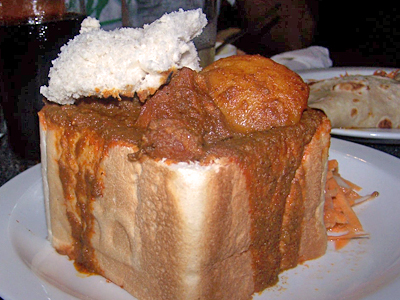
  149. A quarter mutton bunny chow

    Story 130 of 141 · A global table

    Arrived in Africa

    Curry in a loaf: the bunny chow

    Indian South Africans in Durban began serving curry inside a hollowed-out loaf of white bread, probably in the 1940s. The exact origin is disputed, and some stories go back to the Indian workers who first came to Natal.

    Next story1947 · Tandoori chicken comes to Delhi
  150. Tandoori chicken with sliced onions

    Story 131 of 141 · A global table

    Arrived in South Asia

    Tandoori chicken comes to Delhi

    Tandoori chicken began in the Punjab before Partition. Kundan Lal Gujral and other Punjabi Hindu refugees from Peshawar founded the Moti Mahal restaurant in Delhi's Daryaganj in the late 1940s and popularised it, serving it to Jawaharlal Nehru.

    Next story1948 · Jewish cooks from many lands build an Israeli cuisine
  151. A spread of Israeli food

    Story 132 of 141 · A global table

    Arrived in the Middle East

    Jewish cooks from many lands build an Israeli cuisine

    After Israel was founded in 1948, Jewish immigrants from the Middle East, North Africa, Iberia and Central and Eastern Europe brought their dishes. Mixed with local Arab foods, these became an Israeli cuisine of falafel, hummus, shakshouka and couscous.

    Next story1949 · Sichuan veterans create Taiwan's beef noodle soup
  152. A bowl of Taiwanese beef noodle soup in Taipei

    Story 133 of 141 · A global table

    Arrived in East Asia and the Pacific

    Sichuan veterans create Taiwan's beef noodle soup

    After the Kuomintang retreated to Taiwan in 1949, Sichuanese veterans created red-braised beef noodle soup, now often called Taiwanese beef noodle soup. It is sometimes called Sichuan beef noodle soup, though Sichuan has its own versions.

    Next storyc. 1950 · British afternoon tea becomes Hong Kong milk tea
  153. A glass of Hong Kong–style milk tea

    Story 134 of 141 · A global table

    Arrived in East Asia and the Pacific

    British afternoon tea becomes Hong Kong milk tea

    British afternoon tea, black tea with milk and sugar, grew popular in colonial Hong Kong. Local diners and stalls made an affordable version with stronger tea and evaporated milk, which gave a creamier, more intense drink.

    Next storyc. 1955 · Army-base stew in a poor Korea
  154. Budae-jjigae, the Korean army-base stew

    Story 135 of 141 · A global table

    Arrived in East Asia and the Pacific

    Army-base stew in a poor Korea

    Budae-jjigae means army-base stew. It appeared around the time of the Korean War, when South Korea was very poor and cooks turned surplus American rations, ham, sausage, Spam, baked beans and cheese, into a spicy kimchi-and-noodle pot.

    Next story1958 · Instant noodles
  155. The noodle block of a Mama instant noodles, standard size

    Story 136 of 141 · A global table

    Arrived in East Asia and the Pacific

    Instant noodles

    In a shed behind his house in Osaka, Momofuku Ando invented flash-fried instant ramen. His Cup Noodles followed in 1971.

    Next storyc. 1960 · Momos spread from the Himalayas into India
  156. Steamed vegetable momos in Kolkata

    Story 137 of 141 · A global table

    Arrived in South Asia

    Momos spread from the Himalayas into India

    Momos are steamed dumplings of Tibetan and Nepali cooking, believed to have reached the Himalayas from China with the Mongols in the 13th century. Tibetan refugees and Nepali migrants carried them into Indian towns and cities in the later 20th century.

    Next story1966 · Sushi reaches America
  157. Sushi reaches America

    Story 138 of 141 · A global table

    Arrived in the AmericasUnverified

    Sushi reaches America

    A restaurant in Los Angeles's Little Tokyo opened one of the first sushi bars in the United States. The California roll, with avocado, followed.

    Next storyc. 1971 · Chicken tikka masala
  158. en:Chicken Tikka Massala served with rice

    Story 139 of 141 · A global table

    Arrived in Europe

    Chicken tikka masala

    Restaurants run by South Asian immigrants made curry part of British life. Chicken tikka masala, often credited to a Glasgow restaurant, became a national favourite.

    Next story1972 · The doner arrives in Berlin
  159. A doner kebab from a Turkish stand in Berlin

    Story 140 of 141 · A global table

    Arrived in Europe

    The doner arrives in Berlin

    The vertical rotisserie was invented in the 19th-century Ottoman Empire. The sandwich version known today was created in West Berlin in the early 1970s by Turkish immigrants, and Kadir Nurman's stand at Zoo Station in 1972 is credited with spreading it.

    Next story1983 · Maggi noodles arrive in India
  160. A bowl of masala noodles made with Maggi noodles and seasoning

    Story 141 of 141 · A global table

    Arrived in South AsiaUnverified

    Maggi noodles arrive in India

    Nestlé launched Maggi instant noodles in India in 1983. Sold as 2-minute noodles, they became a staple of snacks and student cooking, and a Masala flavour was made to suit Indian tastes, with a green-dot vegetarian recipe.

    NextJourney's end

Journey complete

You travelled 8,982 years

141 stories, c. 7000 BC to 1983. More journeys are being researched and added.

Choose another journeyBack to the start