
All journeys

Inventions and technology

From stone tools made almost three million years ago to gene editing and artificial intelligence: the inventions, from every part of the world, that changed how people work, travel, talk and think.

Stories
211
Distance
2,902,022 years
Route
c. 2,900,000 BC to 2022
  1. The Stone Age20 stories
  2. The ancient world49 stories
  3. The Middle Ages29 stories
  4. The age of exploration and science18 stories
  5. The Industrial Revolution33 stories
  6. The twentieth century49 stories
  7. The digital age13 stories
Begin the journey
  1. Chapter I

    The Stone Age

    20 stories in this chapter

  2. An Oldowan chopper, a pebble flaked on one edge to make a sharp cutting edge, shown beside a scale

    Story 1 of 211 · The Stone Age

    Tools and materials

    The first stone tools

    Early humans in East Africa chipped flakes off pebbles to get sharp edges for cutting meat and breaking bones. This simple toolkit, named after Olduvai Gorge, stayed in use for well over a million years.

    Next storyc. 1,800,000 BC · Controlling fire
  3. About 1,100,000 years later

    c. 2,900,000 BC to c. 1,800,000 BC

  4. A Hadza man in Tanzania making fire with a hand drill and a bundle of tinder

    Story 2 of 211 · The Stone Age

    Tools and materials

    Controlling fire

    Early humans learned to use and keep fire for warmth, light, protection and cooking. Charred bones in Wonderwerk Cave, South Africa, point to fire use about 1.8 million years ago. Making a new fire at will came much later.

    Next storyc. 1,760,000 BC · The hand axe
  5. About 40,000 years later

    c. 1,800,000 BC to c. 1,760,000 BC

  6. The hand axe

    Story 3 of 211 · The Stone Age

    Tools and materials

    The hand axe

    Early humans in Africa began shaping stones on both faces into pointed, teardrop-shaped hand axes. Finds in West Turkana, Kenya, date to about 1.76 million years ago, and the style, called Acheulean, spread across Africa, Asia and Europe.

    Next storyc. 300,000 BC · The Schöningen wooden spears
  7. About 1,460,000 years later

    c. 1,760,000 BC to c. 300,000 BC

  8. Schöniger Speer in der Ausstellung "Bewegte Zeiten

    Story 4 of 211 · The Stone Age

    Tools and materialsUnverified

    The Schöningen wooden spears

    In a lignite mine at Schöningen, Germany, archaeologists dug up ten wooden spears and throwing sticks lying among the bones of butchered horses. Shaped from spruce and pine, they are balanced like modern javelins.

    Next storyc. 80,000 BC · The bow and arrow
  9. About 220,000 years later

    c. 300,000 BC to c. 80,000 BC

  10. A San man in South Africa showing how he hunts with a bow and arrow

    Story 5 of 211 · The Stone Age

    Tools and materials

    The bow and arrow

    Tiny stone points from Uzbekistan and South Africa suggest hunters were shooting arrows 60,000 to 80,000 years ago. A bow stores the effort of drawing in a bent limb, then releases it faster than any arm can throw.

    Next storyc. 48,000 BC · The eyed needle
  11. About 32,000 years later

    c. 80,000 BC to c. 48,000 BC

  12. The eyed needle

    Story 6 of 211 · The Stone Age

    Tools and materialsUnverified

    The eyed needle

    A needle of bird bone with an eye for thread, about 50,000 years old, was found in Denisova Cave in Siberia and is credited to the Denisovans. A possible needle point from Sibudu Cave in South Africa may be older still.

    Next storyc. 21,000 BC · Grinding wild grain at Ohalo II
  13. About 27,000 years later

    c. 48,000 BC to c. 21,000 BC

  14. A map showing the location of Ohalo II on the south-west shore of the Sea of Galilee

    Story 7 of 211 · The Stone Age

    Food and farming

    Grinding wild grain at Ohalo II

    At Ohalo II, a hunter-gatherer camp on the shore of the Sea of Galilee about 23,000 years old, seeds of wild wheat and barley lay scattered around a grinding stone inside a hut. Weeds found with them suggest small cultivated plots.

    Next storyc. 20,500 BC · The fish hook
  15. About 500 years later

    c. 21,000 BC to c. 20,500 BC

  16. The fish hook

    Story 8 of 211 · The Stone Age

    Food and farmingUnverified

    The fish hook

    Hooks carved from sea snail shells, found in Sakitari Cave on Okinawa, Japan, are about 22,500 years old, the oldest known. Shell hooks of a similar age come from Jerimalai cave in East Timor and from New Ireland in Papua New Guinea.

    Next storyc. 18,000 BC · The Ishango bone
  17. About 2,500 years later

    c. 20,500 BC to c. 18,000 BC

  18. The Ishango bone, a narrow bone shaft marked with rows of notches, in a museum case

    Story 9 of 211 · The Stone Age

    Computing

    The Ishango bone

    A bone tool found at Ishango, on the border of Congo and Uganda, is covered in rows of notches. Some see a tally, others a lunar calendar or a table of numbers. It is about 20,000 years old.

    Next storyc. 18,000 BC · Pottery
  19. A fragment of very early pottery from Xianrendong Cave in Jiangxi, China

    Story 10 of 211 · The Stone Age

    Tools and materials

    Pottery

    Hunter-gatherers in what is now China were baking clay into vessels by about 18,000 BC, long before farming. Japan's Jōmon people followed. Fired clay holds water, cooks food and keeps grain dry.

    Next storyc. 10,000 BC · The boomerang
  20. About 8,000 years later

    c. 18,000 BC to c. 10,000 BC

  21. Aboriginal Australian boomerangs of several shapes in a museum case

    Story 11 of 211 · The Stone Age

    Tools and materials

    The boomerang

    Aboriginal Australians shaped curved throwing sticks, and some were made to fly in a circle and return. The oldest surviving Aboriginal boomerang, found in a South Australian peat bog, is about 10,000 years old.

    Next storyc. 9500 BC · Stone pillars rise at Göbekli Tepe
  22. About 500 years later

    c. 10,000 BC to c. 9500 BC

  23. Rings of tall T-shaped limestone pillars on the hill of Göbekli Tepe in Turkey

    Story 12 of 211 · The Stone Age

    Tools and materials

    Stone pillars rise at Göbekli Tepe

    Before anyone farmed, people on a hill in what is now Turkey cut huge limestone pillars, carved some with animals, and set them in circles. Quarrying and raising stones this size took many people working together.

    Next storyc. 9000 BC · Mudbricks let people build with earth
  24. About 500 years later

    c. 9500 BC to c. 9000 BC

  25. Rows of freshly shaped mudbricks laid out to dry in the sun in Palestine

    Story 13 of 211 · The Stone Age

    Tools and materials

    Mudbricks let people build with earth

    Builders mixed mud with straw, shaped it and dried it in the sun. Houses at Jericho were made this way around 9000 BC, and mudbrick stayed the commonest building material of the ancient Near East for thousands of years.

    Next storyc. 8400 BC · People dig wells to reach underground water
  26. About 600 years later

    c. 9000 BC to c. 8400 BC

  27. A village well in Afghanistan with a wooden lever frame, a rope and a black pot, and a child beside a second well ring

    Story 14 of 211 · The Stone Age

    Tools and materials

    People dig wells to reach underground water

    On Cyprus, a round shaft was cut through limestone to reach groundwater eight metres down around 8400 BC. Wells let people live and farm away from rivers and springs.

    Next storyc. 7800 BC · The Pesse canoe, the oldest known boat
  28. About 600 years later

    c. 8400 BC to c. 7800 BC

  29. The Pesse canoe, a long hollowed-out pine log, on display in the Drents Museum in Assen

    Story 15 of 211 · The Stone Age

    Transport

    The Pesse canoe, the oldest known boat

    Hunter-gatherers hollowed a pine trunk into a boat in what is now the Netherlands. Road builders found it in 1955, and radiocarbon dating placed it between 8040 and 7510 BC. A replica made in 2001 floated and carried a paddler.

    Next storyc. 7200 BC · Lime plaster, burned stone made smooth
  30. About 600 years later

    c. 7800 BC to c. 7200 BC

  31. A lime plaster bust from 'Ain Ghazal with a long neck and large eyes outlined in dark paint

    Story 16 of 211 · The Stone Age

    Tools and materials

    Lime plaster, burned stone made smooth

    Builders burned limestone in a very hot fire, then mixed the result with water and sand into a plaster that sets hard. At 'Ain Ghazal in Jordan, people modelled large human statues from it around 7200 BC.

    Next storyc. 6500 BC · The Dufuna canoe, Africa's oldest boat
  32. About 700 years later

    c. 7200 BC to c. 6500 BC

  33. The "Dufuna Canoe", which is the oldest boat in Africa (left) and a scene from its excavation (right)

    Story 17 of 211 · The Stone Age

    Transport

    The Dufuna canoe, Africa's oldest boat

    A Fulani herder found an 8.4-metre dugout near Dufuna in north-east Nigeria in 1987. Radiocarbon dates put it around 8,000 years old, when the area lay on the flood plain of a much larger Lake Chad.

    Next storyc. 6500 BC · Hammering the first metal
  34. A branching lump of native copper crystals, reddish-brown with flecks of green

    Story 18 of 211 · The Stone Age

    Tools and materials

    Hammering the first metal

    Before anyone smelted ore, people in Anatolia and Iraq hammered lumps of pure native copper into beads and small tools. The sites date from the seventh and sixth millennia BC. Copper could be shaped cold, unlike stone.

    Next storyc. 6000 BC · The kiln fires clay in a closed chamber
  35. About 500 years later

    c. 6500 BC to c. 6000 BC

  36. A preserved Neolithic pottery kiln at Banpo in China, a clay-lined pit with an arched firing chamber

    Story 19 of 211 · The Stone Age

    Energy and industry

    The kiln fires clay in a closed chamber

    Potters had fired clay in open pits for thousands of years before the earliest known kiln, at Yarim Tepe in Iraq around 6000 BC. A closed chamber holds heat in, and even Neolithic kilns passed 900 degrees Celsius.

    Next storyc. 5500 BC · Cheese-making begins in Poland
  37. About 500 years later

    c. 6000 BC to c. 5500 BC

  38. A platter holding several kinds of cheese

    Story 20 of 211 · The Stone Age

    Food and farming

    Cheese-making begins in Poland

    Pottery strainers found in Kuyavia, in Poland, carry traces of milk fat from separating curds from whey. Made about 5500 BC, they are the oldest direct proof of cheese.

    Next storyc. 5000 BC · Smelting turns rock into metal
  39. About 500 years later

    c. 5500 BC to c. 5000 BC

  40. Chapter II

    The ancient world

    49 stories in this chapter

  41. Two flat copper axes in a museum case in Serbia, one bright copper and one dark green

    Story 21 of 211 · The ancient world

    Energy and industry

    Smelting turns rock into metal

    At Belovode and Pločnik in Serbia, people heated copper ore to a high temperature to draw the metal out, between about 5500 and 5000 BC. A mace head from Turkey once thought older proved to be hammered native copper.

    Next storyc. 4300 BC · Rice paddies
  42. About 700 years later

    c. 5000 BC to c. 4300 BC

  43. Green rice plants standing in a flooded paddy field at Don Det, Laos

    Story 22 of 211 · The ancient world

    Food and farming

    Rice paddies

    In the lower Yangtze region of China, farmers grew rice in flooded plots. The oldest known paddy field, at Chaodun, dates to about 4330 BC. Standing water feeds the crop and holds down weeds.

    Next storyc. 4000 BC · The plough
  44. About 300 years later

    c. 4300 BC to c. 4000 BC

  45. A farmer ploughing a field with a horse-drawn plough

    Story 23 of 211 · The ancient world

    Food and farming

    The plough

    Early ploughs, pulled by people and then oxen, scratched furrows in the soil so seeds could be sown in rows.

    Next storyc. 3600 BC · Silk
  46. About 400 years later

    c. 4000 BC to c. 3600 BC

  47. A heap of white silkworm cocoons

    Story 24 of 211 · The ancient world

    Tools and materials

    Silk

    People in China learned to raise silkworms and unwind each cocoon into a single fine thread that weaves into light, smooth cloth. China guarded the craft for centuries, and traders carried the fabric west along the Silk Road.

    Next storyc. 3500 BC · The wheel
  48. The Ljubljana Marshes Wheel, the oldest wooden wheel yet found, about 5,000 years old, with its axle

    Story 25 of 211 · The ancient world

    Transport

    The wheel

    Wheels on carts appear in Mesopotamia and Europe in the fourth millennium BC. Potters' wheels may be even older; solid wooden discs later gave way to lighter spoked wheels.

    Next storyc. 3300 BC · Bronze
  49. About 200 years later

    c. 3500 BC to c. 3300 BC

  50. Bronze Age castings of tools and ornaments

    Story 26 of 211 · The ancient world

    Tools and materials

    Bronze

    Metalworkers learned to alloy copper with tin, making a metal harder than copper alone for tools, weapons and bells.

    Next storyc. 3300 BC · Writing in cuneiform
  51. A chart showing how cuneiform signs developed from early pictures

    Story 27 of 211 · The ancient world

    Communication

    Writing in cuneiform

    In Sumer, scribes pressed marks into wet clay tablets, first to keep accounts at Uruk around 3300 BC and later, in wedge-shaped strokes, to record laws, letters and stories.

    Next storyc. 3000 BC · The outrigger canoe
  52. About 300 years later

    c. 3300 BC to c. 3000 BC

  53. Two outrigger canoes with floats on one side drawn up in shallow water on a beach

    Story 28 of 211 · The ancient world

    Transport

    The outrigger canoe

    Austronesian sailors fitted a float on one or both sides of a narrow hull so that a canoe with a sail would not tip over. Outrigger and double-hulled canoes carried them from Taiwan across the Pacific and the Indian Ocean.

    Next storyc. 3000 BC · Papyrus
  54. A page of the Papyrus of Hunefer, an Egyptian Book of the Dead

    Story 29 of 211 · The ancient world

    Communication

    Papyrus

    Egyptians made a writing material from strips of the papyrus reed, pressed together and dried into sheets that could be joined into scrolls.

    Next storyc. 3000 BC · The sail
  55. An ancient Egyptian wooden model of a sailing boat with mast and sail

    Story 30 of 211 · The ancient world

    Transport

    The sail

    Egyptian boats on the Nile carried square sails by around 3000 BC, catching the wind to travel upstream.

    Next storyc. 3000 BC · Terraced fields
  56. The circular Inca farming terraces at Moray in the Peruvian Andes

    Story 31 of 211 · The ancient world

    Food and farming

    Terraced fields

    Farmers cut steps into steep slopes to hold soil and water so crops could grow on hillsides. Yemen's highlands had terraces by the 3rd millennium BC, and the Andean andenes and the rice terraces of the Philippines show the idea arose again and again.

    Next storyc. 2500 BC · The abacus
  57. About 500 years later

    c. 3000 BC to c. 2500 BC

  58. A reconstruction of a Roman hand abacus

    Story 32 of 211 · The ancient world

    Computing

    The abacus

    Counting boards and frames with beads or pebbles let merchants add and subtract quickly. Versions were used in Mesopotamia, Greece, Rome and China.

    Next storyc. 2300 BC · The shaduf
  59. About 200 years later

    c. 2500 BC to c. 2300 BC

  60. A gardener working a shaduf in a wall painting from the tomb of Ipuy at Deir el-Medina, Egypt

    Story 33 of 211 · The ancient world

    Food and farming

    The shaduf

    A long pole pivots on a post, with a bucket on one end and a heavy counterweight on the other. One worker could swing water up from a river or canal onto higher fields all day.

    Next storyc. 2000 BC · The kayak
  61. About 300 years later

    c. 2300 BC to c. 2000 BC

  62. An Inuit seal hunter in a kayak in Greenland holding a harpoon

    Story 34 of 211 · The ancient world

    Transport

    The kayak

    Arctic peoples such as the Inuit built kayaks from driftwood or whalebone covered in sealskin. Light and narrow, with a covered deck and a hole for the paddler, a kayak is fast and stable for hunting seals in icy water.

    Next storyc. 1900 BC · The chariot
  63. Drawings of ancient war chariots copied from carved reliefs

    Story 35 of 211 · The ancient world

    Transport

    The chariot

    The light, spoke-wheeled chariot first appears in burials of the Sintashta culture in the Russian steppe, about 1900 BC. Two horses pulling a driver and an archer gave armies speed and shock, and the idea spread to Egypt, India, China and the Near East.

    Next storyc. 1600 BC · Rubber
  64. About 300 years later

    c. 1900 BC to c. 1600 BC

  65. Latex running from a cut in a rubber tree trunk into a collecting cup

    Story 36 of 211 · The ancient world

    Tools and materials

    Rubber

    The Olmec, Maya and Aztec of Mesoamerica collected latex from rubber trees and used it to make bouncing balls for their ritual ballgame, as well as sandals and figures.

    Next storyc. 1500 BC · Nixtamalization
  66. A bowl of hominy, maize kernels swollen and softened by cooking in limewater

    Story 37 of 211 · The ancient world

    Food and farming

    Nixtamalization

    Cooks in Mesoamerica soaked and simmered maize in limewater or ash, then ground it into dough. The alkali loosens the hulls and frees niacin, so people who live on maize stay healthy. Tortillas and tamales depend on it.

    Next storyc. 1500 BC · Telling time by shadows
  67. Got the time? Sundial in the walled garden at Brodick castle

    Story 38 of 211 · The ancient world

    Tools and materialsUnverified

    Telling time by shadows

    The oldest surviving sundials are shadow clocks from Egypt and Babylon of about 1500 BC: the shadow of a bar or post fell on a marked scale and showed the hour. The people of Kush built sundials too.

    Next storyc. 1400 BC · The water clock
  68. A perforated copper bowl in a vessel of water, a traditional Iranian water clock that sinks after a set time

    Story 39 of 211 · The ancient world

    Tools and materials

    The water clock

    Water running at a steady rate out of a marked vessel told the hour by day or night, even when clouds hid the sun. The oldest surviving example, found at Karnak, dates from the reign of Amenhotep III of Egypt. Babylon, Persia, India, Greece and China built them too.

    Next storyc. 1250 BC · Chinese writing on oracle bones
  69. About 150 years later

    c. 1400 BC to c. 1250 BC

  70. A Shang dynasty oracle bone scratched with early Chinese writing, in the British Library

    Story 40 of 211 · The ancient world

    Communication

    Chinese writing on oracle bones

    Shang dynasty diviners scratched questions for the ancestors on turtle shells and ox bones, then cracked them with heat and read the answer. These are the oldest known Chinese writing, and many of the characters can still be recognised.

    Next storyc. 1200 BC · Iron smelting
  71. The Iron Pillar of Delhi, wrought iron forged around AD 400 that has barely rusted

    Story 41 of 211 · The ancient world

    Tools and materials

    Iron smelting

    Smiths learned to heat iron ore with charcoal in furnaces and hammer out the metal. Iron was more common than copper and tin, so tools became cheaper.

    Next storyc. 1050 BC · The Phoenician alphabet
  72. About 150 years later

    c. 1200 BC to c. 1050 BC

  73. The Gezer calendar, an early inscription in the alphabet used by the Phoenicians and their neighbours

    Story 42 of 211 · The ancient world

    Communication

    The Phoenician alphabet

    Phoenician traders used a short set of letters, one for each consonant sound, instead of hundreds of signs.

    Next storyc. 1000 BC · Polynesian wayfinding
  74. The voyaging canoe Hōkūle'a arriving in Honolulu from Tahiti in 1976, steered by traditional navigation

    Story 43 of 211 · The ancient world

    Transport

    Polynesian wayfinding

    Polynesian navigators crossed thousands of kilometres of open ocean without instruments, reading stars, swells, winds and birds. Their double-hulled canoes took them to nearly every island in the Polynesian Triangle.

    Next storyc. 1000 BC · Qanats
  75. A flooded tunnel section of the Qanat Firaun, an underground water channel

    Story 44 of 211 · The ancient world

    Food and farming

    Qanats

    Early in the first millennium BC, people in Iran began digging gently sloping tunnels from the foothills out to the plain, tapping underground water without pumps. Vertical shafts let diggers clear soil and let in air.

    Next storyc. 640 BC · The first coins
  76. About 360 years later

    c. 1000 BC to c. 640 BC

  77. Münzen aus aller Welt, sog

    Story 45 of 211 · The ancient world

    Tools and materials

    The first coins

    Between about 640 and 550 BC a workshop at Guanzhuang in Henan, China, cast bronze coins shaped like spades. At about the same time, the kingdom of Lydia in Anatolia began striking lumps of electrum, a gold and silver alloy, with a stamp.

    Next story5th century BC · The blast furnace and cast iron
  78. An old blast furnace with its tower and pipes standing disused at Sestao, Spain

    Story 46 of 211 · The ancient world

    Energy and industry

    The blast furnace and cast iron

    Chinese ironworkers made cast iron, molten iron poured into moulds, as early as the 5th century BC. Tall furnaces driven by a blast of air gave the heat needed. Europe adopted the blast furnace in the Middle Ages.

    Next storyc. 500 BC · Wootz steel
  79. A 17th or 18th-century Indian sword blade of wootz steel with its watered pattern

    Story 47 of 211 · The ancient world

    Tools and materials

    Wootz steel

    Smiths in southern India sealed iron and carbon in clay crucibles and melted them, making high-carbon steel with a banded pattern. Cakes of this wootz were exported to the Middle East and forged into famous blades.

    Next storyc. 450 BC · Terra preta
  80. A close-up of dark terra preta soil, rich in charcoal

    Story 48 of 211 · The ancient world

    Food and farming

    Terra preta

    Pre-Columbian farmers in the Amazon basin enriched poor soil with charcoal, bones, broken pottery and compost, making deep black earth that stays fertile. These soils are still farmed and studied today.

    Next story4th century BC · The noria
  81. Three norias, big wooden water-lifting wheels, beside the river at Hama in Syria

    Story 49 of 211 · The ancient world

    Food and farming

    The noria

    A big wheel with pots round its rim, turned by the river's own flow, scoops up water and tips it into a trough. Egypt had water-lifting wheels by the 4th century BC, and the huge norias of Hama in Syria are famous survivors.

    Next storyc. 400 BC · Yakhchāls
  82. A tall domed yakhchāl ice house in Yazd province, Iran

    Story 50 of 211 · The ancient world

    Food and farming

    Yakhchāls

    In the Iranian desert, builders raised thick-walled domed ice houses over deep storage pits, with shade walls and pools for freezing ice. Winter ice stayed frozen all summer and kept food cold, and made cold desserts such as faloodeh possible.

    Next story312 BC · Roman roads
  83. The old paved surface of the Appian Way, the first great Roman road, near Rome

    Story 51 of 211 · The ancient world

    Transport

    Roman roads

    From 312 BC, when the Via Appia was begun, Rome built paved, straight, drained roads to move soldiers and messengers around its empire. At their height the network ran for tens of thousands of kilometres.

    Next story3rd century BC · Archimedes' screw
  84. A diagram of an Archimedes' screw lifting water as it turns

    Story 52 of 211 · The ancient world

    Food and farming

    Archimedes' screw

    A screw turning inside a tube lifts water from a low river or ditch to fields above it. It is credited to Archimedes, though it may be older.

    Next storyc. 300 BC · Counting rods
  85. Counting-rod numerals laid out in squares on a calculating board in an old East Asian mathematics book

    Story 53 of 211 · The ancient world

    Computing

    Counting rods

    Chinese mathematicians laid small bamboo or bone rods on a board to do sums, in a place-value system. They could solve equations with them long before the abacus took over.

    Next storyc. 300 BC · Maya writing
  86. Maya glyphs from Yaxchilan displayed at the National Museum of Anthropology in Mexico City

    Story 54 of 211 · The ancient world

    Communication

    Maya writing

    The Maya of Mesoamerica carved and painted a script with hundreds of picture-like signs that stood for words and syllables. They recorded kings' deeds, calendars and astronomy on stone, pottery and bark-paper books.

    Next story3rd century BC · The watermill
  87. An old watermill at Braine-le-Château in Belgium

    Story 55 of 211 · The ancient world

    Energy and industry

    The watermill

    Greek and Roman engineers used flowing water to turn wheels that ground grain, saving hours of hand labour.

    Next storyc. 250 BC · Brahmi script
  88. Brahmi letters carved into the rock of an Ashoka minor rock edict at Gujarra, Madhya Pradesh

    Story 56 of 211 · The ancient world

    Communication

    Brahmi script

    The emperor Ashoka had edicts carved in Brahmi on pillars and rocks across India in the 3rd century BC. Its letters stood for syllables. Nearly all the scripts of South and Southeast Asia descend from it.

    Next story2nd century BC · Roman concrete
  89. A piece of Roman concrete at the Thermenmuseum in Heerlen

    Story 57 of 211 · The ancient world

    Tools and materials

    Roman concrete

    Roman builders mixed lime with volcanic ash to make a concrete that set even under water.

    Next storyc. 141 BC · Paper
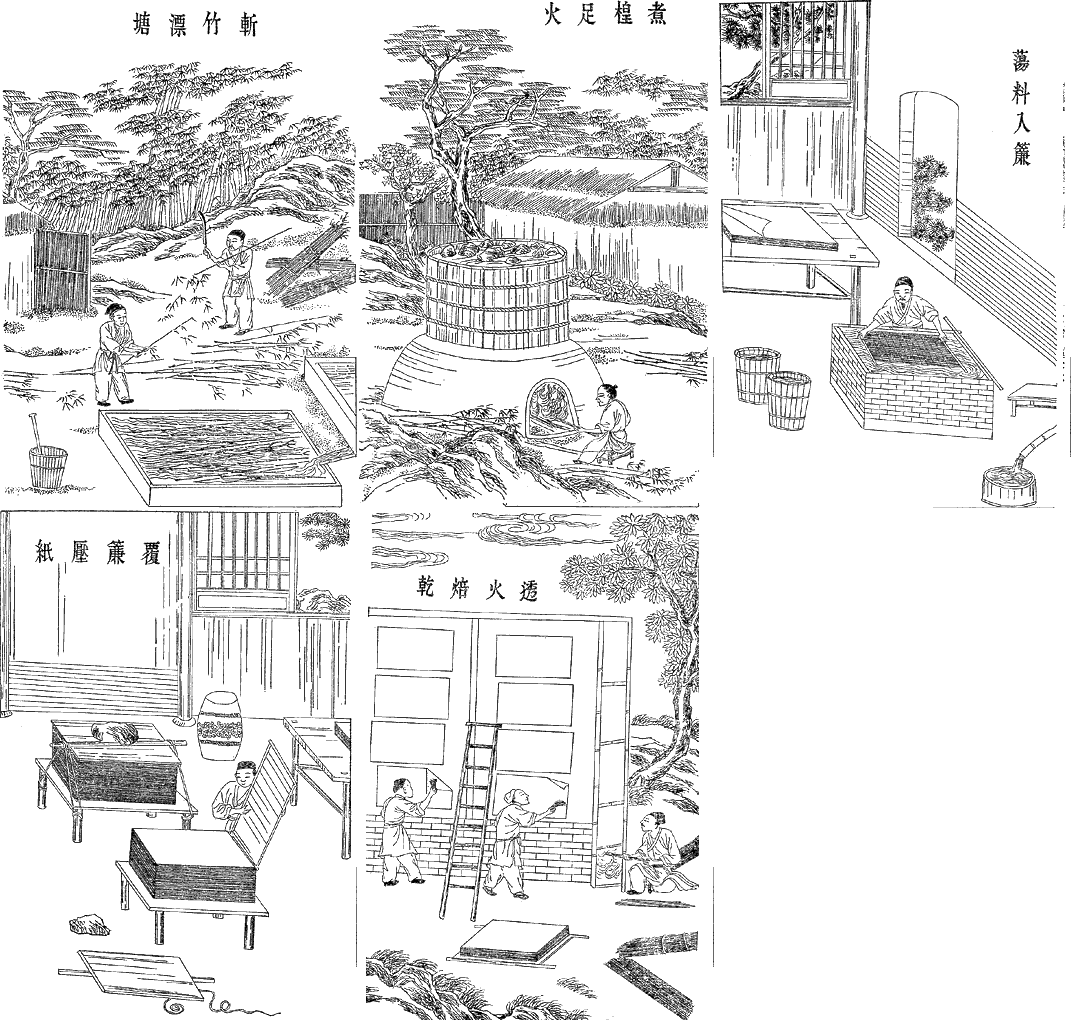
  90. Woodcuts from a 1637 Chinese book showing the steps of making paper by hand

    Story 58 of 211 · The ancient world

    Communication

    Paper

    In China, papermakers pulped plant fibres in water and dried them on screens. The court official Cai Lun is credited with improving the process around AD 105.

    Next storyc. 100 BC · The Antikythera mechanism
  91. The largest surviving fragment of the Antikythera mechanism, with corroded bronze gears

    Story 59 of 211 · The ancient world

    Computing

    The Antikythera mechanism

    A box of bronze gears found in a Greek shipwreck that modelled the movements of the Sun, Moon and planets and predicted eclipses.

    Next storyc. 100 BC · The crank
  92. A metal crank handle with a knob at each end

    Story 60 of 211 · The ancient world

    Energy and industry

    The crank

    A crank turns back-and-forth effort into steady rotation, and the reverse. The earliest crank handles appear on Han dynasty clay models of grain winnowing fans from China. Later the crank turned millstones, pumps and saws.

    Next story1st century BC · Glassblowing
  93. A glassblower shaping molten glass on a blowpipe

    Story 61 of 211 · The ancient world

    Tools and materials

    Glassblowing

    Craftsmen in the eastern Mediterranean found they could blow air through a pipe into molten glass to shape vessels quickly.

    Next storyc. 100 BC · The wheelbarrow
  94. A Chinese wheelbarrow with a central wheel in Peking in 1924

    Story 62 of 211 · The ancient world

    Transport

    The wheelbarrow

    Tomb murals and reliefs show wheelbarrows in Han dynasty China, often with the wheel in the middle so the barrow carried most of the weight. One worker could carry a heavy load far on rough paths.

    Next story31 · The water-powered bellows
  95. A printed Chinese illustration of waterwheels working the bellows of an iron smelting furnace

    Story 63 of 211 · The ancient world

    Energy and industry

    The water-powered bellows

    In AD 31 Du Shi, a Han official, is credited with putting a waterwheel to work blowing air into iron furnaces through piston bellows. This freed workers from pumping by hand and gave steadier heat.

    Next storyc. 50 · Hero's steam engine
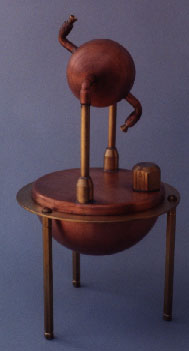
  96. A modern replica of Hero's aeolipile, a metal sphere with two bent steam jets

    Story 64 of 211 · The ancient world

    Energy and industry

    Hero's steam engine

    In the 1st century Hero of Alexandria described a hollow sphere that spins as steam escapes from two bent jets. It was probably a demonstration toy, but it shows that steam could turn a wheel.

    Next storyc. 50 · The stern rudder
  97. An Eastern Han dynasty pottery model of a boat with a rudder at the stern

    Story 65 of 211 · The ancient world

    Transport

    The stern rudder

    Han dynasty Chinese ships were fitted with a rudder hung on the stern post, instead of a steering oar at the side. It gave a ship's helmsman firmer control, especially for large, ocean-going vessels.

    Next story132 · Zhang Heng's earthquake detector
  98. A replica of Zhang Heng's earthquake detector, a bronze jar ringed with dragon heads over toads

    Story 66 of 211 · The ancient world

    Tools and materials

    Zhang Heng's earthquake detector

    In AD 132 the Chinese court astronomer Zhang Heng built a bronze vessel ringed with dragon heads. A distant tremor made a ball drop from a dragon's mouth into a toad's below, showing which direction the shock came from.

    Next storyc. 150 · The lateen sail
  99. A drawing of a boat rigged with a triangular lateen sail on a long slanting yard

    Story 67 of 211 · The ancient world

    Transport

    The lateen sail

    The lateen is a triangular sail on a long slanted yard. It lets a ship sail across the wind and closer to it than the old square sail could. It appeared in the Mediterranean by the 2nd century and spread widely in Arab and Indian Ocean waters.

    Next storyc. 300 · The stirrup
  100. About 150 years later

    c. 150 to c. 300

  101. Pottery horsemen from a Western Jin tomb at Changsha, some shown with a single mounting stirrup

    Story 68 of 211 · The ancient world

    Transport

    The stirrup

    Paired metal or leather stirrups give a rider a firm footing. The Chinese Jin dynasty developed them in the 4th century, and nomad horsemen carried the idea across Asia to Europe.

    Next story5th century · The horse collar
  102. A padded horse collar

    Story 69 of 211 · The ancient world

    Food and farming

    The horse collar

    A padded collar resting on a horse's shoulders, first used in China and later in Europe, let horses pull heavy loads without choking.

    Next storyc. 600 · Chess
  103. About 200 years later

    5th century to c. 600

  104. Chapter III

    The Middle Ages

    29 stories in this chapter

  105. A chess set laid out in the opening position, seen from Black's side

    Story 70 of 211 · The Middle Ages

    Computing

    Chess

    Chess grew from chaturanga, a war game of India recorded by the 7th century. It spread to Persia, the Islamic world and Europe, where pieces and rules changed. Playing it well needs planning many moves ahead.

    Next storyc. 600 · Porcelain
  106. A white Tang dynasty porcelain vase with moulded handles in the Hebei Museum, Shijiazhuang

    Story 71 of 211 · The Middle Ages

    Tools and materials

    Porcelain

    Chinese potters fired white clay with kaolin above 1,200 °C until it turned hard, glassy and thin enough to let light through. Glazed forerunners go back to the Shang dynasty; true porcelain was reached by the Sui and early Tang.

    Next storyc. 600 · The quipu
  107. An Inca quipu of knotted cords in the Larco Museum in Lima

    Story 72 of 211 · The Middle Ages

    Communication

    The quipu

    Andean peoples recorded numbers, and perhaps stories, with knotted cords: the position, type and colour of the knots carried meaning. Wari and then Inca record-keepers kept their empires' accounts on quipus.

    Next story628 · Zero as a number
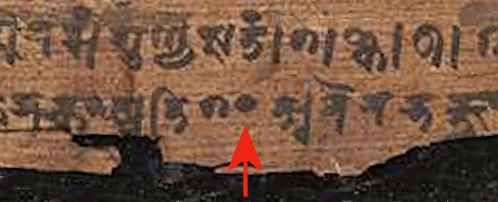
  108. A detail of the Bakhshali manuscript showing the dot used for zero

    Story 73 of 211 · The Middle Ages

    Computing

    Zero as a number

    In 628 the Indian mathematician Brahmagupta set out rules for adding, subtracting and multiplying with zero, treating it as a number in its own right and not just an empty place.

    Next story8th century · The astrolabe in the Islamic world
  109. An Islamic astrolabe, a brass disc with a pierced star map over engraved plates, in the Pergamon Museum, Berlin

    Story 74 of 211 · The Middle Ages

    Tools and materials

    The astrolabe in the Islamic world

    A brass disc with a rotating star map, the astrolabe measured the height of the sun or a star, told the time and found latitude. Greek astronomers invented it; in the 8th century al-Fazari became the first person credited with building one in the Islamic world.

    Next story9th century · The three-field system
  110. Ridge-and-furrow strips left by medieval open-field farming near Theddingworth, England

    Story 75 of 211 · The Middle Ages

    Food and farming

    The three-field system

    In medieval Europe farmers divided their land into three fields: one for winter grain, one for spring crops and one left fallow. Two thirds were used each year instead of half. The system spread through northern Europe from the 9th to the 11th century.

    Next story9th century · The windmill
  111. A windmill on the island of Amrum

    Story 76 of 211 · The Middle Ages

    Energy and industry

    The windmill

    Windmills in Persia turned grain stones with sails on a vertical axis; Europe's post mills, from the twelfth century, faced their sails into the wind.

    Next storyc. 820 · Al-Khwarizmi's algebra
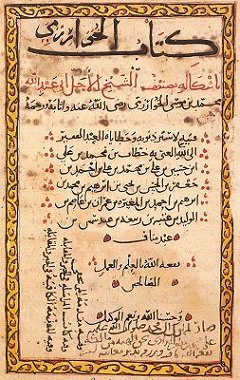
  112. A page from al-Khwarizmi's Arabic book on algebra

    Story 77 of 211 · The Middle Ages

    Computing

    Al-Khwarizmi's algebra

    In Baghdad around 820, al-Khwarizmi wrote a short book on solving equations by balancing both sides. Its Arabic title gave us the word algebra, and his name gave us algorithm.

    Next storyc. 825 · Hindu–Arabic numerals
  113. A diagram showing how the ten digits changed shape from their Indian forms to the numerals used today

    Story 78 of 211 · The Middle Ages

    Computing

    Hindu–Arabic numerals

    Indian mathematicians devised the ten digits with zero and place value. Scholars in Baghdad, among them al-Khwarizmi, explained them in Arabic around 825, and in the early 13th century Fibonacci's Liber Abaci brought them to Europe.

    Next storyc. 850 · Gunpowder
  114. Black powder, the modern form of gunpowder

    Story 79 of 211 · The Middle Ages

    Tools and materials

    Gunpowder

    Chinese alchemists mixed saltpetre, sulphur and charcoal and found an explosive powder, used first in fireworks and then in weapons.

    Next story868 · The first dated printed book
  115. The decorated frontispiece of the Diamond Sutra, a printed scroll from Cave 17 at Dunhuang

    Story 80 of 211 · The Middle Ages

    Communication

    The first dated printed book

    The Diamond Sutra, a Buddhist text found at Dunhuang, China, carries the date 868 and was printed from carved wooden blocks on seven strips of paper pasted into a scroll. It is the oldest dated printed book.

    Next story950 · The fire lance
  116. An illustration of an ampulliform Chinese hand cannon with a gunpowder charge shooting a blast of flame with lead pellets as coviative projectiles

    Story 81 of 211 · The Middle Ages

    Tools and materialsUnverified

    The fire lance

    Chinese soldiers strapped a bamboo tube of gunpowder to a spear, so that when lit it shot out flame and shrapnel. The earliest evidence is from about 950, and Song garrisons used fire lances in a siege in 1132.

    Next story984 · The pound lock
  117. The lower gates of a pound lock at Wusterwitz in Germany with water rushing through

    Story 82 of 211 · The Middle Ages

    Transport

    The pound lock

    Song dynasty engineers built gated chambers on canals, so boats could be raised or lowered between water levels. Only a small pound of water needed to be emptied each time a boat passed.

    Next story11th century · Paper money
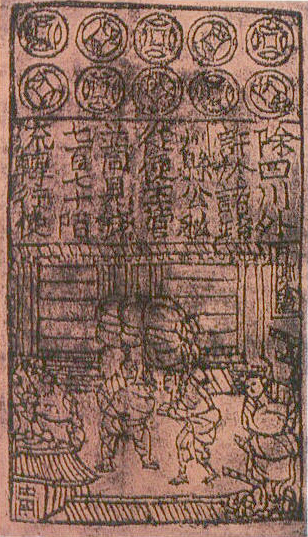
  118. A jiaozi, an early paper note of the Northern Song dynasty

    Story 83 of 211 · The Middle Ages

    Communication

    Paper money

    In Song dynasty Sichuan, merchants began issuing paper notes, called jiaozi, in place of heavy iron coins. They are regarded as the first paper money in history. The government took over the issue in 1023.

    Next story11th century · The magnetic compass
  119. A model of a Chinese south-pointing spoon, a lodestone ladle on a bronze plate

    Story 84 of 211 · The Middle Ages

    Transport

    The magnetic compass

    A magnetised needle that points north was used for navigation in China by the eleventh century and soon after in Europe and the Islamic world.

    Next story11th century · The spinning wheel
  120. A wooden spinning wheel

    Story 85 of 211 · The Middle Ages

    Tools and materials

    The spinning wheel

    A wheel turned by hand drove a spindle that twisted fibre into thread much faster than spinning by hand. It reached Europe from Asia in the Middle Ages.

    Next storyc. 1015 · Ibn al-Haytham's Book of Optics
  121. An engraving from the title page of Opticae Thesaurus, the Latin edition of Ibn al-Haytham's Book of Optics

    Story 86 of 211 · The Middle Ages

    Tools and materials

    Ibn al-Haytham's Book of Optics

    Writing in Cairo, Ibn al-Haytham showed by experiment that we see because light enters the eye, not because the eye sends out rays. He also described the camera obscura. Latin translations shaped European optics for centuries.

    Next storyc. 1040 · Movable type
  122. A Chinese revolving typecase for wooden movable type, from Wang Zhen's Nong Shu of 1313

    Story 87 of 211 · The Middle Ages

    Communication

    Movable type

    Around 1040 the Chinese craftsman Bi Sheng made individual characters of baked clay that could be arranged, printed and reused. Korea later cast metal type.

    Next story1092 · Su Song's clock tower
  123. A replica of Su Song's water-powered armillary sphere and clock tower at the Beijing Ancient Observatory

    Story 88 of 211 · The Middle Ages

    Tools and materials

    Su Song's clock tower

    In Kaifeng, Song China, Su Song's team finished a tall water-driven clock tower crowned by an armillary sphere. A water wheel, held back by an escapement, turned a star globe and figures that rang bells and gongs.

    Next storyc. 1150 · Chinampas
  124. One of the remaining chinampas, a long narrow farm island in canals at Xochimilco, Mexico

    Story 89 of 211 · The Middle Ages

    Food and farming

    Chinampas

    In the Valley of Mexico, farmers built small, fenced beds of mud and plant matter in shallow lakes. Always moist and fertile, they gave several crops a year and fed Aztec cities.

    Next story1206 · Al-Jazari's book of machines
  125. The elephant clock from al-Jazari's manuscript, a water clock built as an elephant with a driver and a pagoda

    Story 90 of 211 · The Middle Ages

    Energy and industry

    Al-Jazari's book of machines

    In 1206 the engineer al-Jazari, who worked at the court of the Artuqid rulers in the Jazira, finished a book describing 50 devices: water-lifting machines, clocks, fountains and programmable automata, with instructions for building them.

    Next storyc. 1286 · Eyeglasses
  126. Tommaso da Modena's 1352 fresco of Cardinal Hugh of Provence reading with spectacles, the oldest known picture of glasses

    Story 91 of 211 · The Middle Ages

    Tools and materials

    Eyeglasses

    Craftsmen in Italy began making lenses set in frames to help people read, around the 1280s.

    Next storyc. 1300 · The mechanical clock
  127. The iron frame and gears of the old mechanical clock in Salisbury Cathedral, England

    Story 92 of 211 · The Middle Ages

    Tools and materials

    The mechanical clock

    In late 13th-century Europe builders replaced flowing water with a falling weight, checked and released tick by tick by a verge escapement. Tower clocks soon struck the hours in towns across Europe.

    Next story1377 · The oldest book printed with movable metal type
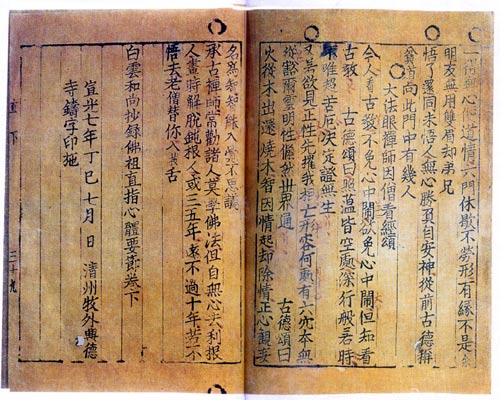
  128. A page of the Jikji, printed in Korea in 1377 with movable metal type

    Story 93 of 211 · The Middle Ages

    Communication

    The oldest book printed with movable metal type

    In 1377 monks at Heungdeok Temple in Cheongju, Korea, printed the Jikji, a collection of Buddhist teachings, using movable metal type. It is the oldest surviving book printed this way.

    Next storyc. 1439 · The printing press
  129. The Caxton Celebration – Wiliam Caxton showing specimens of his printing to King Edward IV and his Queen

    Story 94 of 211 · The Middle Ages

    Communication

    The printing press

    Johannes Gutenberg combined metal movable type, oil-based ink and a screw press in Mainz around 1440. His Bible was printed in the 1450s.

    Next storyc. 1440 · The caravel
  130. A replica of the caravel Vera Cruz under sail on the river Tagus at Lisbon

    Story 95 of 211 · The Middle Ages

    Transport

    The caravel

    The caravel was a small, fast Portuguese ship with lateen and square sails that sailed well into the wind. It was one of the vessels used on 15th-century voyages down Africa's coast and across the Atlantic.

    Next story1441 · The Korean rain gauge
  131. Replica Joseon-era bronze rain gauges on stone stands at the Jang Yeong-sil Science Garden in Busan

    Story 96 of 211 · The Middle Ages

    Tools and materials

    The Korean rain gauge

    In 1441 Korea's Joseon court produced the ch'ŭgugi, a bronze rain gauge. In 1442 King Sejong had identical gauges installed at provincial offices, so rainfall could be measured the same way across the whole kingdom.

    Next story1443 · The Hangul alphabet
  132. The opening page of Hunminjeongeum, the book that announced the Hangul alphabet

    Story 97 of 211 · The Middle Ages

    Communication

    The Hangul alphabet

    King Sejong of Korea and his scholars created Hangul in 1443 so that ordinary people could learn to read and write, instead of the difficult Chinese characters then used. Its letters are shaped after the mouth and tongue as they pronounce each sound.

    Next storyc. 1450 · The Inca road system
  133. A stretch of Inca road climbing a hillside above Lake Mosollaqta in Peru

    Story 98 of 211 · The Middle Ages

    Transport

    The Inca road system

    The Inca built about 40,000 kilometres of roads, stairways and rope bridges, linking the Andes and the coast. Runners relayed messages along them. The road system was the most advanced in pre-Columbian South America.

    Next story1551 · The steam-driven roasting spit
  134. Chapter IV

    The age of exploration and science

    18 stories in this chapter

  135. Ottoman astronomers working with instruments around Taqi al-Din at the Istanbul Observatory

    Story 99 of 211 · The age of exploration and science

    Energy and industry

    The steam-driven roasting spit

    In 1551 the Ottoman scholar Taqi al-Din described a steam turbine that turned a roasting spit: a jet of steam struck the blades of a wheel that turned the spit. He also built astronomical clocks for his observatory.

    Next story1569 · The Mercator map
  136. Mercator's 1569 world map, drawn on eighteen sheets joined together

    Story 100 of 211 · The age of exploration and science

    Transport

    The Mercator map

    In 1569 the Flemish mapmaker Gerardus Mercator published a world map on which a course of constant compass bearing is a straight line, so a navigator could plot a voyage with a ruler. The cost is that lands far from the equator look far too large.

    Next storyc. 1590 · The microscope
  137. Robert Hooke's microscope, drawn in his 1665 book Micrographia

    Story 101 of 211 · The age of exploration and science

    Tools and materials

    The microscope

    Dutch spectacle makers put two lenses in a tube around 1590. In the 1670s Antonie van Leeuwenhoek used his own lenses to see microbes.

    Next story1605 · The newspaper
  138. Portrait of Johann Carolus, the Strasbourg printer who began the first newspaper

    Story 102 of 211 · The age of exploration and science

    Communication

    The newspaper

    In 1605 the Strasbourg printer Johann Carolus began printing weekly news sheets, replacing the handwritten ones he had sold to subscribers. His Relation is considered the first newspaper.

    Next story1608 · The telescope
  139. Two telescopes made by Galileo around 1610, at the Museo Galileo in Florence

    Story 103 of 211 · The age of exploration and science

    Tools and materials

    The telescope

    Hans Lipperhey applied for a patent on a spyglass in 1608, and Galileo soon built his own and turned it to the sky.

    Next story1622 · The slide rule
  140. An Aristo 868 Studio slide rule set to multiply 1.3 by 2

    Story 104 of 211 · The age of exploration and science

    Computing

    The slide rule

    In 1622 the English clergyman William Oughtred put logarithmic scales on two sliding rulers. Sliding one against the other multiplies and divides by adding and subtracting lengths.

    Next story1637 · Song Yingxing's encyclopedia of crafts
  141. Song Yingxing's encyclopedia of crafts

    Story 105 of 211 · The age of exploration and science

    Energy and industryUnverified

    Song Yingxing's encyclopedia of crafts

    In 1637 the Ming scholar Song Yingxing published the Tiangong Kaiwu, The Exploitation of the Works of Nature, with pictures of farming, silk weaving, salt making, ironworking, papermaking and more.

    Next story1642 · The Pascaline
  142. A Pascaline, Blaise Pascal's brass calculating machine, in the Musée des Arts et Métiers in Paris

    Story 106 of 211 · The age of exploration and science

    Computing

    The Pascaline

    Blaise Pascal built a brass calculating machine with toothed wheels, to help his father, a tax supervisor in Rouen. It could add and subtract numbers automatically.

    Next story1643 · The barometer
  143. A glass mercury barometer on the Torricelli pattern, dated 1644, in a glass museum

    Story 107 of 211 · The age of exploration and science

    Tools and materials

    The barometer

    Evangelista Torricelli, an Italian physicist, filled a glass tube with mercury and stood it in a dish. The column sank to a fixed height, showing that air has weight and pushes on the liquid. It was the first barometer.

    Next story1656 · The pendulum clock
  144. A pendulum clock designed by Christiaan Huygens, in the Rijksmuseum

    Story 108 of 211 · The age of exploration and science

    Tools and materials

    The pendulum clock

    Christiaan Huygens built the first pendulum clock in 1656, using the regular swing of a pendulum to keep time.

    Next story1701 · Tull's seed drill
  145. An eighteenth-century engraving of Jethro Tull's seed drill

    Story 109 of 211 · The age of exploration and science

    Food and farming

    Tull's seed drill

    Jethro Tull's horse-drawn drill of 1701 sowed seeds in neat rows at the right depth instead of scattering them by hand.

    Next story1703 · Binary numbers
  146. A table of the numbers 0 to 32 in binary from Leibniz's paper of 1703

    Story 110 of 211 · The age of exploration and science

    Computing

    Binary numbers

    In 1703 Gottfried Leibniz published a full account of arithmetic with only 0 and 1. He saw it as a way to reason by calculation. Computers later stored everything as strings of on and off signals.

    Next story1709 · Smelting iron with coke
  147. Coalbrookdale by Night, a painting of furnaces glowing against the dark sky at the Shropshire ironworks

    Story 111 of 211 · The age of exploration and science

    Energy and industry

    Smelting iron with coke

    In 1709 Abraham Darby at Coalbrookdale in England smelted iron using coke, baked coal, instead of scarce charcoal. Coke burns hotter and cleaner, and Britain had plenty of coal.

    Next story1712 · Newcomen's steam engine
  148. A diagram of Newcomen's atmospheric steam engine

    Story 112 of 211 · The age of exploration and science

    Energy and industry

    Newcomen's steam engine

    Thomas Newcomen's engine of 1712 used steam and air pressure to pump water out of mines.

    Next storyc. 1730 · Four-course crop rotation
  149. Small beds showing crop rotation in the Ecological Garden at Odder, Denmark

    Story 113 of 211 · The age of exploration and science

    Food and farming

    Four-course crop rotation

    Charles Townshend popularised a four-year cycle of wheat, turnips, barley and clover on his Norfolk estate. Turnips and clover fed livestock through winter, and clover restored the soil, so no field needed to lie fallow.

    Next story1733 · The flying shuttle
  150. Flying shuttles at Bradford Industrial Museum

    Story 114 of 211 · The age of exploration and science

    Energy and industry

    The flying shuttle

    John Kay's shuttle of 1733 let one weaver send the thread across a wide loom with a jerk of a cord.

    Next story1745 · The Leyden jar
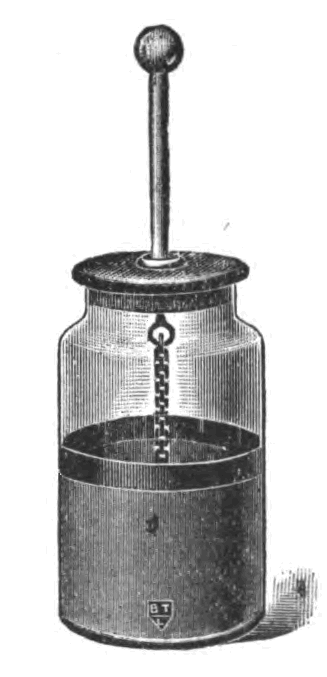
  151. An engraving of a Leyden jar, a glass jar coated with metal inside and out

    Story 115 of 211 · The age of exploration and science

    Energy and industry

    The Leyden jar

    In 1745 and 1746 two experimenters, Ewald von Kleist in Germany and Pieter van Musschenbroek in Leiden, found that a glass jar lined with metal can store a strong electric charge. The Leyden jar was the first capacitor.

    Next story1759 · The marine chronometer
  152. A marine chronometer in its gimballed wooden box

    Story 116 of 211 · The age of exploration and science

    Transport

    The marine chronometer

    John Harrison, a Yorkshire clockmaker, built a spring-driven watch accurate enough at sea to tell a ship's longitude. His fourth model, H4, finished in 1759, lost only seconds on a long sea trial.

    Next story1764 · The spinning jenny
  153. Chapter V

    The Industrial Revolution

    33 stories in this chapter

  154. A Hargreaves spinning jenny at the North Mill Museum

    Story 117 of 211 · The Industrial Revolution

    Energy and industry

    The spinning jenny

    James Hargreaves' frame of the mid-1760s let one worker spin eight or more threads at once.

    Next story1776 · Watt's steam engine
  155. A beam engine of the Watt type

    Story 118 of 211 · The Industrial Revolution

    Energy and industry

    Watt's steam engine

    James Watt hit on a separate condenser in 1765 and patented it in 1769. From 1776 his far more efficient engines worked at mines and ironworks, and later they were made to turn wheels.

    Next story1783 · The hot-air balloon
  156. A hot-air balloon in flight

    Story 119 of 211 · The Industrial Revolution

    Transport

    The hot-air balloon

    The Montgolfier brothers' balloon carried the first people aloft over Paris in November 1783.

    Next story1793 · The optical telegraph
  157. A drawing of a Chappe semaphore tower with its jointed signal arms

    Story 120 of 211 · The Industrial Revolution

    Communication

    The optical telegraph

    Claude Chappe's network of towers in France passed messages by moving signal arms, read through telescopes. The first line, Paris to Lille, opened in 1794. A message could cross a long line in minutes.

    Next story1793 · The cotton gin
  158. A cotton gin on display at the Eli Whitney Museum

    Story 121 of 211 · The Industrial Revolution

    Food and farming

    The cotton gin

    Eli Whitney's machine of 1793 pulled cotton fibres away from their seeds far faster than by hand.

    Next story1800 · The battery
  159. Alessandro Volta's pile of zinc and copper discs, the first battery

    Story 122 of 211 · The Industrial Revolution

    Energy and industry

    The battery

    Alessandro Volta stacked discs of zinc and copper separated by brine-soaked cloth in 1800 and produced a steady electric current.

    Next story1804 · The Jacquard loom
  160. A tall punched-card Jacquard loom in a weaving mill, with its chain of cards above the cloth

    Story 123 of 211 · The Industrial Revolution

    Computing

    The Jacquard loom

    Joseph Marie Jacquard's loom of 1804 read patterns from chains of punched cards. Change the cards and the cloth changes, so a weaver could produce complicated designs.

    Next story1804 · The steam locomotive
  161. A working replica of Richard Trevithick's 1804 Penydarren steam locomotive

    Story 124 of 211 · The Industrial Revolution

    Transport

    The steam locomotive

    Richard Trevithick ran a steam locomotive on rails in Wales in 1804; George Stephenson's engines opened the railway age in the 1820s.

    Next story1807 · The steamboat
  162. An illustration of Robert Fulton's North River steamboat, later called the Clermont, of 1807

    Story 125 of 211 · The Industrial Revolution

    Transport

    The steamboat

    In 1807 Robert Fulton's Clermont steamed up the Hudson River from New York to Albany. Steamboats could move against wind and current, and soon carried cargo and passengers on rivers and seas.

    Next story1809 · Canning food
  163. Portrait of Nicolas Appert, the French confectioner who invented canning

    Story 126 of 211 · The Industrial Revolution

    Food and farming

    Canning food

    In 1809 the French confectioner Nicolas Appert showed that food sealed in jars and heated stays fresh for months. Tin cans soon followed. Armies and ships could now carry safe food on long journeys.

    Next story1817 · The bicycle
  164. A dandy horse, an early two-wheeled machine with a saddle and no pedals

    Story 127 of 211 · The Industrial Revolution

    Transport

    The bicycle

    In 1817 Karl Drais in Germany built a two-wheeled machine that a rider steered and pushed along with their feet. Pedals were added to the front wheel in the 1860s, and the chain-driven safety bicycle came in the 1880s.

    Next story1821 · The Cherokee syllabary
  165. A sign at Cherokee Central Schools in North Carolina written in the Cherokee syllabary and in English

    Story 128 of 211 · The Industrial Revolution

    Communication

    The Cherokee syllabary

    Sequoyah, who had not learned to read English, spent years devising a syllabary of 85 symbols for the sounds of Cherokee. He finished it in 1821, and by 1825 most Cherokee could read it.

    Next story1822 · The difference engine
  166. A drawing of part of Charles Babbage's difference engine

    Story 129 of 211 · The Industrial Revolution

    Computing

    The difference engine

    Charles Babbage designed a machine of gears in 1822 to compute tables of numbers and print them without human error. A full engine was never finished in his lifetime.

    Next story1824 · Braille
  167. A close-up of a page of Braille dots

    Story 130 of 211 · The Industrial Revolution

    Communication

    Braille

    In 1824, aged fifteen, the blind French student Louis Braille devised a code of raised dots that can be read by touch. Each cell of up to six dots stands for a letter or number.

    Next story1831 · The electric generator
  168. A large Thury dynamo from the electric power line of a Swiss paper mill

    Story 131 of 211 · The Industrial Revolution

    Energy and industry

    The electric generator

    In 1831 Michael Faraday spun a copper disc between the poles of a magnet and drew a steady electric current from it. This was the first electric generator, and turning motion into electricity became the model for power stations.

    Next story1831 · The mechanical reaper
  169. A patent drawing of Cyrus McCormick's horse-drawn reaper from 1845

    Story 132 of 211 · The Industrial Revolution

    Food and farming

    The mechanical reaper

    Cyrus McCormick's horse-drawn reaper of the 1830s cut grain faster than a team of workers with scythes.

    Next story1834 · The electric motor
  170. A working model of Moritz von Jacobi's electric motor

    Story 133 of 211 · The Industrial Revolution

    Energy and industry

    The electric motor

    In May 1834 the German-Russian engineer Moritz von Jacobi built the first really useful rotating electric motor. Motors reverse the generator: electricity turns a shaft. They now run fans, trains, tools and cars.

    Next story1834 · Mechanical refrigeration
  171. An engraving of Jacob Perkins's ice-making machine of 1834

    Story 134 of 211 · The Industrial Revolution

    Food and farming

    Mechanical refrigeration

    In 1834 the American inventor Jacob Perkins, working in London, built the first working vapour-compression refrigerator, a closed cycle that used ether. Home fridges came a century later.

    Next story1837 · The Analytical Engine
  172. Photo of Babbage Analytical Engine Plan from 1840 at the Computer History Museum

    Story 135 of 211 · The Industrial Revolution

    Computing

    The Analytical Engine

    Charles Babbage designed a mechanical general-purpose computer in 1837, programmed with punched cards. Ada Lovelace wrote about how to program it. It was never built.

    Next story1837 · The electric telegraph
  173. Cooke and Wheatstone's five-needle telegraph of 1837 at the Science Museum, London

    Story 136 of 211 · The Industrial Revolution

    Communication

    The electric telegraph

    In the 1830s and 1840s inventors in Britain and the United States sent messages along wires as electric pulses; Samuel Morse's code became the standard.

    Next story1839 · Photography
  174. An original 1839 camera for taking daguerreotypes

    Story 137 of 211 · The Industrial Revolution

    Communication

    Photography

    Louis Daguerre announced his process in 1839, fixing a detailed image on a silvered copper plate. Earlier, Nicéphore Niépce made the first lasting photograph.

    Next story1855 · The Bessemer process
  175. A Bessemer converter, the vessel in which air was blown through molten iron

    Story 138 of 211 · The Industrial Revolution

    Tools and materials

    The Bessemer process

    Henry Bessemer patented a way to make steel in 1856 by blowing air through molten iron to burn off impurities.

    Next story1858 · The transatlantic telegraph cable
  176. The steamship Great Eastern, which laid the lasting Atlantic cable, at Heart's Content in 1866

    Story 139 of 211 · The Industrial Revolution

    Communication

    The transatlantic telegraph cable

    In August 1858 a cable laid across the Atlantic Ocean carried Queen Victoria's greeting to the US President. It failed within weeks; a lasting cable came in 1866. Messages that took ten days by ship could now cross in hours.

    Next story1859 · The oil well
  177. The replica engine house and derrick of the Drake Well at Titusville, Pennsylvania

    Story 140 of 211 · The Industrial Revolution

    Energy and industry

    The oil well

    In 1859 Edwin Drake struck oil in Titusville, Pennsylvania, with a drilled well, starting the oil industry. Kerosene for lamps was the first big product. Petrol and diesel came later.

    Next story1876 · The petrol engine
  178. Nicolaus Otto's experimental four-stroke engine

    Story 141 of 211 · The Industrial Revolution

    Energy and industry

    The petrol engine

    In 1876 Nicolaus Otto in Germany built the first successful four-stroke engine: intake, compression, power, exhaust. Burning fuel inside the cylinder made engines small and light enough for road vehicles.

    Next story1876 · The telephone
  179. Alexander Graham Bell's 'iron box' telephone receiver of 1876

    Story 142 of 211 · The Industrial Revolution

    Communication

    The telephone

    Alexander Graham Bell patented the telephone in 1876, carrying the human voice along a wire. Others, such as Elisha Gray and Antonio Meucci, worked on similar ideas.

    Next story1877 · The phonograph
  180. Thomas Edison with his early phonograph

    Story 143 of 211 · The Industrial Revolution

    Communication

    The phonograph

    Thomas Edison's phonograph of 1877 recorded sound as grooves on a tinfoil cylinder and played it back.

    Next story1879 · The light bulb
  181. An Edison demonstration bulb from 1879, said to be the first light bulb lit in public

    Story 144 of 211 · The Industrial Revolution

    Energy and industry

    The light bulb

    Joseph Swan and Thomas Edison made practical bulbs with glowing filaments around 1879, and Edison built power stations to supply them.

    Next story1882 · The power station
  182. A sketch of Edison's Pearl Street Station in New York

    Story 145 of 211 · The Industrial Revolution

    Energy and industry

    The power station

    On 4 September 1882 Thomas Edison's Pearl Street Station in New York began sending electricity along cables to nearby customers' lights. It was Edison's first commercial power plant in the United States.

    Next story1886 · The motor car
  183. Carl Benz's three-wheeled Patent-Motorwagen No. 1

    Story 146 of 211 · The Industrial Revolution

    Transport

    The motor car

    Carl Benz built a three-wheeled carriage powered by a petrol engine and patented it in January 1886. It is regarded as the first practical car.

    Next story1887 · The wind turbine
  184. Charles Brush's 60-foot wind turbine in Cleveland, Ohio, in 1888

    Story 147 of 211 · The Industrial Revolution

    Energy and industry

    The wind turbine

    In July 1887 James Blyth in Scotland made a wind turbine that charged batteries to light his cottage. Soon afterwards Charles Brush in Cleveland, Ohio, built a far larger one to charge batteries at his mansion.

    Next story1892 · The tractor
  185. An old photograph of John Froelich's petrol tractor of 1892

    Story 148 of 211 · The Industrial Revolution

    Food and farming

    The tractor

    In 1892 John Froelich built a petrol-powered tractor in Iowa. Over the next decades, tractors replaced horses and oxen in the fields of rich countries.

    Next story1895 · Radio
  186. Guglielmo Marconi with his spark-gap transmitter and coherer receiver

    Story 149 of 211 · The Industrial Revolution

    Communication

    Radio

    Building on the work of Hertz and others, Guglielmo Marconi sent wireless signals in the 1890s and across the Atlantic in 1901.

    Next story1903 · The aeroplane
  187. Chapter VI

    The twentieth century

    49 stories in this chapter

  188. The first flight of the Wright Flyer at Kitty Hawk, 17 December 1903

    Story 150 of 211 · The twentieth century

    Transport

    The aeroplane

    On 17 December 1903 at Kitty Hawk, North Carolina, Orville and Wilbur Wright made the first controlled, powered flights in their Flyer.

    Next story1907 · Plastic
  189. Vintage Bakelite bangles

    Story 151 of 211 · The twentieth century

    Tools and materials

    Plastic

    Leo Baekeland made Bakelite in 1907, the first fully synthetic plastic, which could be moulded into almost any shape.

    Next story1908 · The Ford Model T
  190. A Ford Model T

    Story 152 of 211 · The twentieth century

    Transport

    The Ford Model T

    Henry Ford's Model T of 1908 was built on a moving assembly line from 1913, making it cheap enough for ordinary families.

    Next story1909 · The Haber process
  191. BASF's first industrial ammonia reactor being assembled at Oppau in 1913

    Story 153 of 211 · The twentieth century

    Food and farming

    The Haber process

    Fritz Haber and Carl Bosch found how to turn nitrogen from the air into ammonia on an industrial scale, around 1909 to 1913.

    Next story1913 · The moving assembly line
  192. Workers along Henry Ford's moving assembly line at Highland Park in 1913

    Story 154 of 211 · The twentieth century

    Energy and industry

    The moving assembly line

    At Ford's Highland Park plant in October 1913, Model T chassis began moving past workers who each did one task. Building a car fell from about twelve and a half hours of labour to one hour thirty-three minutes.

    Next story1926 · Television
  193. A Baird Televisor, an early mechanical television set from around 1930

    Story 155 of 211 · The twentieth century

    Communication

    Television

    John Logie Baird showed moving pictures by wire in 1926, and Philo Farnsworth demonstrated all-electronic television in 1927.

    Next story1926 · The liquid-fuel rocket
  194. Robert Goddard beside his liquid-fuel rocket in the frame from which it was fired on 16 March 1926

    Story 156 of 211 · The twentieth century

    Transport

    The liquid-fuel rocket

    On 16 March 1926 Robert Goddard launched the first liquid-fuelled rocket from a farm in Massachusetts. It flew for about 2.5 seconds and rose some 12 metres. Liquid fuel later gave rockets the power to reach orbit.

    Next story1935 · Nylon
  195. Ball-and-stick models of the molecules of nylon 6 and nylon 6,6

    Story 157 of 211 · The twentieth century

    Tools and materials

    Nylon

    In 1935 Wallace Carothers and his team at DuPont made the first nylon, a strong, stretchy fibre built wholly from chemicals. Nylon stockings sold from 1939, and it soon went into parachutes, rope and fabrics.

    Next story1936 · The Turing machine
  196. A drawing of a Turing machine, a reading head moving along a long tape of squares

    Story 158 of 211 · The twentieth century

    Computing

    The Turing machine

    In 1936 Alan Turing described an imaginary machine that reads and writes symbols on a tape by following rules. He showed that such a machine could carry out any calculation a person could follow by rule.

    Next story1939 · The jet engine
  197. A modern jet engine, the descendant of the first turbojets

    Story 159 of 211 · The twentieth century

    Transport

    The jet engine

    Frank Whittle in Britain and Hans von Ohain in Germany built jet engines in the late 1930s; a German jet first flew in 1939.

    Next story1941 · The Z3
  198. A replica of Konrad Zuse's Z3 in the Deutsches Museum in Munich

    Story 160 of 211 · The twentieth century

    Computing

    The Z3

    Konrad Zuse's Z3 in Berlin ran its first program on 12 May 1941. It was the first programmable, fully automatic digital computer, using relays and binary numbers.

    Next story1942 · The nuclear reactor
  199. A drawing of Chicago Pile-1, the first nuclear reactor, built in 1942

    Story 161 of 211 · The twentieth century

    Energy and industry

    The nuclear reactor

    Enrico Fermi's team built the first nuclear reactor under a Chicago stadium and started a controlled chain reaction in December 1942.

    Next story1943 · Colossus
  200. Two women operating a Colossus Mark 2 codebreaking computer at Bletchley Park

    Story 162 of 211 · The twentieth century

    Computing

    Colossus

    At Bletchley Park in England, Tommy Flowers built Colossus, a codebreaking machine with over a thousand vacuum tubes, to attack German Lorenz-cipher messages. The first was working by the end of 1943.

    Next story1944 · The Green Revolution
  201. Norman Borlaug, the plant breeder known as the father of the Green Revolution, on his 90th birthday in 2004

    Story 163 of 211 · The twentieth century

    Food and farming

    The Green Revolution

    From 1944, Norman Borlaug and Mexican colleagues bred short, sturdy wheat that responds to fertiliser. In the 1960s such crops reached India and Pakistan, and harvests soared.

    Next story1945 · ENIAC
  202. Two of ENIAC's programmers preparing the computer

    Story 164 of 211 · The twentieth century

    Computing

    ENIAC

    Built in Pennsylvania for the US Army and completed in 1945, ENIAC filled a room with 17,000 vacuum tubes and could be programmed for many tasks.

    Next story1947 · The transistor
  203. Several transistors with wire leads

    Story 165 of 211 · The twentieth century

    Computing

    The transistor

    John Bardeen, Walter Brattain and William Shockley made the first working transistor at Bell Labs in 1947, a tiny switch to replace vacuum tubes.

    Next story1948 · The Toyota Production System
  204. Taiichi Ohno, the Toyota engineer who built the Toyota Production System

    Story 166 of 211 · The twentieth century

    Energy and industry

    The Toyota Production System

    In Japan, Toyota's Taiichi Ohno built a production method that cut waste: parts arrive just in time, any worker can stop the line to fix a defect, and teams keep improving.

    Next story1948 · The first stored program
  205. A replica of the Manchester Baby computer at the Museum of Science and Industry

    Story 167 of 211 · The twentieth century

    Computing

    The first stored program

    On 21 June 1948 the Manchester Baby ran the first program stored in electronic memory. It found the highest factor of a number.

    Next story1949 · The N'Ko script
  206. Solomana Kanté, the Guinean writer who invented the N'Ko alphabet

    Story 168 of 211 · The twentieth century

    Communication

    The N'Ko script

    In 1949 Solomana Kanté, a Guinean writer, devised the N'Ko alphabet so that the Manding languages of West Africa could be written in their own script. It runs right to left, and is taught and used today in books and newspapers.

    Next story1954 · The solar cell
  207. A silicon solar cell, front and back

    Story 169 of 211 · The twentieth century

    Energy and industry

    The solar cell

    Bell Labs scientists made the first practical silicon solar cell in 1954, turning sunlight into electricity.

    Next story1954 · The first nuclear power plant
  208. The former Obninsk nuclear power plant building in Kaluga Oblast, Russia

    Story 170 of 211 · The twentieth century

    Energy and industry

    The first nuclear power plant

    On 27 June 1954 a small reactor at Obninsk, near Moscow, began feeding electricity to a power grid. It produced five megawatts, enough for a town.

    Next story1956 · The shipping container
  209. A red shipping container

    Story 171 of 211 · The twentieth century

    Transport

    The shipping container

    Malcom McLean shipped goods in standard steel boxes in 1956 that moved straight from truck to ship to train.

    Next story1957 · Sputnik 1
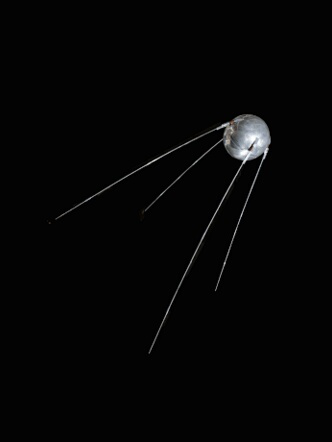
  210. A replica of Sputnik 1, a metal sphere with four long antennas

    Story 172 of 211 · The twentieth century

    Transport

    Sputnik 1

    The Soviet Union launched Sputnik 1, the first artificial satellite, in October 1957. It beeped radio signals as it circled the Earth.

    Next story1958 · The integrated circuit
  211. A modern integrated circuit chip

    Story 173 of 211 · The twentieth century

    Computing

    The integrated circuit

    Jack Kilby in 1958 and Robert Noyce in 1959 put many transistors and their connections on a single chip.

    Next story1958 · The tokamak
  212. A cutaway drawing of ITER, a very large tokamak fusion experiment

    Story 174 of 211 · The twentieth century

    Energy and industry

    The tokamak

    Soviet physicists Andrei Sakharov and Igor Tamm conceived the tokamak, a doughnut-shaped chamber where magnets hold a super-hot gas so that nuclei might fuse. The T-1 device of 1958 is often called the first. It became the model for fusion experiments.

    Next story1958 · Instant noodles
  213. A block of dried instant noodles

    Story 175 of 211 · The twentieth century

    Food and farming

    Instant noodles

    In 1958 Momofuku Ando of Nissin in Japan launched Chikin Ramen, noodles that are flash-fried, dried into a block and ready after a few minutes in boiling water.

    Next story1959 · Drip irrigation
  214. Drip irrigation tubing laid along the rows of a banana plantation in India

    Story 176 of 211 · The twentieth century

    Food and farming

    Drip irrigation

    Simcha Blass and his son in Israel designed a plastic emitter that lets water seep out drop by drop at a plant's roots without clogging. The first test system went up in 1959, and the firm Netafim followed in 1964.

    Next story1960 · The laser
  215. Red and green laser beams

    Story 177 of 211 · The twentieth century

    Tools and materials

    The laser

    Theodore Maiman built the first laser in 1960, using a ruby crystal to make an intense, narrow beam of light.

    Next story1961 · The industrial robot
  216. A Unimate robot arm pouring coffee for a woman at the Biltmore Hotel in 1967

    Story 178 of 211 · The twentieth century

    Energy and industry

    The industrial robot

    In 1961 General Motors installed a Unimate, an arm designed by George Devol and promoted by Joseph Engelberger, to lift hot metal castings at a New Jersey factory. It was the first industrial robot.

    Next story1962 · The light-emitting diode
  217. Red, green and blue light-emitting diodes

    Story 179 of 211 · The twentieth century

    Energy and industry

    The light-emitting diode

    In 1962 Nick Holonyak at General Electric made the first practical visible-light LED, which glowed red. LEDs later came in other colours and grew bright enough for lighting.

    Next story1964 · The computer mouse
  218. A close-up of a computer mouse

    Story 180 of 211 · The twentieth century

    Computing

    The computer mouse

    In 1964 Douglas Engelbart and Bill English at Stanford Research Institute built a wooden box on wheels to move a pointer on a screen. Engelbart demonstrated it in 1968.

    Next story1964 · The bullet train
  219. A line of Shinkansen bullet trains at the Niigata depot

    Story 181 of 211 · The twentieth century

    Transport

    The bullet train

    Japan's Tōkaidō Shinkansen opened between Tokyo and Osaka on 1 October 1964, ten days before the Olympic Games. Its trains ran at 210 km/h on dedicated track.

    Next story1966 · Optical fibre
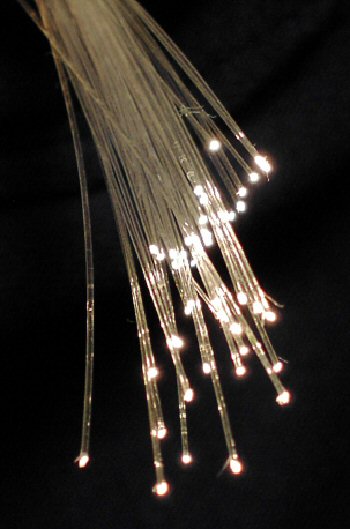
  220. Strands of optical fibre with glowing tips

    Story 182 of 211 · The twentieth century

    Communication

    Optical fibre

    In 1966 Charles Kao and George Hockham showed that pure glass fibre could carry light signals over long distances. Today undersea cables made from such fibres carry nearly all internet traffic.

    Next story1969 · ARPANET
  221. A map of the ARPANET network in 1977

    Story 183 of 211 · The twentieth century

    Communication

    ARPANET

    A US research network first linked computers at UCLA and Stanford in 1969, sending data in small packets.

    Next story1971 · Email
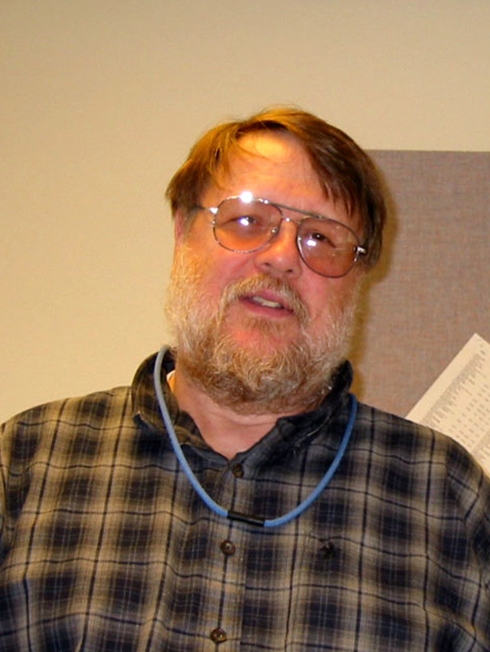
  222. Ray Tomlinson, the engineer who sent the first email in 1971

    Story 184 of 211 · The twentieth century

    Communication

    Email

    In 1971 Ray Tomlinson sent the first email between two computers on ARPANET and chose the @ sign to separate the user's name from the machine.

    Next story1971 · The microprocessor
  223. An Intel 4004 microprocessor with its case opened

    Story 185 of 211 · The twentieth century

    Computing

    The microprocessor

    Intel's 4004 of 1971 put a whole computer processor on one chip.

    Next story1973 · The mobile phone
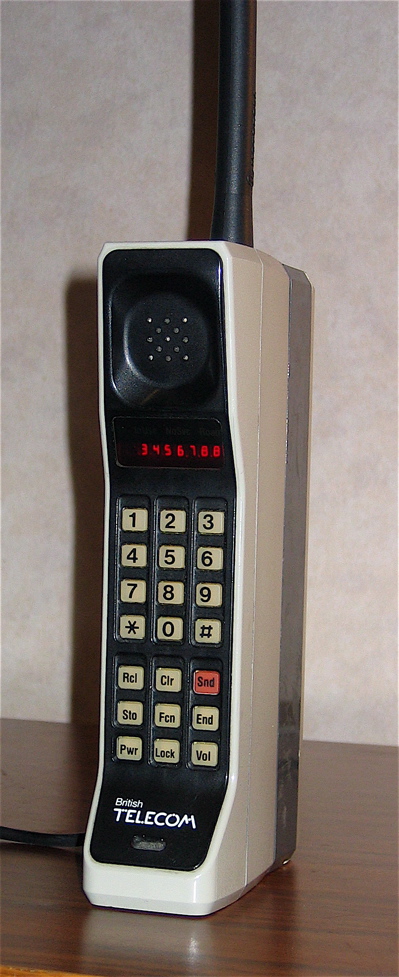
  224. A Motorola DynaTAC 8000X mobile phone from 1984

    Story 186 of 211 · The twentieth century

    Communication

    The mobile phone

    Martin Cooper of Motorola made the first handheld mobile phone call in 1973; the DynaTAC went on sale in 1983.

    Next story1974 · Hybrid rice
  225. Ripening ears of hybrid rice in a field in Hengnan, China

    Story 187 of 211 · The twentieth century

    Food and farming

    Hybrid rice

    Yuan Longping, a Chinese agronomist, led the work that produced the first practical hybrid rice in the 1970s. Hybrid plants yield up to 30 percent more than ordinary varieties.

    Next story1974 · The internet protocols
  226. Vint Cerf, who with Bob Kahn designed the internet's TCP/IP protocols

    Story 188 of 211 · The twentieth century

    Communication

    The internet protocols

    In 1974 Vint Cerf and Bob Kahn described a way for different networks to join together and send data in packets. TCP/IP became the language of ARPANET on 1 January 1983, and the internet grew from it.

    Next story1977 · The personal computer
  227. An Apple II advertisement from December 1977

    Story 189 of 211 · The twentieth century

    Computing

    The personal computer

    The Apple II of 1977, with colour graphics and a keyboard, was one of the first mass-produced home computers.

    Next story1978 · GPS
  228. A Navstar GPS satellite

    Story 190 of 211 · The twentieth century

    Transport

    GPS

    The US launched the first GPS satellites in 1978. Receivers work out their position from the timing of satellite signals.

    Next story1984 · 3D printing
  229. A very large stereolithography machine with an operator standing beside it

    Story 191 of 211 · The twentieth century

    Tools and materials

    3D printing

    In 1984 Chuck Hull invented stereolithography: a laser hardens a thin layer of liquid resin, then another, until a solid object is built up. Printers now use plastics, metal and even concrete.

    Next story1989 · The World Wide Web
  230. The NeXT computer Tim Berners-Lee used as the first web server at CERN

    Story 192 of 211 · The twentieth century

    Communication

    The World Wide Web

    Tim Berners-Lee proposed a system of linked pages at CERN in 1989 and put the first website online in 1991.

    Next story1991 · The lithium-ion battery
  231. A cylindrical lithium-ion battery cell

    Story 193 of 211 · The twentieth century

    Energy and industry

    The lithium-ion battery

    Building on work by John Goodenough, Stanley Whittingham and Akira Yoshino, Sony sold the first lithium-ion batteries in 1991.

    Next story1991 · Linux
  232. Linus Torvalds, who began the Linux kernel in 1991

    Story 194 of 211 · The twentieth century

    Computing

    Linux

    In 1991 the Finnish student Linus Torvalds released a free operating system kernel and invited others to improve it. Volunteers did.

    Next story1993 · The blue LED
  233. A portrait of Shuji Nakamura released when he won the Nobel Prize

    Story 195 of 211 · The twentieth century

    Energy and industry

    The blue LED

    In the early 1990s Isamu Akasaki, Hiroshi Amano and Shuji Nakamura developed blue LEDs in Japan. Nakamura's bright blue LED went into production in 1993. With red and green LEDs already known, white LED light became possible.

    Next story1994 · The QR code
  234. The QR code

    Story 196 of 211 · The twentieth century

    CommunicationUnverified

    The QR code

    Masahiro Hara's team at the Japanese company Denso Wave designed a square two-dimensional barcode to track car parts. It holds far more data than a striped barcode and can be read quickly from any angle.

    Next story1994 · The Flavr Savr tomato
  235. A plant scientist holding ripe tomatoes beside a tomato vine and a crate of fruit

    Story 197 of 211 · The twentieth century

    Food and farming

    The Flavr Savr tomato

    The Flavr Savr, made by the California company Calgene, was a tomato engineered to rot more slowly. It was the first genetically engineered food approved for sale, after US regulators cleared it in May 1994.

    Next story1997 · Deep Blue
  236. The Deep Blue chess computer on display in a museum

    Story 198 of 211 · The twentieth century

    Computing

    Deep Blue

    On 11 May 1997 IBM's Deep Blue beat the world chess champion Garry Kasparov in a six-game match. It searched around 200 million positions each second.

    Next story2001 · Wikipedia
  237. Chapter VII

    The digital age

    13 stories in this chapter

  238. The Wikipedia home page with its globe logo

    Story 199 of 211 · The digital age

    Communication

    Wikipedia

    Wikipedia launched on 15 January 2001. Anyone can write or fix its articles, and volunteers have built it into the largest encyclopaedia ever made.

    Next story2004 · Graphene
  239. A model of graphene's hexagonal lattice of carbon atoms

    Story 200 of 211 · The digital age

    Tools and materials

    Graphene

    At the University of Manchester, Andre Geim and Konstantin Novoselov peeled single layers of carbon off graphite with sticky tape in 2004. The sheet is one atom thick, very strong and an excellent conductor of electricity.

    Next story2007 · The smartphone
  240. A drawing of the first-generation iPhone

    Story 201 of 211 · The digital age

    Communication

    The smartphone

    Apple's iPhone of 2007 combined a phone, music player and web browser in a touchscreen device. Earlier smartphones existed, but it set the pattern.

    Next story2007 · M-Pesa
  241. A roadside M-Pesa kiosk in Kenya where customers send and collect mobile money

    Story 202 of 211 · The digital age

    Communication

    M-Pesa

    M-Pesa, started in Kenya in 2007 by Safaricom and Vodafone, let people send money by text message and store it on their mobile phones. Millions with no bank account began to use it for pay, bills and savings.

    Next story2009 · Bitcoin
  242. The Bitcoin logo, a white capital B on an orange disc

    Story 203 of 211 · The digital age

    Computing

    Bitcoin

    Bitcoin began on 3 January 2009 when its software created the first block of a shared public ledger. A person or group using the name Satoshi Nakamoto designed it so that payments need no bank.

    Next story2012 · Deep learning
  243. A block diagram of AlexNet showing its input, five convolutional layers and fully connected layers

    Story 204 of 211 · The digital age

    Computing

    Deep learning

    In 2012 a neural network called AlexNet, trained on graphics chips by students of Geoffrey Hinton, won an image recognition contest by a huge margin.

    Next story2012 · CRISPR gene editing
  244. An illustration of the CRISPR-Cas9 tool cutting a strand of DNA

    Story 205 of 211 · The digital age

    Tools and materials

    CRISPR gene editing

    In 2012 Jennifer Doudna and Emmanuelle Charpentier showed that a bacterial defence system could be programmed with a strand of RNA to cut DNA at a chosen spot. Labs worldwide soon used it to edit genes in plants, animals and human cells.

    Next story2015 · The reusable rocket
  245. A Falcon 9 Block 5 rocket lifting off during the Es'hail-2 mission

    Story 206 of 211 · The digital age

    Transport

    The reusable rocket

    On 21 December 2015 SpaceX landed the first stage of a Falcon 9 rocket upright on a pad after it had carried satellites into orbit. Reflying such stages later cut the cost of launches.

    Next story2016 · The Unified Payments Interface
  246. A sign with a UPI payment code for paying an entrance fee at a memorial in Bhopal, India

    Story 207 of 211 · The digital age

    Communication

    The Unified Payments Interface

    India launched UPI on 11 April 2016, a system that lets people send money between bank accounts instantly using a phone number or a QR code.

    Next story2016 · The quantum communications satellite
  247. Physicist Pan Jianwei, who led the Micius quantum satellite project, giving a talk in 2023

    Story 208 of 211 · The digital age

    Communication

    The quantum communications satellite

    China launched the satellite Micius on 16 August 2016. It sent quantum keys from orbit to ground stations and shared entangled photons between stations 1,200 km apart, so an eavesdropper could be detected.

    Next story2017 · The transformer
  248. A diagram of the transformer neural network with its stacked encoder and decoder blocks

    Story 209 of 211 · The digital age

    Computing

    The transformer

    In 2017 researchers at Google described the transformer, a neural network design that reads all the words of a text at once and weighs how each relates to the others.

    Next story2020 · mRNA vaccines
  249. A diagram of how an mRNA vaccine works inside a cell

    Story 210 of 211 · The digital age

    Tools and materials

    mRNA vaccines

    In December 2020 the first mRNA vaccines against COVID-19 were authorised. Fatty bubbles carry a strand of genetic code into cells, which then briefly make a harmless virus protein. Karikó and Weissman's earlier chemical tweak kept the body from attacking the RNA.

    Next story2022 · ChatGPT
  250. Interfaz de ChatGPT generando un resumen en español sobre la historia de Wikipedia y un PDF descargable

    Story 211 of 211 · The digital age

    Computing Unverified

    ChatGPT

    OpenAI released ChatGPT, a chatbot built on a large language model of the transformer kind, on 30 November 2022. Anyone with a browser could ask it questions in plain language and get fluent answers.

    NextJourney's end

Journey complete

You travelled 2,902,022 years

211 stories, c. 2,900,000 BC to 2022. More inventions are being researched and added.

Choose another journeyBack to the start