All journeys

Heads of state

Kings, queens, emperors, presidents and prime ministers who changed their countries, from Khufu of Egypt to the leaders of our own century.

Stories
250
Distance
4,611 years
Route
c. 2589 BC to 2023
  1. The ancient world40 stories
  2. The post-classical era54 stories
  3. The early modern era36 stories
  4. The nineteenth century33 stories
  5. The modern world87 stories
Begin the journey
  1. Chapter I

    The ancient world

    40 stories in this chapter

  2. The Great Pyramid of Khufu at Giza under a blue sky

    Story 1 of 250 · The ancient world

    Africa

    Khufu

    Khufu ruled Egypt in the Fourth Dynasty and built the Great Pyramid at Giza, the largest of all the pyramids. It stayed the tallest building in the world for about 3,800 years. Little else is known of his reign.

    Next storyc. 2334 BC · Sargon of Akkad
  3. About 260 years later

    c. 2589 BC to c. 2334 BC

  4. Weathered fragment of a victory stele that may show Sargon of Akkad, in the Louvre

    Story 2 of 250 · The ancient world

    Middle East and Central Asia

    Sargon of Akkad

    Sargon, a cupbearer who rose to be king, conquered the Sumerian city-states and built the Akkadian Empire, the first empire in history, from the Persian Gulf to the Mediterranean. Tradition gives him a 56-year reign from his new capital, Akkad.

    Next storyc. 1792 BC · Hammurabi
  5. About 540 years later

    c. 2334 BC to c. 1792 BC

  6. Hammurabi standing before the sun god Shamash, carved at the top of the stele of his law code

    Story 3 of 250 · The ancient world

    Middle East and Central Asia

    Hammurabi

    The sixth king of Babylon's first dynasty, Hammurabi turned a small city-state into the leading power of Mesopotamia through war and diplomacy. Late in his reign he had 282 laws carved on stone stelae, the Code of Hammurabi.

    Next storyc. 1479 BC · Hatshepsut
  7. About 310 years later

    c. 1792 BC to c. 1479 BC

  8. Limestone statue of Hatshepsut seated, wearing the royal headcloth of a pharaoh

    Story 4 of 250 · The ancient world

    Africa

    Hatshepsut

    Hatshepsut ruled Egypt first as regent for her young stepson Thutmose III, then as pharaoh in her own right. She sent a trading expedition to the land of Punt and built a great terraced temple at Deir el-Bahari.

    Next storyc. 1353 BC · Akhenaten
  9. Statue of Akhenaten wearing a tall crown and holding a crook and flail, in the Egyptian Museum, Cairo

    Story 5 of 250 · The ancient world

    Africa

    Akhenaten

    Akhenaten set aside Egypt's many gods and made the sun disc, the Aten, the focus of worship. He moved the capital to a new city, Akhetaten, and had art made in a new, softer style. After his death his successors undid most of it.

    Next storyc. 1332 BC · Tutankhamun
  10. The golden death mask of the Tutankhamun at The Egyptian Museum in Cairo

    Story 6 of 250 · The ancient world

    Africa

    Tutankhamun

    Tutankhamun became pharaoh as a boy of about nine and died around eighteen. During his short reign the court turned back from his father Akhenaten's religious changes and restored the old gods and temples.

    Next storyc. 1279 BC · Ramesses II
  11. Colossal granite bust of Ramesses II from the Ramesseum at Thebes

    Story 7 of 250 · The ancient world

    Africa

    Ramesses II

    Ramesses II ruled Egypt for about 66 years. He fought the Hittites at Kadesh, then made one of the earliest known peace treaties with them. He covered Egypt and Nubia with temples and colossal statues, among them Abu Simbel.

    Next storyc. 744 BC · Piye
  12. About 540 years later

    c. 1279 BC to c. 744 BC

  13. Drawing of the victory stele of Piye, showing the rulers of Egypt submitting to him

    Story 8 of 250 · The ancient world

    Africa

    Piye

    Piye, king of Kush in what is now Sudan, marched north in the 8th century BC and took control of Egypt, founding the 25th Dynasty. He restored the old temples and was buried under a small pyramid at El-Kurru.

    Next story669 BC · Ashurbanipal
  14. Ashurbanipal, detail of a lion-hunt scene from the North Palace at Nineveh, in modern-day Nineveh Governorate, Iraq

    Story 9 of 250 · The ancient world

    Middle East and Central Asia

    Ashurbanipal

    Ashurbanipal, last great king of Assyria, crushed Egypt and Elam and gathered some 30,000 clay tablets in his library at Nineveh. He was among the few Assyrian kings who could read the old Sumerian and Akkadian scripts.

    Next story605 BC · Nebuchadnezzar II
  15. Onyx eye stone engraved with an inscription of Nebuchadnezzar II

    Story 10 of 250 · The ancient world

    Middle East and Central Asia

    Nebuchadnezzar II

    Nebuchadnezzar made Babylon the greatest city of its day, rebuilding it with the Ishtar Gate and mighty walls. He took Jerusalem in 597 and 587 BC, destroyed the Temple and deported many Judeans to Babylon.

    Next storyc. 559 BC · Cyrus the Great
  16. The stone tomb of Cyrus the Great at Pasargadae, in Iran, under a starry sky

    Story 11 of 250 · The ancient world

    Middle East and Central Asia

    Cyrus the Great

    Cyrus founded the Achaemenid Persian Empire, conquering the Medes, the kingdom of Lydia and, in 539 BC, Babylon. He allowed peoples the Babylonians had exiled, including the Jews, to return home.

    Next story522 BC · Darius I
  17. Darius I in a detail from the Darius Vase, a Greek vase painted in the 4th century BC

    Story 12 of 250 · The ancient world

    Middle East and Central Asia

    Darius I

    Darius took the Persian throne in 522 BC and ruled from Egypt to the Indus. He divided the empire into provinces under governors, built the Royal Road and Persepolis, standardised coinage and left the Behistun inscription. His army lost at Marathon in 490 BC.

    Next storyc. 489 BC · Leonidas I
  18. Marble statue said to show Leonidas, about 480 BC, in the museum at Sparta

    Story 13 of 250 · The ancient world

    Europe

    Leonidas I

    Leonidas, king of Sparta, led some 7,000 Greeks, including 300 Spartans, to hold the narrow pass of Thermopylae against the Persians in 480 BC. After two days a local man showed the Persians a path round the pass, and Leonidas and those who stayed behind died fighting.

    Next story486 BC · Xerxes I
  19. Relief of Xerxes I on a doorway of the Hadish, his palace at Persepolis

    Story 14 of 250 · The ancient world

    Middle East and Central Asia

    Xerxes I

    Xerxes put down revolts in Egypt and Babylon, then in 480 BC led a vast army and fleet against Greece. He burnt Athens but lost the naval battle of Salamis and, in 479, the land battle of Plataea. He was murdered in a palace plot.

    Next story359 BC · Philip II of Macedon
  20. Marble bust of Philip II of Macedon, a Roman copy of a Greek original, in the Ny Carlsberg Glyptotek, Copenhagen

    Story 15 of 250 · The ancient world

    Europe

    Philip II of Macedon

    Philip II turned Macedon from a backward kingdom into the strongest power in Greece. He reformed the army around the long-spear phalanx and beat the Greek city-states at Chaeronea in 338 BC. He was assassinated in 336 BC as he planned to invade Persia.

    Next story336 BC · Alexander the Great
  21. Alexander riding into battle, from the Alexander Mosaic found at Pompeii

    Story 16 of 250 · The ancient world

    Europe

    Alexander the Great

    Crowned king of Macedon at 20, Alexander led his army east and in about ten years defeated the Persian Empire, reaching Egypt and the edge of India without losing a major battle. He died in Babylon at 32, and his generals divided his empire.

    Next storyc. 321 BC · Chandragupta Maurya
  22. Relief carving of Chandragupta Maurya at the Birla Mandir temple in Delhi

    Story 17 of 250 · The ancient world

    South and Southeast Asia

    Chandragupta Maurya

    Chandragupta, with the adviser Chanakya, overthrew the Nanda dynasty around 321 BC and built the first empire to unite most of the Indian subcontinent. He beat back Seleucus I's bid to retake Alexander's eastern lands and, Jain tradition says, retired as a monk.

    Next storyc. 268 BC · Ashoka
  23. Stone relief from the great stupa at Sanchi showing Ashoka's visit to the Ramagrama stupa

    Story 18 of 250 · The ancient world

    South and Southeast Asia

    Ashoka

    Ashoka, grandson of the founder of the Maurya Empire, ruled most of the Indian subcontinent. Horrified by the slaughter of his war against Kalinga, he embraced Buddhism and had edicts urging peace and tolerance carved on rocks and pillars across his realm.

    Next story247 BC · Qin Shi Huang
  24. Qin Shi Huang in an imagined portrait from an 18th-century Chinese album of emperors

    Story 19 of 250 · The ancient world

    East Asia and the Pacific

    Qin Shi Huang

    King of the state of Qin from the age of 13, Ying Zheng conquered the last of its rivals in 221 BC and took the title Shi Huangdi, First Emperor. He standardised writing, coins, weights and measures, and linked older walls into a first Great Wall.

    Next story202 BC · Liu Bang, Emperor Gaozu of Han
  25. Ming-dynasty painted portrait of Liu Bang, the first Han emperor

    Story 20 of 250 · The ancient world

    East Asia and the Pacific

    Liu Bang, Emperor Gaozu of Han

    Liu Bang, a village official of peasant birth, rose in the revolts against the Qin, defeated his rival Xiang Yu and in 202 BC became the first Han emperor. He kept Qin's centralised government but lowered taxes and eased its harsh laws.

    Next story141 BC · Emperor Wu of Han
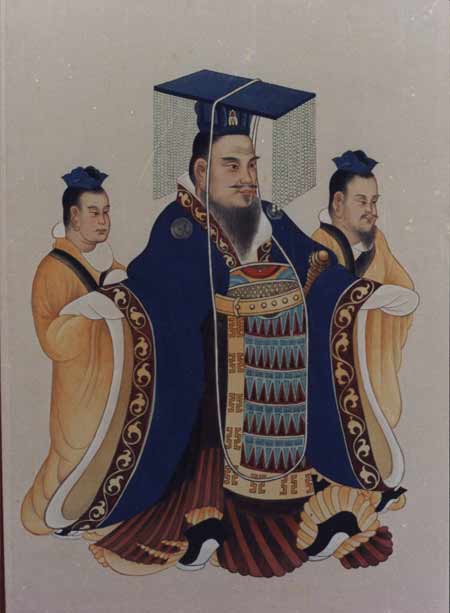
  26. Traditional portrait of Emperor Wu of Han from an ancient Chinese book

    Story 21 of 250 · The ancient world

    East Asia and the Pacific

    Emperor Wu of Han

    Emperor Wu pushed Han China to its widest extent, sending armies against the Xiongnu and south and east into Vietnam and Korea. He made Confucian learning the basis of official careers and sent Zhang Qian west, opening what became the Silk Road.

    Next story120 BC · Mithridates VI of Pontus
  27. Portrait of the king of Pontus Mithridates VI as Heracles

    Story 22 of 250 · The ancient world

    Middle East and Central Asia

    Mithridates VI of Pontus

    Mithridates, king of Pontus on the Black Sea, fought three wars against Rome and for a time ruled much of Anatolia and parts of Greece. Roman writers say he trained himself against poison with small doses. Facing capture in 63 BC, he had a soldier kill him.

    Next story95 BC · Tigranes the Great
  28. Coin of Tigranes II the Great, Antioch mint

    Story 23 of 250 · The ancient world

    Middle East and Central Asia

    Tigranes the Great

    Tigranes made Armenia a great power, conquering Syria and parts of Mesopotamia and building a new capital, Tigranocerta. Allied with his father-in-law Mithridates, he was defeated by Rome in 69–66 BC and kept his throne only as Rome's client.

    Next story51 BC · Cleopatra VII
  29. Marble bust of Cleopatra VII in the Altes Museum, Berlin

    Story 24 of 250 · The ancient world

    Africa

    Cleopatra VII

    Cleopatra, the last active ruler of Ptolemaic Egypt, spoke several languages and ruled with and against her brothers. She allied with Julius Caesar and then Mark Antony to keep Egypt independent, and died by suicide after Octavian defeated them.

    Next story49 BC · Julius Caesar
  30. Portrait of Julius Caesar

    Story 25 of 250 · The ancient world

    Europe

    Julius Caesar

    Caesar conquered Gaul, crossed the Rubicon in 49 BC and beat Pompey in the civil war that followed. As dictator he reformed the calendar and the Senate and was made dictator for life in early 44 BC. A group of senators stabbed him on the Ides of March.

    Next storyc. 40 BC · Amanirenas
  31. Kushite royal pyramids at Meroë in Sudan, where the kings and queens of Kush were buried

    Story 26 of 250 · The ancient world

    Africa

    Amanirenas

    Amanirenas was a kandake, a ruling queen, of Kush. In 25 BC her army marched north against Roman Egypt and took Aswan. When Rome struck back and sacked the city of Napata, she held out and won a treaty on good terms from Augustus.

    Next story37 BC · Herod the Great
  32. Engraved portrait of Herod the Great wearing a laurel wreath, inside a circular frame

    Story 27 of 250 · The ancient world

    Middle East and Central Asia

    Herod the Great

    Herod ruled Judea as Rome's client king and rebuilt the Temple in Jerusalem on a grand scale, with the port of Caesarea and the fortress of Masada. Fear of rivals led him to kill his wife and sons. Matthew's Gospel says he ordered the infants of Bethlehem killed.

    Next story27 BC · Augustus
  33. Marble statue of Augustus in armour, his right arm raised

    Story 28 of 250 · The ancient world

    Europe

    Augustus

    Julius Caesar's adopted heir, Octavian won the civil wars that followed Caesar's murder. In 27 BC the Senate gave him the name Augustus, and as Rome's first emperor he kept the forms of the republic while holding power until his death.

    Next story40 · Trưng Trắc
  34. Dong Ho folk print of the Trưng sisters riding war elephants

    Story 29 of 250 · The ancient world

    South and Southeast Asia

    Trưng Trắc

    The sisters Trưng Trắc and Trưng Nhị led an uprising against Han Chinese rule in northern Vietnam in AD 40, drove out the governor and ruled as queens. The Han general Ma Yuan crushed them in 43, and tradition says they drowned themselves in a river.

    Next story98 · Trajan
  35. Head of Trajan (reign 98–117 CE), from an oversized statue (around 2.70 m height)

    Story 30 of 250 · The ancient world

    Europe

    Trajan

    Trajan, the first emperor born outside Italy, conquered Dacia and in his last years Mesopotamia, taking the Roman Empire to its greatest extent. He built a forum, a column and a harbour at Rome and paid for a food programme for poor children.

    Next storyc. 127 · Kanishka
  36. Gold coin of Kanishka

    Story 31 of 250 · The ancient world

    South and Southeast Asia

    Kanishka

    Kanishka ruled the Kushan Empire, which stretched from Central Asia to the Ganges plain and controlled the Silk Road. A patron of Buddhism, he is said to have called a great council and to have helped spread the faith to Central Asia and China.

    Next story161 · Marcus Aurelius
  37. Portrait of Emperor Marcus Aurelius (type III)

    Story 32 of 250 · The ancient world

    Europe

    Marcus Aurelius

    Marcus Aurelius spent much of his reign defending the northern frontier against Germanic peoples and fighting a plague that swept the empire. A Stoic philosopher, he wrote a private notebook, known as the Meditations, on duty, change and self-control.

    Next storyc. 189 · Himiko
  38. Reconstructed Yayoi-period village at Yoshinogari in Saga, often linked to the debate over Yamatai

    Story 33 of 250 · The ancient world

    East Asia and the Pacific

    Himiko

    Chinese chronicles describe Himiko as a shaman-queen who ended a long war in Wa, as Japan was then called, and ruled the land of Yamatai. She sent envoys to the Wei court in 238 and received a golden seal and the title of friend of Wei.

    Next story240 · Shapur I
  39. The triumph of Shapur I over the Roman emperors Valerian and Philip the Arab (detail), Naqsh-e Rostam, Iran

    Story 34 of 250 · The ancient world

    Middle East and Central Asia

    Shapur I

    Shapur I, second ruler of the Sasanian dynasty, defeated three Roman emperors and took Valerian prisoner in 260. Carved reliefs at Naqsh-e Rustam show his triumph. He built cities with Roman captives and welcomed the prophet Mani.

    Next story267 · Zenobia
  40. zenobia, queen of Palmyra, by Sir Edward Poynter (1878)

    Story 35 of 250 · The ancient world

    Middle East and Central Asia

    Zenobia

    Zenobia ruled Palmyra after her husband Odaenathus was murdered, at first as regent for her young son. In 270 she conquered Egypt and much of Asia Minor, creating a state independent of Rome. Emperor Aurelian defeated her in 272 and took her to Rome.

    Next story306 · Constantine the Great
  41. Head of the colossal statue of Constantine I, Musei Capitolini, Rome

    Story 36 of 250 · The ancient world

    Europe

    Constantine the Great

    Constantine won the civil wars that followed Diocletian's retirement and ruled the whole Roman Empire from 324. He favoured Christianity after the battle of the Milvian Bridge in 312, called the Council of Nicaea in 325 and in 330 founded Constantinople as his new capital.

    Next storyc. 320 · Ezana of Axum
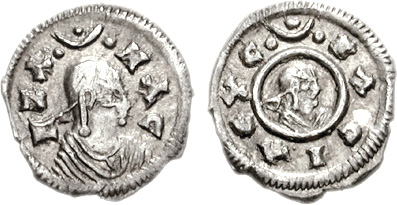
  42. Coin of the Axumite king Ezana

    Story 37 of 250 · The ancient world

    Africa

    Ezana of Axum

    Ezana ruled Aksum, a trading kingdom in what is now Ethiopia and Eritrea. He defeated Kush and, around 330, converted to Christianity, making Aksum one of the first states to adopt the faith.

    Next storyc. 335 · Samudragupta
  43. Coin of the Gupta king Samudragupta

    Story 38 of 250 · The ancient world

    South and Southeast Asia

    Samudragupta

    Samudragupta extended the Gupta kingdom across northern India in a series of campaigns recorded on the Allahabad pillar. He was also a poet and musician, and issued coins showing himself playing the veena.

    Next story391 · Gwanggaeto the Great
  44. Korean Goguryeo 19th king Gwanggaeto

    Story 39 of 250 · The ancient world

    East Asia and the Pacific

    Gwanggaeto the Great

    Gwanggaeto expanded the Korean kingdom of Goguryeo north into Manchuria and south against its rivals Baekje and Silla, ruling for 22 years. A huge stele raised by his son in 414 records his conquests.

    Next story426 · Kʼinich Yax Kʼukʼ Moʼ
  45. Carved volcanic-stone head of Kʼinich Yax Kʼukʼ Moʼ, founder of Copán, in the British Museum

    Story 40 of 250 · The ancient world

    Americas

    Kʼinich Yax Kʼukʼ Moʼ

    Maya inscriptions name Kʼinich Yax Kʼukʼ Moʼ as the founder and first holy lord of Copán, in today's Honduras. Later monuments show him with goggle-eyed headgear linked to distant Teotihuacan, suggesting ties to that great city.

    Next story527 · Justinian I
  46. Chapter II

    The post-classical era

    54 stories in this chapter

  47. San Vitale (Ravenna) - Mosaic of Iustinianus I

    Story 41 of 250 · The post-classical era

    Europe

    Justinian I

    Justinian set out to restore the Roman Empire, and his generals Belisarius and Narses retook North Africa, Italy and part of Spain. He had Roman law gathered in the Corpus Juris Civilis and built the Hagia Sophia, though plague and war left the empire drained.

    Next story531 · Khosrow I
  48. Plate of the Sasanian king Khosrow I Anushirvan

    Story 42 of 250 · The post-classical era

    Middle East and Central Asia

    Khosrow I

    Khosrow I reformed taxation and the army, built canals and fought Justinian's Byzantium, sacking Antioch in 540. His rule is seen as the high point of Sasanian Persia, and he welcomed scholars at the medical school of Gundeshapur.

    Next story593 · Empress Suiko
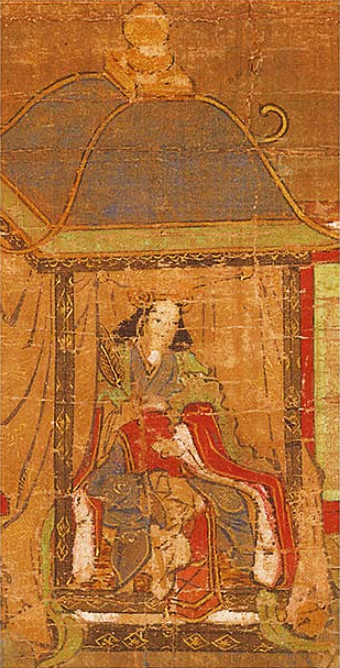
  49. A painting of Empress Suiko (554 – 15 April 628) in the Asuka period

    Story 43 of 250 · The post-classical era

    East Asia and the Pacific

    Empress Suiko

    Suiko was the first reigning empress in Japanese history. She ruled with her nephew Prince Shōtoku as regent, in years when Buddhism took root at court, a seventeen-article document set out the duties of officials, and embassies were sent to Sui China.

    Next story606 · Harsha
  50. Harshavardhana Circa AD 606-647

    Story 44 of 250 · The post-classical era

    South and Southeast Asia

    Harsha

    Harsha built an empire across northern India from Thanesar and Kannauj. He supported Buddhism and learning, wrote plays, and hosted the Chinese pilgrim Xuanzang, whose account is a main source for his reign. His empire broke up after his death with no heir.

    Next story615 · Pakal the Great
  51. A stucco portrait head of Pakal wearing a tall headdress, from Palenque

    Story 45 of 250 · The post-classical era

    Americas

    Pakal the Great

    Kʼinich Janaabʼ Pakal became king of Palenque, a Maya city in what is now southern Mexico, at the age of 12 and reigned for 68 years. He rebuilt the city after defeats by its rivals, raising palaces and temples.

    Next story626 · Emperor Taizong of Tang
  52. Emperor Taizong of Tang

    Story 46 of 250 · The post-classical era

    East Asia and the Pacific

    Emperor Taizong of Tang

    Li Shimin seized the throne from his brother in 626 and ruled as Taizong. He extended Tang rule over the Eastern Turks and into Central Asia, and listened to frank advice from his ministers, which made his court a model for later emperors.

    Next storyc. 629 · Songtsen Gampo
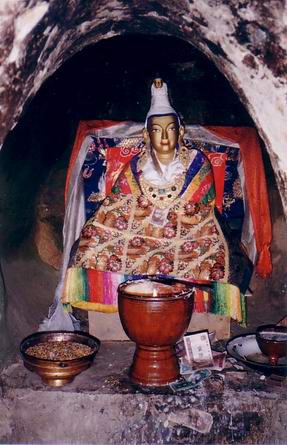
  53. Statue of King Songtsen Gampo

    Story 47 of 250 · The post-classical era

    East Asia and the Pacific

    Songtsen Gampo

    Songtsen Gampo united the Tibetan clans and founded the Tibetan Empire. He is credited with introducing a script based on an Indian model and with bringing Buddhism through marriages to a Nepalese princess and a Chinese princess, Wencheng.

    Next story632 · Queen Seondeok of Silla
  54. Cheomseongdae, the stone observatory in Gyeongju that tradition ties to Queen Seondeok

    Story 48 of 250 · The post-classical era

    East Asia and the Pacific

    Queen Seondeok of Silla

    Seondeok became the first reigning queen of Silla, one of Korea's three kingdoms. She built the Cheomseongdae observatory and the nine-storey pagoda of Hwangnyongsa and sent students to Tang China. A rebellion against a woman ruler broke out as she lay dying.

    Next story634 · Umar ibn al-Khattab
  55. Calligraphic roundel bearing the name of the caliph Umar ibn al-Khattab, from the Hagia Sophia in Istanbul

    Story 49 of 250 · The post-classical era

    Middle East and Central Asia

    Umar ibn al-Khattab

    Umar succeeded Abu Bakr as the second caliph. In ten years his armies took Syria, Iraq, Egypt and the Persian Empire. He set up governors, courts and a salaried army, and started the Islamic calendar counting from the Hijra.

    Next story685 · Abd al-Malik
  56. Umayyad Caliph 'Abd al-Malik: 'Caliphal Image solidus' or Standing Caliph solidus struck from 74-77 AH

    Story 50 of 250 · The post-classical era

    Middle East and Central Asia

    Abd al-Malik

    Abd al-Malik ended the second civil war, made Arabic the language of government and began minting purely Islamic gold coins without images. He built the Dome of the Rock in Jerusalem, completed in 691.

    Next story690 · Wu Zetian
  57. Wu Zetian in an imagined portrait from an 18th-century Chinese album

    Story 51 of 250 · The post-classical era

    East Asia and the Pacific

    Wu Zetian

    Wu Zetian was a consort of two Tang emperors and wielded power through her husband and sons for decades. In 690 she took the throne herself and declared a new Zhou dynasty, the only woman in Chinese history to rule as emperor in her own right.

    Next story712 · Emperor Xuanzong of Tang
  58. The Ming people painted the portrait of Tang Xuanzong Li Longji

    Story 52 of 250 · The post-classical era

    East Asia and the Pacific

    Emperor Xuanzong of Tang

    Xuanzong ruled for 44 years, bringing the Tang to its height of wealth and culture in the age of poets such as Li Bai. Late in his reign he neglected affairs for his consort Yang Guifei, and the An Lushan rebellion of 755 forced him to flee the capital.

    Next story768 · Charlemagne
  59. Albrecht Dürer's imagined portrait of Charlemagne in coronation robes, painted about 700 years after his death

    Story 53 of 250 · The post-classical era

    Europe

    Charlemagne

    King of the Franks from 768, Charlemagne conquered much of western and central Europe. On Christmas Day 800 the pope crowned him emperor, the first in western Europe since the fall of Rome, and his court at Aachen became a centre of learning.

    Next story786 · Harun al-Rashid
  60. Miniature painting of Harun al-Rashid

    Story 54 of 250 · The post-classical era

    Middle East and Central Asia

    Harun al-Rashid

    Harun al-Rashid ruled the Abbasid caliphate from Baghdad at its peak of wealth. He exchanged embassies with Charlemagne, patronised scholars and poets, and is the model for the caliph in The Thousand and One Nights, though the stories are largely legend.

    Next story871 · Alfred the Great
  61. Silver penny minted during the reign of Alfred the Great, struck 875–880 AD (Cross-and-Lozenge type, London style)

    Story 55 of 250 · The post-classical era

    Europe

    Alfred the Great

    Alfred, king of Wessex, held off the Danish Vikings when other English kingdoms fell, and won the battle of Edington in 878. He built fortified towns, a navy and a legal code, and promoted learning by having Latin books translated into English.

    Next story960 · Emperor Taizu of Song
  62. Emperor Taizu of Song

    Story 56 of 250 · The post-classical era

    East Asia and the Pacific

    Emperor Taizu of Song

    Zhao Kuangyin, a general, was hailed emperor by his troops in 960 and founded the Song dynasty. He reunified much of southern China, put civil officials above generals and persuaded his commanders to retire peacefully on estates.

    Next story980 · Vladimir the Great
  63. Medieval illumination of Saint Vladimir, ruler of Kyiv

    Story 57 of 250 · The post-classical era

    Europe

    Vladimir the Great

    Vladimir seized the throne of Kyiv in 980 and expanded Kievan Rus'. Around 988 he was baptised in the Byzantine church and ordered Kyiv's people baptised in the Dnieper. He married a Byzantine princess and brought priests and builders north.

    Next story985 · Rajaraja I
  64. The Brihadeeswarar Temple at Thanjavur, built by Rajaraja I, lit up at dusk

    Story 58 of 250 · The post-classical era

    South and Southeast Asia

    Rajaraja I

    Rajaraja I made the Chola dynasty of southern India a great power, conquering rival kingdoms, northern Sri Lanka and the Maldives. In his capital, Thanjavur, he built the Brihadeeswarar Temple, whose granite tower rises about 66 metres.

    Next story998 · Mahmud of Ghazni
  65. Likely idealized depiction of Sultan Mahmud of Ghazni in the pose of a Sasanian hero-king

    Story 59 of 250 · The post-classical era

    Middle East and Central Asia

    Mahmud of Ghazni

    Mahmud made Ghazni, in today's Afghanistan, the capital of a large empire stretching from Iran to northern India. He raided India seventeen times, including the temple at Somnath, and gathered scholars at his court, among them al-Biruni.

    Next story1014 · Rajendra Chola I
  66. Rajendra Chola being crowned with flower garlands by Shiva

    Story 60 of 250 · The post-classical era

    South and Southeast Asia

    Rajendra Chola I

    Rajendra Chola extended the Chola empire north to the Ganges and in 1025 sent a naval expedition across the Bay of Bengal against Srivijaya in Southeast Asia. To mark his Ganges campaign he built a new capital, Gangaikonda Cholapuram.

    Next story1044 · Anawrahta
  67. Statue of King Anawrahta in front of the Defence Services Academy

    Story 61 of 250 · The post-classical era

    South and Southeast Asia

    Anawrahta

    Anawrahta founded the Pagan kingdom, taking the Irrawaddy valley and then the Mon city of Thaton in 1057. He adopted Theravada Buddhism and brought Mon monks, scriptures and artisans home, laying the base for the temples of Bagan.

    Next storyc. 1061 · Yusuf ibn Tashfin
  68. Gold dinar issued under Yusuf ibn Tashfin , leader of the Almoravids in the Iberian Peninsula during the 11th century CE

    Story 62 of 250 · The post-classical era

    Africa

    Yusuf ibn Tashfin

    Yusuf ibn Tashfin made Marrakesh his capital and united Morocco and the western Sahara. In 1086 he crossed to Spain at the call of its Muslim princes and beat Alfonso VI of Castile at Sagrajas, then took over their lands himself.

    Next story1063 · Alp Arslan
  69. Miniature painted illustration from the Majma' al-Tawarikh of Hafiz 'Abru

    Story 63 of 250 · The post-classical era

    Middle East and Central Asia

    Alp Arslan

    Alp Arslan, the second Seljuk sultan, extended the empire across Persia and Syria. In 1071 he defeated and captured the Byzantine emperor Romanos IV at Manzikert, which opened Anatolia to Turkish settlement.

    Next story1063 · Eight Deer Jaguar Claw
  70. Page from a Mixtec codex showing Eight Deer Jaguar Claw receiving a visit from Four Jaguar

    Story 64 of 250 · The post-classical era

    AmericasUnverified

    Eight Deer Jaguar Claw

    A Mixtec warlord in Oaxaca, the son of a priest of Tilantongo, Eight Deer is known from painted deerskin books such as the Codex Zouche-Nuttall, which counts 94 cities conquered in his reign. He was killed in 1115, by his nephew Four Wind's doing.

    Next story1066 · William the Conqueror
  71. Bayeux Tapestry - Scene 23 (detail): William the Conqueror

    Story 65 of 250 · The post-classical era

    Europe

    William the Conqueror

    William, Duke of Normandy, beat Harold at Hastings in October 1066 and was crowned King of England on Christmas Day. His Norman lords took the land from the English. In 1086 he ordered the Domesday Book, a survey of landholdings across the kingdom.

    Next story1113 · Suryavarman II
  72. Relief of Suryavarman II seated in majesty, from Angkor Wat

    Story 66 of 250 · The post-classical era

    South and Southeast Asia

    Suryavarman II

    Suryavarman II built Angkor Wat, the largest religious monument in the world, as a temple to Vishnu and probably as his tomb. He expanded the Khmer Empire against Champa and Dai Viet and sent an embassy to China.

    Next story1174 · Saladin
  73. A seated ruler on one of Saladin's copper coins

    Story 67 of 250 · The post-classical era

    Middle East and Central Asia

    Saladin

    A Kurdish commander who became sultan of Egypt and Syria, Saladin united much of the Muslim Middle East. In 1187 he destroyed the crusader army at Hattin and took Jerusalem, which he held against Richard the Lionheart in the Third Crusade.

    Next story1181 · Jayavarman VII
  74. Stone head of Jayavarman VII with his eyes lowered in meditation

    Story 68 of 250 · The post-classical era

    South and Southeast Asia

    Jayavarman VII

    Jayavarman VII drove out the Cham invaders who had sacked Angkor and became the Khmer Empire's greatest builder. He raised the walled city of Angkor Thom, with the Bayon temple at its heart, and had hospitals and rest houses built along his roads.

    Next storyc. 1181 · Lalibela
  75. detail from Ethiopian icon, IESMus3450, showing Negus Lalibela

    Story 69 of 250 · The post-classical era

    Africa

    Lalibela

    Lalibela, a king of the Zagwe dynasty, is credited with ordering eleven churches cut downward into solid rock at his capital. Tradition says he wanted a new Jerusalem, as pilgrimage to the Holy Land became hard after 1187.

    Next story1184 · Queen Tamar of Georgia
  76. Medieval fresco of Queen Tamar at Betania Monastery in Georgia

    Story 70 of 250 · The post-classical era

    Middle East and Central Asia

    Queen Tamar of Georgia

    Tamar was the first woman to rule Georgia in her own right and presided over its Golden Age. She defeated Muslim neighbours, extended the kingdom from the Black Sea to the Caspian and patronised the poet Shota Rustaveli, who wrote The Knight in the Panther's Skin.

    Next story1206 · Genghis Khan
  77. Portrait of Genghis Khan from a 14th-century album of Yuan emperors

    Story 71 of 250 · The post-classical era

    Middle East and Central Asia

    Genghis Khan

    Temüjin united the feuding Mongol tribes and in 1206 was proclaimed Genghis Khan. His mounted armies then conquered northern China and Central Asia, killing on a vast scale, and laid the foundations of the largest land empire in history.

    Next storyc. 1235 · Sundiata Keita
  78. Map of the Mali Empire that Sundiata Keita founded

    Story 72 of 250 · The post-classical era

    Africa

    Sundiata Keita

    By oral tradition Sundiata was a lame child exiled from Mali who returned to defeat the sorcerer-king Sumanguru around 1235. He united the Mandinka states into the Mali Empire and is linked to a charter of laws still recited by West African griots.

    Next story1236 · Raziya Sultana
  79. Equestrian miniature painting of Razia Sultana (alt

    Story 73 of 250 · The post-classical era

    South and Southeast Asia

    Raziya Sultana

    Raziya was named heir by her father Iltutmish and became the only woman to rule the Delhi Sultanate. She rode and held court in public, and appointed an Ethiopian-born former slave as master of the horse. Nobles who resented her overthrew her, and she was killed in 1240.

    Next story1260 · Kublai Khan
  80. Portrait of Kublai Khan painted by Araniko in 1294

    Story 74 of 250 · The post-classical era

    East Asia and the Pacific

    Kublai Khan

    Genghis Khan's grandson Kublai became Great Khan in 1260, founded China's Yuan dynasty in 1271 and completed the conquest of the southern Song dynasty in 1279. He ruled from a new capital, Khanbaliq, today's Beijing.

    Next story1279 · Ramkhamhaeng
  81. Statue of King Ramkhamhaeng in Sukhothai Historical Park, Thailand

    Story 75 of 250 · The post-classical era

    South and Southeast Asia

    Ramkhamhaeng

    Ramkhamhaeng ruled the Sukhothai Kingdom, in what is now Thailand, in its most prosperous years. He is credited with creating the Thai alphabet and with making Theravada Buddhism the state religion; much of what is known comes from a stele dated 1292.

    Next story1296 · Alauddin Khalji
  82. Medieval Persian miniature showing the murder of Sultan Jalal-ud-din Khalji, the uncle whom Alauddin killed to take the throne

    Story 76 of 250 · The post-classical era

    South and Southeast Asia

    Alauddin Khalji

    Alauddin took the Delhi throne by killing his uncle, then beat back repeated Mongol invasions and conquered Gujarat, Rajasthan and parts of the Deccan. He fixed grain and cloth prices to feed a large standing army, and built the Siri fort and the Alai Darwaza.

    Next storyc. 1312 · Mansa Musa
  83. Mansa Musa on a throne holding a gold coin, from the Catalan Atlas of 1375

    Story 77 of 250 · The post-classical era

    Africa

    Mansa Musa

    Mansa Musa ruled the Mali Empire at its height, when it stretched from the Atlantic coast to beyond the Niger bend and supplied much of the gold traded around the Mediterranean. The trading cities of Timbuktu and Gao came under his rule.

    Next story1350 · Hayam Wuruk
  84. Map of the Majapahit Empire at its height, covering much of the Indonesian archipelago

    Story 78 of 250 · The post-classical era

    South and Southeast Asia

    Hayam Wuruk

    Hayam Wuruk was king of Majapahit, the Javanese empire that, with his minister Gajah Mada, claimed authority over much of the Indonesian archipelago and parts of the Malay peninsula. His court is celebrated in the poem Nagarakretagama.

    Next story1368 · Hongwu Emperor
  85. Seated portrait of the Hongwu Emperor

    Story 79 of 250 · The post-classical era

    East Asia and the Pacific

    Hongwu Emperor

    An orphan who joined the Red Turban rebels, Zhu Yuanzhang drove the Mongols out of China in 1368 and founded the Ming dynasty. He rebuilt farming after years of war but purged officials and abolished the chancellor's post to hold all power himself.

    Next story1370 · Timur
  86. Timur seated, Timurid genealogicy, 1405–1409, Samarkand (TSMK, H2152) "167 HUSAIN B

    Story 80 of 250 · The post-classical era

    Middle East and Central Asia

    Timur

    Timur, a Turco-Mongol warlord from Samarkand, built an empire from Delhi to Damascus and Ankara, beating the Ottoman sultan Bayezid I in 1402. His campaigns razed cities and killed perhaps millions, while he brought artisans to make Samarkand a splendid capital.

    Next story1387 · Margaret I of Denmark
  87. Nineteenth-century illustration of Queen Margaret I of Denmark

    Story 81 of 250 · The post-classical era

    Europe

    Margaret I of Denmark

    Margaret became regent of Denmark and Norway after her son's death in 1387 and beat the Swedish king in 1389. In 1397 she joined the three Scandinavian crowns in the Kalmar Union under her great-nephew Eric of Pomerania, and ruled it in his name.

    Next story1389 · Parameswara
  88. Imagined portrait of Parameswara, founder of Malacca

    Story 82 of 250 · The post-classical era

    South and Southeast AsiaUnverified

    Parameswara

    Parameswara was the last king of Singapura, which he fled after a Majapahit attack in 1398. In 1402 he founded a new base at the mouth of the Malacca River, which grew within decades into the capital of the Malacca Sultanate.

    Next story1402 · Yongle Emperor
  89. Seated portrait of Emperor Ming Chengzu

    Story 83 of 250 · The post-classical era

    East Asia and the Pacific

    Yongle Emperor

    The Yongle Emperor took the throne by civil war, moved the capital to Beijing and built the Forbidden City. He sponsored the Yongle Encyclopedia and sent the admiral Zheng He on great naval voyages across the Indian Ocean.

    Next story1418 · Sejong the Great
  90. Gilded statue of King Sejong seated on his throne in Seoul

    Story 84 of 250 · The post-classical era

    East Asia and the Pacific

    Sejong the Great

    Sejong ruled Joseon Korea for 32 years and had scholars devise Hangul, the Korean alphabet, announced in 1446 so that ordinary people could learn to read and write. His reign also saw advances in astronomy, printing, music and farming.

    Next story1427 · Itzcoatl
  91. Sixteenth-century codex drawing of Itzcoatl, ruler of Tenochtitlan

    Story 85 of 250 · The post-classical era

    Americas

    Itzcoatl

    The fourth king of Tenochtitlan, Itzcoatl freed the Mexica from Tepanec rule and joined Texcoco and Tlacopan in the Triple Alliance. The Florentine Codex says he had the old picture histories burned so that an official history could replace them.

    Next story1428 · Lê Lợi
  92. Le Loi statue in front of the City Hall of Thanh Hoa province

    Story 86 of 250 · The post-classical era

    South and Southeast Asia

    Lê Lợi

    Lê Lợi led the ten-year Lam Sơn uprising that drove the Ming Chinese out of Vietnam in 1427 and then ruled as emperor, founding the Later Lê dynasty. Legend says a magic sword was returned to a turtle in a Hanoi lake after victory.

    Next storyc. 1438 · Pachacuti
  93. An 18th-century Peruvian portrait of Pachacuti, from a series of Inca kings

    Story 87 of 250 · The post-classical era

    Americas

    Pachacuti

    Pachacuti seized the throne after defending Cusco against the Chanka people, and turned the small Inca kingdom into an empire. He rebuilt Cusco as its capital and is thought to have had Machu Picchu built as a royal estate.

    Next story1440 · Ewuare
  94. Benin bronze plaque of Oba Ewuare I flanked by guards, in the Horniman Museum

    Story 88 of 250 · The post-classical era

    Africa

    Ewuare

    Ewuare took the throne of Benin in a violent coup against his brother that wrecked much of the capital. He rebuilt Benin City with walls, moats and broad avenues, reformed government, enlarged the kingdom and promoted the arts and festivals.

    Next story1447 · Ulugh Beg
  95. Timurid painting of Ulugh Beg

    Story 89 of 250 · The post-classical era

    Middle East and Central Asia

    Ulugh Beg

    A grandson of Timur, Ulugh Beg ruled Samarkand and is remembered as an astronomer. He built an observatory and compiled a catalogue of 994 stars, the most accurate between Ptolemy and Tycho Brahe. His own son had him killed in 1449.

    Next story1451 · Mehmed II
  96. Sixteenth-century Ottoman miniature portrait of Mehmed II

    Story 90 of 250 · The post-classical era

    Middle East and Central Asia

    Mehmed II

    Mehmed II took Constantinople in May 1453 at 21, ending the Byzantine Empire after more than 1,000 years. He made it the Ottoman capital and rebuilt it, and went on to conquer Serbia, Bosnia and much of Greece.

    Next story1464 · Sunni Ali
  97. Map of the Songhai Empire, which Sunni Ali built along the middle Niger

    Story 91 of 250 · The post-classical era

    Africa

    Sunni Ali

    Sunni Ali took Timbuktu in 1468 and Djenné in 1473, turning the small Songhai kingdom into an empire along the middle Niger. With a river fleet and swift cavalry he was rarely beaten.

    Next story1474 · Isabella I of Castile
  98. Portrait of Isabella I of Castile

    Story 92 of 250 · The post-classical era

    Europe

    Isabella I of Castile

    Isabella took the Castilian throne against her niece's claim and married Ferdinand of Aragon in 1469. Together they completed the conquest of Muslim Granada in 1492, set up the Spanish Inquisition, expelled Jews who would not convert and backed Columbus's voyage.

    Next story1493 · Askia Muhammad I
  99. The stepped mud-brick Tomb of Askia at Gao in Mali, built for Askia Muhammad I

    Story 93 of 250 · The post-classical era

    Africa

    Askia Muhammad I

    A general who overthrew Sunni Ali's son, Askia Muhammad took power in 1493. He made a pilgrimage to Mecca in 1496, divided the empire into provinces under governors and made Timbuktu a centre of Islamic scholarship.

    Next storyc. 1493 · Huayna Capac
  100. Colonial-era painted portrait of Huayna Capac, in the Brooklyn Museum

    Story 94 of 250 · The post-classical era

    Americas

    Huayna Capac

    Under Huayna Capac the Inca Empire reached its widest extent, from the Chilean coast north into Ecuador and southern Colombia. He extended the Inca road system and storehouses. He died in 1527, perhaps of a European disease that ran ahead of the Spanish.

    Next story1502 · Moctezuma II
  101. Chapter III

    The early modern era

    36 stories in this chapter

  102. Portrait of Moctezuma II (1466-1520)

    Story 95 of 250 · The early modern era

    Americas

    Moctezuma II

    Moctezuma ruled the Aztec Empire at its height from Tenochtitlan. In 1519 he received Hernán Cortés and his Spanish soldiers peacefully. Within months they held him captive, and he died in 1520, killed either by his own people or by the Spaniards.

    Next story1509 · Henry VIII
  103. Portrait of Henry VIII after Hans Holbein the Younger

    Story 96 of 250 · The early modern era

    Europe

    Henry VIII

    Henry VIII broke with the Pope when he could not annul his marriage to Catherine of Aragon and made himself head of the Church of England. He closed the monasteries, married six times and built up the navy, leaving a kingdom divided by religion.

    Next story1509 · Krishnadevaraya
  104. Chinnadevi, Krishnadevaraya, Tirumaladevi statues at Chandragiri Museum

    Story 97 of 250 · The early modern era

    South and Southeast Asia

    Krishnadevaraya

    Krishnadevaraya ruled the Vijayanagara Empire in south India at its peak. He won wars against the Deccan sultanates and Odisha, traded with the Portuguese on the west coast and patronised Telugu, Kannada and Sanskrit poets, and wrote verse himself.

    Next story1519 · Charles V
  105. Portrait of Charles V, Holy Roman Emperor, attributed to Titian

    Story 98 of 250 · The early modern era

    Europe

    Charles V

    Charles inherited Spain, the Netherlands, Austria and Spanish America, and was elected Holy Roman Emperor in 1519. He faced Luther's Reformation and wars with France and the Ottomans, and in 1556 divided his realms between his son and brother and retired to a monastery.

    Next story1520 · Suleiman the Magnificent
  106. Portrait of Suleiman the Magnificent in a white turban, from the circle of Titian

    Story 99 of 250 · The early modern era

    Middle East and Central Asia

    Suleiman the Magnificent

    Suleiman led the Ottoman Empire at its peak, taking Belgrade, Rhodes and much of Hungary and besieging Vienna in 1529, while his fleets dominated the Mediterranean. At home he was known as the Lawgiver for reorganising Ottoman law.

    Next story1526 · Babur
  107. Humayun and Babur (Late Shah Jahan Album) "Babur and Humayun with Courtiers, from the Late Shah Jahan Album" (Babur detail); India; ca

    Story 100 of 250 · The early modern era

    South and Southeast Asia

    Babur

    Babur, a descendant of Timur and Genghis Khan driven from Fergana and Samarkand, took Kabul and then beat the Delhi sultan Ibrahim Lodi at Panipat in 1526 using artillery. He founded the Mughal Empire and wrote a memoir, the Baburnama.

    Next story1532 · Atahualpa
  108. "Atahuallpa, Inca XIIII"

    Story 101 of 250 · The early modern era

    Americas

    Atahualpa

    Atahualpa won a civil war against his half-brother Huáscar in 1532, only to be seized weeks later by Francisco Pizarro and a few hundred Spaniards at Cajamarca. He filled a room with gold and silver as ransom and was executed anyway.

    Next story1547 · Ivan the Terrible
  109. Portrait of Ivan the Terrible

    Story 102 of 250 · The early modern era

    Europe

    Ivan the Terrible

    Ivan was crowned the first tsar of Russia in 1547. He conquered the khanates of Kazan and Astrakhan, opening the way to Siberia, and reformed the law. His later years brought the oprichnina terror, the killing of nobles and, in 1581, of his own son and heir.

    Next story1550 · Bayinnaung
  110. Statue of King Bayinnaung in front of the Defence Services Academy

    Story 103 of 250 · The early modern era

    South and Southeast Asia

    Bayinnaung

    Bayinnaung, king of Toungoo, reunited Burma and built the largest empire in Southeast Asian history, taking in the Shan states, Lan Na, Ayutthaya and Lan Xang at its widest. After his death it fell apart within two decades.

    Next story1556 · Akbar
  111. A Mughal painting of Akbar seated, made in 1605, the year he died

    Story 104 of 250 · The early modern era

    South and Southeast Asia

    Akbar

    Akbar came to the Mughal throne at 13 and expanded his empire across most of northern and central India. A Muslim ruling a mostly Hindu land, he abolished the tax on non-Muslims and invited scholars of many faiths to debate at his court.

    Next story1556 · Philip II of Spain
  112. Portrait of Philip II of Spain by Sofonisba Anguissola

    Story 105 of 250 · The early modern era

    Europe

    Philip II of Spain

    Philip II ruled Spain, the Netherlands, Portugal from 1580 and a vast empire in the Americas and the Philippines. He fought the Dutch rebels, France and England, and his Armada failed against England in 1588. Costly wars left Spain's finances in ruin.

    Next story1558 · Elizabeth I
  113. Elizabeth I in a jewelled gown and ruff, her hand on a globe, with the Spanish Armada pictured behind her

    Story 106 of 250 · The early modern era

    Europe

    Elizabeth I

    The last Tudor monarch, Elizabeth restored the Protestant Church of England, survived plots to put her Catholic cousin Mary, Queen of Scots, on the throne, and saw off the Spanish Armada in 1588. She never married.

    Next storyc. 1570 · Idris Alooma
  114. Map of the Kanem–Bornu Empire around Lake Chad in 1600

    Story 107 of 250 · The early modern era

    Africa

    Idris Alooma

    Idris Alooma ruled Kanem–Bornu, around Lake Chad, for about three decades. He ended the long wars with the Bilala of Kanem, set up qadi courts under Islamic law separate from the royal power and expanded the empire's reach.

    Next story1578 · Ahmad al-Mansur
  115. A possible portrait of Ahmad al-Mansur, titled "Cherif roi de Fez et de Marroc"

    Story 108 of 250 · The early modern era

    Africa

    Ahmad al-Mansur

    Ahmad al-Mansur became sultan after Morocco's victory over Portugal at Alcácer Quibir in 1578. He used the ransom for Portuguese prisoners to build an army and in 1591 sent it across the Sahara to conquer the Songhai Empire.

    Next story1588 · Abbas I of Persia
  116. Sultan Abbas I, Chehel Sotoun, 1647 painting

    Story 109 of 250 · The early modern era

    Middle East and Central Asia

    Abbas I of Persia

    Abbas I made Isfahan his capital and filled it with mosques, gardens and the great Naqsh-e Jahan Square. He built a standing army with slave-soldiers and trained artillery, drove the Ottomans and Portuguese from Persian lands and encouraged the silk trade.

    Next story1603 · Tokugawa Ieyasu
  117. portrait of Tokugawa Ieyasu

    Story 110 of 250 · The early modern era

    East Asia and the Pacific

    Tokugawa Ieyasu

    Tokugawa Ieyasu won the battle of Sekigahara in 1600 and took the title of shogun in 1603, founding the shogunate that ruled Japan for 265 years. He retired in 1605 but kept power from Sunpu until 1616, and made Edo, today's Tokyo, his seat of government.

    Next story1624 · Queen Nzinga
  118. A 19th-century lithograph of Queen Nzinga

    Story 111 of 250 · The early modern era

    Africa

    Queen Nzinga

    Nzinga became ruler of Ndongo, in what is now Angola, in 1624 and spent decades resisting Portuguese expansion. Driven from Ndongo, she conquered the neighbouring kingdom of Matamba, allied with the Dutch, and ruled until her death at about 80.

    Next story1628 · Shah Jahan
  119. Mughal miniature, The Minto Album, Fifth Mughal Sultan, Shah Jahan

    Story 112 of 250 · The early modern era

    South and Southeast Asia

    Shah Jahan

    Shah Jahan ruled the Mughal Empire at its richest and built the Taj Mahal as a tomb for his wife Mumtaz Mahal, as well as the Red Fort and the Jama Masjid in Delhi. His sons fought for the throne, and Aurangzeb held him in Agra Fort until he died in 1666.

    Next story1643 · Louis XIV
  120. Portrait of Louis XIV by Hyacinthe Rigaud

    Story 113 of 250 · The early modern era

    Europe

    Louis XIV

    Louis XIV became king at four, ruled in his own right from 1661 and reigned 72 years, the longest of any European monarch. He built Versailles, centralised power in the Crown and fought costly wars of expansion, and in 1685 revoked the Edict of Nantes that protected Protestants.

    Next story1648 · Bohdan Khmelnytsky
  121. Portrait of hetman Bohdan Khmelnytsky

    Story 114 of 250 · The early modern era

    Europe

    Bohdan Khmelnytsky

    Khmelnytsky led the great Cossack uprising of 1648 against Polish–Lithuanian rule and became hetman of a new Cossack state in Ukraine. In 1654 he accepted Russian protection at Pereiaslav. His rising also brought massacres of Jews and Poles.

    Next story1653 · Oliver Cromwell
  122. Portrait of Oliver Cromwell after Samuel Cooper

    Story 115 of 250 · The early modern era

    Europe

    Oliver Cromwell

    Cromwell, a Puritan gentleman farmer, rose to lead Parliament's New Model Army in the English Civil War and signed the death warrant of King Charles I in 1649. In 1653 he became Lord Protector, ruling without a king until he died in 1658.

    Next story1658 · Aurangzeb
  123. Mughal miniature portrait of Aurangzeb

    Story 116 of 250 · The early modern era

    South and Southeast Asia

    Aurangzeb

    Aurangzeb ruled for 49 years and brought the Mughal Empire to its greatest extent, with nearly all of India under it. Long wars in the Deccan, a stricter Islamic policy and the reimposed jizya tax on non-Muslims strained the state, and it fragmented soon after he died.

    Next story1661 · The Kangxi Emperor
  124. The Kangxi Emperor seated on a throne in yellow dragon robes and a red hat

    Story 117 of 250 · The early modern era

    East Asia and the Pacific

    The Kangxi Emperor

    The Kangxi Emperor came to the Qing throne as a boy of six and reigned for 61 years, the longest of any Chinese emperor. He crushed a great rebellion in the south, took Taiwan, settled the border with Russia and sponsored a vast dictionary of Chinese characters.

    Next story1674 · Shivaji
  125. This portrait of Chhatrapati Shivaji Maharaj is from the British Museum in London

    Story 118 of 250 · The early modern era

    South and Southeast Asia

    Shivaji

    Shivaji began as a Deccan noble who built forts and a small army to challenge Bijapur and the Mughals, and in 1674 was crowned Chhatrapati at Raigad. He raised a navy, ran a disciplined administration and famously escaped Aurangzeb's custody at Agra in 1666.

    Next story1682 · Peter the Great
  126. Portrait of Peter the Great in armour, after Jean-Marc Nattier

    Story 119 of 250 · The early modern era

    Europe

    Peter the Great

    Peter became tsar as a boy and, after touring western Europe in disguise, set out to modernise Russia with a new army and navy, schools and western dress. He defeated Sweden in a long war and built a new capital, St Petersburg, on land taken from it.

    Next storyc. 1695 · Osei Tutu
  127. The Golden Stool of the Asante, photographed in 1935

    Story 120 of 250 · The early modern era

    Africa

    Osei Tutu

    Osei Tutu, with the priest Okomfo Anokye, joined the Akan states around Kumasi into the Asante Confederacy. Tradition says a golden stool descended from the sky to unite them. He died in battle in 1717.

    Next story1735 · Qianlong Emperor
  128. 'Portrait of the Qianlong Emperor in Court Dress

    Story 121 of 250 · The early modern era

    East Asia and the Pacific

    Qianlong Emperor

    Qianlong ruled sixty years at the Qing dynasty's height. His campaigns added Xinjiang and tightened control of Tibet, and his court compiled the vast Siku Quanshu library. In 1793 he turned down Lord Macartney's request for trade, a turning point in relations with Britain.

    Next story1736 · Nader Shah
  129. Contemporary portrait of Nader Shah

    Story 122 of 250 · The early modern era

    Middle East and Central Asia

    Nader Shah

    A shepherd's son who became Persia's greatest general, Nader Shah drove out the Afghans and Ottomans, then in 1739 invaded India and sacked Delhi, carrying home the Peacock Throne and the Koh-i-Noor diamond. His own officers assassinated him in 1747.

    Next story1740 · Frederick the Great
  130. Portrait of Frederick II of Prussia (1712-1786)

    Story 123 of 250 · The early modern era

    Europe

    Frederick the Great

    Frederick II took Silesia from Austria in 1740 and held it through the Seven Years' War against Austria, France and Russia, in which Prussia nearly collapsed. A flute-playing, French-speaking enlightened despot, he reformed the law and promoted religious tolerance and farming.

    Next story1740 · Maria Theresa
  131. Portrait of Empress Maria Theresa by Martin van Meytens, 1759

    Story 124 of 250 · The early modern era

    Europe

    Maria Theresa

    Maria Theresa inherited the Habsburg lands when her father had no son and defended them in the War of the Austrian Succession, though she lost Silesia to Prussia. She reformed the army, taxes and schools, and had 16 children, among them Marie Antoinette.

    Next story1747 · Ahmad Shah Durrani
  132. Portrait of Ahmad-Shah Durrani

    Story 125 of 250 · The early modern era

    Middle East and Central Asia

    Ahmad Shah Durrani

    Ahmad Shah, a Pashtun commander under Nader Shah, was chosen king by an assembly in 1747 and founded the Durrani Empire, which covered Afghanistan and parts of Iran, Pakistan, Kashmir and northwest India. He beat the Marathas at Panipat in 1761.

    Next story1762 · Catherine the Great
  133. Portrait of Catherine the Great after Alexander Roslin

    Story 126 of 250 · The early modern era

    Europe

    Catherine the Great

    A German princess who took the Russian throne in a coup against her husband Peter III, Catherine pushed Russia's border to the Black Sea and shared in the partitions of Poland. She corresponded with Voltaire and Diderot but strengthened serfdom.

    Next story1782 · Tipu Sultan
  134. Portrait of Tipu Sultan by an anonymous Indian artist in Mysore, ca

    Story 127 of 250 · The early modern era

    South and Southeast Asia

    Tipu Sultan

    Tipu Sultan, ruler of Mysore, fought the British East India Company in two wars and used iron-cased rockets against them. He sent envoys to France and the Ottomans and was killed defending Srirangapatna in 1799.

    Next story1788 · Quang Trung
  135. Qing court painter's portrait of Quang Trung

    Story 128 of 250 · The early modern era

    South and Southeast Asia

    Quang Trung

    Nguyễn Huệ, one of the three Tây Sơn brothers, routed an invading Qing army near Hanoi in early 1789 and ruled Vietnam as Emperor Quang Trung. He promoted writing in Vietnamese, land reform and trade, and died young in 1792.

    Next story1789 · George Washington
  136. Gilbert Stuart's portrait of George Washington, painted in 1803

    Story 129 of 250 · The early modern era

    Americas

    George Washington

    After leading the Continental Army to victory in the American Revolutionary War, Washington presided over the convention that wrote the Constitution. He was then elected the first president of the United States, unanimously, twice.

    Next story1795 · Kamehameha I
  137. Kamehameha I in a yellow cloak over a red vest, in a portrait based on a sketch made from life in 1816

    Story 130 of 250 · The early modern era

    East Asia and the Pacific

    Kamehameha I

    Kamehameha rose from ruling part of the island of Hawaiʻi to conquering Maui and Oʻahu by 1795, founding the Kingdom of Hawaii. In 1810 the king of Kauaʻi accepted his rule, bringing all the islands under one ruler for the first time.

    Next story1801 · Thomas Jefferson
  138. Chapter IV

    The nineteenth century

    33 stories in this chapter

  139. Portrait of Thomas Jefferson by Rembrandt Peale

    Story 131 of 250 · The nineteenth century

    Americas

    Thomas Jefferson

    Jefferson, the main author of the Declaration of Independence, won the 1800 election and in 1803 bought the Louisiana Territory from France, doubling the country's size. He sent Lewis and Clark west and banned the import of slaves from 1808, while owning enslaved people himself.

    Next story1801 · Ranjit Singh
  140. An illustration of Maharaja Ranjit Singh

    Story 132 of 250 · The nineteenth century

    South and Southeast Asia

    Ranjit Singh

    Ranjit Singh, the Lion of the Punjab, joined the Sikh misls into one kingdom, took Lahore and Amritsar, then Kashmir and Peshawar. He hired European officers to modernise his army and kept the British out until his death. The Golden Temple was gilded in his reign.

    Next story1801 · Toussaint Louverture
  141. Portrait of General Toussaint Louverture

    Story 133 of 250 · The nineteenth century

    Americas

    Toussaint Louverture

    Born into slavery, Toussaint Louverture became the military leader of the Haitian Revolution. He beat Spanish, British and French forces, ended slavery on the island and in 1801 issued a constitution naming himself governor for life. French troops arrested him in 1802.

    Next story1804 · Jean-Jacques Dessalines
  142. Jean Jacques Dessalines, president and then emperor of Haiti

    Story 134 of 250 · The nineteenth century

    Americas

    Jean-Jacques Dessalines

    Dessalines, Toussaint's lieutenant, led the army that beat the French at Vertières in 1803 and declared Haiti independent on 1 January 1804. He took the title of emperor, wrote a constitution that banned slavery for ever, and was killed in an ambush in 1806.

    Next story1804 · Napoleon
  143. Jacques-Louis David's portrait of Napoleon in uniform, standing in his study

    Story 135 of 250 · The nineteenth century

    Europe

    Napoleon

    A general who took power in a coup in 1799, Napoleon was proclaimed emperor of the French in 1804 and conquered much of Europe. After disaster in Russia he was exiled to Elba, returned for a hundred days in 1815, and was finally defeated at Waterloo.

    Next story1805 · Muhammad Ali of Egypt
  144. Portrait of Muhammad Ali Pasha of Egypt by Auguste Couder

    Story 136 of 250 · The nineteenth century

    Africa

    Muhammad Ali of Egypt

    An Albanian-born Ottoman officer, Muhammad Ali took power in Egypt in 1805 and ruled it as a near-independent state. He modernised the army, expanded cotton farming and irrigation and sent students to Europe. His family ruled Egypt until 1953.

    Next story1816 · Shaka
  145. Sketch of King Shaka (1781 - 1828) from 1825

    Story 137 of 250 · The nineteenth century

    Africa

    Shaka

    Shaka, a Zulu chief's son raised in exile, took power in 1816 and remade his army with short stabbing spears, close formations and age regiments. In a decade the Zulu kingdom dominated much of south-eastern Africa. His half-brothers killed him.

    Next story1817 · Bernardo O'Higgins
  146. Portrait of Bernardo O'Higgins holding the Chilean Constitution

    Story 138 of 250 · The nineteenth century

    Americas

    Bernardo O'Higgins

    O'Higgins, the son of an Irish-born viceroy of Peru, fought alongside San Martín at Chacabuco and Maipú and became Chile's first head of state. He built Chile's first navy and pushed reforms against the old aristocracy, whose opposition forced him out in 1823.

    Next story1819 · Simón Bolívar
  147. Ricardo Acevedo Bernal's portrait of Simón Bolívar in uniform, painted in 1922

    Story 139 of 250 · The nineteenth century

    Americas

    Simón Bolívar

    Born in Caracas, Bolívar led the wars that freed Venezuela, Colombia, Ecuador, Peru and Bolivia from Spanish rule. He was president of Gran Colombia, a union he hoped would hold the new nations together, until it began to break apart in 1830.

    Next story1821 · José de San Martín
  148. Most canonical portrait of José de San Martín

    Story 140 of 250 · The nineteenth century

    Americas

    José de San Martín

    San Martín led the Army of the Andes across the mountains in 1817 to free Chile, then sailed to Peru and declared its independence in 1821 as Protector. After a meeting with Bolívar at Guayaquil in 1822 he stepped aside and went into exile.

    Next storyc. 1822 · Moshoeshoe I
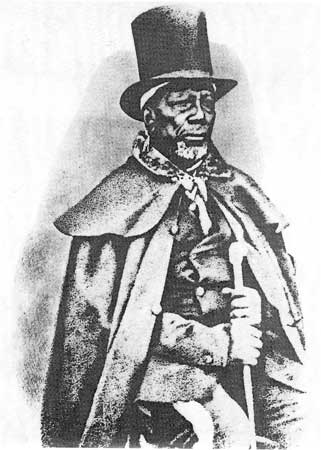
  149. King Moshoeshoe (1786-1870), founder or Lesotho

    Story 141 of 250 · The nineteenth century

    Africa

    Moshoeshoe I

    Moshoeshoe gathered refugees from the wars of the 1820s on the mountain of Thaba Bosiu and built the Basotho nation. He relied on diplomacy as much as force, and in 1868 asked Britain for protection from Boer settlers.

    Next story1822 · Pedro I of Brazil
  150. Portrait of Emperor Pedro I of Brazil

    Story 142 of 250 · The nineteenth century

    Americas

    Pedro I of Brazil

    The Portuguese prince Pedro declared Brazil independent on 7 September 1822 and was acclaimed its first emperor. He gave it a constitution but lost support after a costly war with Argentina and abdicated in 1831 in favour of his young son.

    Next story1827 · Pōmare IV
  151. Portrait of Queen Pōmare IV of Tahiti

    Story 143 of 250 · The nineteenth century

    East Asia and the PacificUnverified

    Pōmare IV

    Pōmare IV became queen of Tahiti at 14. In 1843 France declared a protectorate; she appealed to Louis Philippe and to Queen Victoria and her people fought the French, but she finally agreed to rule under French oversight.

    Next story1828 · Ranavalona I
  152. Queen Ranavalona I of Madagascar

    Story 144 of 250 · The nineteenth century

    Africa

    Ranavalona I

    Ranavalona I ruled the Merina kingdom of Madagascar and closed it to most foreigners, expelling missionaries and banning Christianity. She turned back a French and British attack in 1845, but her rule brought forced labour and executions.

    Next story1829 · Andrew Jackson
  153. Portrait of Andrew Jackson, the seventh president of the United States

    Story 145 of 250 · The nineteenth century

    Americas

    Andrew Jackson

    A general famed for New Orleans in 1815, Jackson was the first president from outside the eastern elite. He widened the vote among white men, vetoed the national bank's renewal and signed the Indian Removal Act, which led to the Trail of Tears.

    Next story1831 · Pedro II of Brazil
  154. Portrait of Emperor Pedro II of Brazil, c.1885

    Story 146 of 250 · The nineteenth century

    Americas

    Pedro II of Brazil

    Emperor at five and declared of age at fourteen, Pedro II ruled Brazil for 58 years. A scholar of science and the arts, he backed railways and telegraphs. Slavery ended in 1888, the last in the Americas, and the army overthrew him a year later.

    Next story1837 · Queen Victoria
  155. Queen Victoria, 1819–1901, by Bassano, 1882

    Story 147 of 250 · The nineteenth century

    Europe

    Queen Victoria

    Victoria came to the throne at 18 and reigned for 63 years, giving her name to an age of industry, empire and reform. Britain's empire grew to cover about a quarter of the world's land, and she became Empress of India in 1877.

    Next story1845 · George Tupou I
  156. Engraved portrait of George Tupou I, King of Tonga

    Story 148 of 250 · The nineteenth century

    East Asia and the PacificUnverified

    George Tupou I

    Starting from a disputed inheritance in Haʻapai, Tāufaʻāhau won control of Vavaʻu and Tongatapu and took the title Tuʻi Kanokupolu in 1845, uniting Tonga. A Christian convert, he issued a law code in 1862 and in 1875 a constitution.

    Next story1855 · Tewodros II
  157. Emperor Theodore of Ethiopia

    Story 149 of 250 · The nineteenth century

    Africa

    Tewodros II

    Tewodros, a warlord born Kassa, had himself crowned emperor in 1855 to end the feuding of the Era of the Princes. When Britain ignored his letters and he held its envoys, a British force marched on his fortress at Magdala, and he shot himself in 1868.

    Next story1858 · Benito Juárez
  158. Portrait of Benito Juárez

    Story 150 of 250 · The nineteenth century

    Americas

    Benito Juárez

    A Zapotec lawyer born to a poor family, Juárez led Mexico's liberals through the Reform War and the French intervention that briefly made Maximilian emperor. His governments separated church and state, and he restored the republic in 1867.

    Next story1861 · Abraham Lincoln
  159. Photograph of Abraham Lincoln in November 1863

    Story 151 of 250 · The nineteenth century

    Americas

    Abraham Lincoln

    Elected as southern states moved to leave the Union, Lincoln led the United States through the Civil War. His Emancipation Proclamation of 1863 declared enslaved people in the Confederacy free. He was assassinated days after the main Confederate army surrendered.

    Next story1861 · Empress Dowager Cixi
  160. The Qing Dynasty Empress Dowager Cixi of China (1835-1908)

    Story 152 of 250 · The nineteenth century

    East Asia and the Pacific

    Empress Dowager Cixi

    Cixi entered the court as a concubine and became the dominant ruler of Qing China for nearly half a century, governing through the child emperors Tongzhi and Guangxu. She backed some modernisation but crushed the 1898 reform movement and in 1900 supported the Boxers.

    Next story1867 · Emperor Meiji
  161. Photograph of Emperor Meiji in 1873, taken by Uchida Kuichi

    Story 153 of 250 · The nineteenth century

    East Asia and the Pacific

    Emperor Meiji

    Mutsuhito became emperor of Japan at 14. In 1868 the shogun's government fell and power returned to the throne, and during his reign, named Meiji, Japan built railways, factories, a constitution and a modern army, and defeated China and Russia in war.

    Next story1867 · John A. Macdonald
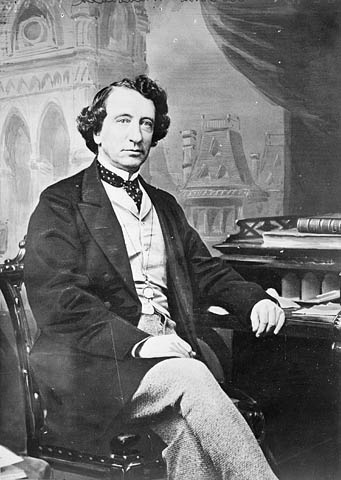
  162. John Alexander Macdonald, first prime minister of Canada, in 1867

    Story 154 of 250 · The nineteenth century

    Americas

    John A. Macdonald

    Canada's first prime minister and a chief architect of Confederation in 1867, Macdonald drove the Canadian Pacific Railway to the Pacific and founded the North-West Mounted Police. His government also confined Indigenous peoples to reserves and backed residential schools.

    Next story1868 · Chulalongkorn
  163. King Chulalongkorn or Rama V of Thailand

    Story 155 of 250 · The nineteenth century

    South and Southeast Asia

    Chulalongkorn

    Chulalongkorn came to the throne of Siam at fifteen and modernised it with schools, railways, a civil service and the abolition of slavery. He ceded border provinces to France and Britain, and so kept Siam the only Southeast Asian state never colonised.

    Next story1871 · Seru Epenisa Cakobau
  164. Photograph of Cakobau in western clothes, taken in the 1870s

    Story 156 of 250 · The nineteenth century

    East Asia and the PacificUnverified

    Seru Epenisa Cakobau

    Cakobau, a warlord chief of Bau, united part of Fiji's warring chiefdoms and in 1871 became king of a new Fijian kingdom, whose government was dominated by foreigners. On 10 October 1874 he signed the Deed of Cession that handed Fiji to Britain.

    Next story1871 · Otto von Bismarck
  165. Otto von Bismarck-Schönhausen ( Reichskanzler of Germany , 1871 - 1890), after his resignation in 1890

    Story 157 of 250 · The nineteenth century

    Europe

    Otto von Bismarck

    Bismarck, Prussia's minister-president, united Germany through wars against Denmark, Austria and France, and in 1871 became chancellor of the new German Empire. He built alliances to isolate France and brought in the first state social insurance. Wilhelm II dismissed him in 1890.

    Next story1876 · Abdul Hamid II
  166. Photograph of Sultan Abdul Hamid II in 1899

    Story 158 of 250 · The nineteenth century

    Middle East and Central Asia

    Abdul Hamid II

    Abdul Hamid II suspended the first Ottoman constitution in 1878 and ruled as an autocrat for 30 years with a network of spies. He built railways and telegraph lines, including the Hejaz Railway, but massacres of Armenians marked the 1890s. The Young Turks deposed him in 1909.

    Next story1876 · Porfirio Díaz
  167. Portrait of Porfirio Díaz

    Story 159 of 250 · The nineteenth century

    Americas

    Porfirio Díaz

    A general who took power in 1876, Díaz ruled Mexico for about 30 years of railways, foreign investment and growth, but also of repression and land concentrated in a few hands. The Mexican Revolution forced him into exile in 1911.

    Next story1885 · Itō Hirobumi
  168. Itō Hirobumi

    Story 160 of 250 · The nineteenth century

    East Asia and the Pacific

    Itō Hirobumi

    Itō studied in Britain, helped draft Japan's 1889 Meiji Constitution and became its first prime minister in 1885, serving four times. As resident-general of Korea he oversaw the takeover of that country, and a Korean nationalist assassinated him in 1909.

    Next story1888 · Wilhelm II
  169. Head and shoulders portrait of Kaiser Wilhelm II by Court Photographer T

    Story 161 of 250 · The nineteenth century

    Europe

    Wilhelm II

    Wilhelm II dismissed Bismarck, built a large navy that alarmed Britain and backed Austria-Hungary in the crisis of 1914. Germany lost the First World War, and he fled to the Netherlands in November 1918, where he lived until 1941.

    Next story1889 · Menelik II
  170. Menelik II in his coronation robes and crown

    Story 162 of 250 · The nineteenth century

    Africa

    Menelik II

    King of Shewa, Menelik became emperor of Ethiopia in 1889 and greatly enlarged it. When Italy claimed the country as a protectorate, his army crushed the Italian invasion at Adwa in 1896. He modernised Ethiopia from the capital he had founded, Addis Ababa.

    Next story1891 · Liliʻuokalani
  171. Photograph of Liliuokalani , the last sovereign of the Hawaiian kingdom

    Story 163 of 250 · The nineteenth century

    East Asia and the Pacific

    Liliʻuokalani

    The last sovereign of the Kingdom of Hawaii, Liliʻuokalani tried to restore royal power with a new constitution in 1893. A group of American and European businessmen, backed by US Marines, overthrew her. She wrote Aloha ʻOe and spent her later life seeking redress.

    Next story1901 · Theodore Roosevelt
  172. Chapter V

    The modern world

    87 stories in this chapter

  173. Photograph of Theodore Roosevelt showing head and shoulders, facing slightly left

    Story 164 of 250 · The modern world

    Americas

    Theodore Roosevelt

    Roosevelt became president at 42 when McKinley was assassinated. He broke up trusts, protected about 230 million acres of public land, pushed through the Panama Canal and won the 1906 Nobel Peace Prize for mediating the end of the Russo-Japanese War.

    Next story1908 · Puyi
  174. Puyi in a decorated military-style uniform beside a plumed hat

    Story 165 of 250 · The modern world

    East Asia and the Pacific

    Puyi

    Puyi was enthroned at two and forced to abdicate at six, when the Qing fell. Japan later made him puppet emperor of Manchukuo. After years in Soviet and Chinese custody, he ended his life as a gardener in Beijing.

    Next story1912 · Sun Yat-sen
  175. Portrait of Sun Yat-sen

    Story 166 of 250 · The modern world

    East Asia and the Pacific

    Sun Yat-sen

    A doctor trained in Hawaii and Hong Kong, Sun spent decades organising the overthrow of the Qing from exile. After the 1911 revolution he was made provisional president, but gave way within months to the general Yuan Shikai to avoid civil war.

    Next story1913 · Woodrow Wilson
  176. 1914 portrait photograph of Woodrow Wilson by Harris & Ewing

    Story 167 of 250 · The modern world

    Americas

    Woodrow Wilson

    Wilson brought the United States into the First World War in 1917 and set out Fourteen Points for peace. He helped create the League of Nations, but the Senate refused to join it, and a stroke in 1919 left him incapacitated for the rest of his term.

    Next story1917 · Vladimir Lenin
  177. Vladimir Lenin in a digitally colorized photograph

    Story 168 of 250 · The modern world

    Europe

    Vladimir Lenin

    Lenin led the Bolsheviks to power in the October Revolution of 1917, took Russia out of the First World War and won the civil war. He set up the Soviet Union in 1922 and brought in the New Economic Policy to rebuild the economy. He died in 1924 after several strokes.

    Next story1918 · Sālote Tupou III
  178. Portrait of Queen Sālote Tupou III of Tonga in her coronation robe and crown

    Story 169 of 250 · The modern world

    East Asia and the PacificUnverified

    Sālote Tupou III

    Sālote came to the Tongan throne at 18 in 1918 and ruled until her death in 1965, longer than any other monarch of Tonga. Tongans remember those years as a golden age for the kingdom.

    Next story1922 · Benito Mussolini
  179. Portrait of Benito Mussolini from the second edition of Adolf Dresler 's Mussolini als Journalist (1939)

    Story 170 of 250 · The modern world

    Europe

    Benito Mussolini

    Mussolini became prime minister in 1922 after the March on Rome and turned Italy into a Fascist dictatorship. He invaded Ethiopia, allied with Hitler and entered the Second World War in 1940. He was deposed in 1943 and shot by partisans in 1945.

    Next story1923 · Mustafa Kemal Atatürk
  180. Black-and-white portrait of Mustafa Kemal Atatürk in a suit

    Story 171 of 250 · The modern world

    Middle East and Central Asia

    Mustafa Kemal Atatürk

    An Ottoman officer who led the Turkish War of Independence after the First World War, Mustafa Kemal founded the Republic of Turkey in 1923 and became its first president. He abolished the caliphate, replaced Arabic script with a Latin alphabet and gave women the vote.

    Next story1924 · Joseph Stalin
  181. Joseph Stalin in uniform at the Tehran Conference in 1943

    Story 172 of 250 · The modern world

    Europe

    Joseph Stalin

    After Lenin's death Stalin outmanoeuvred his rivals to rule the Soviet Union alone. He forced peasants onto collective farms and drove rapid industrialisation through famine, purges and the Gulag labour camps, in which millions died.

    Next story1925 · Reza Shah
  182. Picture of Reza Shah, emperor of Iran in the early 30's in uniform

    Story 173 of 250 · The modern world

    Middle East and Central Asia

    Reza Shah

    A cavalry officer who seized power in a 1921 coup, Reza Shah was crowned in 1925. He modernised Iran with railways, schools, a university and a national army, and banned the veil. In 1941 Britain and the Soviets, wary of his German ties, forced him to abdicate.

    Next story1926 · Hirohito
  183. Hirohito in dress uniform

    Story 174 of 250 · The modern world

    East Asia and the Pacific

    Hirohito

    Hirohito became emperor in 1926, reigned through the war in China and the Pacific, and in August 1945 broadcast Japan's surrender. He gave up his claim to divinity in 1946 and remained a symbolic monarch until 1989, the longest reign of any Japanese emperor.

    Next story1928 · Chiang Kai-shek
  184. Chiang Kai-shek in full-dress military uniform with epaulettes, medals and a ceremonial sword

    Story 175 of 250 · The modern world

    East Asia and the Pacific

    Chiang Kai-shek

    Chiang led the Kuomintang's Northern Expedition, headed China's government from 1928 and its war against Japan. He lost the civil war to the Communists in 1949 and retreated to Taiwan, ruling it under martial law until his death in 1975.

    Next story1930 · Haile Selassie
  185. His Imperial Majesty Emperor Haile Selassie I

    Story 176 of 250 · The modern world

    Africa

    Haile Selassie

    Haile Selassie took Ethiopia into the League of Nations, appealed to it in 1936 after Italy's invasion, and returned in 1941 with British help. He pushed modernisation but kept absolute power until the army deposed him in 1974.

    Next story1930 · Getúlio Vargas
  186. Foto oficial de Getúlio Vargas , presidente do Brasil entre 1930 e 1945 e entre 1951 e 1954

    Story 177 of 250 · The modern world

    Americas

    Getúlio Vargas

    Vargas came to power in a 1930 revolution, ruled as dictator through the Estado Novo from 1937, and returned as an elected president in 1951. He created Brazil's labour laws, a national steel industry and the state oil company, and killed himself in 1954 under political pressure.

    Next story1932 · Ibn Saud
  187. Portrait of King Abdulaziz bin Abdul Rahman Al Saud

    Story 178 of 250 · The modern world

    Middle East and Central Asia

    Ibn Saud

    Starting in 1902 with the recapture of Riyadh, Abdulaziz Ibn Saud conquered most of the Arabian Peninsula and proclaimed the Kingdom of Saudi Arabia in 1932. The discovery of oil in 1938 transformed it. Several of his many sons have since inherited the throne.

    Next story1933 · Adolf Hitler
  188. Portrait photograph of Adolf Hitler in 1937

    Story 179 of 250 · The modern world

    Europe

    Adolf Hitler

    Appointed chancellor in 1933, Hitler made Germany a one-party dictatorship within months. His invasion of Poland in 1939 began the Second World War in Europe, and his regime murdered six million Jews in the Holocaust, and millions of others. He killed himself as Berlin fell.

    Next story1933 · Franklin D. Roosevelt
  189. Colour portrait photograph of Franklin D. Roosevelt in 1944

    Story 180 of 250 · The modern world

    Americas

    Franklin D. Roosevelt

    Elected in the depths of the Great Depression, Roosevelt launched the New Deal of public works, banking reform and social security. He led the United States into the Second World War after Pearl Harbor and died in office weeks before victory in Europe.

    Next story1934 · Lázaro Cárdenas
  190. Mexican President Lázaro Cárdenas del Río

    Story 181 of 250 · The modern world

    Americas

    Lázaro Cárdenas

    Cárdenas redistributed some 18 million hectares of land to peasants and in 1938 nationalised the foreign-owned oil companies, creating Pemex. He also gave refuge to Spanish Republicans fleeing Franco.

    Next story1936 · Francisco Franco
  191. Portrait of Francisco Franco

    Story 182 of 250 · The modern world

    Europe

    Francisco Franco

    Franco led the Nationalist side in the Spanish Civil War, winning in 1939 with German and Italian help. He ruled as Caudillo until 1975, with censorship, one-party rule and repression, kept Spain out of the Second World War and opened its economy from the 1950s.

    Next story1940 · Winston Churchill
  192. Yousuf Karsh's photograph of Winston Churchill, scowling, in December 1941

    Story 183 of 250 · The modern world

    Europe

    Winston Churchill

    Churchill became prime minister in May 1940, as Germany overran western Europe, and refused to make peace. His speeches rallied Britain through the Blitz, and with its allies he led it to victory in 1945, then lost that summer's election. He returned from 1951 to 1955.

    Next story1941 · Mohammad Reza Pahlavi
  193. Official portrait of Mohammad Reza Pahlavi

    Story 184 of 250 · The modern world

    Middle East and Central Asia

    Mohammad Reza Pahlavi

    The last Shah ruled Iran for 37 years. He pursued the White Revolution of land reform, votes for women and oil-fuelled growth, while his secret police, SAVAK, repressed critics. Mass protests forced him to leave in January 1979, and he died in exile in Egypt in 1980.

    Next story1945 · Josip Broz Tito
  194. Portrait of Josip Broz Tito in uniform

    Story 185 of 250 · The modern world

    Europe

    Josip Broz Tito

    Tito led the Partisan resistance against the Axis in Yugoslavia and then ruled it as a communist state. He broke with Stalin in 1948, kept Yugoslavia out of the Warsaw Pact and helped found the Non-Aligned Movement, holding the rival nationalities together until he died in 1980.

    Next story1945 · Harry S. Truman
  195. Portrait of President Harry S. Truman

    Story 186 of 250 · The modern world

    Americas

    Harry S. Truman

    Truman became president on Roosevelt's death, approved the atomic bombings of Hiroshima and Nagasaki, and then led the early Cold War. He launched the Marshall Plan and NATO, ordered the Berlin Airlift, desegregated the armed forces and sent troops to Korea.

    Next story1945 · Sukarno
  196. Official Portrait of President Sukarno

    Story 187 of 250 · The modern world

    South and Southeast Asia

    Sukarno

    Sukarno read the proclamation of independence in 1945 and led Indonesia through the revolution against the Dutch. He championed the 1955 Bandung Conference of Asian and African states, ran Guided Democracy from 1959 and was eased out by General Suharto after the 1965 crisis.

    Next story1945 · Ho Chi Minh
  197. Ho Chi Minh

    Story 188 of 250 · The modern world

    South and Southeast Asia

    Ho Chi Minh

    Hồ Chí Minh founded the Indochinese Communist Party, led the Viet Minh against the French and declared Vietnam's independence on 2 September 1945. He led North Vietnam through the war with the United States and died in 1969, six years before reunification.

    Next story1946 · Juan Perón
  198. Official photo of President of Argentina, Juan Domingo Perón, using the presidential sash

    Story 189 of 250 · The modern world

    Americas

    Juan Perón

    Perón, a colonel, won the 1946 election with working-class support, gave unions new power and higher wages, and built a movement around himself and his wife Eva. A coup removed him in 1955; he returned from exile in 1973 and died in office in 1974.

    Next story1947 · Jawaharlal Nehru
  199. Portrait photograph of Jawaharlal Nehru in about 1925

    Story 190 of 250 · The modern world

    South and Southeast Asia

    Jawaharlal Nehru

    A leader of the independence movement alongside Gandhi, Nehru became India's first prime minister in 1947 and held the office until his death 17 years later. He built a secular democracy, launched five-year plans, and kept India out of the Cold War blocs.

    Next story1947 · Muhammad Ali Jinnah
  200. Portrait of Muhammad Ali Jinnah, about 1945

    Story 191 of 250 · The modern world

    South and Southeast Asia

    Muhammad Ali Jinnah

    A London-trained barrister who once urged Hindu–Muslim unity, Jinnah led the Muslim League's demand for a separate Muslim state. He became Pakistan's first governor-general at independence in 1947 and died a year later.

    Next story1948 · David Ben-Gurion
  201. Prime minister David Ben Gurion

    Story 192 of 250 · The modern world

    Middle East and Central Asia

    David Ben-Gurion

    Ben-Gurion, leader of the Jewish community in Palestine, declared the State of Israel on 14 May 1948 and led it through the war that followed. As prime minister he absorbed hundreds of thousands of immigrants and built the army and state institutions.

    Next story1948 · Kim Il-sung
  202. Kim Il-sung in 1950

    Story 193 of 250 · The modern world

    East Asia and the Pacific

    Kim Il-sung

    A former anti-Japanese guerrilla installed by the Soviets, Kim became North Korea's leader in 1948 and invaded the South in 1950. He built a one-party state around his own cult and the idea of Juche, self-reliance, and passed power to his son Kim Jong-il.

    Next story1949 · Konrad Adenauer
  203. Portrait of Konrad Adenauer

    Story 194 of 250 · The modern world

    Europe

    Konrad Adenauer

    Adenauer, a former mayor of Cologne, became West Germany's first chancellor at 73. He tied the country to the West by joining NATO and the forerunners of the European Union, made peace with France and sought reconciliation with Israel.

    Next story1949 · Mao Zedong
  204. Official portrait of Mao Zedong in 1950

    Story 195 of 250 · The modern world

    East Asia and the Pacific

    Mao Zedong

    Mao led the Communists to victory in China's civil war and proclaimed the People's Republic in 1949. His Great Leap Forward caused a famine that killed tens of millions, and his Cultural Revolution, launched in 1966, brought a decade of persecution and chaos.

    Next story1949 · Zhou Enlai
  205. Zhou Enlai at No.17 Meiyuan Xincun, Nanjing, 1946

    Story 196 of 250 · The modern world

    East Asia and the Pacific

    Zhou Enlai

    Zhou was the People's Republic's first premier and kept the government running through the Great Leap famine, the Cultural Revolution and the opening to the West. He negotiated Nixon's 1972 visit, and mass mourning at his death in January 1976 spilled into the Tiananmen protests.

    Next story1951 · Mohammad Mosaddegh
  206. Mohammad Mosaddeq (1882 - 1967), Iranian Prime Minister

    Story 197 of 250 · The modern world

    Middle East and Central Asia

    Mohammad Mosaddegh

    Mosaddegh nationalised Iran's oil industry in 1951, taking on the Anglo-Iranian Oil Company. A British boycott crippled the economy. In August 1953 a coup backed by the CIA and MI6 overthrew him and restored the Shah's power.

    Next story1952 · Elizabeth II
  207. Official portrait of Queen Elizabeth II

    Story 198 of 250 · The modern world

    Europe

    Elizabeth II

    Elizabeth II became queen at 25 and reigned for over 70 years. She reigned through the end of the British empire, the growth of the Commonwealth, and decades of change in the monarchy's place in national life.

    Next story1952 · Hussein of Jordan
  208. King Hussein I of Jordan, smiling, at a meeting at the US Defense Department

    Story 199 of 250 · The modern world

    Middle East and Central Asia

    Hussein of Jordan

    Hussein became king of Jordan as a teenager and ruled for 46 years through repeated Arab–Israeli wars and civil strife. He lost the West Bank and East Jerusalem to Israel in 1967, made peace with Israel in 1994 and won wide respect as a mediator.

    Next story1956 · Gamal Abdel Nasser
  209. Official Portrait of President Gamal Abdel Nasser

    Story 200 of 250 · The modern world

    Africa

    Gamal Abdel Nasser

    Nasser, an army officer who helped overthrow King Farouk in 1952, became president in 1956 and nationalised the Suez Canal that July. The crisis made him a hero of Arab nationalism, though defeat by Israel in 1967 cost him much standing.

    Next story1957 · Kwame Nkrumah
  210. Kwame Nkrumah during a state visit to the United States in 1961

    Story 201 of 250 · The modern world

    Africa

    Kwame Nkrumah

    Nkrumah led the British colony of the Gold Coast to independence as Ghana in 1957, inspiring independence movements across Africa. He became president of the new republic in 1960, but made Ghana a one-party state and was overthrown in a coup in 1966.

    Next story1957 · Habib Bourguiba
  211. Portrait of Tunisian President Habib Bourguiba (1903-2000)

    Story 202 of 250 · The modern world

    Africa

    Habib Bourguiba

    Bourguiba led Tunisia to independence from France in 1956 and was its first president. He gave women rights unmatched in the Arab world and expanded schools and health care, but had himself named president for life and grew more authoritarian.

    Next story1957 · Tunku Abdul Rahman
  212. Portrait of Tunku Abdul Rahman

    Story 203 of 250 · The modern world

    South and Southeast Asia

    Tunku Abdul Rahman

    The Tunku led the Alliance coalition to victory in Malaya's first elections and negotiated independence from Britain in 1957. In 1963 he brought Singapore, Sabah and Sarawak into the larger Federation of Malaysia; Singapore left in 1965.

    Next story1959 · Charles de Gaulle
  213. Studio portrait of Charles de Gaulle in a jacket and tie, his hair slicked back

    Story 204 of 250 · The modern world

    Europe

    Charles de Gaulle

    De Gaulle led the Free French from London in the Second World War and headed France's first post-war government. Recalled in 1958 during the Algerian crisis, he wrote the Fifth Republic's constitution, ended the Algerian war and pulled France out of NATO's military command.

    Next story1959 · Fidel Castro
  214. Fidel Castro in the 1950s

    Story 205 of 250 · The modern world

    Americas

    Fidel Castro

    Castro led the guerrilla campaign that overthrew Batista in 1959 and made Cuba a communist state allied with the Soviet Union. He survived the Bay of Pigs and the 1962 missile crisis, and held power for almost 50 years until illness forced him to step down.

    Next story1959 · Lee Kuan Yew
  215. Lee Kuan Yew in a suit, photographed in 2002

    Story 206 of 250 · The modern world

    South and Southeast Asia

    Lee Kuan Yew

    Lee became prime minister of self-governing Singapore in 1959 and led it through a brief union with Malaysia to independence in 1965. Over three decades he turned a port with few natural resources into one of Asia's richest economies, keeping tight control of press and politics.

    Next story1960 · Patrice Lumumba
  216. Patrice Lumumba in Brussels, 26 January 1960

    Story 207 of 250 · The modern world

    Africa

    Patrice Lumumba

    Patrice Lumumba led the Congolese National Movement to independence from Belgium and became the first prime minister in June 1960. Within weeks the army mutinied and Katanga broke away. He was dismissed, arrested and killed in January 1961.

    Next story1960 · Sirimavo Bandaranaike
  217. Sirimavo Bandaranaike in a press photograph taken in Poland

    Story 208 of 250 · The modern world

    South and Southeast Asia

    Sirimavo Bandaranaike

    Sirimavo Bandaranaike took over her assassinated husband's party and in 1960 became the world's first woman prime minister. Over three terms she nationalised banks, insurance and plantations and followed a non-aligned course abroad.

    Next story1960 · Léopold Sédar Senghor
  218. Photograph of Léopold Sédar Senghor

    Story 209 of 250 · The modern world

    Africa

    Léopold Sédar Senghor

    A poet and Senegal's first president, Senghor co-founded the négritude movement and in 1983 became the first African elected to the Académie française. He stepped down voluntarily in 1980 after twenty years in office.

    Next story1961 · John F. Kennedy
  219. Official White House portrait of John F. Kennedy

    Story 210 of 250 · The modern world

    Americas

    John F. Kennedy

    At 43, Kennedy was the youngest man elected president. He faced the failed Bay of Pigs invasion and the Cuban Missile Crisis in 1962, and pledged to land an American on the Moon within the decade. He was assassinated in Dallas in 1963.

    Next story1961 · Park Chung-hee
  220. Park Chung-hee

    Story 211 of 250 · The modern world

    East Asia and the Pacific

    Park Chung-hee

    Park seized power in a 1961 coup and led South Korea for 18 years. Under his five-year plans it moved from poverty to heavy industry and exports, while he jailed critics, imposed martial law and rewrote the constitution to stay in power. His intelligence chief shot him in 1979.

    Next story1962 · Julius Nyerere
  221. Julius Nyerere as president of Tanzania

    Story 212 of 250 · The modern world

    Africa

    Julius Nyerere

    Nyerere led Tanganyika to independence in 1961 and, after it merged with Zanzibar, ran Tanzania until 1985. His Ujamaa socialism and village resettlement brought mixed results, but he held together a country of many ethnic groups around Swahili.

    Next story1963 · Jomo Kenyatta
  222. Jomo Kenyatta as president of Kenya

    Story 213 of 250 · The modern world

    Africa

    Jomo Kenyatta

    Kenyatta was jailed by the British for seven years over the Mau Mau uprising, then led Kenya to independence in 1963, as prime minister and from 1964 as president. He kept Kenya stable and friendly to the West, though critics say land and influence favoured his allies.

    Next story1964 · Kenneth Kaunda
  223. The President of Zambia Kenneth David Kaunda

    Story 214 of 250 · The modern world

    Africa

    Kenneth Kaunda

    Kaunda led the non-violent campaign for Northern Rhodesia's independence and was Zambia's first president. He backed liberation movements in neighbouring countries but banned other parties in 1972 and ran a one-party state until 1991.

    Next story1966 · Indira Gandhi
  224. Indira Gandhi in 1967

    Story 215 of 250 · The modern world

    South and Southeast Asia

    Indira Gandhi

    Nehru's daughter Indira Gandhi became India's first woman prime minister in 1966 and led it to victory in the 1971 war that created Bangladesh. She suspended civil liberties in the Emergency of 1975–77 and lost power, but won it back in 1980.

    Next story1967 · Suharto
  225. Suharto , second President of the Republic of Indonesia, at the start of his sixth term

    Story 216 of 250 · The modern world

    South and Southeast Asia

    Suharto

    Suharto, an army general, took power after the 1965 coup attempt and a mass killing of suspected communists that cost hundreds of thousands of lives. His New Order brought growth and stability, but also corruption and repression. Riots in the 1997 crisis forced him out.

    Next story1969 · Golda Meir
  226. Golda Meir , Israeli PM

    Story 217 of 250 · The modern world

    Middle East and Central Asia

    Golda Meir

    Born in Kyiv and raised in Milwaukee, Golda Meir became Israel's fourth prime minister and one of the first women to lead a state. She faced the Munich Olympics massacre of 1972 and the surprise attack of the Yom Kippur War in 1973, after which she resigned.

    Next story1969 · Muammar Gaddafi
  227. Muammar al-Gaddafi, Guide of the Great Revolution of the Great Socialist People's Libyan Arab Jamahiriya, at the 3rd EU/Africa Summit, 29-30/11/2010

    Story 218 of 250 · The modern world

    Africa

    Muammar Gaddafi

    Gaddafi took power in Libya at 27 in a 1969 coup and ruled for 42 years under his own Third Universal Theory, holding no formal office. Oil-funded welfare went with harsh repression and support for militant groups. Rebels backed by NATO air strikes overthrew him in 2011.

    Next story1970 · Anwar Sadat
  228. Official Portrait of President Anwar El Sadat

    Story 219 of 250 · The modern world

    Africa

    Anwar Sadat

    Sadat succeeded Nasser, launched the surprise attack on Israel in October 1973, and in 1977 flew to Jerusalem to seek peace. He signed the Camp David Accords and a treaty with Israel, sharing the 1978 Nobel Peace Prize with Menachem Begin.

    Next story1970 · Salvador Allende
  229. Salvador Allende, President of Chile (United Nations, New York)

    Story 220 of 250 · The modern world

    Americas

    Salvador Allende

    Allende, a doctor and Marxist, was the first Marxist elected president in Latin America. He nationalised copper and banks and pushed land reform amid inflation, strikes and US hostility. On 11 September 1973 the army attacked La Moneda palace, and he died there.

    Next story1971 · Sheikh Mujibur Rahman
  230. Portrait of Sheikh Mujibur Rahman

    Story 221 of 250 · The modern world

    South and Southeast Asia

    Sheikh Mujibur Rahman

    Mujib led the Awami League's demand for Bengali autonomy and won Pakistan's 1970 election. After the army's crackdown in March 1971 and the war that followed, he became the first head of independent Bangladesh. He was killed with most of his family in a coup in 1975.

    Next story1972 · Gough Whitlam
  231. Gough Whitlam at the launch of the Australian Conservation Foundation's newsletter in 1973

    Story 222 of 250 · The modern world

    East Asia and the Pacific

    Gough Whitlam

    In three fast-moving years Whitlam ended Australia's part in Vietnam, recognised China, brought in universal health insurance and free university education, and set Aboriginal land rights in motion. In 1975 the governor-general dismissed him.

    Next story1973 · Augusto Pinochet
  232. Official photograph of Augusto Pinochet

    Story 223 of 250 · The modern world

    Americas

    Augusto Pinochet

    Pinochet led the 1973 coup, headed the junta and became president in 1974. His government killed or disappeared more than 3,000 people and tortured tens of thousands, while free-market policies reshaped the economy. He left office after losing a 1988 plebiscite.

    Next story1976 · Pol Pot
  233. Colour portrait of Pol Pot in a high-collared tunic, 1978

    Story 224 of 250 · The modern world

    South and Southeast Asia

    Pol Pot

    As leader of the Khmer Rouge, Pol Pot emptied Cambodia's cities in 1975 and tried to build a classless farming society. Executions, forced labour, starvation and disease killed an estimated 1.5 to 2 million people. Vietnam's invasion ended his regime in 1979.

    Next story1978 · Deng Xiaoping
  234. Deng Xiaoping and Jimmy Carter at the arrival ceremony for the Vice Chairman of the Chinese Communist Party and Vice Premier of China

    Story 225 of 250 · The modern world

    East Asia and the Pacific

    Deng Xiaoping

    Deng, purged twice under Mao, became China's leading figure in 1978 and launched reform and opening-up, with special economic zones, household farming and foreign trade. Growth ran near 10% a year for decades. He also backed the army's clearing of Tiananmen Square in 1989.

    Next story1979 · Margaret Thatcher
  235. Margaret Thatcher in 1983

    Story 226 of 250 · The modern world

    Europe

    Margaret Thatcher

    Thatcher was Britain's first woman prime minister and won three elections. She curbed the unions, privatised state industries, cut taxes and won the 1982 Falklands War. Her own party forced her to resign in 1990 after rows over the poll tax and Europe.

    Next story1979 · Saddam Hussein
  236. Saddam Hussein speaking at his trial

    Story 227 of 250 · The modern world

    Middle East and Central Asia

    Saddam Hussein

    Saddam rose through the Ba'ath Party and became president of Iraq in 1979. He fought Iran for eight years, used chemical weapons against Kurds in 1988 and invaded Kuwait in 1990, leading to the Gulf War. US-led forces toppled him in 2003, and he was hanged in 2006.

    Next story1979 · Ruhollah Khomeini
  237. Ruhollah Khomeini in Jamaran

    Story 228 of 250 · The modern world

    Middle East and Central Asia

    Ruhollah Khomeini

    Khomeini, a cleric exiled in 1964, led the 1979 revolution from abroad and returned to Tehran on 1 February. As Supreme Leader he built a system in which clerics hold final authority, endorsed the seizure of the US embassy and led Iran through the eight-year war with Iraq.

    Next story1980 · Robert Mugabe
  238. Robert Mugabe

    Story 229 of 250 · The modern world

    Africa

    Robert Mugabe

    Mugabe led Zimbabwe's guerrilla war against white-minority rule and was its first prime minister, then president, from 1980. Early gains in schooling and health gave way to land seizures, hyperinflation and repression. The army pushed him out in 2017.

    Next story1980 · Vigdís Finnbogadóttir
  239. Vigdís Finnbogadóttir inspecting an honour guard with Queen Beatrix of the Netherlands in 1985

    Story 230 of 250 · The modern world

    Europe

    Vigdís Finnbogadóttir

    A theatre director and French teacher, Vigdís Finnbogadóttir was elected president of Iceland in 1980, the world's first woman to be elected head of state in a national vote. She won three more terms and served 16 years.

    Next story1981 · Ronald Reagan
  240. Official portrait photograph of Ronald Reagan, 1981

    Story 231 of 250 · The modern world

    Americas

    Ronald Reagan

    A former film actor and governor of California, Reagan cut taxes, built up the military and called the Soviet Union an evil empire. In his second term he negotiated with Gorbachev and signed a treaty removing intermediate-range missiles from Europe.

    Next story1981 · Mahathir Mohamad
  241. Mahathir Mohamad in 2018

    Story 232 of 250 · The modern world

    South and Southeast Asia

    Mahathir Mohamad

    Mahathir led Malaysia for 22 years from 1981, pushing industrialisation, the Petronas Towers and policies favouring Malays. In 2018, at 92, he led an opposition alliance to end the governing coalition's 61 years in power, then resigned in 2020.

    Next story1983 · Thomas Sankara
  242. Thomas Sankara giving a speech in Harlem, New York, 1984

    Story 233 of 250 · The modern world

    Africa

    Thomas Sankara

    An army captain, Sankara took power in a 1983 coup and renamed Upper Volta Burkina Faso, the land of upright people. He launched mass vaccination, tree planting and school building, promoted women in government and sold the ministers' Mercedes cars.

    Next story1985 · Mikhail Gorbachev
  243. Soviet politician, General Secretary of the Communist Party of the Soviet Union President of the Soviet Union Mikhail Gorbachev, Moscow, October 24 1991

    Story 234 of 250 · The modern world

    Europe

    Mikhail Gorbachev

    Gorbachev became Soviet leader in 1985 and launched glasnost and perestroika. He agreed arms cuts with Reagan, let Eastern Europe go in 1989 without force and won the 1990 Nobel Peace Prize. The Soviet Union dissolved in December 1991, and he resigned.

    Next story1988 · Benazir Bhutto
  244. Portrait of Benazir Bhutto by Oliver Mark

    Story 235 of 250 · The modern world

    South and Southeast Asia

    Benazir Bhutto

    Benazir Bhutto, daughter of the executed prime minister Zulfikar Ali Bhutto, became the first woman to lead a Muslim-majority democracy in 1988. Both her governments were dismissed on corruption charges. She was assassinated in Rawalpindi in 2007 while campaigning.

    Next story1989 · F. W. de Klerk
  245. Frederik Willem de Klerk, President of South Africa 1989–1994, visiting Switzerland 1990

    Story 236 of 250 · The modern world

    Africa

    F. W. de Klerk

    F. W. de Klerk, South Africa's last white president, unbanned the African National Congress in 1990, freed Nelson Mandela and began talks to end apartheid. The first non-racial election followed in 1994.

    Next story1989 · Václav Havel
  246. Václav Havel during his speech at the Freedom and its adversaries conference held in Prague on 14 November 2009

    Story 237 of 250 · The modern world

    Europe

    Václav Havel

    A playwright jailed for his dissent, Havel led the Civic Forum in the Velvet Revolution of 1989 and was elected Czechoslovakia's president that December. He then served as the first president of the Czech Republic from 1993 until 2003.

    Next story1990 · Lech Wałęsa
  247. Lech Walesa in 2009

    Story 238 of 250 · The modern world

    Europe

    Lech Wałęsa

    An electrician at the Gdańsk shipyard, Wałęsa led the Solidarity trade union in 1980, the first independent union in the Soviet bloc. Jailed under martial law, he won the 1983 Nobel Peace Prize and in 1990 became Poland's first freely elected president.

    Next story1991 · Boris Yeltsin
  248. Boris Yeltsin

    Story 239 of 250 · The modern world

    Europe

    Boris Yeltsin

    Yeltsin was the first freely elected leader of Russia. He faced down the August 1991 coup against Gorbachev from atop a tank, helped end the Soviet Union and began a painful switch to a market economy. He sent troops into Chechnya in 1994 and resigned on New Year's Eve 1999.

    Next story1994 · Nelson Mandela
  249. Nelson Mandela smiling, in a dark suit, in 1994

    Story 240 of 250 · The modern world

    Africa

    Nelson Mandela

    Imprisoned for 27 years for fighting apartheid, Mandela was released in 1990 and negotiated its end with President F. W. de Klerk. In 1994, in South Africa's first election open to all races, he became the country's first Black president. He served one term.

    Next story1994 · Yasser Arafat
  250. Photo shows: Leader of the PLO Yasser Arafat During a visit to Israeli President Ezer Weizman's residence in Caesarea, Israel

    Story 241 of 250 · The modern world

    Middle East and Central Asia

    Yasser Arafat

    Arafat led the Palestine Liberation Organization from 1969, moving from armed struggle to talks with Israel. He signed the Oslo Accords in 1993, shared the 1994 Nobel Peace Prize with Rabin and Peres, and headed the Palestinian Authority until he died in 2004.

    Next story1999 · Hugo Chávez
  251. Hugo Chávez in Brasília in June 2011

    Story 242 of 250 · The modern world

    Americas

    Hugo Chávez

    A former paratrooper who led a failed coup in 1992, Chávez won the presidency in 1998 and launched the Bolivarian Revolution. He spent oil income on social programmes, rewrote the constitution and nationalised industries; critics say he weakened democratic checks.

    Next story2003 · Luiz Inácio Lula da Silva
  252. Retrato oficial do Presidente da República, Luiz Inácio Lula da Silva

    Story 243 of 250 · The modern world

    Americas

    Luiz Inácio Lula da Silva

    A metalworker and union leader, Lula was Brazil's first working-class president. His Bolsa Família programme lifted millions out of poverty during a commodities boom. He was jailed in 2018 on a conviction later annulled, and returned to office in 2023.

    Next story2004 · Manmohan Singh
  253. Manmohan Singh at the World Economic Forum in 2009

    Story 244 of 250 · The modern world

    South and Southeast Asia

    Manmohan Singh

    An economist, Singh as finance minister opened India's economy in 1991. As prime minister from 2004 to 2014 he presided over fast growth, a rural jobs guarantee, the right to information act and a civil nuclear deal with the United States.

    Next story2005 · Angela Merkel
  254. Angela Merkel in a red jacket, photographed in 2019

    Story 245 of 250 · The modern world

    Europe

    Angela Merkel

    A physicist who grew up in East Germany, Merkel became Germany's first woman chancellor in 2005 and led it for 16 years. She steered Europe through the financial and euro crises, and in 2015 opened Germany to hundreds of thousands of refugees.

    Next story2006 · Ellen Johnson Sirleaf
  255. Ellen Johnson Sirleaf in a blue head wrap and pearls, photographed in 2015

    Story 246 of 250 · The modern world

    Africa

    Ellen Johnson Sirleaf

    Elected after 14 years of civil war in Liberia, Ellen Johnson Sirleaf became Africa's first elected woman head of state in 2006. Over two terms she rebuilt roads and public services, won relief from the country's debts and led it through the Ebola epidemic.

    Next story2006 · Evo Morales
  256. Official portrait of Evo Morales, president of Bolivia from 2006 to 2019

    Story 247 of 250 · The modern world

    Americas

    Evo Morales

    A coca grower and union leader, Morales became Bolivia's first Indigenous president in 2006. He nationalised natural gas, wrote a new constitution that made the state plurinational, and cut poverty. He resigned in 2019 after a disputed election and left the country.

    Next story2009 · Barack Obama
  257. Official White House portrait of Barack Obama

    Story 248 of 250 · The modern world

    Americas

    Barack Obama

    The first African American president, Obama signed the Affordable Care Act in 2010, steered the country out of the 2008 financial crisis, ordered the raid that killed Osama bin Laden, and joined the Paris climate agreement and a nuclear deal with Iran.

    Next story2016 · Aung San Suu Kyi
  258. Aung San Suu Kyi in October 2019

    Story 249 of 250 · The modern world

    South and Southeast Asia

    Aung San Suu Kyi

    Aung San Suu Kyi, daughter of Burma's independence hero, spent about 15 years under house arrest for opposing the junta and won the 1991 Nobel Peace Prize. As State Counsellor from 2016 she shared power with the army. The army deposed her in a 2021 coup.

    Next story2017 · Jacinda Ardern
  259. New Zealand prime minister, Jacinda Ardern, at Waitangi on 22 January 2022

    Story 250 of 250 · The modern world

    East Asia and the Pacific

    Jacinda Ardern

    Ardern became prime minister of New Zealand at 37 and gave birth in office. She led the country after the 2019 Christchurch mosque attacks, passing a gun law within weeks, and through a COVID-19 strategy that kept deaths low in the first two years. She resigned in 2023.

    NextJourney's end

Journey complete

You travelled 4,611 years

250 stories, c. 2589 BC to 2023. More leaders are being researched and added.

Choose another journeyBack to the start