All journeys

Medical discoveries

From prehistoric skull surgery to mRNA vaccines and gene editing: the discoveries that changed what it means to fall ill, and what changed for patients.

Stories
146
Distance
7,024 years
Route
c. 5000 BC to 2025
  1. The ancient world22 stories
  2. The Middle Ages16 stories
  3. Early modern medicine20 stories
  4. 19th century28 stories
  5. 20th century47 stories
  6. 21st century13 stories
Begin the journey
  1. Chapter I

    The ancient world

    22 stories in this chapter

  2. A skull from about 3300 BC with a trepanation hole, found at Börnecke in Germany

    Story 1 of 146 · The ancient world

    Surgery

    Opening the skull, and surviving

    Skulls from Neolithic Europe, and later Peru and Asia, show neat holes made by scraping or drilling. On many the bone has healed around the edge, so the patient lived on for years afterwards.

    Next storyc. 4500 BC · A Neolithic tooth is filled with beeswax
  3. About 500 years later

    c. 5000 BC to c. 4500 BC

  4. A fragment of a Neolithic human jaw with teeth, photographed from three sides beside a 10-millimetre scale bar

    Story 2 of 146 · The ancient world

    Surgery

    A Neolithic tooth is filled with beeswax

    A Neolithic jaw found in Slovenia has a cracked tooth that was sealed with beeswax about 6,500 years ago. It is one of the oldest known dental fillings, and shows early people repairing teeth.

    Next storyc. 4200 BC · Poppy heads in a Neolithic burial
  5. About 300 years later

    c. 4500 BC to c. 4200 BC

  6. Opium poppy ( Papaver somniferum ), unripe fruits (capsules seed)

    Story 3 of 146 · The ancient world

    Medicines

    Poppy heads in a Neolithic burial

    In the Cueva de los Murciélagos, a burial cave in southern Spain, people laid many opium poppy capsules beside the dead; radiocarbon dates put them about 4200 BC. Poppy seeds turn up at Neolithic sites from Spain to Switzerland.

    Next storyc. 3300 BC · Ötzi carries medicine and pain-relief tattoos
  7. About 900 years later

    c. 4200 BC to c. 3300 BC

  8. A museum reconstruction of Ötzi the Iceman, a bearded man in fur and leather, at the Quinson prehistory museum in France

    Story 4 of 146 · The ancient world

    Medicines

    Ötzi carries medicine and pain-relief tattoos

    Ötzi the Iceman, frozen in an Alpine glacier for about 5,300 years, carried a birch fungus that works against intestinal worms, and had whipworm. His 61 tattoos lie over worn joints and his back, so they may have been a pain treatment.

    Next storyc. 2650 BC · Imhotep, the first named physician
  9. About 650 years later

    c. 3300 BC to c. 2650 BC

  10. Bronze statuette of the seated Imhotep with a papyrus on his lap, in the Louvre

    Story 5 of 146 · The ancient world

    Public health and research

    Imhotep, the first named physician

    Imhotep served the pharaoh Djoser as chief adviser and architect, and later Egyptians remembered him as a healer. The Greeks identified him with their god of medicine, Asclepius. No medical writing of his survives.

    Next storyc. 2500 BC · Peseshet, supervisor of women physicians
  11. About 150 years later

    c. 2650 BC to c. 2500 BC

  12. Statuette of a seated woman from Old Kingdom Egypt

    Story 6 of 146 · The ancient world

    Public health and research

    Peseshet, supervisor of women physicians

    An Old Kingdom tomb inscription names Peseshet as 'overseer of female physicians', the earliest known woman in medicine. We know nothing more about her work, but the title shows that women healers existed and were supervised.

    Next storyc. 1754 BC · Laws for doctors in Babylon
  13. About 750 years later

    c. 2500 BC to c. 1754 BC

  14. The Code of Hammurabi carved on a black stone pillar, now in the Louvre

    Story 7 of 146 · The ancient world

    Public health and research

    Laws for doctors in Babylon

    Babylon's famous law code sets fees for surgeons by the patient's rank, and punishments if an operation fails: a surgeon whose patient died after a deep cut could lose a hand.

    Next storyc. 1600 BC · The Edwin Smith Papyrus
  15. About 150 years later

    c. 1754 BC to c. 1600 BC

  16. The Edwin Smith papyrus , the world's oldest surviving surgical document

    Story 8 of 146 · The ancient world

    Surgery

    The Edwin Smith Papyrus

    This Egyptian scroll describes 48 injuries, from head wounds to broken bones, each with an examination, a diagnosis and a treatment. It is the oldest known surgical text, and relies mostly on observation rather than magic.

    Next storyc. 1550 BC · The Ebers Papyrus
  17. A page of hieratic writing from the Ebers Papyrus

    Story 9 of 146 · The ancient world

    Medicines

    The Ebers Papyrus

    This Egyptian scroll collects about 700 remedies and spells for complaints from crocodile bites to low mood, using honey, plants, minerals and animal products. It also describes the heart and its vessels.

    Next storyc. 1050 BC · The Babylonian diagnostic handbook
  18. About 500 years later

    c. 1550 BC to c. 1050 BC

  19. Clay tablet fragment of an Assyrian medical text in cuneiform

    Story 10 of 146 · The ancient world

    Diagnosis and imaging

    The Babylonian diagnostic handbook

    Esagil-kin-apli, a Babylonian healer, compiled a handbook of about 40 tablets listing symptoms, a probable diagnosis and a prognosis for each. It treated illness as something to read from signs on the body.

    Next storyc. 950 BC · An artificial toe in ancient Egypt
  20. A model employed by James Edward Hanger with prosthetic legs taken by C

    Story 11 of 146 · The ancient world

    SurgeryUnverified

    An artificial toe in ancient Egypt

    A woman buried in a necropolis near Thebes, in Egypt, had lost her big toe and wore a carved wooden replacement strapped to her foot. Dated between about 950 and 710 BC, it is the first confirmed prosthesis.

    Next storyc. 500 BC · The brain as the seat of thought
  21. About 450 years later

    c. 950 BC to c. 500 BC

  22. Bronze medal of Alcmaeon of Croton

    Story 12 of 146 · The ancient world

    Anatomy and physiology

    The brain as the seat of thought

    The Greek physician Alcmaeon of Croton is said to have cut the nerves running from the eye to the brain, and concluded that the brain, not the heart, is where we think and sense. Only later reports of his work survive.

    Next storyc. 400 BC · Hippocratic medicine
  23. "Twelfth-century Byzantine manuscript the oath was written out in the form of a cross , relating it visually to Christian ideas"

    Story 13 of 146 · The ancient world

    Public health and research

    Hippocratic medicine

    Writings linked to the Greek physician Hippocrates and his followers argued that illness has natural causes, not divine ones, and urged careful observation of patients. They include the Hippocratic Oath.

    Next storyc. 300 BC · Dissecting people in Alexandria
  24. Stone medallion of Herophilus on the old medical faculty building in Zaragoza

    Story 14 of 146 · The ancient world

    Anatomy and physiology

    Dissecting people in Alexandria

    In Ptolemaic Alexandria, Herophilus and Erasistratus carried out the first systematic dissections of human bodies. They traced the nerves, described the brain's chambers, the eye and the liver, and studied the pulse.

    Next storyc. 200 BC · The Yellow Emperor's Inner Classic
  25. The earliest printed edition of the Su Wen, the first part of the Huangdi Neijing

    Story 15 of 146 · The ancient world

    Anatomy and physiology

    The Yellow Emperor's Inner Classic

    Written as a dialogue between the legendary Yellow Emperor and his physician, this Chinese classic ties health to the balance of yin and yang and the flow of qi along channels in the body. It is the root text of acupuncture.

    Next storyc. 200 BC · Sushruta's surgery manual
  26. A manuscript page of the Sushruta Samhita

    Story 16 of 146 · The ancient world

    Surgery

    Sushruta's surgery manual

    This Sanskrit text lists about 120 surgical instruments and more than 300 operations, including removing cataracts, mending fractures and rebuilding a nose with a flap of cheek skin. Students were to practise on fruit, leather and dead animals.

    Next storyc. 60 · Dioscorides' guide to drugs
  27. About 260 years later

    c. 200 BC to c. 60

  28. A page from a 15th-century Byzantine copy of Dioscorides' De materia medica

    Story 17 of 146 · The ancient world

    Medicines

    Dioscorides' guide to drugs

    The Greek army doctor Dioscorides described some 600 plants and many minerals and animal products, with how to find, prepare and use them. For about 1,500 years it was the main drug handbook of Europe and the Islamic world.

    Next storyc. 100 · Charaka's guide to internal medicine
  29. A page of a manuscript of the Charaka Samhita

    Story 18 of 146 · The ancient world

    Public health and research

    Charaka's guide to internal medicine

    This Sanskrit text from the Ayurvedic tradition teaches how to examine a patient and treat illness with drugs, diet and daily routine. It also lays out how a physician should behave, and how medicine should be taught.

    Next storyc. 100 · Shennong's herbal of 365 medicines
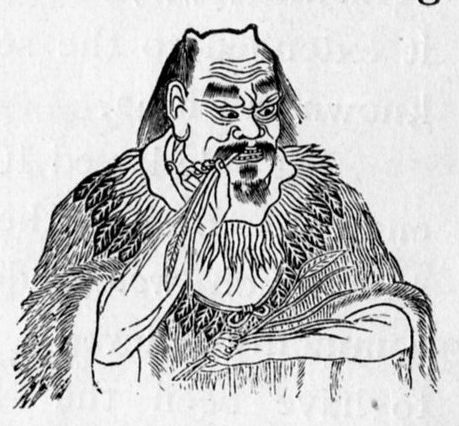
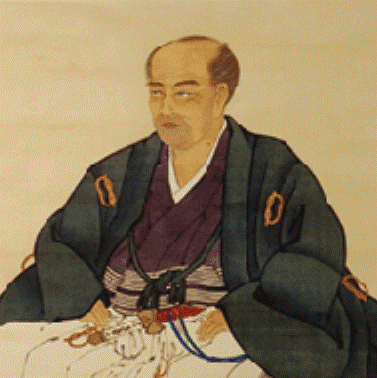
  30. Woodcut portrait of Shennong, the legendary Farmer God of Chinese medicine

    Story 19 of 146 · The ancient world

    Medicines

    Shennong's herbal of 365 medicines

    Named after the legendary farmer-god Shennong, this Han-dynasty text lists 365 medicines from plants, minerals and animals, ranked by strength and safety. It started the long Chinese tradition of writing about drugs.

    Next storyc. 170 · Galen's anatomy
  31. Galenus, a representative portrait of the Claudius Galen in the form of engraving made by German artist Georg Paul Busch

    Story 20 of 146 · The ancient world

    Anatomy and physiology

    Galen's anatomy

    The Greek physician Galen, working in Rome, dissected animals and showed that arteries carry blood, not air. His books shaped medicine in Europe and the Middle East for more than 1,300 years.

    Next storyc. 200 · Hua Tuo and the numbing powder
  32. Portrait of the physician Hua Tuo from a Qing Dynasty edition of The Romance of the Three Kingdoms

    Story 21 of 146 · The ancient world

    Surgery

    Hua Tuo and the numbing powder

    Chinese tradition says the physician Hua Tuo had patients drink wine mixed with a herbal powder called mafeisan, which numbed them enough for operations on the abdomen. The recipe is lost, and surviving accounts are later stories.

    Next storyc. 280 · The Pulse Classic
  33. Woodcut from a 1554 Chinese medical book showing how to feel the pulse at the wrist

    Story 22 of 146 · The ancient world

    Diagnosis and imaging

    The Pulse Classic

    Wang Shuhe gathered Chinese pulse knowledge into ten volumes, naming 24 kinds of pulse, such as floating, deep, slow and rapid, and tying each to a condition of the body. Feeling the wrist became a core step of examination in East Asia.

    Next story6th century · Gondishapur, a Persian centre of medicine
  34. About 220 years later

    c. 280 to 6th century

  35. Chapter II

    The Middle Ages

    16 stories in this chapter

  36. Ruins at the site of ancient Gondishapur in Khuzestan, Iran

    Story 23 of 146 · The Middle Ages

    Public health and research

    Gondishapur, a Persian centre of medicine

    In the Sasanian city of Gondishapur, in today's south-west Iran, King Khosrow I (531–579) welcomed Greek, Syriac-speaking Christian and Indian scholars. The city became famous for teaching medicine, with a library and, by later accounts, a hospital.

    Next storyc. 650 · Byzantine surgery handed on
  37. Engraved portrait of Paul of Aegina

    Story 24 of 146 · The Middle Ages

    Surgery

    Byzantine surgery handed on

    Paul of Aegina, a Greek physician in Alexandria, gathered ancient and Byzantine medicine into a seven-book Epitome. Its sixth book on surgery described removing arrowheads, cutting into the windpipe and operating on hernias.

    Next storyc. 652 · Sun Simiao's Thousand Golden Formulas
  38. Portrait of Sun Simiao

    Story 25 of 146 · The Middle Ages

    Medicines

    Sun Simiao's Thousand Golden Formulas

    The Tang dynasty physician Sun Simiao wrote a thirty-volume Chinese medical encyclopedia of remedies, diets and treatments. Its opening essay on the 'sincerity of great physicians' asks doctors to treat rich and poor alike, with compassion.

    Next storyc. 805 · Public hospitals in the Islamic world
  39. About 150 years later

    c. 652 to c. 805

  40. A medieval medical prescription issued by the Qalawun hospital in Cairo

    Story 26 of 146 · The Middle Ages

    Public health and research

    Public hospitals in the Islamic world

    In Baghdad, then Damascus and Cairo, rulers and donors paid for bimaristans: hospitals with wards by disease, salaried doctors, pharmacies and medical students on rounds. They treated rich and poor alike, free of charge.

    Next storyc. 850 · Baghdad translates Greek medicine
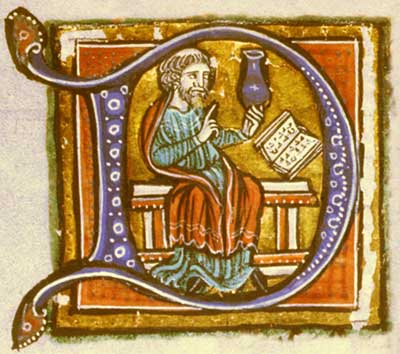
  41. Medieval illumination of Hunayn ibn Ishaq from a manuscript of the Isagoge

    Story 27 of 146 · The Middle Ages

    Public health and research

    Baghdad translates Greek medicine

    Under the Abbasid caliphs, scholars in Baghdad, led by the Christian physician Hunayn ibn Ishaq, translated Galen, Hippocrates and other Greek authors into Syriac and Arabic. Many of these works survive only through these versions.

    Next storyc. 910 · Smallpox and measles told apart
  42. European depiction of the Persian (Iranian) doctor Al-Razi , in Gerardus Cremonensis "Recueil des traités de médecine" 1250-1260

    Story 28 of 146 · The Middle Ages

    Infection and immunity

    Smallpox and measles told apart

    The Persian physician al-Razi wrote a treatise that clearly separated smallpox from measles, listing the signs of each, how each runs its course and how to nurse the sick. Latin and English translations kept being printed in Europe until the 1800s.

    Next story984 · Japan's oldest medical book
  43. Ishinpō is the oldest surviving Japanese medical text written by Tamba Yasuyori

    Story 29 of 146 · The Middle Ages

    Medicines

    Japan's oldest medical book

    The court physician Tamba Yasuyori finished the Ishinpō, a 30-volume collection of medical knowledge drawn largely from Chinese texts, in 984. It covers diseases, drugs, acupuncture, hygiene and childbirth.

    Next storyc. 1000 · Al-Zahrawi's illustrated surgery
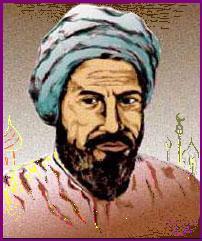
  44. Imagined portrait of Al-Zahrawi, based on a 1964 Syrian stamp

    Story 30 of 146 · The Middle Ages

    Surgery

    Al-Zahrawi's illustrated surgery

    Al-Zahrawi, physician to the court at Córdoba, wrote the 30-volume Kitab al-Tasrif. Its surgical volume pictured about 200 instruments and described stitching wounds, tying arteries and treating dislocations. Latin translations taught European surgeons for centuries.

    Next storyc. 1020 · How the eye sees
  45. Engraving from the title page of Opticae Thesaurus , a latin edition of Ibn al-Haytham's Book of Optics

    Story 31 of 146 · The Middle Ages

    Anatomy and physiology

    How the eye sees

    Working in Cairo, Ibn al-Haytham argued that we see because light bounces off objects into the eye, and not because the eye sends out rays. His Book of Optics described the parts of the eye and tested every claim by experiment.

    Next story1025 · Avicenna's Canon of Medicine
  46. Handwritten Arabic Manuscript of Canon Medicinae - BuAli Sina (Avicenna) Mausoleum - Hamadan - Western Iran

    Story 32 of 146 · The Middle Ages

    Public health and research

    Avicenna's Canon of Medicine

    The Persian scholar Ibn Sina, known in Europe as Avicenna, gathered Greek, Roman, Indian and Islamic medical knowledge into a five-volume encyclopedia. It also set out rules for testing new drugs.

    Next storyc. 1050 · Salerno, Europe's first medical school
  47. Miniature of the medical school of Salerno, from a manuscript of Avicenna's Canon

    Story 33 of 146 · The Middle Ages

    Public health and research

    Salerno, Europe's first medical school

    In the southern Italian port of Salerno, doctors taught medicine to students from across the Mediterranean, mixing Greek, Arabic and Latin learning. Women practised there too, including Trota, whose handbook on women's health was widely copied.

    Next storyc. 1242 · Blood's path through the lungs
  48. About 190 years later

    c. 1050 to c. 1242

  49. Illustration of the physician Ibn al-Nafis

    Story 34 of 146 · The Middle Ages

    Anatomy and physiology

    Blood's path through the lungs

    The Syrian physician Ibn al-Nafis described how blood passes from the right side of the heart through the lungs to the left side, rather than through pores in the heart's wall as Galen taught.

    Next story1247 · Song Ci's forensic handbook
  50. Page of an 1843 edition of Song Ci's forensic handbook, showing the bones of the body

    Story 35 of 146 · The Middle Ages

    Public health and research

    Song Ci's forensic handbook

    Song Ci, a Chinese judge, wrote a guide to examining bodies in suspicious deaths, from telling drowning from strangling to testing for poison with a silver pin. Courts used it for centuries.

    Next story1315 · Human dissection returns to Europe
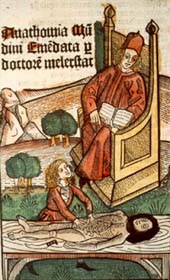
  51. Title page of an early edition of the Anathomia of Mondino de Liuzzi

    Story 36 of 146 · The Middle Ages

    Anatomy and physiology

    Human dissection returns to Europe

    At the University of Bologna, Mondino de Liuzzi dissected human bodies in front of students, and wrote a short manual, the Anathomia, around 1316. It was the standard anatomy text in European universities for about two centuries.

    Next storyc. 1350 · Plague is contagious, says Granada
  52. Bust of Ibn al-Khatib in Iznájar, Andalusia

    Story 37 of 146 · The Middle Ages

    Infection and immunity

    Plague is contagious, says Granada

    During the Black Death, the scholar and physician Ibn al-Khatib of Granada argued that plague passes from person to person through contact, clothing and objects. When this clashed with a reading of scripture, he said, evidence must win.

    Next story1377 · Quarantine begins at Ragusa
  53. The Lazareti, the old quarantine station on the waterfront at Dubrovnik

    Story 38 of 146 · The Middle Ages

    Public health and research

    Quarantine begins at Ragusa

    To keep plague out, the port of Ragusa, now Dubrovnik, made arriving ships and travellers wait thirty days on an island before entering. The wait later grew to forty days, which gave us the word quarantine.

    Next storyc. 1500 · Variolation, protection from smallpox
  54. Chapter III

    Early modern medicine

    20 stories in this chapter

  55. Lady Mary Wortley Montagu with her son and attendants in Ottoman Istanbul, painted by Jean-Baptiste Vanmour

    Story 39 of 146 · Early modern medicine

    Infection and immunity

    Variolation, protection from smallpox

    Centuries before Jenner, people in China, India and the Ottoman lands gave healthy people a little smallpox matter, often as dried scab blown into the nose, so they caught a mild case and were then immune.

    Next storyc. 1510 · Leonardo draws the body
  56. Leonardo da Vinci's pen drawings of the muscles and bones of the shoulder

    Story 40 of 146 · Early modern medicine

    Anatomy and physiology

    Leonardo draws the body

    Leonardo da Vinci dissected more than ten human bodies and drew the muscles, the spine, the heart's valves and a baby in the womb with astonishing care. His notebooks stayed unpublished for centuries.

    Next story1527 · The dose makes the poison
  57. Seventeenth-century portrait of Paracelsus

    Story 41 of 146 · Early modern medicine

    Medicines

    The dose makes the poison

    The Swiss physician Paracelsus is said to have burned the works of Avicenna in the street at Basel in 1527, and argued that medicines should be chemicals made in the laboratory. He taught that every substance is a poison, and only the dose makes it a remedy.

    Next story1543 · Vesalius maps the human body
  58. Vesalius maps the human body

    Story 42 of 146 · Early modern medicine

    Anatomy and physiology

    Vesalius maps the human body

    Andreas Vesalius published detailed drawings of the human body based on his own dissections, correcting many of Galen's errors. Its illustrations set a new standard for accuracy.

    Next story1545 · Paré treats wounds gently
  59. Ambroise Pare, father of military surgery

    Story 43 of 146 · Early modern medicine

    Surgery

    Paré treats wounds gently

    A French army surgeon, Ambroise Paré ran out of the boiling oil then poured into gunshot wounds and tried a soothing mix of egg yolk and rose oil instead. His patients did better. Later he tied off arteries rather than burning them.

    Next story1546 · Contagion by tiny seeds
  60. Portrait of Girolamo Fracastoro by Titian

    Story 44 of 146 · Early modern medicine

    Infection and immunity

    Contagion by tiny seeds

    In On Contagion, the Italian physician Girolamo Fracastoro argued that some diseases spread by invisible 'seeds' passed by touch, by objects, or through the air. He also gave syphilis its name, in a poem of 1530.

    Next story1552 · The Aztec herbal
  61. Pages of the Aztec herbal known as the Badianus Manuscript

    Story 45 of 146 · Early modern medicine

    Medicines

    The Aztec herbal

    Two Aztec scholars, Martín de la Cruz and Juan Badiano, produced an illustrated herbal at the college of Santa Cruz in Tlatelolco. It records over 180 plants used by Aztec healers for wounds, fevers and more.

    Next story1578 · Li Shizhen's Compendium of Materia Medica
  62. Li Shizhen's Compendium of Materia Medica

    Story 46 of 146 · Early modern medicine

    Medicines

    Li Shizhen's Compendium of Materia Medica

    After three decades of travel and reading more than 800 books, the Ming physician Li Shizhen finished his draft of the Bencao Gangmu in 1578. Printed in 1596, it describes 1,892 drugs from plants, animals and minerals, 374 of them new.

    Next story1613 · Korea's Principles and Practice of Eastern Medicine
  63. TOC of en:Dongui Bogam

    Story 47 of 146 · Early modern medicine

    Public health and research

    Korea's Principles and Practice of Eastern Medicine

    The royal physician Heo Jun led the compiling of the Dongui Bogam, a Korean encyclopedia of medicine. War with Japan interrupted the work, and King Seonjo, who ordered it, did not live to see it. Published in 1613, it paired illnesses with practical remedies.

    Next story1628 · Harvey shows blood circulates
  64. Portrait of William Harvey

    Story 48 of 146 · Early modern medicine

    Anatomy and physiology

    Harvey shows blood circulates

    William Harvey showed that the heart pumps blood around the body in a continuous loop, out through the arteries and back through the veins. He worked it out from experiments and simple measurements.

    Next storyc. 1630 · Bark that cures malaria
  65. Cinchona pubescens (flowers)

    Story 49 of 146 · Early modern medicine

    Medicines

    Bark that cures malaria

    Jesuits in Peru learned from the Quechua people that bark of the cinchona tree could stop the shivering fevers. By the 1630s 'Jesuit's bark' reached Europe, and it became the first effective treatment for malaria.

    Next story1661 · Capillaries close Harvey's loop
  66. Seventeenth-century engraved portrait of Marcello Malpighi

    Story 50 of 146 · Early modern medicine

    Anatomy and physiology

    Capillaries close Harvey's loop

    Looking at a frog's lung through an early microscope, Marcello Malpighi saw the tiny vessels that join arteries to veins. They were the missing link in William Harvey's account of blood circulating.

    Next story1676 · Microbes seen for the first time
  67. Low-temperature electron micrograph of a cluster of E

    Story 51 of 146 · Early modern medicine

    Infection and immunity

    Microbes seen for the first time

    Using single-lens microscopes he made himself, Antonie van Leeuwenhoek saw tiny living creatures in pond water and in scrapings from teeth. He described them in letters to the Royal Society in London.

    Next story1721 · Onesimus and the Boston inoculation
  68. Eighteenth-century engraving of the city of Boston, seen from the south-east

    Story 52 of 146 · Early modern medicine

    Infection and immunity

    Onesimus and the Boston inoculation

    An enslaved African man named Onesimus told Cotton Mather that people in West Africa inoculated against smallpox. In Boston's 1721 epidemic Zabdiel Boylston inoculated hundreds, and far fewer of them died than of those who caught it naturally.

    Next story1733 · The first blood pressure reading
  69. Portrait of Stephen Hales

    Story 53 of 146 · Early modern medicine

    Anatomy and physiology

    The first blood pressure reading

    Stephen Hales, an English clergyman, tied a tube into the artery of a live horse and watched blood rise more than two metres up the glass. He had made the first measurement of blood pressure.

    Next story1747 · An early controlled trial
  70. Portrait of James Lind

    Story 54 of 146 · Early modern medicine

    Public health and research

    An early controlled trial

    Aboard HMS Salisbury, the naval surgeon James Lind gave twelve sailors with scurvy different remedies, two men to each. The two given oranges and lemons recovered quickly.

    Next story1761 · Tapping the chest
  71. Portrait of Leopold Auenbrugger

    Story 55 of 146 · Early modern medicine

    Diagnosis and imaging

    Tapping the chest

    Leopold Auenbrugger of Vienna, who as a boy had tapped his father's wine casks to judge how full they were, tapped patients' chests and listened. A dull note meant fluid or a solid lung.

    Next story1761 · Illness traced to organs
  72. Portrait of Giovanni Battista Morgagni, from De sedibus et causis morborum per anatomen indagatis (1761)

    Story 56 of 146 · Early modern medicine

    Anatomy and physiology

    Illness traced to organs

    In Padua, Giovanni Battista Morgagni compared what patients had suffered in life with what he found inside their bodies after death. His book De Sedibus placed each disease in a particular organ.

    Next story1774 · Japan's first Western anatomy book
  73. An open copy of Kaitai Shinsho, with an illustrated title page and pages of Japanese text

    Story 57 of 146 · Early modern medicine

    Anatomy and physiology

    Japan's first Western anatomy book

    In 1771 Sugita Genpaku watched an executed criminal dissected in Edo, and saw that a Dutch anatomy atlas matched the body while the old Chinese texts did not. He and colleagues translated it into Japanese as Kaitai Shinsho.

    Next story1798 · The first vaccine, against smallpox
  74. Portrait of Edward Jenner

    Story 58 of 146 · Early modern medicine

    Infection and immunity

    The first vaccine, against smallpox

    Edward Jenner showed that infecting people with mild cowpox protected them from deadly smallpox. He tested it on a boy in 1796 and published in 1798; the word vaccine comes from vacca, Latin for cow.

    Next story1804 · Morphine isolated from opium
  75. Chapter IV

    19th century

    28 stories in this chapter

  76. An opium poppy flower beside its unripe seed capsules, the source of opium

    Story 59 of 146 · 19th century

    Medicines

    Morphine isolated from opium

    A young German apothecary, Friedrich Sertürner, extracted the active chemical from opium poppy sap and tested it on himself. He named it morphium after Morpheus, the Greek god of dreams.

    Next story1804 · General anaesthesia in Japan, 1804
  77. Portrait of Hanaoka Seishū

    Story 60 of 146 · 19th century

    Surgery

    General anaesthesia in Japan, 1804

    Hanaoka Seishū of Wakayama prepared a drink from plants including datura, which he called tsusensan, and used it to put a woman under while he removed a breast tumour. This was 42 years before ether was shown in Boston.

    Next story1816 · The stethoscope
  78. The stethoscope

    Story 61 of 146 · 19th century

    Diagnosis and imaging

    The stethoscope

    René Laennec rolled a sheet of paper into a tube to listen to a patient's chest, then built a wooden tube to do the job. He called it the stethoscope and used it to identify diseases of the heart and lungs.

    Next story1818 · The first transfusion of human blood
  79. English obstetrician James Blundell

    Story 62 of 146 · 19th century

    Surgery

    The first transfusion of human blood

    The London obstetrician James Blundell showed that human blood given through a syringe and funnel could rescue patients bleeding after childbirth. Many transfusions failed until blood groups were found.

    Next story1842 · The Sanitary Report
  80. Sir Edwin Chadwick (1800-1890)

    Story 63 of 146 · 19th century

    Public health and research

    The Sanitary Report

    Edwin Chadwick's report on how working people lived in Britain showed that dirt, foul water and crowding made them ill and cut short their lives. It led to Britain's first Public Health Act in 1848.

    Next story1846 · Surgery without pain
  81. Portrait of William Morton

    Story 64 of 146 · 19th century

    Surgery

    Surgery without pain

    At Massachusetts General Hospital, the dentist William Morton gave ether to a patient while a surgeon removed a tumour from his neck, and the patient felt no pain. The news spread worldwide within months.

    Next story1847 · Handwashing saves mothers
  82. Portrait of Ignaz Semmelweis

    Story 65 of 146 · 19th century

    Infection and immunity

    Handwashing saves mothers

    In a Vienna maternity clinic, Ignaz Semmelweis had doctors wash their hands in chlorinated lime before delivering babies, and deaths from childbed fever fell sharply. Many doctors rejected the idea.

    Next story1851 · The ophthalmoscope
  83. A doctor examining a patient's eye with a handheld ophthalmoscope

    Story 66 of 146 · 19th century

    Diagnosis and imaging

    The ophthalmoscope

    Hermann von Helmholtz built a device with a mirror and lenses that lit up the inside of a living eye. For the first time doctors could look at the retina, the optic nerve and its blood vessels.

    Next story1854 · John Snow maps cholera
  84. The new location of the replica pump, now on the same street as the John Snow pub

    Story 67 of 146 · 19th century

    Public health and research

    John Snow maps cholera

    During a cholera outbreak in London's Soho, John Snow mapped the deaths and traced them to a single water pump on Broad Street. The pump's handle was removed.

    Next story1855 · Nightingale cuts hospital deaths
  85. Photograph of Florence Nightingale by Henry Hering

    Story 68 of 146 · 19th century

    Public health and research

    Nightingale cuts hospital deaths

    At the Scutari hospital in the Crimean War, Florence Nightingale pressed for clean wards and better care, and after a Sanitary Commission flushed the sewers in March 1855 deaths fell sharply. Later her charts showed disease killed more soldiers than battle.

    Next story1857 · The body keeps its own balance
  86. Claude Bernard (1813-1878)

    Story 69 of 146 · 19th century

    Anatomy and physiology

    The body keeps its own balance

    Claude Bernard showed that the liver stores sugar as glycogen and releases it into the blood. From this he argued that the body works to keep its inner environment steady, an idea later called homeostasis.

    Next story1858 · Disease begins in cells
  87. Photograph of Rudolf Virchow

    Story 70 of 146 · 19th century

    Anatomy and physiology

    Disease begins in cells

    Rudolf Virchow argued that every cell comes from another cell, and that illness begins when cells go wrong, not through bad humours or air. He set this out in a lecture series published as Cellular Pathology.

    Next story1860s · Germ theory of disease
  88. Portrait photograph of Louis Pasteur

    Story 71 of 146 · 19th century

    Infection and immunity

    Germ theory of disease

    Louis Pasteur showed that microbes cause fermentation and decay rather than arising on their own. Through the 1870s and 1880s, Robert Koch proved that particular germs cause particular diseases.

    Next story1861 · A speech area in the brain
  89. Photograph of Paul Broca by Pierre Petit

    Story 72 of 146 · 19th century

    Anatomy and physiology

    A speech area in the brain

    Paul Broca studied a patient who understood speech but could say only one syllable. After the man died, Broca found damage in the left frontal lobe. It was the first strong proof that a brain region has a particular job.

    Next story1867 · Antiseptic surgery
  90. Portrait of Joseph Lister

    Story 73 of 146 · 19th century

    Surgery

    Antiseptic surgery

    Inspired by Pasteur, Joseph Lister began cleaning wounds, dressings and instruments with carbolic acid. Deaths from infection after surgery fell dramatically.

    Next story1868 · Fever measured
  91. Portrait of Carl Wunderlich

    Story 74 of 146 · 19th century

    Diagnosis and imaging

    Fever measured

    Carl Wunderlich of Leipzig recorded the temperatures of about 25,000 patients and showed that normal body heat is around 37 degrees Celsius and that fever patterns point to particular diseases.

    Next story1879 · A Caesarean in Bunyoro
  92. Portrait photograph of Robert William Felkin, the Scottish doctor who recorded the operation

    Story 75 of 146 · 19th century

    Surgery

    A Caesarean in Bunyoro

    In 1879 a Scottish doctor, Robert Felkin, watched healers in Bunyoro, Uganda, perform a Caesarean. The woman was given banana wine, bleeding was stopped with a hot iron, the wound was pinned shut, and both mother and baby lived.

    Next story1882 · The cause of tuberculosis
  93. Portrait of Robert Koch

    Story 76 of 146 · 19th century

    Infection and immunity

    The cause of tuberculosis

    Robert Koch identified the bacterium that causes tuberculosis, then the leading cause of death in Europe. He announced it in Berlin on 24 March, now marked as World Tuberculosis Day.

    Next story1885 · Pasteur's rabies vaccine
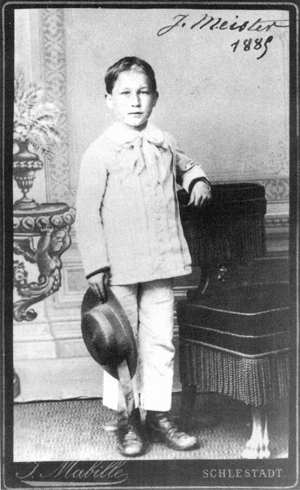
  94. Photograph of Joseph Meister in 1885

    Story 77 of 146 · 19th century

    Infection and immunity

    Pasteur's rabies vaccine

    Louis Pasteur gave his experimental rabies vaccine to nine-year-old Joseph Meister, who had been bitten by a rabid dog. The boy survived.

    Next story1888 · The nervous system is made of cells
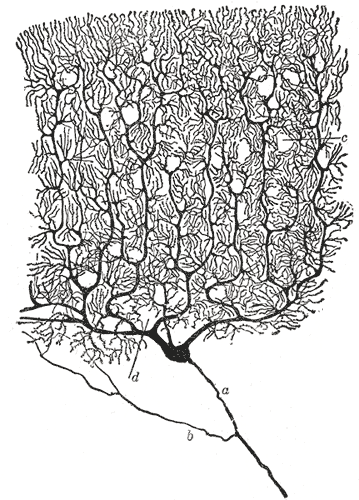
  95. Cajal's drawing of a Purkinje nerve cell from a cat's cerebellum, branching like a tree

    Story 78 of 146 · 19th century

    Anatomy and physiology

    The nervous system is made of cells

    Using a stain invented by Camillo Golgi, Santiago Ramón y Cajal drew the nervous system as separate cells that pass signals across tiny gaps, not a continuous net. The two shared the 1906 Nobel Prize, though Golgi disagreed.

    Next story1890 · Antitoxin treats diphtheria
  96. Emil Behring (1854-1917) 1896 in Neapel

    Story 79 of 146 · 19th century

    Infection and immunity

    Antitoxin treats diphtheria

    Emil von Behring and Kitasato Shibasaburō found that blood serum from an animal that had survived tetanus or diphtheria protected other animals. From 1891 it was used to treat children with diphtheria, the first antibody therapy.

    Next story1892 · Haffkine's cholera vaccine
  97. Waldemar Mordecai Wolffe Haffkine

    Story 80 of 146 · 19th century

    Infection and immunity

    Haffkine's cholera vaccine

    Waldemar Haffkine, a Ukrainian-born bacteriologist, tested the first cholera vaccine on himself in 1892. Working in India, he went on to make a plague vaccine in Bombay in 1897.

    Next story1894 · The plague bacillus found in Hong Kong
  98. Portrait of Alexandre Yersin, who found the plague bacterium

    Story 81 of 146 · 19th century

    Infection and immunity

    The plague bacillus found in Hong Kong

    During an outbreak in Hong Kong, the Swiss-French physician Alexandre Yersin found the bacterium of plague in swollen lymph glands of the dead. It was later named Yersinia pestis. Within a few years, fleas on rats were shown to carry it.

    Next story1895 · X-rays see inside the body
  99. X-rays see inside the body

    Story 82 of 146 · 19th century

    Diagnosis and imaging

    X-rays see inside the body

    Wilhelm Röntgen noticed a screen glowing near a covered cathode-ray tube and found invisible rays that pass through flesh but not bone. Within weeks, hospitals were using them.

    Next story1896 · Measuring blood pressure
  100. An electronic upper-arm blood pressure monitor with its cuff, showing 138 over 73

    Story 83 of 146 · 19th century

    Diagnosis and imaging

    Measuring blood pressure

    Scipione Riva-Rocci designed an inflatable cuff that measures blood pressure on the upper arm. In 1905 the Russian surgeon Nikolai Korotkov added listening for sounds in the artery, the method still used today.

    Next story1897 · Aspirin
  101. Crystals of acetyl salicylic acid (Aspirin) on a on ruled notebook page

    Story 84 of 146 · 19th century

    Medicines

    Aspirin

    Felix Hoffmann, a chemist at Bayer, made a stable form of acetylsalicylic acid, a relative of salicylic acid from willow bark. Bayer sold it as Aspirin from 1899.

    Next story1897 · Chickens, rice and the missing nutrient
  102. Portrait of Christiaan Eijkman, the Dutch physician who traced beriberi to diet

    Story 85 of 146 · 19th century

    Anatomy and physiology

    Chickens, rice and the missing nutrient

    In Java, Christiaan Eijkman saw that chickens fed polished white rice developed beriberi, and recovered on whole rice. The cause turned out to be a missing nutrient, later named vitamin B1.

    Next story1897 · Mosquitoes carry malaria
  103. Ronald Ross, winner of Nobel Prize in Medicine

    Story 86 of 146 · 19th century

    Infection and immunity

    Mosquitoes carry malaria

    In Secunderabad, India, Ronald Ross found malaria parasites in the stomach of a mosquito that had fed on a patient. Alphonse Laveran had seen the parasite in human blood in 1880.

    Next story1901 · Blood groups discovered
  104. Chapter V

    20th century

    47 stories in this chapter

  105. Portrait of Karl Landsteiner

    Story 87 of 146 · 20th century

    Diagnosis and imaging

    Blood groups discovered

    Karl Landsteiner found that mixing blood from different people sometimes made it clump, and sorted blood into the groups now called A, B and O. The rarer AB group was found the following year.

    Next story1903 · The electrocardiogram
  106. A normal 12 channel ECG

    Story 88 of 146 · 20th century

    Diagnosis and imaging

    The electrocardiogram

    Willem Einthoven built a sensitive string galvanometer that recorded the heart's electrical activity as a wavy trace: the electrocardiogram, or ECG.

    Next story1909 · Salvarsan, the first designed drug
  107. Paul Ehrlich and Sahachirō Hata, who found the first effective drug against syphilis

    Story 89 of 146 · 20th century

    Medicines

    Salvarsan, the first designed drug

    After testing hundreds of arsenic compounds, Paul Ehrlich and the Japanese bacteriologist Sahachirō Hata found that the 606th cleared syphilis in rabbits. Sold as Salvarsan from 1910, it was called a 'magic bullet'.

    Next story1909 · One scientist finds a disease, its parasite and its carrier
  108. Carlos Chagas in his laboratory at the Oswaldo Cruz Institute

    Story 90 of 146 · 20th century

    Infection and immunity

    One scientist finds a disease, its parasite and its carrier

    In rural Minas Gerais, Brazil, Carlos Chagas found a parasite in a blood-sucking bug, then in a two-year-old girl called Berenice. He described the germ, the insect that carries it and the illness, now known as Chagas disease.

    Next story1917 · Plastic surgery rebuilds faces
  109. Sir Harold Delf Gillies, a famous plastic surgeon

    Story 91 of 146 · 20th century

    Surgery

    Plastic surgery rebuilds faces

    Faced with soldiers whose faces were torn by shell fragments in the First World War, Harold Gillies opened a hospital at Sidcup, England, to rebuild them with flaps of skin and bone. He worked with artists and dentists.

    Next story1921 · The BCG vaccine against tuberculosis
  110. microscopic image of the bacille Calmette-Guérin (BCG, Japan strain)

    Story 92 of 146 · 20th century

    Infection and immunityUnverified

    The BCG vaccine against tuberculosis

    Albert Calmette and Camille Guérin at the Pasteur Institute weakened a cattle tuberculosis bacterium over years of culture. Their live vaccine was first given to a person in 1921.

    Next story1922 · Insulin treats diabetes
  111. Insulin treats diabetes

    Story 93 of 146 · 20th century

    Medicines

    Insulin treats diabetes

    In Toronto, insulin extracted by Frederick Banting and Charles Best was given to 14-year-old Leonard Thompson, the first person with diabetes treated with it. James Collip purified the extract.

    Next story1924 · Recording the brain's electrical waves
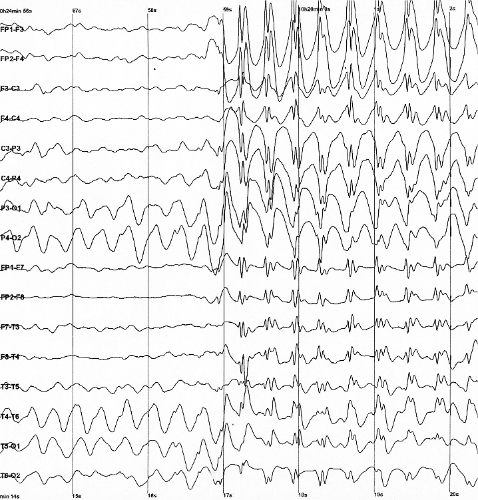
  112. An EEG recording with spike-and-wave activity across many channels

    Story 94 of 146 · 20th century

    Diagnosis and imaging

    Recording the brain's electrical waves

    In Jena, the psychiatrist Hans Berger recorded faint electrical waves through the skull of a patient. He called the trace an electroencephalogram and spent years proving it came from the brain.

    Next story1928 · The Pap smear
  113. Microscope image of normal cervical cells stained for a Pap test

    Story 95 of 146 · 20th century

    Diagnosis and imaging

    The Pap smear

    George Papanicolaou, a Greek-born scientist in New York, showed that cells scraped from the cervix could reveal cancer before any symptoms. A 1943 book with Herbert Traut turned the test into routine screening.

    Next story1928 · Penicillin discovered
  114. Penicillin discovered

    Story 96 of 146 · 20th century

    Medicines

    Penicillin discovered

    Alexander Fleming noticed that a mould growing on one of his bacteria plates had killed the colonies around it. Howard Florey and Ernst Chain turned it into a usable medicine in the early 1940s.

    Next story1929 · Forssmann threads a tube into his own heart
  115. Werner Theodor Otto Forßmann, Nobel Prize in Physiology or Medicine 1956

    Story 97 of 146 · 20th century

    Diagnosis and imaging

    Forssmann threads a tube into his own heart

    Werner Forssmann, a young German doctor, slid a thin tube through a vein in his arm and into his own heart, then walked to the X-ray room to prove it. The stunt began cardiac catheterisation.

    Next story1932 · Sulfa drugs, the first antibiotics
  116. A box of Prontosil ampoules from Germany in the late 1930s

    Story 98 of 146 · 20th century

    Medicines

    Sulfa drugs, the first antibiotics

    In 1932 Gerhard Domagk found that a red dye, Prontosil, cured mice of streptococcal infection; he published it in 1935. French researchers then showed the active part was sulfanilamide, and a family of cheap sulfa drugs followed.

    Next story1937 · The 17D yellow fever vaccine
  117. Officials at the opening of a yellow fever vaccine production line in Brazil

    Story 99 of 146 · 20th century

    Infection and immunity

    The 17D yellow fever vaccine

    At the Rockefeller Foundation, the South African virologist Max Theiler and colleagues found that a chance mutation had made a mild, highly protective strain of yellow fever virus, named 17D. After trials in Brazil, over a million people were vaccinated by 1939.

    Next story1940 · Plasma and the first blood banks
  118. Portrait of Charles Drew

    Story 100 of 146 · 20th century

    Surgery

    Plasma and the first blood banks

    Charles Drew, a Black American surgeon, showed that plasma separated from blood cells could be stored and shipped. In 1940 he ran the Blood for Britain programme and then led the first American Red Cross blood bank.

    Next story1943 · Streptomycin, the first drug for TB
  119. Colonies of Streptomyces griseus, the soil bacterium that gives streptomycin, growing on agar

    Story 101 of 146 · 20th century

    Medicines

    Streptomycin, the first drug for TB

    In Selman Waksman's lab at Rutgers, graduate student Albert Schatz isolated streptomycin from soil bacteria in 1943. It was the first effective drug against tuberculosis.

    Next story1947 · Consent for research on people
  120. The court and defendants at the Doctors' Trial in Nuremberg, 1946 to 1947

    Story 102 of 146 · 20th century

    Public health and research

    Consent for research on people

    After doctors in Nazi camps carried out deadly experiments on prisoners, the judges at the Nuremberg Doctors' Trial set out ten rules for research on people. The first says a person's voluntary consent is essential.

    Next story1948 · The first randomised trial
  121. Portrait of Sir Austin Bradford Hill

    Story 103 of 146 · 20th century

    Public health and research

    The first randomised trial

    Austin Bradford Hill designed a British test of streptomycin for tuberculosis in which patients were allocated by chance, using sealed envelopes, so doctors could not pick who got the drug. Its 1948 report set the model for clinical trials.

    Next story1949 · Lithium calms mania
  122. A space-filling model of the crystal structure of lithium carbonate

    Story 104 of 146 · 20th century

    MedicinesUnverified

    Lithium calms mania

    In Melbourne, the psychiatrist John Cade found that lithium salts calmed guinea pigs, tested them on himself, then gave them to patients with mania. He reported the results in 1949 in the Medical Journal of Australia.

    Next story1950 · Smoking linked to lung cancer
  123. Sir Richard Doll in 2002

    Story 105 of 146 · 20th century

    Public health and research

    Smoking linked to lung cancer

    Richard Doll and Austin Bradford Hill compared hospital patients with and without lung cancer and found that the sick were far more likely to be smokers. A long follow-up of British doctors confirmed it in 1954.

    Next story1952 · The first antipsychotic
  124. A box of Hibernal, a brand of chlorpromazine, with two ampoules beside it

    Story 106 of 146 · 20th century

    Medicines

    The first antipsychotic

    Surgeon Henri Laborit noticed that chlorpromazine calmed patients before operations. In Paris in 1952, the psychiatrists Jean Delay and Pierre Deniker gave it to people with psychosis and saw a striking improvement.

    Next story1953 · The heart-lung machine
  125. Portrait of John H. Gibbon Jr., who built the first heart-lung machine

    Story 107 of 146 · 20th century

    Surgery

    The heart-lung machine

    John Gibbon and his wife Mary spent twenty years building a machine to take over the work of the heart and lungs. On 6 May 1953 it kept an 18-year-old woman alive while he closed a hole in her heart.

    Next story1954 · The first successful organ transplant
  126. Kidney location after transplantation

    Story 108 of 146 · 20th century

    Surgery

    The first successful organ transplant

    Joseph Murray's team in Boston moved a kidney from Ronald Herrick into his identical twin Richard, whose own kidneys were failing. Because the twins matched, Richard's body did not reject it.

    Next story1955 · The polio vaccine
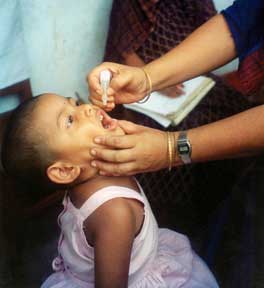
  127. Child receiving polio vaccine

    Story 109 of 146 · 20th century

    Infection and immunity

    The polio vaccine

    Results of a trial involving more than a million children showed that Jonas Salk's injected polio vaccine was safe and effective. Albert Sabin's oral vaccine followed in the early 1960s.

    Next story1958 · Ultrasound lets doctors see a baby
  128. An ultrasound monitor showing the profile of an unborn baby at 20 weeks

    Story 110 of 146 · 20th century

    Diagnosis and imaging

    Ultrasound lets doctors see a baby

    Obstetrician Ian Donald in Glasgow borrowed an industrial flaw detector, bounced sound waves off a patient's abdomen and saw a tumour. He soon used it to show babies growing in the womb.

    Next story1958 · The first implanted pacemaker
  129. An implantable pacemaker next to a ruler, about five centimetres across

    Story 111 of 146 · 20th century

    Surgery

    The first implanted pacemaker

    In Stockholm, surgeon Åke Senning implanted a device built by engineer Rune Elmqvist into Arne Larsson, whose heart kept stopping. The first unit failed within hours, but Larsson lived to 86 and used 26 pacemakers in his life.

    Next story1960 · The contraceptive pill
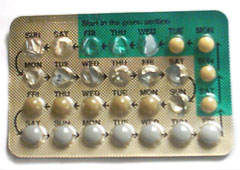
  130. Photograph of a half-used blister pack of Levlen®ED oral contraceptive pill

    Story 112 of 146 · 20th century

    Medicines

    The contraceptive pill

    The first oral contraceptive pill, developed from work by Gregory Pincus, John Rock and others, was approved in the United States. Within a few years, millions of women were taking it.

    Next story1961 · Thalidomide and the rules for new drugs
  131. A bottle of Kevadon, a brand of thalidomide, from 1960

    Story 113 of 146 · 20th century

    Medicines

    Thalidomide and the rules for new drugs

    A sedative sold in the late 1950s to pregnant women caused thousands of babies to be born with limb differences. After Widukind Lenz and William McBride linked the two in 1961, it was withdrawn.

    Next story1967 · Coronary bypass surgery
  132. Dr René Favaloro

    Story 114 of 146 · 20th century

    Surgery

    Coronary bypass surgery

    At the Cleveland Clinic, the Argentine surgeon René Favaloro began using a vein from the patient's leg to carry blood around a blocked heart artery. His method made coronary bypass a routine operation.

    Next story1967 · The first heart transplant
  133. Photograph of Christiaan Barnard

    Story 115 of 146 · 20th century

    Surgery

    The first heart transplant

    In Cape Town, Christiaan Barnard's team transplanted the heart of a young woman killed in a road accident into Louis Washkansky. He lived for 18 days.

    Next story1968 · A salt and sugar drink beats cholera
  134. A cholera patient drinking oral rehydration solution with help from nurses

    Story 116 of 146 · 20th century

    Public health and research

    A salt and sugar drink beats cholera

    Researchers in Dhaka and Calcutta showed that glucose helps the gut absorb salt and water even during cholera. A cheap drink of sugar, salt and water saved patients, and was used in refugee camps in 1971.

    Next story1971 · The CT scanner
  135. Modern CT scanner located at the Lochotín University Hospital in Pilsen, Czech Republic

    Story 117 of 146 · 20th century

    Diagnosis and imaging

    The CT scanner

    Godfrey Hounsfield's scanner took X-rays from many angles and used a computer to build a picture of a slice through the body. Its first patient, in London, had a brain tumour.

    Next story1972 · Artemisinin from sweet wormwood
  136. Sweet wormwood (Artemisia annua), the plant artemisinin comes from

    Story 118 of 146 · 20th century

    Medicines

    Artemisinin from sweet wormwood

    Tu Youyou led a Chinese team that searched old medical texts for malaria cures. A fourth-century recipe pointed her to sweet wormwood, and by 1972 her group had isolated artemisinin, which cured patients when other drugs were failing.

    Next story1972 · The pulse oximeter
  137. A wrist-worn pulse oximeter with a probe clipped to a finger

    Story 119 of 146 · 20th century

    Diagnosis and imaging

    The pulse oximeter

    Takuo Aoyagi, a Japanese engineer, realised that the pulsing of blood in a finger could be used to read oxygen levels. The oximeter, which clips on a fingertip, gives a result in seconds with no needle.

    Next story1973 · Magnetic resonance imaging
  138. Hybridní přístroj pro diagnostiku PET/MR o síle magnetického pole 3 Tesla

    Story 120 of 146 · 20th century

    Diagnosis and imaging

    Magnetic resonance imaging

    Paul Lauterbur showed how to turn magnetic resonance signals into images, and Peter Mansfield made scanning fast enough for patients. The first scans of human bodies followed in the late 1970s.

    Next story1973 · Statins lower cholesterol
  139. Portrait of Akira Endō, the Japanese biochemist who discovered the first statin

    Story 121 of 146 · 20th century

    Medicines

    Statins lower cholesterol

    Akira Endo, a Japanese biochemist, screened thousands of moulds for a chemical that blocks the body's cholesterol production. In 1973 he found compactin in a blue-green mould. Its descendants, the statins, were on sale from 1987.

    Next story1975 · Lab-made antibodies
  140. Diagram of how hybridoma cells are made and used to produce monoclonal antibodies

    Story 122 of 146 · 20th century

    Infection and immunity

    Lab-made antibodies

    In Cambridge, César Milstein, from Argentina, and Georges Köhler fused an antibody-making white blood cell with a long-lived tumour cell. The hybrid made unlimited copies of one precise antibody.

    Next story1978 · The first IVF baby
  141. The process of IVF explained step by step - English

    Story 123 of 146 · 20th century

    Public health and research

    The first IVF baby

    Louise Brown, the first baby conceived by in vitro fertilisation, was born in Oldham, England. Robert Edwards and Patrick Steptoe had fertilised the egg in a laboratory dish.

    Next story1978 · The bionic ear
  142. A person wearing a cochlear implant sound processor behind the ear

    Story 124 of 146 · 20th century

    Surgery

    The bionic ear

    A team led by Graeme Clark in Melbourne made a multi-channel cochlear implant. In 1978 it let Rod Saunders, an adult who had lost his hearing, make out speech sounds through electrodes placed in his inner ear.

    Next story1978 · Health for All at Alma-Ata
  143. Story 125 of 146 · 20th century

    Public health and research

    Health for All at Alma-Ata

    Meeting in Alma-Ata, then in the Soviet Union and now Almaty in Kazakhstan, a WHO and UNICEF conference declared health a human right and called on every government to build primary health care, with the goal of 'Health for All'.

    Next story1980 · Smallpox wiped out
  144. Poster urging vaccination against smallpox

    Story 126 of 146 · 20th century

    Public health and research

    Smallpox wiped out

    After a worldwide vaccination campaign, the World Health Assembly declared smallpox eradicated. The last natural case had been in Somalia in 1977.

    Next story1981 · A vaccine that prevents a cancer
  145. SOUTH CHINA SEA (Apr

    Story 127 of 146 · 20th century

    Infection and immunityUnverified

    A vaccine that prevents a cancer

    Baruch Blumberg found a hepatitis B protein in an Aboriginal Australian's blood in 1963. Maurice Hilleman's team at Merck turned purified virus proteins into a vaccine, approved in the United States in 1981; a version made by yeast followed in 1986.

    Next story1982 · A bacterium causes stomach ulcers
  146. Electron micrograph of H

    Story 128 of 146 · 20th century

    Infection and immunityUnverified

    A bacterium causes stomach ulcers

    In Perth, Robin Warren and Barry Marshall grew a spiral bacterium from ulcer patients after leaving their dishes in the incubator over Easter. Most doctors thought no germ could live in stomach acid, until Marshall drank a culture and fell ill.

    Next story1983 · Ciclosporin makes transplants last
  147. A box of ciclosporin capsules with its blister pack

    Story 129 of 146 · 20th century

    Medicines

    Ciclosporin makes transplants last

    Ciclosporin, found in a Norwegian soil fungus by researchers at Sandoz in Basel, held back the body's attack on a donated organ far better than earlier drugs. It was approved in 1983.

    Next story1983 · The virus that causes AIDS
  148. Scanning electron micrograph of HIV-1 budding (in green) from cultured lymphocyte

    Story 130 of 146 · 20th century

    Infection and immunity

    The virus that causes AIDS

    Françoise Barré-Sinoussi and Luc Montagnier at the Pasteur Institute identified the virus that causes AIDS, later named HIV. A blood test followed in 1985.

    Next story1983 · PCR copies DNA
  149. Thermal cycler used to amplify segments of DNA via the polymerase chain reaction (PCR)

    Story 131 of 146 · 20th century

    Diagnosis and imaging

    PCR copies DNA

    Kary Mullis thought up a way to copy a tiny stretch of DNA millions of times by repeated heating and cooling. The method, polymerase chain reaction, became the basis of tests for infections, inherited diseases and crime scenes.

    Next story1985 · Keyhole surgery
  150. A modern operating theatre equipped for keyhole surgery

    Story 132 of 146 · 20th century

    Surgery

    Keyhole surgery

    In Böblingen, Germany, Erich Mühe removed a patient's gall bladder through small cuts with a camera and long instruments. At first many surgeons were sceptical, but keyhole surgery spread worldwide in the early 1990s.

    Next story1996 · Combination drugs hold HIV back
  151. A variety of tablets and capsules used in combination to treat HIV

    Story 133 of 146 · 20th century

    Infection and immunity

    Combination drugs hold HIV back

    At the 1996 Vancouver AIDS conference, trials showed that three drugs taken together could push HIV down to levels too low to detect. AIDS deaths in rich countries fell steeply within two years.

    Next story2001 · Cheap HIV drugs for Africa
  152. Chapter VI

    21st century

    13 stories in this chapter

  153. A single pink tablet combining several HIV drugs, taken once a day

    Story 134 of 146 · 21st century

    Public health and research

    Cheap HIV drugs for Africa

    In 2001 the Indian drug company Cipla offered a three-drug HIV combination at about $350 per patient a year, a small fraction of Western prices. Price cuts followed, and treatment reached millions in Africa.

    Next story2001 · Imatinib, a targeted cancer drug
  154. Two 400 mg tablets of Gleevec (imatinib), front and back

    Story 135 of 146 · 21st century

    Medicines

    Imatinib, a targeted cancer drug

    Imatinib blocks the rogue protein that drives chronic myeloid leukaemia. In Brian Druker's trials almost every patient went into remission, and it was approved in 2001.

    Next story2003 · The human genome read
  155. Illustration of the DNA double helix

    Story 136 of 146 · 21st century

    Public health and research

    The human genome read

    An international project finished reading nearly all of the three billion DNA letters in the human genome, two years ahead of schedule. A first draft had been announced in 2000.

    Next story2005 · Making mRNA safe to inject
  156. Katalin Karikó at a reception for the Nobel laureates in Stockholm, 2023

    Story 137 of 146 · 21st century

    Infection and immunity

    Making mRNA safe to inject

    Katalin Karikó and Drew Weissman found that swapping one building block in lab-made messenger RNA stopped the body reacting violently to it, so cells could use it to make a protein. They shared the 2023 Nobel Prize.

    Next story2006 · Skin cells turned back into stem cells
  157. Microscope image of a colony of human induced pluripotent stem cells

    Story 138 of 146 · 21st century

    Public health and research

    Skin cells turned back into stem cells

    In Kyoto, Shinya Yamanaka found that adding four genes could make ordinary mouse skin cells behave like embryonic stem cells. In 2007 the same worked with human cells.

    Next story2006 · A vaccine against cervical cancer
  158. A prefilled syringe of Gardasil HPV vaccine from Japan

    Story 139 of 146 · 21st century

    Infection and immunity

    A vaccine against cervical cancer

    Ian Frazer and Jian Zhou in Brisbane made harmless particles shaped like the human papillomavirus. A vaccine built on them was approved in 2006 and protects against the strains that cause most cervical cancer.

    Next story2011 · Releasing the immune system's brakes on cancer
  159. James P. Allison, who shared the 2018 Nobel Prize for cancer immunotherapy

    Story 140 of 146 · 21st century

    Medicines

    Releasing the immune system's brakes on cancer

    James Allison in the United States and Tasuku Honjo in Kyoto found that tumours use 'checkpoints' to switch off immune cells. Drugs that release these brakes, starting with ipilimumab in 2011, clear advanced cancers in some patients.

    Next story2015 · An Ebola vaccine tested by rings of contacts
  160. Electron microscope image of thread-like Ebola virus particles

    Story 141 of 146 · 21st century

    Infection and immunity Unverified

    An Ebola vaccine tested by rings of contacts

    During the West African epidemic, a trial in Guinea vaccinated rings of contacts around each new case with rVSV-ZEBOV, a vaccine first made at Canada's National Microbiology Laboratory. It proved highly protective and was approved in Europe and the United States in 2019.

    Next story2018 · A computer diagnoses without a doctor
  161. Photograph of the back of a healthy right eye, showing the retina, optic disc and blood vessels

    Story 142 of 146 · 21st century

    Diagnosis and imaging

    A computer diagnoses without a doctor

    In 2018 the US regulator approved IDx-DR, a program that examines photographs of the back of the eye and decides, with no doctor involved, whether a diabetic needs referral. It was the first autonomous AI diagnostic system approved.

    Next story2020 · COVID-19 vaccines
  162. First day of vaccination against Covid-19 in Spain

    Story 143 of 146 · 21st century

    Infection and immunity

    COVID-19 vaccines

    Less than a year after the virus was identified, COVID-19 vaccination began, starting with 90-year-old Margaret Keenan in Coventry, England. The first vaccines used mRNA, building on work by Katalin Karikó and Drew Weissman.

    Next story2021 · The first malaria vaccines
  163. A sign reading 'Bring your child for malaria vaccination'

    Story 144 of 146 · 21st century

    Infection and immunity

    The first malaria vaccines

    After about 30 years of trials, WHO recommended the RTS,S vaccine for children in parts of Africa where malaria is common. A second vaccine, R21, followed in 2023. They are the first vaccines against a human parasite.

    Next story2023 · The first CRISPR medicine
  164. Emmanuelle Charpentier and Jennifer Doudna, who developed CRISPR gene editing

    Story 145 of 146 · 21st century

    Public health and research

    The first CRISPR medicine

    The UK approved Casgevy, a treatment that edits a patient's own blood stem cells with CRISPR to treat sickle cell disease and beta-thalassaemia. It followed the gene-editing work of Emmanuelle Charpentier and Jennifer Doudna.

    Next story2025 · HIV prevention twice a year
  165. Chemical structure diagram of the lenacapavir molecule

    Story 146 of 146 · 21st century

    Medicines

    HIV prevention twice a year

    In June 2025 US regulators approved lenacapavir for preventing HIV: one injection every six months instead of a daily pill. Europe and Canada followed the same year.

    NextJourney's end

Journey complete

You travelled 7,024 years

146 stories, c. 5000 BC to 2025. More breakthroughs are being researched and added.

Choose another journeyBack to the start