All journeys

Pandemics and plagues

From a plague among the Hittites over three thousand years ago to the Ebola epidemic of today: the outbreaks that changed history, told with care, and how people learned to understand and fight them.

Stories
127
Distance
3,375 years
Route
c. 1350 BC to present
  1. The ancient world4 stories
  2. The Middle Ages6 stories
  3. The early modern world25 stories
  4. The nineteenth century24 stories
  5. The modern world68 stories
Begin the journey
  1. Chapter I

    The ancient world

    4 stories in this chapter

  2. A clay tablet with Mursili II's prayers to the gods to end the plague, from Hattusa

    Story 1 of 127 · The ancient world

    Other and unknown

    The Hittite plague

    A plague spread through the Hittite Empire in the 14th century BC and killed King Suppiluliuma I and soon afterwards his heir. His son Mursili II wrote prayers to the gods asking why they had sent it, and the texts survive.

    Next story430 BC · The Plague of Athens
  3. About 920 years later

    c. 1350 BC to 430 BC

  4. A seventeenth-century painting of plague in an ancient city

    Story 2 of 127 · The ancient world

    Other and unknown

    The Plague of Athens

    An epidemic struck Athens, crowded with refugees, in the second year of its war with Sparta. Thucydides, who caught it and survived, described it in detail. Pericles was among the dead.

    Next story165 · The Antonine Plague
  5. About 590 years later

    430 BC to 165

  6. A nineteenth-century engraving of the angel of death striking a door during a plague in Rome

    Story 3 of 127 · The ancient world

    Smallpox and measles

    The Antonine Plague

    Returning from war in the east, Roman soldiers brought a disease, probably smallpox, that spread across the empire. The physician Galen described its rash and fever.

    Next story249 · The Plague of Cyprian
  7. A Byzantine mosaic of Saint Cyprian of Carthage in Ravenna

    Story 4 of 127 · The ancient world

    Other and unknown

    The Plague of Cyprian

    A deadly epidemic swept the Roman Empire during a time of civil war and invasions. It is named after Cyprian, bishop of Carthage, who wrote about it.

    Next story541 · The Plague of Justinian
  8. About 290 years later

    249 to 541

  9. Chapter II

    The Middle Ages

    6 stories in this chapter

  10. The Barberini ivory, showing the emperor Justinian on horseback

    Story 5 of 127 · The Middle Ages

    Plague

    The Plague of Justinian

    Bubonic plague reached Constantinople from Egypt in 542 and spread around the Mediterranean, returning in waves for two centuries.

    Next story638 · The Plague of Amwas
  11. The ruins of a Byzantine basilica at Emmaus Nicopolis, the site of Amwas

    Story 6 of 127 · The Middle Ages

    Plague

    The Plague of Amwas

    A plague hit Syria and Palestine as the Muslim conquest of the region was ending, named for the army camp at Amwas, or Emmaus. It killed up to 25,000 soldiers and relatives, among them most of the commanders, and many local Christians died or fled.

    Next story735 · Smallpox sweeps Japan
  12. The Great Buddha of Tōdai-ji in Nara, begun after the smallpox epidemic

    Story 7 of 127 · The Middle Ages

    Smallpox and measles

    Smallpox sweeps Japan

    Smallpox, probably brought from Korea, spread through Japan and killed about a third of the population, around a million people, including senior courtiers. Emperor Shōmu answered with prayers and Buddhist temples, and later ordered the Great Buddha of Nara.

    Next story1346 · The Black Death
  13. About 610 years later

    735 to 1346

  14. A medieval miniature of townspeople burying plague victims in Tournai

    Story 8 of 127 · The Middle Ages

    Plague

    The Black Death

    Plague spread from the Black Sea along trade routes to Europe, the Middle East and North Africa, killing an estimated 30 to 60 per cent of Europe's people.

    Next story1485 · The sweating sickness
  15. The title page of a 1529 German pamphlet on the English sweating sickness

    Story 9 of 127 · The Middle Ages

    Other and unknown

    The sweating sickness

    A mysterious illness that could kill within hours struck England in five outbreaks, often among the well-off, then vanished.

    Next story1495 · The Great Pox arrives in Europe
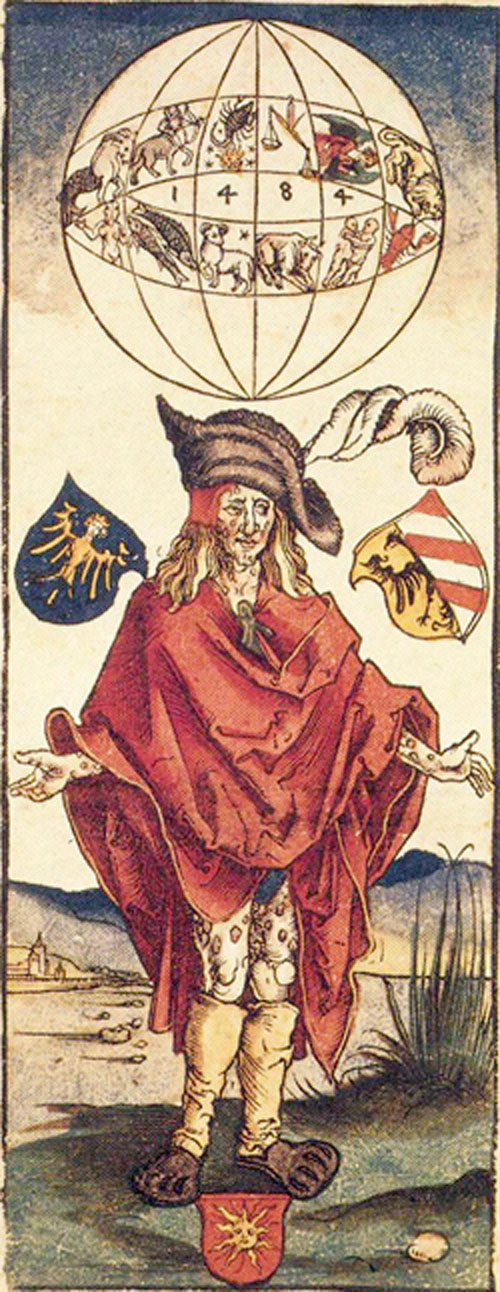
  16. A woodcut of 1496, attributed to Albrecht Dürer, of a man with syphilis

    Story 10 of 127 · The Middle Ages

    Other and unknown

    The Great Pox arrives in Europe

    A new, disfiguring sexual disease broke out among the French army occupying Naples in 1494–95 and spread across Europe with returning soldiers. Italians called it the French disease, and the French called it the Neapolitan disease.

    Next story1518 · Smallpox in the Americas
  17. Chapter III

    The early modern world

    25 stories in this chapter

  18. A sixteenth-century Aztec drawing from the Florentine Codex of people sick with smallpox

    Story 11 of 127 · The early modern world

    Smallpox and measles

    Smallpox in the Americas

    Europeans brought smallpox and other diseases to peoples with no immunity. Smallpox struck Tenochtitlan in 1520 during the Spanish conquest, and swept through the Inca Empire.

    Next story1518 · The dancing plague of 1518
  19. A 16th-century drawing after Pieter Bruegel of pilgrims in the grip of dancing mania

    Story 12 of 127 · The early modern world

    Other and unknown

    The dancing plague of 1518

    In July 1518 a woman began dancing in a street in Strasbourg and did not stop. Within weeks between 50 and 400 people had joined in, dancing for days. Officials, thinking it a natural illness, had musicians and a stage set up to help them dance it out.

    Next story1545 · The cocoliztli epidemics
  20. A sixteenth-century Aztec drawing from the Florentine Codex of people sick in an epidemic

    Story 13 of 127 · The early modern world

    Other and unknown

    The cocoliztli epidemics

    A haemorrhagic fever the Nahua called cocoliztli killed millions in New Spain, mostly Indigenous people.

    Next story1557 · The influenza pandemic of 1557
  21. A 1550 world map by Sebastian Münster, from the years of the 1557 flu

    Story 14 of 127 · The early modern world

    Influenza and coronaviruses

    The influenza pandemic of 1557

    A new flu strain emerged in Asia in 1557 and spread to Africa, Europe and the Americas, with high burial rates and miscarriages. Governments invited physicians to organise their epidemic responses, possibly for the first time.

    Next story1580 · The influenza pandemic of 1580
  22. Map of the Silk Road land and sea routes along which the 1580 flu spread

    Story 15 of 127 · The early modern world

    Influenza and coronaviruses

    The influenza pandemic of 1580

    A severe flu pandemic spread from Asia along the Silk Road in 1580 and crossed Europe in about six weeks, infecting nearly everyone. Thousands died. Some physicians began to see these epidemic catarrhs as caused by a contagious agent, not the stars.

    Next story1616 · The New England epidemics
  23. Squanto, the last of the Patuxet, teaching the Plymouth colonists to plant corn

    Story 16 of 127 · The early modern world

    Other and unknown

    The New England epidemics

    Epidemics of unknown cause swept the New England coast from about 1616 and killed most of the Indigenous people in many villages, in some places nearly all. The Patuxet village on Plymouth Bay was emptied.

    Next story1629 · The Italian plague
  24. An etching of Milan's Piazza San Babila during the plague of 1630

    Story 17 of 127 · The early modern world

    Plague

    The Italian plague

    Plague carried by armies in the War of the Mantuan Succession killed about a third of the people of Milan, Venice and other northern Italian cities.

    Next story1633 · The great plague of the late Ming
  25. Painted portrait of the Chongzhen Emperor, the last Ming emperor

    Story 18 of 127 · The early modern world

    Plague

    The great plague of the late Ming

    An epidemic began in Shanxi in 1633 and spread across north China, reaching Beijing in 1641. In 1643 it killed more than 200,000 people in the capital. Chinese records of a pimple plague and a blood-vomiting plague suggest bubonic and pneumonic plague.

    Next story1647 · The Great Plague of Seville
  26. An anonymous Baroque painting of Seville during the plague of 1649

    Story 19 of 127 · The early modern world

    Plague

    The Great Plague of Seville

    Plague arrived in Spain's southern ports in 1647 and spread across the country. In Seville, the richest city in Spain and its gateway to the Americas, it killed up to a quarter of the population in 1649.

    Next story1656 · The Naples plague
  27. Micco Spadaro's painting of the Largo Mercatello in Naples during the plague of 1656

    Story 20 of 127 · The early modern world

    Plague

    The Naples plague

    Plague reached Naples in 1656 and killed more than half its people in a matter of months, some 150,000 to 200,000. Estimates for the whole Kingdom of Naples run far higher, up to 1.25 million deaths.

    Next story1665 · The Great Plague of London
  28. A coloured print of plague victims being carried to a cart in London, 1665

    Story 21 of 127 · The early modern world

    Plague

    The Great Plague of London

    Plague killed about 100,000 people in London, around a quarter of its population. Samuel Pepys and Daniel Defoe left vivid accounts.

    Next story1679 · The Great Plague of Vienna
  29. The Baroque Plague Column on the Graben in Vienna

    Story 22 of 127 · The early modern world

    Plague

    The Great Plague of Vienna

    Plague spread through Vienna's crowded streets in the summer of 1679, driving the imperial court to flee. It is estimated to have killed 76,000 residents and kept returning into the early 1680s.

    Next story1707 · Stórabóla, the Great Smallpox of Iceland
  30. Turf houses at Glaumbær, a preserved Icelandic farm of the kind most people lived on in the 1700s

    Story 23 of 127 · The early modern world

    Smallpox and measles

    Stórabóla, the Great Smallpox of Iceland

    Smallpox spread across Iceland in 1707–08 and killed between 12,000 and 18,000 people, close to a quarter of the island's population. It was one of the deadliest epidemics in Icelandic history.

    Next story1708 · Plague follows the Great Northern War
  31. An engraving of the great plague in Danzig in 1709

    Story 24 of 127 · The early modern world

    Plague

    Plague follows the Great Northern War

    Plague followed the armies of the Great Northern War through Poland and Prussia and around the Baltic, reaching Hamburg by 1712. Soldiers and refugees carried it along army and trade routes, and towns and villages were emptied.

    Next story1720 · The plague of Marseille
  32. Michel Serre's painting of the Cours Belsunce in Marseille during the plague of 1720

    Story 25 of 127 · The early modern world

    Plague

    The plague of Marseille

    A merchant ship brought plague to Marseille, where it killed about half the city's people; a wall was built across Provence to hold it back.

    Next story1721 · Smallpox in Boston, 1721
  33. An 18th-century engraving of Boston seen from the south-east

    Story 26 of 127 · The early modern world

    Smallpox and measles

    Smallpox in Boston, 1721

    Smallpox infected 5,759 of Boston's 10,600 people and killed 844 between April 1721 and February 1722. The minister Cotton Mather and the physician Zabdiel Boylston inoculated hundreds against fierce opposition, and far fewer of those inoculated died.

    Next story1738 · The Great Plague of 1738
  34. The monument to St Mary and St John of Nepomuk in Timișoara, raised in memory of plague victims

    Story 27 of 127 · The early modern world

    Plague

    The Great Plague of 1738

    The imperial army carried plague into the Banat in 1738, and it spread across Habsburg lands in what are now Romania, Hungary, Serbia and neighbouring countries. Over several years it killed about a sixth of the people of Timișoara.

    Next story1738 · Smallpox among the Cherokee and Catawba
  35. Cherokee delegates to England in 1730, among them Attakullakulla

    Story 28 of 127 · The early modern world

    Smallpox and measles

    Smallpox among the Cherokee and Catawba

    Smallpox swept through the Cherokee and Catawba peoples of the Carolinas and killed about half of each. An estimated 7,700 to 11,700 people died, and the Cherokee abandoned many villages.

    Next story1741 · Fever defeats the British at Cartagena
  36. A painting of the British attack on Cartagena de Indias in 1741

    Story 29 of 127 · The early modern world

    Mosquito-borne diseases

    Fever defeats the British at Cartagena

    In 1741 a huge British fleet and army besieged Cartagena de Indias, in modern Colombia. Heat, dysentery and yellow fever struck the unacclimatised troops, and the British withdrew after losing some 9,500 to 11,500 men, mostly to disease.

    Next storyc. 1750 · The White Plague
  37. A tuberculosis sanatorium in Davos, Switzerland

    Story 30 of 127 · The early modern world

    Other and unknown

    The White Plague

    From the 18th century, tuberculosis, called consumption and the White Plague, was a leading cause of death in Europe and North America, and took Keats, Chopin, the Brontë sisters and Kafka. Sanatoria, Koch's 1882 bacillus, the BCG vaccine and streptomycin changed its course.

    Next story1770 · The plague of Moscow
  38. An illustration of the plague in Moscow in 1771

    Story 31 of 127 · The early modern world

    Plague

    The plague of Moscow

    Plague spread north from the Russo-Turkish war front, peaking in Moscow in September 1771 and killing 52,000 to 100,000 people, a sixth to a third of the city. In the Plague Riot, a mob murdered Archbishop Ambrose after he had a miraculous icon removed from the crowds.

    Next story1775 · Smallpox in North America
  39. George Washington, who ordered his troops inoculated against smallpox

    Story 32 of 127 · The early modern world

    Smallpox and measles

    Smallpox in North America

    Smallpox spread across North America during the American Revolutionary War, from Boston to the Pacific coast. George Washington ordered his troops inoculated.

    Next story1789 · The influenza epidemic of 1789
  40. John Trumbull's 1790 portrait of George Washington, who nearly died of the flu that spring

    Story 33 of 127 · The early modern world

    Influenza and coronaviruses

    The influenza epidemic of 1789

    Flu spread across the United States from September 1789, as the new federal government was settling in, and returned in spring 1790, more often fatal. It reached the West Indies and Nova Scotia. President Washington nearly died of it in May 1790.

    Next story1789 · Smallpox at Sydney, 1789
  41. Watercolour by William Bradley of Sydney Cove, Port Jackson, in 1788, with ships of the First Fleet

    Story 34 of 127 · The early modern world

    Smallpox and measles

    Smallpox at Sydney, 1789

    A year after the first British colony was founded at Sydney, an epidemic swept the Aboriginal peoples around Port Jackson, killing perhaps half of them, while the colonists were almost untouched. Most historians call it smallpox; some experts argue it was chickenpox.

    Next story1793 · Yellow fever in Philadelphia
  42. An Aedes aegypti mosquito, which spreads yellow fever

    Story 35 of 127 · The early modern world

    Mosquito-borne diseases

    Yellow fever in Philadelphia

    Yellow fever killed about a tenth of Philadelphia's people, then the US capital, and half the city fled. Free Black citizens nursed the sick.

    Next story1802 · Yellow fever destroys Napoleon's army in Haiti
  43. Chapter IV

    The nineteenth century

    24 stories in this chapter

  44. A painting of the Battle for Palm Tree Hill in Saint-Domingue

    Story 36 of 127 · The nineteenth century

    Mosquito-borne diseases

    Yellow fever destroys Napoleon's army in Haiti

    Napoleon sent a large army under General Leclerc in 1802 to retake Saint-Domingue. Yellow fever killed tens of thousands of the French, Leclerc among them, and the survivors, beaten at Vertières, left the island in 1803.

    Next story1809 · Walcheren fever
  45. A painting of the British evacuation of Walcheren in 1809

    Story 37 of 127 · The nineteenth century

    Mosquito-borne diseases

    Walcheren fever

    In 1809 Britain landed 39,000 troops on the marshy island of Walcheren, in the Netherlands, to attack Antwerp. Many caught Walcheren fever, probably malaria with typhus and typhoid. Over 4,000 died, only 106 in battle, and nearly 12,000 were still ill in February 1810.

    Next story1813 · The 1813 plague of Malta
  46. The Lazzaretto on Manoel Island, Malta, the old quarantine hospital

    Story 38 of 127 · The nineteenth century

    Plague

    The 1813 plague of Malta

    Plague reached Malta from Alexandria in March 1813 and killed about 4,500 people, around 5 per cent of the islands' population. Infected cargo stolen from a quarantined ship helped it spread, and the British authorities then enforced strict controls.

    Next story1817 · The first cholera pandemic
  47. An electron micrograph of Vibrio cholerae, the bacterium that causes cholera

    Story 39 of 127 · The nineteenth century

    Cholera

    The first cholera pandemic

    Cholera spread from the Ganges delta across Asia to the Middle East and East Africa.

    Next story1826 · The second cholera pandemic
  48. A cholera prevention poster issued in New York in 1849

    Story 40 of 127 · The nineteenth century

    Cholera

    The second cholera pandemic

    Cholera spread from India across Asia to Russia and Europe, and in 1832 reached Canada and the United States. It killed 6,536 people in London, 20,000 in Paris and about 100,000 in France, and cholera riots broke out against government measures in Russia.

    Next story1832 · Cholera in Paris, 1832
  49. A French lithograph of 1832 showing the government assailed by cholera

    Story 41 of 127 · The nineteenth century

    Cholera

    Cholera in Paris, 1832

    Cholera reached Paris in March 1832 and killed about 20,000 people in a few months, mostly in poor districts. The prime minister, Casimir Perier, died of it, and the funeral of General Lamarque, another victim, set off the June Rebellion, the uprising in Les Misérables.

    Next story1837 · Smallpox on the Missouri River
  50. Karl Bodmer's print of a Mandan village on the Missouri River

    Story 42 of 127 · The nineteenth century

    Smallpox and measles

    Smallpox on the Missouri River

    Smallpox spread up the Missouri River in 1837 aboard the American Fur Company steamboat St. Peter's. More than 17,000 Indigenous people died along the river alone, and some bands, among them the Mandan, were nearly wiped out.

    Next story1846 · The third cholera pandemic
  51. Pavel Fedotov's painting It Is Cholera to Blame

    Story 43 of 127 · The nineteenth century

    Cholera

    The third cholera pandemic

    The deadliest cholera pandemic of the nineteenth century reached Asia, Europe, Africa and the Americas. During it, John Snow traced a London outbreak to a water pump.

    Next story1847 · Typhus on the Irish emigrant ships
  52. Elderly men at a memorial service on Grosse-Île, Quebec, where Irish typhus victims are buried

    Story 44 of 127 · The nineteenth century

    Other and unknown

    Typhus on the Irish emigrant ships

    Irish people fleeing the Great Famine crowded into disease-ridden coffin ships in 1847, and typhus spread aboard them. More than 20,000 people died in Canada alone, and the quarantine station at Grosse Isle, Quebec, was overwhelmed.

    Next story1853 · Yellow fever in New Orleans, 1853
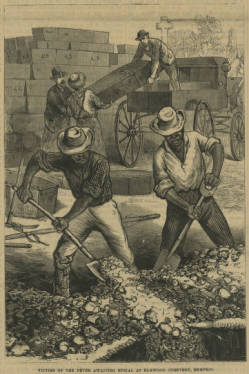
  53. An illustration of Cypress Grove Cemetery in New Orleans in 1853, during the yellow fever epidemic

    Story 45 of 127 · The nineteenth century

    Mosquito-borne diseases

    Yellow fever in New Orleans, 1853

    Over 9,000 people died of yellow fever in New Orleans in 1853, about 8% of the city, many of them Irish immigrants with no immunity. Death rates were uneven: 7.4% of white patients died but only 0.2% of Black patients, who were more often immune.

    Next story1854 · The Broad Street cholera outbreak
  54. The replica Broad Street pump on Broadwick Street, London, near the John Snow pub

    Story 46 of 127 · The nineteenth century

    Cholera

    The Broad Street cholera outbreak

    About 420 people died near Broad Street in Soho in 1854. The physician John Snow mapped the cases and argued that contaminated water, not foul air, was spreading cholera. After he showed his results, the parish board had the handle of the Broad Street pump removed.

    Next story1855 · The third plague pandemic
  55. A doctor injecting serum into a plague patient in Karachi in 1897

    Story 47 of 127 · The nineteenth century

    Plague

    The third plague pandemic

    Plague spread from Yunnan in China to Hong Kong and then by ship worldwide, killing about 12 million people, mostly in India. Alexandre Yersin identified the bacterium in 1894.

    Next story1862 · Smallpox on the Northwest Coast
  56. A view of the harbour at Victoria, British Columbia, in 1864

    Story 48 of 127 · The nineteenth century

    Smallpox and measles

    Smallpox on the Northwest Coast

    Smallpox arrived at Victoria, on Vancouver Island, in 1862 and swept along the coast from Puget Sound to south-east Alaska. Colonial authorities vaccinated settlers but did little to protect Indigenous people, and whole communities were devastated.

    Next story1863 · The fourth cholera pandemic
  57. A notice about cholera and oysters in Washington, D.C., in 1866

    Story 49 of 127 · The nineteenth century

    Cholera

    The fourth cholera pandemic

    The fourth pandemic spread from Bengal with pilgrims to Mecca, where 30,000 of 90,000 pilgrims died in the first year. It went on through the Middle East into Russia, Europe, Africa and North America.

    Next story1875 · Measles in Fiji, 1875
  58. Cakobau, the Fijian chief and former king, in a photograph from the 1870s

    Story 50 of 127 · The nineteenth century

    Smallpox and measles

    Measles in Fiji, 1875

    Measles reached Fiji after Cakobau and two of his sons were taken to Sydney to celebrate the islands' annexation by Britain. In 1875–76 the epidemic killed over 40,000 Fijians, about a third of the population.

    Next story1878 · The 1878 yellow fever epidemic
  59. An illustration of yellow fever victims awaiting burial in Memphis in 1878

    Story 51 of 127 · The nineteenth century

    Mosquito-borne diseases

    The 1878 yellow fever epidemic

    Yellow fever, apparently brought from Havana, spread up the lower Mississippi valley in 1878. More than 74,000 cases and nearly 16,000 deaths were recorded in five states, and Memphis was among the hardest hit.

    Next story1881 · The fifth cholera pandemic
  60. The sickbay for cholera patients in Baku during the 1892 outbreak

    Story 52 of 127 · The nineteenth century

    Cholera

    The fifth cholera pandemic

    The fifth pandemic spread from the Ganges delta by steamship and railway to Europe, North Africa, Asia and South America. In 1883–84 Robert Koch isolated the cholera bacterium, working in Egypt and India.

    Next story1881 · Disease and the Panama Canal
  61. William Crawford Gorgas in 1914

    Story 53 of 127 · The nineteenth century

    Mosquito-borne diseases

    Disease and the Panama Canal

    Yellow fever and malaria killed thousands of workers in the failed French attempt to dig the Panama Canal. After the Americans took over in 1904, William Gorgas drained mosquito breeding sites and screened houses, and yellow fever was gone from the Canal Zone by 1906.

    Next story1887 · The African rinderpest epizootic
  62. Photograph of cattle killed by rinderpest in South Africa in 1896

    Story 54 of 127 · The nineteenth century

    Other and unknownUnverified

    The African rinderpest epizootic

    Rinderpest, a cattle virus, entered Eritrea in 1887 and swept south across Africa, killing more than 5.2 million cattle south of the Zambezi alone, as well as sheep, goats and wild buffalo and wildebeest.

    Next story1889 · The 1889 pandemic
  63. An 1890 cartoon of a man with influenza surrounded by doctors and druggists

    Story 55 of 127 · The nineteenth century

    Influenza and coronaviruses

    The 1889 pandemic

    A respiratory pandemic, long called the Russian flu, spread around the world in months by rail and steamship.

    Next story1892 · Cholera in Hamburg, 1892
  64. Water supply in Hamburg during the cholera epidemic of 1892

    Story 56 of 127 · The nineteenth century

    Cholera

    Cholera in Hamburg, 1892

    Hamburg drew its drinking water untreated from the Elbe and was slow to quarantine arriving ships. Cholera killed more than 8,000 people in about three months in 1892. Neighbouring Altona, which filtered its water from the same river, was largely spared.

    Next story1894 · The Hong Kong plague
  65. Shropshire Regiment cleaning plague houses, Hong Kong

    Story 57 of 127 · The nineteenth century

    Plague

    The Hong Kong plague

    Plague reached Hong Kong from Canton in 1894 and returned every year until 1929, killing over 20,000 people, more than nine in ten of those who caught it. Alexandre Yersin identified the plague bacterium in Hong Kong in June 1894.

    Next story1896 · The Bombay plague
  66. A plague house in Kaladevi Road, Bombay

    Story 58 of 127 · The nineteenth century

    Plague

    The Bombay plague

    Bombay declared plague in September 1896, and by January 1897 half its people had fled, spreading it across India. Harsh British measures, including house searches and forced removal of the sick, led to anger and to the murder of a plague officer in Pune in 1897.

    Next story1899 · The sixth cholera pandemic
  67. Drawing about the Cholera in Le Petit Journal

    Story 59 of 127 · The nineteenth century

    Cholera

    The sixth cholera pandemic

    The sixth pandemic began in India, probably at the Haridwar Kumbh Mela, and killed more than 800,000 people there. It spread to West Asia, North Africa and Russia. A 1910–11 outbreak in New York, brought on a ship from Naples, is counted as part of it.

    Next story1900 · Plague in San Francisco's Chinatown
  68. Chapter V

    The modern world

    68 stories in this chapter

  69. An alley in San Francisco's Chinatown around 1900

    Story 60 of 127 · The modern world

    Plague

    Plague in San Francisco's Chinatown

    Plague broke out in San Francisco's Chinatown in 1900, the first plague epidemic in the continental United States. California's governor denied it for two years to protect trade. 121 cases were identified and 119 people died.

    Next story1900 · Typhoid Mary
  70. Portrait photograph of Mary Mallon, known as Typhoid Mary

    Story 61 of 127 · The modern world

    Other and unknown

    Typhoid Mary

    Mary Mallon, a New York cook, is thought to have infected up to 57 people with typhoid, three fatally, without being ill herself. The first healthy carrier identified in the US, she was isolated by force in 1907, freed in 1910 and isolated again from 1915 until she died.

    Next story1910 · The Manchurian plague
  71. Dr Wu Lien-teh, who led the response to the Manchurian plague

    Story 62 of 127 · The modern world

    Plague

    The Manchurian plague

    Pneumonic plague, which spreads through the air from person to person, killed about 60,000 people in Manchuria in the winter of 1910–11, after marmot-fur hunters gathered in crowded lodgings. The doctor Wu Lien-teh led the response, with quarantine and cloth face masks.

    Next story1914 · Typhus in Serbia, 1915
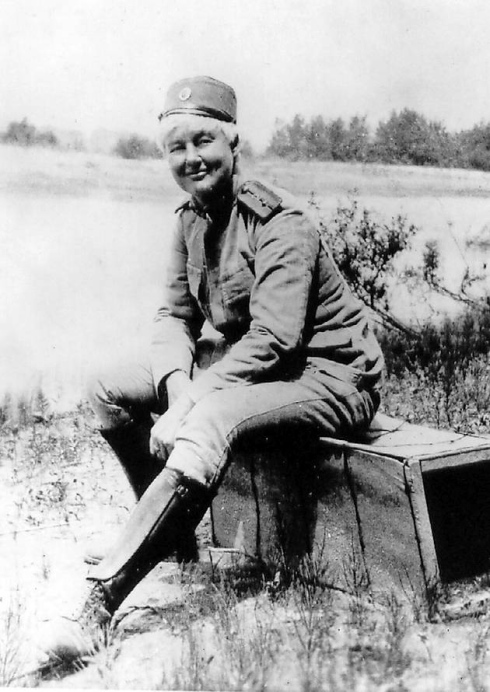
  72. Flora Sandes, the British nurse who served in Serbia during the typhus epidemic

    Story 63 of 127 · The modern world

    Other and unknown

    Typhus in Serbia, 1915

    In the First World War, typhus and relapsing fever swept through Serbia from late 1914, infecting troops, prisoners and even doctors. At least 150,000 people died of typhus, 50,000 of them prisoners.

    Next story1915 · The sleepy sickness
  73. Brain tissue from an infected monkey under the microscope, from a 1918 study of encephalitis lethargica

    Story 64 of 127 · The modern world

    Other and unknown

    The sleepy sickness

    Between 1915 and 1926 an epidemic of sleepy sickness spread around the world, leaving some victims statue-like, silent and motionless. More than a million people are thought to have been infected, and over 500,000 died. Most survivors never fully recovered.

    Next story1916 · The 1916 polio epidemic
  74. A newspaper headline from July 1916 on the polio epidemic in New York

    Story 65 of 127 · The modern world

    Other and unknown

    The 1916 polio epidemic

    Polio infected several thousand people in New York City in 1916, mostly children in Brooklyn, and killed over 2,000. Quarantines, closed cinemas and pools, and rumours blaming immigrants and cats spread fear.

    Next story1918 · Typhus in Russia, 1918–1922
  75. A Russian poster showing the typhus louse shaking hands with Death

    Story 66 of 127 · The modern world

    Other and unknown

    Typhus in Russia, 1918–1922

    Typhus spread through armies, trains and cities during the Russian Civil War, with 20–30 million cases and 2–3 million deaths in Russia in 1918–22. Lenin reportedly warned that either socialism would defeat the louse or the louse would defeat socialism.

    Next story1918 · The 1918 flu pandemic
  76. Rows of beds in an emergency hospital at Camp Funston, Kansas, during the 1918 flu

    Story 67 of 127 · The modern world

    Influenza and coronaviruses

    The 1918 flu pandemic

    An influenza pandemic spread with troops at the end of the First World War, killing tens of millions of people, often young adults.

    Next story1918 · The 1918 flu in India
  77. Mohandas Gandhi in 1918, the year he fell gravely ill with influenza

    Story 68 of 127 · The modern world

    Influenza and coronaviruses

    The 1918 flu in India

    The flu reached Bombay in June 1918, probably on ships bringing troops home, and spread along the railways. At least 12 million people died, about 5% of the population, and some estimates reach 17–18 million, the most of any country.

    Next story1918 · The flu at Brevig Mission
  78. Drone photo of Brevig Mission Alaska taken in Spring 2017

    Story 69 of 127 · The modern world

    Influenza and coronaviruses

    The flu at Brevig Mission

    In November 1918 influenza killed 72 of the 80 people in the Iñupiat village of Brevig Mission, Alaska, within five days. The dead were buried in a mass grave in the frozen ground.

    Next story1918 · Flu reaches Samoa
  79. The steamer Talune at a wharf in Tahiti in 1910

    Story 70 of 127 · The modern world

    Influenza and coronaviruses

    Flu reaches Samoa

    The steamer Talune reached Western Samoa on 7 November 1918 with a clean bill of health but sick crew. The islands, ruled by New Zealand, were not quarantined, and about 22% of the population died within weeks. American Samoa shut its ports and escaped.

    Next story1925 · The serum run to Nome
  80. The musher Gunnar Kaasen with Balto, the lead sled dog on the last leg of the serum run

    Story 71 of 127 · The modern world

    Other and unknown

    The serum run to Nome

    In January 1925 diphtheria threatened Nome, Alaska, with the port frozen in. Twenty mushers and about 150 sled dogs relayed antitoxin 674 miles in five and a half days. The lead dog Balto became a celebrity, and his statue stands in New York's Central Park.

    Next story1934 · Malaria in Ceylon, 1934–35
  81. An Anopheles mosquito, the kind that carries malaria

    Story 72 of 127 · The modern world

    Mosquito-borne diseases

    Malaria in Ceylon, 1934–35

    A failed monsoon and a rice famine left Ceylon's people weak when malaria surged in 1934. About 1.5 million of its 5.5 million people were ill, and around 80,000 more died than usual in about seven months.

    Next story1947 · Smallpox in New York, 1947
  82. The tip of a bifurcated needle used to give smallpox vaccinations

    Story 73 of 127 · The modern world

    Smallpox and measles

    Smallpox in New York, 1947

    A traveller from Mexico brought smallpox to New York in March 1947. Within three weeks more than 6 million people were vaccinated, 5 million of them in the first two weeks. Only 12 people fell ill, and two died.

    Next storyc. 1950 · Hepatitis C in Egypt
  83. An electron micrograph of hepatitis C virus particles

    Story 74 of 127 · The modern world

    Other and unknown

    Hepatitis C in Egypt

    A mass campaign against the parasitic disease schistosomiasis, using reused glass syringes, is blamed for infecting millions of Egyptians with hepatitis C, the world's highest rate. It may be the largest spread of a blood-borne virus through medical care.

    Next storyc. 1950 · Kuru among the Fore
  84. Map of eastern Papua New Guinea with the Okapa region, home of the Fore people, picked out

    Story 75 of 127 · The modern world

    Other and unknownUnverified

    Kuru among the Fore

    Kuru, a fatal prion disease of the brain, spread among the Fore people of Papua New Guinea through funeral customs in which the dead were eaten. Women and children, who ate the brain, were most affected. Around 1957 about 200 people died of it each year.

    Next story1952 · Copenhagen's polio epidemic, 1952
  85. An iron lung, the breathing machine used for polio patients

    Story 76 of 127 · The modern world

    Other and unknown

    Copenhagen's polio epidemic, 1952

    Copenhagen's Blegdam Hospital was overwhelmed by polio in the summer of 1952. With too few iron lungs, medical students squeezed air into patients' lungs by hand for weeks, while the doctor Bjørn Ibsen devised a way to ventilate them through a tube in the windpipe.

    Next story1955 · The Global Malaria Eradication Programme
  86. A worker spraying DDT indoors in a malaria eradication campaign

    Story 77 of 127 · The modern world

    Mosquito-borne diseases

    The Global Malaria Eradication Programme

    In 1955 the WHO launched a worldwide campaign to wipe out malaria with DDT spraying and drugs. It cleared the disease from southern Europe and much of the Americas, but failed in sub-Saharan Africa, and was dropped as a goal in 1969.

    Next story1957 · The 1957 flu pandemic
  87. Conscripts sick with flu in beds set up in a sports arena in Luleå, Sweden, 1957

    Story 78 of 127 · The modern world

    Influenza and coronaviruses

    The 1957 flu pandemic

    A new H2N2 flu strain from southern China spread worldwide. The CDC puts the death toll at about 1.1 million; other estimates of excess deaths run from 1 to 4 million. A vaccine was produced within months.

    Next story1961 · The seventh cholera pandemic
  88. A cholera patient drinking oral rehydration solution, helped by nurses

    Story 79 of 127 · The modern world

    Cholera

    The seventh cholera pandemic

    Cholera began spreading from Indonesia in 1961 and reached South Asia, Africa and Latin America. It continues where clean water is lacking.

    Next story1967 · The campaign to eradicate smallpox
  89. Two members of the WHO smallpox eradication team crossing a bamboo bridge in Bangladesh

    Story 80 of 127 · The modern world

    Smallpox and measles

    The campaign to eradicate smallpox

    The World Health Organization stepped up its smallpox campaign in 1967, using surveillance and vaccination of the contacts of each case. The last natural case came in 1977, and the World Health Assembly declared smallpox eradicated in May 1980.

    Next story1967 · The first Marburg outbreak
  90. An electron micrograph of thread-like Marburg virus particles

    Story 81 of 127 · The modern world

    Other and unknown

    The first Marburg outbreak

    In August 1967 laboratory workers in Marburg, Frankfurt and Belgrade fell ill after handling tissue from imported African green monkeys. There were 25 primary infections and six secondary cases, and seven people died.

    Next story1968 · The 1968 flu pandemic
  91. An illustration of an influenza virus particle

    Story 82 of 127 · The modern world

    Influenza and coronaviruses

    The 1968 flu pandemic

    A flu pandemic first detected in Hong Kong killed an estimated one to four million people worldwide; the CDC's estimate is about one million.

    Next story1972 · Smallpox in Yugoslavia, 1972
  92. These field physicians are checking an immunization reaction in a man vaccinated during a smallpox epidemic in Yugoslavia, 1972

    Story 83 of 127 · The modern world

    Smallpox and measles

    Smallpox in Yugoslavia, 1972

    A pilgrim returning from the Middle East brought smallpox to Kosovo in 1972. 175 people were infected and 35 died. Enforced quarantine and mass vaccination stopped it.

    Next story1974 · Smallpox in India, 1974
  93. Close-up of the tip of a bifurcated needle used to give smallpox vaccine

    Story 84 of 127 · The modern world

    Smallpox and measlesUnverified

    Smallpox in India, 1974

    In 1974 smallpox infected about 188,000 people in India and killed 31,000, mostly in Bihar, Uttar Pradesh and West Bengal, during the intensified eradication campaign that had switched from mass vaccination to search and containment.

    Next story1976 · The 1976 swine flu scare
  94. This photograph depicts President Gerald Ford receiving a swine flu inoculation from his White House physician, Dr

    Story 85 of 127 · The modern world

    Influenza and coronaviruses

    The 1976 swine flu scare

    A new swine-flu strain killed a soldier at Fort Dix, New Jersey, in 1976, and officials feared a repeat of 1918. A mass vaccination programme reached more than 40 million Americans (counts range from 43 to 48 million) before it was halted. The feared pandemic never came.

    Next story1976 · Legionnaires' disease
  95. A postcard of the Bellevue-Stratford Hotel in Philadelphia, where the Legionnaires' disease outbreak began

    Story 86 of 127 · The modern world

    Other and unknown

    Legionnaires' disease

    After an American Legion convention in a Philadelphia hotel in July 1976, 221 people fell ill with pneumonia and 34 died. Months later scientists at the CDC found a new bacterium, which was named Legionella.

    Next story1976 · The first Ebola outbreak
  96. A colorized electron micrograph of an Ebola virus particle

    Story 87 of 127 · The modern world

    Other and unknown

    The first Ebola outbreak

    In August 1976 a new haemorrhagic fever began near the mission hospital at Yambuku, in what is now the Democratic Republic of the Congo. 318 people were infected and 280 died. The virus was named after the nearby Ebola River.

    Next story1977 · The 1977 Russian flu
  97. A computer-generated image of an H1N1 influenza virus

    Story 88 of 127 · The modern world

    Influenza and coronaviruses

    The 1977 Russian flu

    An H1N1 flu appeared in northern China and the Soviet Union in 1977, almost identical to a strain that circulated from 1946 to 1957. It was mild and struck mainly people under 25, who had no immunity from the earlier years.

    Next story1977 · The last natural case of smallpox
  98. Smallpox virus particles under an electron microscope

    Story 89 of 127 · The modern world

    Smallpox and measles

    The last natural case of smallpox

    Ali Maow Maalin, a hospital cook in Merca, Somalia, was diagnosed with smallpox in October 1977. He recovered, and none of his many contacts fell ill. He is the last person known to have caught naturally occurring smallpox.

    Next story1981 · The HIV/AIDS pandemic
  99. A scanning electron micrograph of HIV particles budding from a white blood cell

    Story 90 of 127 · The modern world

    Other and unknown

    The HIV/AIDS pandemic

    AIDS was first reported in 1981. HIV had spread silently for decades, and by UNAIDS estimates AIDS-related illnesses have since killed about 44 million people, most of them in sub-Saharan Africa.

    Next story1986 · Mad cow disease
  100. A cow showing signs of bovine spongiform encephalopathy

    Story 91 of 127 · The modern world

    Other and unknown

    Mad cow disease

    Mad cow disease was first identified in British cattle in 1986 and spread through feed made from infected animal remains. In 1996 scientists linked it to a new human brain disease, variant CJD, and Europe banned British beef. 233 human cases had been reported worldwide by 2024.

    Next story1988 · The campaign to end polio
  101. A polio survivor gives the polio vaccine to a child at a vaccination launch in Kenya

    Story 92 of 127 · The modern world

    Other and unknown

    The campaign to end polio

    In 1988 the World Health Assembly resolved to eradicate polio, and the WHO-led initiative became the largest international public health programme ever. Cases have fallen by over 99%, and two of the three wild poliovirus types have been declared eradicated.

    Next story1991 · Cholera returns to the Americas
  102. A culture plate showing colonies of the cholera bacterium, Vibrio cholerae

    Story 93 of 127 · The modern world

    Cholera

    Cholera returns to the Americas

    Cholera reappeared in the Americas in January 1991 on Peru's coast, after about a century. It spread through Latin America over the next few years, causing roughly a million cases and about 10,000 deaths.

    Next story1993 · The Four Corners hantavirus
  103. Transmission electron micrograph of the Sin Nombre Hantavirus

    Story 94 of 127 · The modern world

    Other and unknown

    The Four Corners hantavirus

    In May 1993 healthy young people in the Four Corners region of the south-western United States began dying of sudden lung failure. Within weeks the CDC had identified a new hantavirus, carried by deer mice, the first hantavirus known to cause disease in the Americas.

    Next story1994 · The 1994 plague scare in India
  104. An electron micrograph of Yersinia pestis, the plague bacterium

    Story 95 of 127 · The modern world

    Plague

    The 1994 plague scare in India

    Bubonic and pneumonic plague were reported in western and southern India from August 1994, centred on the city of Surat. 693 suspected cases and 56 deaths were recorded, but panic sent hundreds of thousands fleeing, and other countries restricted Indian trade and travel.

    Next story1997 · Bird flu in Hong Kong
  105. Colorized transmission electron micrograph of avian influenza A H5N1 viruses (seen in gold) grown in MDCK cells (seen in green)

    Story 96 of 127 · The modern world

    Influenza and coronaviruses

    Bird flu in Hong Kong

    In 1997 an H5N1 bird flu virus infected 18 people in Hong Kong, the first known outbreak of its kind in humans. Six died. The government had all of the territory's poultry, about 1.5 million birds, killed within days.

    Next story1998 · The Nipah virus outbreak in Malaysia
  106. A colorized electron micrograph of Nipah virus budding from a cell

    Story 97 of 127 · The modern world

    Other and unknown

    The Nipah virus outbreak in Malaysia

    From September 1998 pig farm workers in Malaysia fell ill with brain inflammation, first thought to be Japanese encephalitis. 265 people had encephalitis and 105 died before a virologist identified a new virus, named after the village of Sungai Nipah.

    Next story1999 · West Nile virus reaches the Americas
  107. A Culex mosquito beside an electron micrograph of West Nile virus

    Story 98 of 127 · The modern world

    Mosquito-borne diseases

    West Nile virus reaches the Americas

    In 1999 a cluster of encephalitis cases in Queens, New York, was traced to West Nile virus, new to the Americas. Carried by birds and mosquitoes, it spread across the United States within a few years.

    Next story2002 · SARS
  108. Amoy Gardens in Hong Kong, a housing estate at the centre of the 2003 SARS outbreak

    Story 99 of 127 · The modern world

    Influenza and coronaviruses

    SARS

    A new coronavirus emerged in southern China and spread to about 30 countries, infecting about 8,000 people before it was contained.

    Next story2008 · Cholera in Zimbabwe
  109. Map of the 2008 cholera outbreak in Zimbabwe, by province

    Story 100 of 127 · The modern world

    Cholera

    Cholera in Zimbabwe

    As Zimbabwe's economy and health services collapsed, cholera spread from Harare's suburbs to all ten provinces and into neighbouring countries. 98,596 cases and 4,369 deaths were reported, and the government declared a national emergency.

    Next story2009 · The 2009 flu pandemic
  110. An electron micrograph of the H1N1 influenza virus identified in 2009

    Story 101 of 127 · The modern world

    Influenza and coronaviruses

    The 2009 flu pandemic

    A new H1N1 flu strain first identified in Mexico and the United States spread worldwide, mostly causing mild illness.

    Next story2010 · Cholera in Haiti
  111. Aid officials at a cholera treatment facility in Haiti

    Story 102 of 127 · The modern world

    Cholera

    Cholera in Haiti

    After the 2010 earthquake, cholera introduced by UN peacekeepers spread through Haiti. By UN figures about 820,000 people were infected and nearly 10,000 died.

    Next story2012 · MERS
  112. MERS-CoV particles as seen by negative stain electron microscopy

    Story 103 of 127 · The modern world

    Influenza and coronaviruses

    MERS

    MERS, caused by a coronavirus carried by dromedary camels, was first identified in Saudi Arabia in 2012. By late 2025 the WHO had counted over 2,600 cases in 27 countries, about 84% of them in Saudi Arabia, and about 37% of those diagnosed had died.

    Next story2013 · Ebola in West Africa
  113. A map of Ebola cases in Guinea, Liberia and Sierra Leone

    Story 104 of 127 · The modern world

    Other and unknown

    Ebola in West Africa

    The largest Ebola outbreak on record spread through Guinea, Liberia and Sierra Leone, killing more than 11,000 people.

    Next story2013 · H7N9 bird flu in China
  114. Influenza A (H7N9) as viewed through an electron microscope

    Story 105 of 127 · The modern world

    Influenza and coronaviruses

    H7N9 bird flu in China

    A new bird flu virus, H7N9, began infecting people in eastern China in 2013, mostly after contact with live poultry. Over several winter waves about 1,500 people were infected and roughly a third died. Poultry vaccination and market controls ended it.

    Next story2013 · Chikungunya arrives in the Americas
  115. An Asian tiger mosquito, Aedes albopictus, starting a blood meal

    Story 106 of 127 · The modern world

    Mosquito-borne diseases

    Chikungunya arrives in the Americas

    In December 2013 the first locally spread case of chikungunya in the Americas was found on Saint Martin. The virus moved through the Caribbean and into Central and South America, with over a million suspected cases within two years.

    Next story2014 · The Disneyland measles outbreak
  116. An electron micrograph of a single measles virus particle

    Story 107 of 127 · The modern world

    Smallpox and measles

    The Disneyland measles outbreak

    Measles linked to Disneyland in California in December 2014 reached seven US states, Mexico and Canada, and ended in April 2015. 131 Californians fell ill, and in Canada nearly every case was in an unvaccinated person.

    Next story2015 · The Zika epidemic
  117. A map of countries with Zika virus transmission

    Story 108 of 127 · The modern world

    Mosquito-borne diseases

    The Zika epidemic

    Zika, spread by mosquitoes, swept through the Americas. Infection in pregnancy was linked to babies born with small heads.

    Next story2015 · MERS in South Korea
  118. A colorized electron micrograph of MERS coronavirus particles

    Story 109 of 127 · The modern world

    Influenza and coronaviruses

    MERS in South Korea

    A traveller returning from the Gulf brought MERS to South Korea in May 2015, and it spread mainly through crowded hospitals. 186 people were infected and 38 died, the largest outbreak outside the Arabian Peninsula.

    Next story2015 · Yellow fever in Angola and Congo
  119. A yellow fever mosquito, Aedes aegypti, taking a blood meal

    Story 110 of 127 · The modern world

    Mosquito-borne diseases

    Yellow fever in Angola and Congo

    Yellow fever broke out in Luanda, Angola, in December 2015, spreading in the mosquito cycle of a big city and into the Democratic Republic of the Congo. A shortage of vaccine worried the WHO, and a mass vaccination campaign had stopped it by September 2016.

    Next story2016 · Cholera in Yemen
  120. Buildings in the Old City of Sana'a, the capital of Yemen

    Story 111 of 127 · The modern world

    Cholera

    Cholera in Yemen

    Cholera began in Yemen in October 2016, during the civil war, and peaked in 2017. By late 2021 more than 2.5 million cases and over 4,000 deaths had been reported. In 2017 and 2019 Yemen had most of the world's cholera cases.

    Next story2017 · The 2017 plague outbreak in Madagascar
  121. Locator map of Madagascar

    Story 112 of 127 · The modern world

    Plague

    The 2017 plague outbreak in Madagascar

    A large outbreak of mostly pneumonic plague struck Madagascar from August 2017, including cities such as the capital, Antananarivo. About 200 people died. Antibiotics and rapid tracing of contacts brought it under control within a few months.

    Next story2018 · Nipah in Kerala
  122. Coloured electron micrograph of a Nipah virus particle beside an infected cell

    Story 113 of 127 · The modern world

    Other and unknown Unverified

    Nipah in Kerala

    India's state of Kerala confirmed its first Nipah virus case in May 2018, and further outbreaks followed in later years, some traced to fruit bats. Between 2018 and 2024 a total of 21 infected people died.

    Next story2018 · The Kivu Ebola epidemic
  123. Map of Ebola cases in North Kivu, South Kivu and Ituri provinces

    Story 114 of 127 · The modern world

    Other and unknown

    The Kivu Ebola epidemic

    Ebola broke out in North Kivu and Ituri, in eastern Congo, in August 2018, in a region of armed conflict. By June 2020 there were 3,470 cases and 2,280 deaths, making it the second-largest Ebola outbreak at the time.

    Next story2019 · Measles in Samoa
  124. A colorized electron micrograph of a measles virus particle

    Story 115 of 127 · The modern world

    Smallpox and measles

    Measles in Samoa

    Measles hit Samoa after vaccination of newborns fell from 74% in 2017 to about a third in 2018. By January 2020 over 5,700 cases and 83 deaths had been reported among about 200,000 people.

    Next story2019 · The COVID-19 pandemic
  125. A scanning electron micrograph of SARS-CoV-2 virus particles

    Story 116 of 127 · The modern world

    Influenza and coronaviruses

    The COVID-19 pandemic

    A new coronavirus identified in Wuhan, China, spread worldwide, closing borders, schools and workplaces. More than 7 million deaths were reported; excess-death estimates are far higher.

    Next story2020 · The H5N1 bird flu panzootic
  126. A turkey; turkey flocks in the United States have been badly hit by H5N1 bird flu

    Story 117 of 127 · The modern world

    Influenza and coronaviruses

    The H5N1 bird flu panzootic

    A new form of H5N1 bird flu has spread to every continent since 2020, killing vast numbers of wild birds and forcing mass culls of poultry. In 2024 it jumped into dairy cattle in the United States, and sporadic human cases have followed.

    Next story2020 · The Wuhan lockdown
  127. The Wuhan Yangtze River Bridge in 2020

    Story 118 of 127 · The modern world

    Influenza and coronaviruses

    The Wuhan lockdown

    On 23 January 2020 Wuhan and other cities in Hubei were sealed off, trapping some 11 million people in Wuhan. Transport stopped and residents stayed home for 76 days, until the lockdown ended on 8 April.

    Next story2020 · The Diamond Princess outbreak
  128. Aerial view of the cruise ship Diamond Princess moored off Yokohama

    Story 119 of 127 · The modern world

    Influenza and coronaviruses

    The Diamond Princess outbreak

    In February 2020 a cruise ship quarantined off Japan became an early test of how COVID-19 spreads. Of 3,711 people aboard, 712 were infected and as many as 14 died, all of them older passengers.

    Next story2022 · The mpox outbreak
  129. A world map showing where mpox spread in 2022

    Story 120 of 127 · The modern world

    Smallpox and measles

    The mpox outbreak

    Mpox, long found in Central and West Africa, spread to more than 100 countries in 2022.

    Next story2023 · Dengue in Bangladesh, 2023
  130. An Asian tiger mosquito, Aedes albopictus, showing the white stripe on its back

    Story 121 of 127 · The modern world

    Mosquito-borne diseases

    Dengue in Bangladesh, 2023

    Dengue surged across Bangladesh in the 2023 monsoon, centred on Dhaka, and by the end of the year 321,179 people had been admitted to hospital and 1,705 had died, by official count.

    Next story2023 · The clade I mpox epidemic
  131. A colorized electron micrograph of mpox virus particles

    Story 122 of 127 · The modern world

    Smallpox and measles

    The clade I mpox epidemic

    A new form of mpox, clade Ib, began spreading in Central Africa by September 2023, mostly in the Democratic Republic of the Congo. By September 2024, over 29,000 cases and 800 deaths had been reported, and the WHO declared a global health emergency on 14 August 2024.

    Next story2024 · The record dengue year in the Americas
  132. An Asian tiger mosquito, Aedes albopictus, one of the insects that carry dengue

    Story 123 of 127 · The modern world

    Mosquito-borne diseases

    The record dengue year in the Americas

    In 2024 the Americas reported over 13 million suspected dengue cases, a record, with Brazil, Argentina, Paraguay, Colombia and Peru among the worst hit. Cases fell by about two-thirds in 2025.

    Next story2024 · Cholera in Sudan
  133. A map of the cholera outbreak in Sudan

    Story 124 of 127 · The modern world

    Cholera

    Cholera in Sudan

    Cholera has spread through Sudan since 2024, worsened by the civil war, and into Chad and South Sudan. By December 2025 Sudan and Chad had recorded about 127,000 suspected cases and 3,500 deaths. Khartoum, North Kordofan, White Nile and Darfur were among the worst hit.

    Next story2024 · Marburg in Rwanda
  134. A notice in Kigali, Rwanda, on preventing the spread of Marburg virus

    Story 125 of 127 · The modern world

    Other and unknown

    Marburg in Rwanda

    Rwanda declared its first Marburg outbreak on 27 September 2024. Almost four in five cases were staff at two health facilities in Kigali. In all, 66 people were confirmed infected and 15 died before the outbreak was declared over on 20 December.

    Next story2025 · The Texas measles outbreak
  135. A colorized electron micrograph of a measles virus particle

    Story 126 of 127 · The modern world

    Smallpox and measles

    The Texas measles outbreak

    Measles began to spread in West Texas in January 2025, concentrated in a Mennonite community, and reached New Mexico, Oklahoma, Kansas and Mexico. It was among the largest US outbreaks since measles was declared eliminated in 2000, and three people died.

    Next story2026 · The 2026 Ebola epidemic
  136. Map of confirmed cases in the 2026 Ituri Province Ebola outbreak

    Story 127 of 127 · The modern world

    Other and unknown

    The 2026 Ebola epidemic

    An Ebola outbreak caused by the Bundibugyo virus was declared in Ituri, DR Congo, in mid-May 2026. No licensed vaccine or treatment targets this species. The WHO declared an international emergency within days, and the virus spread to eight DRC provinces and to Kenya.

    NextJourney's end

Journey complete

You travelled 3,375 years

127 stories, c. 1350 BC to present. More outbreaks are being researched and added.

Choose another journeyBack to the start