Two Sumerian city-states in southern Iraq, Lagash and Umma, fought on and off for generations over a fertile border strip. Lagash's kings Eannatum and Enmetena won several rounds; later Lugalzagesi of Umma struck back against Lagash.
Pharaoh Thutmose III marched into Canaan against a coalition of rebel vassal cities led by the king of Kadesh, routed them outside Megiddo and then besieged the city until it surrendered. The date is usually given as 1457 BC, though some put it two decades earlier.
Ramesses II of Egypt and Muwatalli II of the Hittites met on the Orontes River near Kadesh, in today's Syria, in about 1274 BC. Thousands of chariots took part. Ramesses claimed a great victory, but neither side won the war.
King Wu of Zhou led a rebel army against Di Xin, the last Shang king, defeated him at Muye and took the Shang capital, Yin. The Zhou dynasty that followed ruled, at least in name, for about eight centuries.
The Assyrian kings Esarhaddon and Ashurbanipal invaded Egypt, then ruled by the Kushite pharaohs of the 25th Dynasty. They drove out Taharqa and his successor Tantamani and sacked Thebes in 663 BC, leaving local princes such as Psamtik I as vassals.
The Persian Empire twice invaded mainland Greece after Greek cities in Ionia rebelled. Outnumbered Greek city-states, led by Athens and Sparta, won at Marathon, Salamis and Plataea.
Athens and its maritime empire fought Sparta and its allies for almost thirty years. Plague, a disastrous expedition to Sicily and Persian money for Sparta's fleet led to Athens' surrender.
Alexander of Macedon led his army from Greece through Egypt and Persia to the Indus, defeating the Persian king Darius III and founding cities across the conquered lands.
Rome and Carthage fought three wars for control of the western Mediterranean. In the second, Hannibal crossed the Alps and won great victories in Italy, but Rome prevailed and destroyed Carthage in 146 BC.
The Maurya emperor Ashoka conquered the eastern coastal kingdom of Kalinga. His own inscriptions record the huge loss of life and his remorse afterwards.
After the Qin dynasty collapsed, the warlords Xiang Yu of Chu and Liu Bang of Han fought for control of China. Liu Bang won and founded the Han dynasty.
Rome fought Jugurtha, king of Numidia in North Africa, after he seized his cousins' shares of the kingdom. Bribery and early Roman defeats were followed by his capture.
Julius Caesar campaigned across Gaul, roughly modern France and Belgium, defeating its tribes one by one and finally the alliance led by Vercingetorix at Alesia in 52 BC.
A revolt in the Roman province of Judaea was crushed by Roman legions. Jerusalem fell in 70 and its Temple was destroyed; the last rebels held out at Masada.
A peasant uprising inspired by a Taoist movement spread across Han China. It was put down, but the warlords who fought it became too powerful for the court.
Goths fleeing the Huns crossed the Danube into the Roman Empire and rebelled against harsh treatment. At Adrianople in 378 they destroyed a Roman army and killed Emperor Valens.
The Kaanu'l kings of Dzibanche, later based at Calakmul, fought Tikal for control of the Maya lowlands, with Caracol, Dos Pilas, Naranjo and other cities as allies. Tikal was crushed in 562 but recovered and beat Calakmul in 695.
The last and greatest war between Byzantium and Persia. Persian armies took Syria, Jerusalem and Egypt and besieged Constantinople, before Emperor Heraclius struck back into Persia.
After Muhammad's death, armies of the new Muslim state took Syria, Iraq, Egypt and Persia within a few decades, then spread across North Africa to Spain and east to Central Asia.
Arab armies of the Rashidun and Umayyad caliphates took Byzantine North Africa in campaigns lasting about seventy years. Uqba ibn Nafi founded Kairouan in 670, and Berber resistance was overcome partly by recruiting Berbers into the armies.
Over almost eight centuries the Christian kingdoms of northern Iberia pushed south against the Muslim states of al-Andalus, ending with the fall of Granada in 1492.
Near Basra, enslaved East Africans, the Zanj, who had been forced to drain salt marshes, rose under Ali ibn Muhammad. Joined by other slaves and free Arabs, they held off the Abbasid caliphate for fourteen years.
The Viet lord Ngô Quyền planted iron-tipped stakes in the bed of the Bạch Đằng River. When the tide fell, the invading Southern Han fleet was caught on them and destroyed.
The south Indian Chola king Rajendra I sent a naval expedition across the Bay of Bengal that raided the ports of Srivijaya, the trading empire of Sumatra and the Malay peninsula.
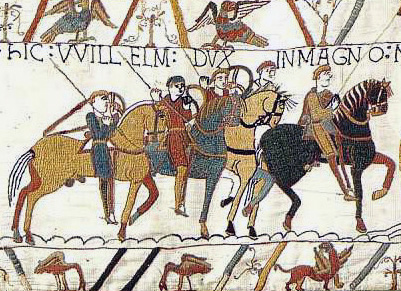
Duke William of Normandy invaded England, killed King Harold at the Battle of Hastings and was crowned king. Rebellions over the next years were crushed.
Western European armies, called on by the popes, campaigned to take Jerusalem and the Holy Land. They founded crusader states that were steadily retaken until Acre fell in 1291.
Genghis Khan united the Mongol tribes and his armies and successors conquered China, Central Asia, Persia and Russia, building the largest land empire there had been.
The Mandinka prince Sundiata Keita defeated Sumanguru Kanté, king of Sosso, at Kirina in the upper Niger region. The battle is known mostly from oral tradition, kept by griots in the Epic of Sundiata.
Three Mongol invasions of Đại Việt were driven back. Under Trần Hưng Đạo the Vietnamese avoided pitched battles and sank the Mongol fleet at the Bạch Đằng River.
The Ottoman Turks took Byzantine lands in Anatolia and the Balkans over two centuries, and in 1453 Sultan Mehmed II captured Constantinople with huge cannons.
Kublai Khan sent 20,000 to 30,000 men to punish King Kertanegara of Singhasari for maiming his envoy. Kertanegara was already dead, so the Yuan force helped Raden Wijaya defeat the usurper Kediri, then Wijaya turned on his allies and drove them out.
English kings fought French kings for the French throne and lands in France. After English victories such as Agincourt, Joan of Arc helped turn the tide and France won.
Uprisings across China against the Mongol Yuan dynasty grew into a civil war among rebel leaders. Zhu Yuanzhang won, drove the Mongols north and founded the Ming dynasty.
The Aztec Triple Alliance fought ritual wars with neighbouring states such as Tlaxcala, arranged in advance, to take captives for sacrifice and to train warriors.
Two branches of the English royal family, York and Lancaster, fought for the throne. Henry Tudor won at Bosworth in 1485 and married Elizabeth of York.
France and Spain, with the Holy Roman Empire, the papacy and Italian states, fought a long series of wars for control of Italy. Rome itself was sacked in 1527.
Hernán Cortés and a few hundred Spaniards, allied with Tlaxcala and other enemies of the Aztecs, took Tenochtitlan after a long siege worsened by a smallpox epidemic.
From Mohács in 1526 the Ottoman Empire and the Habsburgs fought over Hungary and the Balkans. The Ottomans twice besieged Vienna, and after 1683 were slowly pushed back.
Imam Ahmad ibn Ibrahim of the Adal Sultanate overran most of the Christian Ethiopian Empire. With help from a Portuguese force, Ethiopia recovered after the imam was killed in battle.
After the Sapa Inca Huayna Capac died, two of his sons, Huáscar in Cusco and Atahualpa with the veteran northern armies, fought for the throne. Atahualpa won and captured Huáscar just as Francisco Pizarro landed.
Francisco Pizarro captured the Inca ruler Atahualpa at Cajamarca, in an empire already weakened by civil war and epidemics. Inca resistance held out at Vilcabamba until 1572.
An alliance of the Deccan sultanates defeated the army of the Vijayanagara Empire, whose regent Aliya Rama Raya was captured and killed. The victors then sacked the great capital at Hampi.
The northern provinces of the Habsburg Netherlands, where Protestants led the revolt, rose against Spanish rule under William of Orange and in 1648 won recognition as the Dutch Republic.
Japan under Toyotomi Hideyoshi invaded Korea twice, aiming at China. Korean resistance, Admiral Yi Sun-sin's navy and Ming Chinese armies forced Japan to withdraw.
Manchu armies from the northeast took advantage of rebellion inside Ming China, entered Beijing in 1644 and conquered the rest of the country, with Taiwan falling last.
A Protestant revolt in Bohemia grew into a war across the Holy Roman Empire drawing in Sweden, France and Spain. Fighting, famine and disease killed millions in Germany.
Supporters of King Charles I fought Parliament's armies over power, religion and taxes. Parliament won, the king was executed in 1649, and England became a republic for a decade.
After King António I was killed by Portuguese-led forces at Mbwila, rival royal houses fought for the throne of Kongo and its capital São Salvador was abandoned.
Mysore under Hyder Ali and his son Tipu Sultan fought four wars against the British East India Company and its allies, using rockets against the Company's troops.
Enslaved people in the French colony of Saint-Domingue rose up, fought French, Spanish and British armies, and under Toussaint Louverture and Dessalines won independence.
Napoleon's France dominated most of Europe until the disastrous invasion of Russia in 1812. Coalition armies defeated him in 1814, and finally at Waterloo in 1815.
Once Māori iwi could buy muskets from European traders, an arms race followed. As many as 3,000 battles and raids were fought across New Zealand and the Chatham Islands, peaking in the 1830s, as iwi sought land and revenge.
The United States declared war on Britain over trade and the seizure of American sailors. Fighting in Canada, at sea and around Washington, which was burned, ended in stalemate.
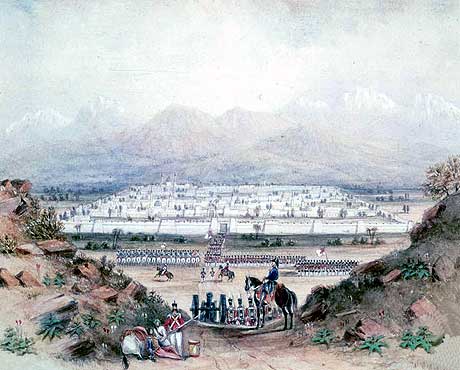
Britain invaded Afghanistan to install a friendly ruler. An uprising in Kabul forced a winter retreat in which almost the whole British-Indian force was destroyed.
Hong Xiuquan, who believed he was Jesus's younger brother, led a movement that founded the Taiping Heavenly Kingdom and held much of southern China before the Qing defeated it.
Indian soldiers of the East India Company mutinied at Meerut, and the revolt spread across northern India around the last Mughal emperor before being crushed.
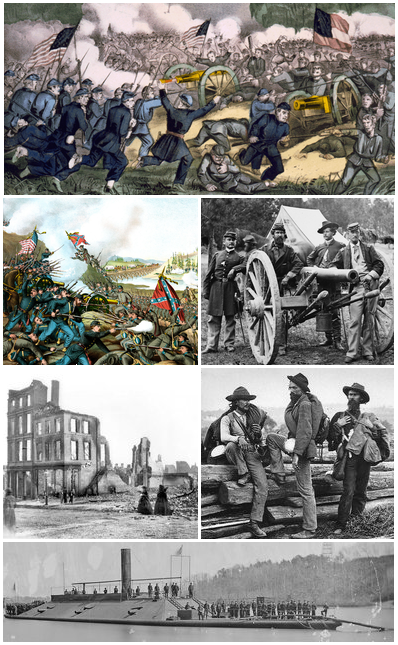
Eleven southern states that wanted to protect slavery seceded and formed the Confederacy. The Union defeated them after four years of war in which about 700,000 soldiers died.
In Sudan, Muhammad Ahmad, proclaimed the Mahdi, led a revolt against Egyptian rule and took Khartoum in 1885. An Anglo-Egyptian army defeated the Mahdist state at Omdurman in 1898.
Britain fought the two Boer republics in southern Africa. After Boer guerrilla warfare, Britain burned farms and held civilians, Boer and Black African, in camps where many died.
The Herero and Nama peoples rose against German colonial rule in South West Africa, now Namibia. German forces drove the Herero into the desert and held survivors in camps.
The assassination of Archduke Franz Ferdinand set Europe's alliances against each other. Trench warfare on the Western Front, and fighting in the east, the Middle East and Africa, killed millions.
After the Bolsheviks seized power, their Red Army fought the anti-communist White armies, national movements and foreign interventions across the former Russian Empire.
Berber tribes of the Rif mountains in Morocco, led by Abd el-Krim, defeated a Spanish army at Annual and set up a republic, before French and Spanish forces crushed it.
The Nationalist Kuomintang and the Communist Party fought for control of China, pausing to fight Japan, then resuming in 1946. The Communists won and the Nationalists withdrew to Taiwan.
A military uprising against the Spanish Republic led to civil war. Nationalists under Francisco Franco, aided by Germany and Italy, defeated the Republicans.
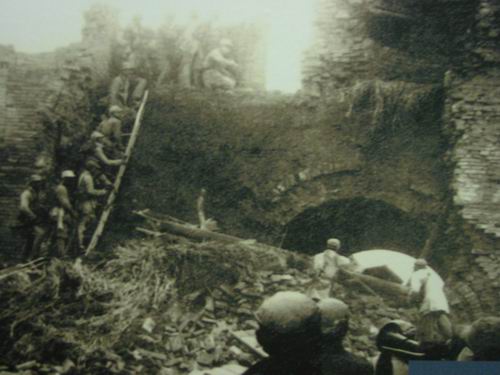
Japan launched a full invasion of China, taking its coast and major cities and carrying out atrocities such as the Nanjing massacre. China fought on until Japan's surrender.
Germany's invasion of Poland began a war that spread across Europe, Africa, Asia and the Pacific. It included the Holocaust and ended with Germany's defeat and the atomic bombings of Japan.
Kikuyu fighters in Kenya's highlands rose against British colonial rule and white settlement. Britain held tens of thousands of people in detention camps.
After Egypt massed troops in Sinai and closed the Straits of Tiran to Israeli shipping, Israel struck Egypt's air force and fought Egypt, Jordan and Syria, taking Sinai, Gaza, the West Bank, East Jerusalem and the Golan Heights in six days.
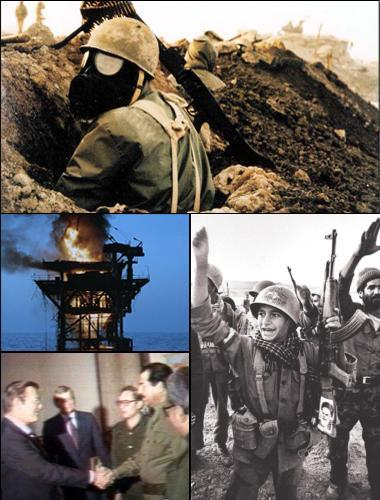
Iraq invaded Iran in 1980. Eight years of trench warfare, missile attacks on cities and Iraqi use of chemical weapons followed, and around half a million people died.
As Yugoslavia broke apart, wars were fought in Slovenia, Croatia, Bosnia and Herzegovina and Kosovo, with ethnic cleansing and the Srebrenica genocide.
Houthi forces took Yemen's capital Sanaa in 2014, and in 2015 a Saudi-led coalition intervened for the government. The anti-Houthi side has since split into rival factions.
Ethiopia's federal government and Eritrean troops fought the Tigray People's Liberation Front in northern Ethiopia. Sieges and blockades caused famine.
After the military seized power in February 2021, pro-democracy resistance forces and ethnic armed groups took up arms against military rule across much of the country.
A Hamas-led attack on southern Israel on 7 October 2023 killed about 1,200 people, and 251 were taken hostage. Israel's offensive has since killed more than 74,000 Palestinians in Gaza, a toll studies suggest is an undercount, and caused a humanitarian crisis.
Two Sumerian city-states in southern Iraq, Lagash and Umma, fought on and off for generations over a fertile border strip. Lagash's kings Eannatum and Enmetena won several rounds; later Lugalzagesi of Umma struck back against Lagash.
Lasted
About 150 years
Why it matters
It is the earliest war between states that is well documented, through Lagash inscriptions and the Stele of the Vultures.
Pharaoh Thutmose III marched into Canaan against a coalition of rebel vassal cities led by the king of Kadesh, routed them outside Megiddo and then besieged the city until it surrendered. The date is usually given as 1457 BC, though some put it two decades earlier.
Why it matters
It is the first battle recorded in fairly reliable detail, by an army scribe whose account was carved at Karnak.
Ramesses II of Egypt and Muwatalli II of the Hittites met on the Orontes River near Kadesh, in today's Syria, in about 1274 BC. Thousands of chariots took part. Ramesses claimed a great victory, but neither side won the war.
Why it matters
It is the earliest pitched battle whose tactics and formations are known, and it was followed by one of the oldest known peace treaties.
King Wu of Zhou led a rebel army against Di Xin, the last Shang king, defeated him at Muye and took the Shang capital, Yin. The Zhou dynasty that followed ruled, at least in name, for about eight centuries.
Why it matters
Later Chinese writers told it as the first great case of the Mandate of Heaven passing from a corrupt dynasty to a worthy one.
The Assyrian kings Esarhaddon and Ashurbanipal invaded Egypt, then ruled by the Kushite pharaohs of the 25th Dynasty. They drove out Taharqa and his successor Tantamani and sacked Thebes in 663 BC, leaving local princes such as Psamtik I as vassals.
Lasted
10 years
Why it matters
It took the Neo-Assyrian Empire to its greatest extent and ended Kushite rule in Egypt.
The Persian Empire twice invaded mainland Greece after Greek cities in Ionia rebelled. Outnumbered Greek city-states, led by Athens and Sparta, won at Marathon, Salamis and Plataea.
Lasted
50 years
Why it matters
Greek victory let Athens flourish in its classical age, the setting for its democracy, drama and philosophy.
Athens and its maritime empire fought Sparta and its allies for almost thirty years. Plague, a disastrous expedition to Sicily and Persian money for Sparta's fleet led to Athens' surrender.
Lasted
27 years
Why it matters
It ended Athens' golden age, and Thucydides' account of it became a founding work of history writing.
Alexander of Macedon led his army from Greece through Egypt and Persia to the Indus, defeating the Persian king Darius III and founding cities across the conquered lands.
Lasted
13 years
Why it matters
His conquests spread Greek language and culture from Egypt to Central Asia for centuries.
Rome and Carthage fought three wars for control of the western Mediterranean. In the second, Hannibal crossed the Alps and won great victories in Italy, but Rome prevailed and destroyed Carthage in 146 BC.
Lasted
About 120 years
Why it matters
Victory made Rome the dominant power of the Mediterranean.
The Maurya emperor Ashoka conquered the eastern coastal kingdom of Kalinga. His own inscriptions record the huge loss of life and his remorse afterwards.
Lasted
About 1 year
Why it matters
Ashoka turned to Buddhism and to rule by moral law, and sent Buddhist missions across Asia.
After the Qin dynasty collapsed, the warlords Xiang Yu of Chu and Liu Bang of Han fought for control of China. Liu Bang won and founded the Han dynasty.
Lasted
4 years
Why it matters
The Han dynasty that followed lasted four centuries and gave its name to China's largest ethnic group.
Rome fought Jugurtha, king of Numidia in North Africa, after he seized his cousins' shares of the kingdom. Bribery and early Roman defeats were followed by his capture.
Lasted
6 years
Why it matters
The war made the career of Gaius Marius, whose army reforms changed Roman politics.
Julius Caesar campaigned across Gaul, roughly modern France and Belgium, defeating its tribes one by one and finally the alliance led by Vercingetorix at Alesia in 52 BC.
Lasted
8 years
Why it matters
Gaul became Roman, and the wealth and loyal army Caesar gained let him take power in Rome.
A revolt in the Roman province of Judaea was crushed by Roman legions. Jerusalem fell in 70 and its Temple was destroyed; the last rebels held out at Masada.
Lasted
7 years
Why it matters
The loss of the Temple reshaped Judaism around synagogues, scripture and rabbinic study.
A peasant uprising inspired by a Taoist movement spread across Han China. It was put down, but the warlords who fought it became too powerful for the court.
Lasted
21 years
Why it matters
It hastened the end of the Han dynasty and the Three Kingdoms period that followed.
Goths fleeing the Huns crossed the Danube into the Roman Empire and rebelled against harsh treatment. At Adrianople in 378 they destroyed a Roman army and killed Emperor Valens.
Lasted
6 years
Why it matters
Goths settled inside the empire as allies, an early step in the end of Roman rule in the west.
The Kaanu'l kings of Dzibanche, later based at Calakmul, fought Tikal for control of the Maya lowlands, with Caracol, Dos Pilas, Naranjo and other cities as allies. Tikal was crushed in 562 but recovered and beat Calakmul in 695.
Lasted
About 150 years
Why it matters
These wars between rival alliances of city-states shaped the politics of the Classic Maya for well over a century.
The last and greatest war between Byzantium and Persia. Persian armies took Syria, Jerusalem and Egypt and besieged Constantinople, before Emperor Heraclius struck back into Persia.
Lasted
26 years
Why it matters
It left both empires drained just as the Arab armies arrived.
After Muhammad's death, armies of the new Muslim state took Syria, Iraq, Egypt and Persia within a few decades, then spread across North Africa to Spain and east to Central Asia.
Lasted
About 130 years
Why it matters
They created a caliphate from Spain to the Indus and spread Islam and the Arabic language.
Arab armies of the Rashidun and Umayyad caliphates took Byzantine North Africa in campaigns lasting about seventy years. Uqba ibn Nafi founded Kairouan in 670, and Berber resistance was overcome partly by recruiting Berbers into the armies.
Lasted
62 years
Why it matters
It brought Islam and Arabic to North Africa, and Berber troops from it led the invasion of Spain in 711.
Over almost eight centuries the Christian kingdoms of northern Iberia pushed south against the Muslim states of al-Andalus, ending with the fall of Granada in 1492.
Lasted
About 770 years
Why it matters
It shaped Spain and Portugal, and the year it ended Spain also sponsored Columbus.
Near Basra, enslaved East Africans, the Zanj, who had been forced to drain salt marshes, rose under Ali ibn Muhammad. Joined by other slaves and free Arabs, they held off the Abbasid caliphate for fourteen years.
Lasted
14 years
Why it matters
One of the largest slave revolts in history, it shows the reach of the Indian Ocean slave trade and cost tens of thousands of lives.
The Viet lord Ngô Quyền planted iron-tipped stakes in the bed of the Bạch Đằng River. When the tide fell, the invading Southern Han fleet was caught on them and destroyed.
Why it matters
It ended about a thousand years of Chinese rule over northern Vietnam, and the stake trap was used again against the Mongols in 1288.
Image: Rajendra_map_new.png : The original uploader was Venu62 at English Wikipedia . derivative work: Gregors ( talk ) · CC BY-SA 3.0, via Wikimedia Commons
South and Southeast Asia
Chola invasion of Srivijaya
The south Indian Chola king Rajendra I sent a naval expedition across the Bay of Bengal that raided the ports of Srivijaya, the trading empire of Sumatra and the Malay peninsula.
Why it matters
A rare overseas campaign by an Indian state, it shows the reach of trade and power across the Indian Ocean.
Duke William of Normandy invaded England, killed King Harold at the Battle of Hastings and was crowned king. Rebellions over the next years were crushed.
Lasted
5 years
Why it matters
It replaced England's ruling class and changed its language, law and architecture.
Western European armies, called on by the popes, campaigned to take Jerusalem and the Holy Land. They founded crusader states that were steadily retaken until Acre fell in 1291.
Lasted
About 200 years
Why it matters
Two centuries of war shaped relations between Christian Europe and the Muslim world, and between Latin and Greek Christians.
Genghis Khan united the Mongol tribes and his armies and successors conquered China, Central Asia, Persia and Russia, building the largest land empire there had been.
Lasted
About 160 years
Why it matters
The empire linked East and West for trade and ideas, at the cost of enormous destruction.
The Mandinka prince Sundiata Keita defeated Sumanguru Kanté, king of Sosso, at Kirina in the upper Niger region. The battle is known mostly from oral tradition, kept by griots in the Epic of Sundiata.
Why it matters
It made Sundiata's new Mali Empire the leading power of West Africa for two centuries.
Three Mongol invasions of Đại Việt were driven back. Under Trần Hưng Đạo the Vietnamese avoided pitched battles and sank the Mongol fleet at the Bạch Đằng River.
Lasted
30 years
Why it matters
The defeats checked Mongol expansion into Southeast Asia and became central to Vietnamese identity.
The Ottoman Turks took Byzantine lands in Anatolia and the Balkans over two centuries, and in 1453 Sultan Mehmed II captured Constantinople with huge cannons.
Lasted
About 210 years
Why it matters
The fall of Constantinople ended the Roman Empire in the east and made the Ottomans a great power.
Kublai Khan sent 20,000 to 30,000 men to punish King Kertanegara of Singhasari for maiming his envoy. Kertanegara was already dead, so the Yuan force helped Raden Wijaya defeat the usurper Kediri, then Wijaya turned on his allies and drove them out.
Why it matters
The failed expedition cleared the way for Raden Wijaya's new kingdom, Majapahit, which became the great power of the archipelago.
English kings fought French kings for the French throne and lands in France. After English victories such as Agincourt, Joan of Arc helped turn the tide and France won.
Lasted
About 120 years
Why it matters
England lost almost all its French lands, and both countries came out with stronger national identities.
Uprisings across China against the Mongol Yuan dynasty grew into a civil war among rebel leaders. Zhu Yuanzhang won, drove the Mongols north and founded the Ming dynasty.
Lasted
17 years
Why it matters
It ended Mongol rule in China and began the Ming, which lasted almost three centuries.
The Aztec Triple Alliance fought ritual wars with neighbouring states such as Tlaxcala, arranged in advance, to take captives for sacrifice and to train warriors.
Lasted
About 69 years
Why it matters
Tlaxcala's long enmity with the Aztecs made it Spain's key ally in the conquest of 1519–1521.
Two branches of the English royal family, York and Lancaster, fought for the throne. Henry Tudor won at Bosworth in 1485 and married Elizabeth of York.
France and Spain, with the Holy Roman Empire, the papacy and Italian states, fought a long series of wars for control of Italy. Rome itself was sacked in 1527.
Lasted
65 years
Why it matters
Spain emerged dominant in Italy, and the wars spread Renaissance ideas north of the Alps.
Hernán Cortés and a few hundred Spaniards, allied with Tlaxcala and other enemies of the Aztecs, took Tenochtitlan after a long siege worsened by a smallpox epidemic.
Lasted
2 years
Why it matters
It began three centuries of Spanish rule in Mexico, where New Spain was built on the Aztec capital.
From Mohács in 1526 the Ottoman Empire and the Habsburgs fought over Hungary and the Balkans. The Ottomans twice besieged Vienna, and after 1683 were slowly pushed back.
Lasted
About 270 years
Why it matters
The long frontier war shaped Central Europe and the Balkans.
Imam Ahmad ibn Ibrahim of the Adal Sultanate overran most of the Christian Ethiopian Empire. With help from a Portuguese force, Ethiopia recovered after the imam was killed in battle.
Lasted
14 years
Why it matters
Both states came out exhausted, opening the way for Oromo migrations into the region.
After the Sapa Inca Huayna Capac died, two of his sons, Huáscar in Cusco and Atahualpa with the veteran northern armies, fought for the throne. Atahualpa won and captured Huáscar just as Francisco Pizarro landed.
Lasted
3 years
Why it matters
The war left the empire divided and exhausted when the Spanish arrived, which helped a small force seize it.
Francisco Pizarro captured the Inca ruler Atahualpa at Cajamarca, in an empire already weakened by civil war and epidemics. Inca resistance held out at Vilcabamba until 1572.
Lasted
40 years
Why it matters
Spain took the largest empire of the Americas and its silver, which flowed into the world economy.
An alliance of the Deccan sultanates defeated the army of the Vijayanagara Empire, whose regent Aliya Rama Raya was captured and killed. The victors then sacked the great capital at Hampi.
Why it matters
It began the end of Vijayanagara, the last great south Indian empire; historians now reject old readings of it as a simple Hindu–Muslim clash.
The northern provinces of the Habsburg Netherlands, where Protestants led the revolt, rose against Spanish rule under William of Orange and in 1648 won recognition as the Dutch Republic.
Lasted
80 years
Why it matters
The Dutch Republic became a leading trading and colonial power of the seventeenth century.
Japan under Toyotomi Hideyoshi invaded Korea twice, aiming at China. Korean resistance, Admiral Yi Sun-sin's navy and Ming Chinese armies forced Japan to withdraw.
Lasted
6 years
Why it matters
Korea was devastated, the Ming were weakened, and in Japan the war helped bring the Tokugawa to power.
Manchu armies from the northeast took advantage of rebellion inside Ming China, entered Beijing in 1644 and conquered the rest of the country, with Taiwan falling last.
Lasted
65 years
Why it matters
The Manchu Qing dynasty ruled China until 1912 and built its largest territory.
A Protestant revolt in Bohemia grew into a war across the Holy Roman Empire drawing in Sweden, France and Spain. Fighting, famine and disease killed millions in Germany.
Lasted
30 years
Why it matters
The Peace of Westphalia that ended it is often seen as the start of the modern system of sovereign states.
Supporters of King Charles I fought Parliament's armies over power, religion and taxes. Parliament won, the king was executed in 1649, and England became a republic for a decade.
Lasted
9 years
Why it matters
A king was tried and executed by his own subjects, and English monarchs never again ruled without Parliament for long.
After King António I was killed by Portuguese-led forces at Mbwila, rival royal houses fought for the throne of Kongo and its capital São Salvador was abandoned.
Lasted
44 years
Why it matters
The kingdom was reunited but decentralised, and the wars fed the Atlantic slave trade.
Mysore under Hyder Ali and his son Tipu Sultan fought four wars against the British East India Company and its allies, using rockets against the Company's troops.
Lasted
32 years
Why it matters
Tipu's death at Seringapatam in 1799 removed the Company's strongest rival in south India.
Enslaved people in the French colony of Saint-Domingue rose up, fought French, Spanish and British armies, and under Toussaint Louverture and Dessalines won independence.
Lasted
13 years
Why it matters
Haiti became the first state founded by formerly enslaved people, a landmark in the end of slavery.
Napoleon's France dominated most of Europe until the disastrous invasion of Russia in 1812. Coalition armies defeated him in 1814, and finally at Waterloo in 1815.
Lasted
12 years
Why it matters
The wars redrew Europe's map, ended the Holy Roman Empire and spread the Napoleonic legal code.
Once Māori iwi could buy muskets from European traders, an arms race followed. As many as 3,000 battles and raids were fought across New Zealand and the Chatham Islands, peaking in the 1830s, as iwi sought land and revenge.
Lasted
39 years
Why it matters
Between 20,000 and 40,000 people died and tribal boundaries were redrawn just before the Treaty of Waitangi in 1840.
The United States declared war on Britain over trade and the seizure of American sailors. Fighting in Canada, at sea and around Washington, which was burned, ended in stalemate.
Lasted
3 years
Why it matters
Canada stayed British, and Native nations allied with Britain lost their last chance to stop US expansion.
Britain invaded Afghanistan to install a friendly ruler. An uprising in Kabul forced a winter retreat in which almost the whole British-Indian force was destroyed.
Lasted
3 years
Why it matters
It became a byword for imperial overreach in the 'Great Game' between Britain and Russia.
Hong Xiuquan, who believed he was Jesus's younger brother, led a movement that founded the Taiping Heavenly Kingdom and held much of southern China before the Qing defeated it.
Lasted
14 years
Why it matters
Estimates of the dead run from 20–30 million to as many as 100 million, and the Qing came out dependent on regional armies.
Indian soldiers of the East India Company mutinied at Meerut, and the revolt spread across northern India around the last Mughal emperor before being crushed.
Lasted
1 year
Why it matters
The British Crown took direct rule of India, and the Mughal dynasty ended.
Eleven southern states that wanted to protect slavery seceded and formed the Confederacy. The Union defeated them after four years of war in which about 700,000 soldiers died.
Lasted
4 years
Why it matters
It preserved the United States and ended slavery there.
Image: This image is from the Canadian Illustrated News , 1869-1883, held in the Library and Archives Canada under record 3724 · Public domain, via Wikimedia Commons
Europe
Franco-Prussian War
Prussia and its German allies quickly defeated France, captured Napoleon III at Sedan and besieged Paris.
Lasted
1 year
Why it matters
The German Empire was proclaimed at Versailles, and France lost Alsace-Lorraine.
In Sudan, Muhammad Ahmad, proclaimed the Mahdi, led a revolt against Egyptian rule and took Khartoum in 1885. An Anglo-Egyptian army defeated the Mahdist state at Omdurman in 1898.
Lasted
18 years
Why it matters
Sudan came under joint British and Egyptian rule until 1956.
Image: Ethiopia_Italia_war.JPG : * Mekele_1896.jpg : Unknown but died more than 70 years ago In_Vista_Di_Massaua.jpg : Unknown but obviously died more than 70 years… · Public domain, via Wikimedia Commons
Africa
First Italo-Ethiopian War
Italy tried to make Ethiopia a protectorate. Emperor Menelik II's army defeated the Italians at Adwa.
Lasted
1 year
Why it matters
Ethiopia stayed independent, a symbol of African resistance to colonialism.
Britain fought the two Boer republics in southern Africa. After Boer guerrilla warfare, Britain burned farms and held civilians, Boer and Black African, in camps where many died.
Lasted
3 years
Why it matters
The republics were annexed and later joined the Union of South Africa.
The Herero and Nama peoples rose against German colonial rule in South West Africa, now Namibia. German forces drove the Herero into the desert and held survivors in camps.
Lasted
4 years
Why it matters
Often called the first genocide of the twentieth century; Germany officially recognised it as genocide in 2021.
The assassination of Archduke Franz Ferdinand set Europe's alliances against each other. Trench warfare on the Western Front, and fighting in the east, the Middle East and Africa, killed millions.
Lasted
4 years
Why it matters
It ended four empires, redrew the map of Europe and the Middle East, and set the stage for the Second World War.
After the Bolsheviks seized power, their Red Army fought the anti-communist White armies, national movements and foreign interventions across the former Russian Empire.
Lasted
5 years
Why it matters
The Bolsheviks won and founded the Soviet Union in 1922.
Berber tribes of the Rif mountains in Morocco, led by Abd el-Krim, defeated a Spanish army at Annual and set up a republic, before French and Spanish forces crushed it.
Lasted
5 years
Why it matters
Abd el-Krim's guerrilla tactics inspired later anti-colonial movements.
The Nationalist Kuomintang and the Communist Party fought for control of China, pausing to fight Japan, then resuming in 1946. The Communists won and the Nationalists withdrew to Taiwan.
Lasted
22 years
Why it matters
It founded the People's Republic of China and left the dispute over Taiwan.
A military uprising against the Spanish Republic led to civil war. Nationalists under Francisco Franco, aided by Germany and Italy, defeated the Republicans.
Image: File:Japanese_Occupation_-_Map.jpg : original File:OcupaciónJaponesaDeChina1940.svg : Rowanwindwhistler ( talk ) "Turned into SVG and translated into Spanish… · CC BY-SA 3.0, via Wikimedia Commons
East Asia and the Pacific
Second Sino-Japanese War
Japan launched a full invasion of China, taking its coast and major cities and carrying out atrocities such as the Nanjing massacre. China fought on until Japan's surrender.
Lasted
8 years
Why it matters
It was the largest Asian war of the century and part of the Second World War.
Germany's invasion of Poland began a war that spread across Europe, Africa, Asia and the Pacific. It included the Holocaust and ended with Germany's defeat and the atomic bombings of Japan.
Lasted
6 years
Why it matters
The deadliest war in history created the United Nations and a world divided between the US and the Soviet Union.
Image: Mr. Edward J. Krasnoborski and Mr. Frank Martini, Department of History, U.S. Military Academy Honza.havlicek ( talk ) · Public domain, via Wikimedia Commons
Middle East and Central Asia
1948 Arab–Israeli War
After Israel declared independence, neighbouring Arab states invaded. Israel won and held more land than the UN partition plan had given it.
Lasted
1 year
Why it matters
More than 700,000 Palestinians fled or were expelled, the Nakba; the conflict continues today.
Kikuyu fighters in Kenya's highlands rose against British colonial rule and white settlement. Britain held tens of thousands of people in detention camps.
Image: This image is available from the United States Library of Congress 's Prints and Photographs division under the digital ID ppmsc.03256 . This tag does not in… · Public domain, via Wikimedia Commons
Americas
Cuban Revolution
Fidel Castro's guerrillas fought the dictatorship of Fulgencio Batista from the Sierra Maestra mountains until Batista fled.
Lasted
6 years
Why it matters
Cuba became a communist state allied with the Soviet Union, ninety miles from the United States.
Image: Department of Defense. Department of the Navy. U.S. Marine Corps. James K. F. Dung, SFC, Photographer Ronald L. Haeberle U.S. National Archives and Records A… · Public domain, via Wikimedia Commons
South and Southeast Asia
Vietnam War
Communist North Vietnam and the Viet Cong fought South Vietnam and the United States, with fighting spreading into Laos and Cambodia.
Lasted
20 years
Why it matters
Vietnam was reunified under communist rule, and the war divided American society.
After Egypt massed troops in Sinai and closed the Straits of Tiran to Israeli shipping, Israel struck Egypt's air force and fought Egypt, Jordan and Syria, taking Sinai, Gaza, the West Bank, East Jerusalem and the Golan Heights in six days.
Lasted
5 days
Why it matters
Its occupations remain at the centre of the Arab–Israeli conflict.
Iraq invaded Iran in 1980. Eight years of trench warfare, missile attacks on cities and Iraqi use of chemical weapons followed, and around half a million people died.
As Yugoslavia broke apart, wars were fought in Slovenia, Croatia, Bosnia and Herzegovina and Kosovo, with ethnic cleansing and the Srebrenica genocide.
Lasted
10 years
Why it matters
Seven states emerged from Yugoslavia, and an international tribunal tried war crimes.
Nine African countries and many armed groups fought in the Democratic Republic of the Congo, much of it over control of minerals.
Lasted
5 years
Why it matters
An IRC study put deaths from fighting, disease and hunger at 5.4 million by 2008, a figure other researchers dispute. Conflict continues in eastern Congo.
Houthi forces took Yemen's capital Sanaa in 2014, and in 2015 a Saudi-led coalition intervened for the government. The anti-Houthi side has since split into rival factions.
Lasted
12 years so far
Why it matters
It caused one of the world's worst humanitarian crises.
Ethiopia's federal government and Eritrean troops fought the Tigray People's Liberation Front in northern Ethiopia. Sieges and blockades caused famine.
Lasted
2 years
Why it matters
A peace agreement in November 2022 ended the fighting.
After the military seized power in February 2021, pro-democracy resistance forces and ethnic armed groups took up arms against military rule across much of the country.
Lasted
5 years so far
Why it matters
Millions have been displaced, and by late 2023 the military held less than 40% of the country's territory.
A Hamas-led attack on southern Israel on 7 October 2023 killed about 1,200 people, and 251 were taken hostage. Israel's offensive has since killed more than 74,000 Palestinians in Gaza, a toll studies suggest is an undercount, and caused a humanitarian crisis.
Lasted
2 years so far
Why it matters
A US-backed ceasefire began on 10 October 2025, but Israeli strikes have continued. UN bodies and many scholars say Israel committed genocide in Gaza; Israel denies it.