Gandhi at Dandi, South Gujarat, picking salt on the beach at the end of the Salt March, 5 April 1930

All major events

The British in India

A trading company became the ruler of a subcontinent. For two centuries the East India Company and then the Crown governed India, taking its wealth, reshaping its economy and law, and provoking one of the largest independence movements in history.

Ended on 15 August 1947 with independence and the partition of India and Pakistan.

Stories
28
Distance
347 years
Route
1600 to 1948
  1. The Company13 stories
  2. The Raj3 stories
  3. The freedom struggle12 stories
Begin the journey

The Salt March, 1930. Image: Unknown author · Public domain, via Wikimedia Commons

  1. Chapter I

    The Company

    13 stories in this chapter

  2. The East India Company is chartered

    Story 1 of 28 · The Company

    Trade, technology and economy

    The East India Company is chartered

    Queen Elizabeth I gave a group of London merchants a monopoly of English trade with Asia. The Company began as a trader in spices and textiles and became one of the most powerful commercial and military forces in history.

    Next story1756 · The Black Hole of Calcutta
  3. About 160 years later

    1600 to 1756

  4. The Black Hole , inclosed by railing, Calcutta , India

    Story 2 of 28 · The Company

    People and society

    The Black Hole of Calcutta

    The Nawab of Bengal captured Fort William, the Company's base at Calcutta, and held many of its prisoners overnight in a small cell, where a number died. A survivor's claim that 123 died is now thought much too high.

    Next story1757 · Battle of Plassey
  5. Battle of Plassey

    Story 3 of 28 · The Company

    Battles and campaigns

    Battle of Plassey

    Robert Clive's small Company army beat the larger army of the Nawab of Bengal after the Nawab's commander, Mir Jafar, secretly agreed to change sides. Clive put Mir Jafar on the throne as a puppet.

    Next story1764 · Battle of Buxar
  6. Sketch of the Battle of Buxar , 1764

    Story 4 of 28 · The Company

    Battles and campaigns

    Battle of Buxar

    The Company's army defeated the combined forces of the Mughal emperor, the Nawab of Awadh and the ex-Nawab of Bengal. The next year the emperor gave the Company the right to collect the revenue of Bengal, Bihar and Orissa.

    Next story1770 · The Bengal famine of 1770
  7. "Distressed Natives Going to the Relief Works The Famine in Bengal

    Story 5 of 28 · The Company

    People and society

    The Bengal famine of 1770

    After the monsoon failed, a famine struck Bengal. It is reckoned to have swept away a third of the population, and modern estimates of the dead run from about one million to ten million. The Company went on collecting tax at high rates.

    Next story1799 · The fall of Seringapatam
  8. "The Last Effort and Fall of Tippoo Sultaun "

    Story 6 of 28 · The Company

    Battles and campaigns

    The fall of Seringapatam

    Company troops stormed the capital of Mysore, and Tipu Sultan, who had fought the British for years with French help and rocket artillery, died defending it. Mysore was reduced to a small state under British control.

    Next story1817 · The Third Anglo-Maratha War
  9. The Third Anglo-Maratha War

    Story 7 of 28 · The Company

    Battles and campaigns

    The Third Anglo-Maratha War

    The Company defeated the Maratha confederacy, the last great Indian rival, in a short war. The Peshwa was pensioned off and most of central India came under British control.

    Next story1829 · The ban on sati
  10. Portrait of the Indian reformer Ram Mohan Roy

    Story 8 of 28 · The Company

    Politics and diplomacy

    The ban on sati

    Governor-General William Bentinck, with the support of Indian reformers such as Ram Mohan Roy, made it illegal to burn a widow on her husband's funeral pyre. How common it was is still debated, but the ban became a symbol of the Company's civilising claims.

    Next story1835 · The English Education Act
  11. Portrait of Thomas Babington Macaulay, author of the minute on education in India, by Sir Francis Grant

    Story 9 of 28 · The Company

    Ideas and culture

    The English Education Act

    Following a minute by Thomas Macaulay, the Company decided to spend its education funds on teaching Western learning in English, not on Sanskrit and Persian. It aimed to create a class of Indians English in taste and opinions.

    Next story1848 · The Second Anglo-Sikh War
  12. Coloured aquatint of British cavalry and infantry advancing at the battle of Gujrat, 1849

    Story 10 of 28 · The Company

    Battles and campaigns

    The Second Anglo-Sikh War

    A revolt at Multan grew into war between the East India Company and the Sikh Empire. After hard battles at Ramnagar and Chillianwala, the Company won at Gujrat in February 1849 and annexed the Punjab.

    Next story1853 · India's first railway
  13. A schematic map of the Indian Railway network

    Story 11 of 28 · The Company

    Trade, technology and economy

    India's first railway

    A passenger train carrying guests ran for 34 kilometres from Bombay to Thane. India grew one of the largest rail networks in the world, built with British capital and designed to move troops and goods to ports.

    Next story1857 · The Rebellion of 1857
  14. Map, "North India: The Mutiny 1857-9" from "The Cambridge Modern History Atlas"

    Story 12 of 28 · The Company

    Revolt and resistance

    The Rebellion of 1857

    Sepoys of the Company's army rose at Meerut after rumours of greased cartridges, and the revolt spread through north and central India, joined by many civilians and rulers such as the Rani of Jhansi. It was put down with great violence and reprisals.

    Next story1858 · The Crown takes over
  15. Queen Victoria's proclamation of 1 November 1858, announcing that the Crown was taking over the government of India

    Story 13 of 28 · The Company

    Politics and diplomacy

    The Crown takes over

    Parliament ended the East India Company's rule and transferred India to the Crown, with a Viceroy at its head. Queen Victoria's proclamation promised respect for Indian religions and equal treatment under law.

    Next story1876 · The Great Famine of 1876–78
  16. Chapter II

    The Raj

    3 stories in this chapter

  17. The Great Famine of 1876–78

    Story 14 of 28 · The Raj

    People and society

    The Great Famine of 1876–78

    A drought across southern and western India killed millions. The Viceroy, Lord Lytton, refused to interfere with grain exports and trade. At the same time he held a grand durbar to proclaim Queen Victoria Empress of India.

    Next story1885 · The Indian National Congress is founded
  18. Open hand election symbol of INC in centre of Indian tricolours

    Story 15 of 28 · The Raj

    Politics and diplomacy

    The Indian National Congress is founded

    Seventy-two delegates from across India met in Bombay to form a body that would press for a greater Indian role in government. It began cautiously, asking for reforms, and would lead the independence movement.

    Next story1905 · The Partition of Bengal
  19. Portrait of Lord Curzon, Viceroy of India at the time of the partition of Bengal

    Story 16 of 28 · The Raj

    Politics and diplomacy

    The Partition of Bengal

    Viceroy Curzon divided the large province of Bengal into a Muslim-majority east and Hindu-majority west, arguing it was for administration. Many Indians saw a plan to divide them. A mass campaign of boycott followed, and the partition was reversed in 1911.

    Next story1919 · The Jallianwala Bagh massacre
  20. Chapter III

    The freedom struggle

    12 stories in this chapter

  21. Narrow passage from Jalianwala Bagh Garden through which people entered the park on the massacre of 13th April 1919

    Story 17 of 28 · The freedom struggle

    People and society

    The Jallianwala Bagh massacre

    At Amritsar in Punjab, General Dyer ordered troops to fire without warning into a crowd of unarmed people gathered in an enclosed garden. At least 379 were killed by the official count, and over a thousand by Indian estimates.

    Next story1920 · The Non-Cooperation Movement
  22. The Non-Cooperation Movement

    Story 18 of 28 · The freedom struggle

    Revolt and resistance

    The Non-Cooperation Movement

    Led by Gandhi, Indians boycotted British courts, schools, titles and cloth, in a campaign of non-violent protest. It ended in 1922 after violence at Chauri Chaura, but turned Congress into a mass movement.

    Next story1930 · The Salt March
  23. Gandhi at Dandi, South Gujarat, picking salt on the beach at the end of the Salt March, 5 April 1930

    Story 19 of 28 · The freedom struggle

    Revolt and resistance

    The Salt March

    Gandhi led 78 followers on a march of about 390 kilometres from his ashram to the sea at Dandi, where he picked up salt, in defiance of the British tax on it. Thousands joined the civil disobedience, and more than 60,000 were jailed.

    Next story1935 · The Government of India Act
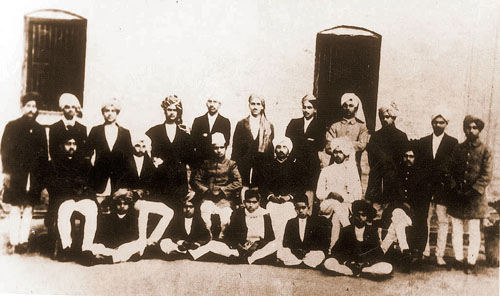
  24. Story 20 of 28 · The freedom struggle

    Politics and diplomacyUnverified

    The Government of India Act

    Britain's longest law for India gave the provinces elected governments and widened the vote from about five million to 35 million people, while keeping defence, foreign affairs and key finances in British hands. Its planned federation with the princely states never came about.

    Next story1942 · The fall of Singapore
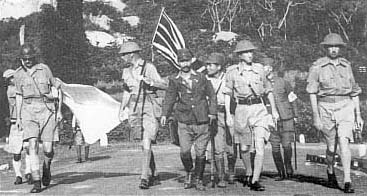
  25. Arthur Percival marches under a flag of truce in order to sue for surrender of the British forces to the Japanese on 15 February 1942

    Story 21 of 28 · The freedom struggle

    Battles and campaigns

    The fall of Singapore

    A smaller Japanese army, having advanced down the Malay Peninsula on bicycles and by tank, took Britain's great Asian fortress. Some 80,000 to 90,000 British, Indian and Australian troops surrendered.

    Next story1942 · The Quit India Movement
  26. Photo taken by me using B & W film camera.Photo shows Procession at Bangalore during Quit India movement by Indian National Congress

    Story 22 of 28 · The freedom struggle

    Revolt and resistance

    The Quit India Movement

    Gandhi called on Britain to leave India at once. Within hours the Congress leaders were arrested, and unrest spread across the country in protests that were put down by force.

    Next story1943 · The Bengal famine
  27. A worried woman during the Bengal famine of 1943

    Story 23 of 28 · The freedom struggle

    People and society

    The Bengal famine

    Estimates of the dead in Bengal run from about 800,000 to 3.8 million, from hunger and the diseases that followed it. A cyclone, rice imports lost to Japan's conquest of Burma, hoarding and wartime policies of the British government all contributed.

    Next story1944 · The Battle of Kohima
  28. The Battle of Kohima March - July 1944: View of the Garrison Hill battlefield with the British and Japanese positions shown

    Story 24 of 28 · The freedom struggle

    Battles and campaigns

    The Battle of Kohima

    British and Indian troops held a hilltop hamlet in north-east India against a much bigger Japanese attack, in some places fighting across a tennis court. The relieved garrison ended Japan's attempt to invade India.

    Next story1946 · The Royal Indian Navy mutiny
  29. Portrait photograph of Balai Chand Dutt, one of the leaders of the 1946 naval mutiny

    Story 25 of 28 · The freedom struggle

    Revolt and resistance Unverified

    The Royal Indian Navy mutiny

    Indian sailors in Bombay mutinied against pay, food and racism, and over six days the revolt spread to some 56 ships and shore bases, from Karachi to Calcutta, with strikes in support. Congress and the Muslim League urged them to surrender, and they did.

    Next story1947 · A tryst with destiny
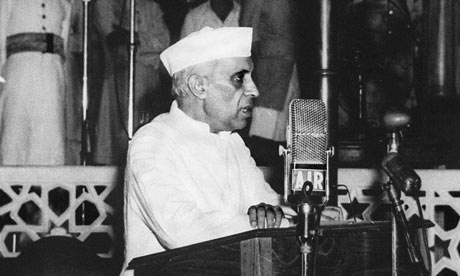
  30. Jawaharlal Nehru gives his "tryst with destiny" speech at Parliament House in New Delhi in 1947

    Story 26 of 28 · The freedom struggle

    Ideas and culture

    A tryst with destiny

    At the stroke of midnight, Jawaharlal Nehru told India's Constituent Assembly that the nation was awakening to life and freedom. At midnight India became independent; Pakistan marks its own independence on 14 August.

    Next story1947 · The Partition of India
  31. Map of the partition of India (1947)

    Story 27 of 28 · The freedom struggle

    People and society

    The Partition of India

    British India was divided into India and Pakistan along religious lines, with the border drawn in weeks by a commission that few Indians trusted. Perhaps 15 million people were displaced, and hundreds of thousands to two million killed.

    Next story1948 · Gandhi is assassinated
  32. Crowds follow the funeral procession of Mahatma Gandhi in Delhi in 1948

    Story 28 of 28 · The freedom struggle

    Politics and diplomacy

    Gandhi is assassinated

    Five months after independence, a Hindu nationalist, Nathuram Godse, shot Gandhi at a prayer meeting in Delhi. Gandhi had worked to stop the violence between Hindus and Muslims.

    NextJourney's end

Journey complete

You travelled 347 years

28 stories, 1600 to 1948. More turning points are being researched and added.

Choose another eventBack to the start