A LCVP (Landing Craft, Vehicle, Personnel) from the U.S

All major events

World War II

The deadliest war in history spread from Europe and China to nearly every part of the world. Between 70 and 85 million people died, most of them civilians, including six million Jews murdered in the Holocaust.

Ended in Europe on 8 May 1945 and in Asia on 2 September 1945.

Stories
57
Distance
8 years
Route
1937 to 1945
  1. The road to war8 stories
  2. Axis victories15 stories
  3. The tide turns14 stories
  4. Allied victory18 stories
  5. Peace and judgement2 stories
Begin the journey

D-Day: the Normandy landings, 1944. Image: Chief Photographer's Mate (CPHoM) Robert F. Sargent · Public domain, via Wikimedia Commons

  1. Chapter I

    The road to war

    8 stories in this chapter

  2. Japanese troops shelling the walled town of Wanping near the Marco Polo Bridge

    Story 1 of 57 · The road to war

    Battles and campaigns

    The Marco Polo Bridge Incident

    A skirmish between Japanese and Chinese troops near Beijing escalated within weeks into full-scale war. For many in Asia, the Second World War began here, two years before Poland.

    Next story1937 · The Nanjing Massacre
  3. Memorial to the victims of the Nanjing Massacre, in Nanjing

    Story 2 of 57 · The road to war

    People and society

    The Nanjing Massacre

    After taking Nanjing, Japanese troops killed large numbers of Chinese civilians and surrendered soldiers and raped many thousands of women over six weeks. Most estimates of the dead run from about 100,000 to more than 300,000; Japanese studies give lower figures.

    Next story1938 · The Anschluss
  4. Crowds in Vienna's Heldenplatz as Hitler announces the union of Austria with Germany in March 1938

    Story 3 of 57 · The road to war

    Politics and diplomacy

    The Anschluss

    German troops crossed into Austria without a fight and Hitler announced its union with Germany. The move was cheered by crowds in Vienna, and was followed by violence against Austrian Jews.

    Next story1938 · Battle of Taierzhuang
  5. Chinese soldiers fighting among ruined houses in Taierzhuang, 1938

    Story 4 of 57 · The road to war

    Battles and campaigns

    Battle of Taierzhuang

    In close street fighting in a walled town on the Grand Canal, Chinese troops held the Japanese for two weeks, then nearly encircled them and drove them out with heavy losses.

    Next story1938 · The Munich Agreement
  6. For documentary purposes the German Federal Archive often retained the original image captions , which may be erroneous, biased, obsolete or politically extreme

    Story 5 of 57 · The road to war

    Politics and diplomacy

    The Munich Agreement

    Britain and France agreed with Germany and Italy that Germany could take the Sudetenland from Czechoslovakia. The Czechs were not invited. Chamberlain returned home promising peace for our time.

    Next story1938 · Kristallnacht
  7. German citizens look the other way on nov

    Story 6 of 57 · The road to war

    People and society

    Kristallnacht

    Across Germany and Austria, Nazi activists and police destroyed synagogues, smashed and looted Jewish shops and homes, and killed at least 91 people. About 30,000 Jewish men were arrested and sent to concentration camps.

    Next story1939 · The Molotov–Ribbentrop Pact
  8. For documentary purposes the German Federal Archive often retained the original image captions , which may be erroneous, biased, obsolete or politically extreme

    Story 7 of 57 · The road to war

    Politics and diplomacy

    The Molotov–Ribbentrop Pact

    Hitler's Germany and Stalin's Soviet Union, ideological enemies, signed a non-aggression pact. A secret protocol divided Poland, the Baltic states and other territories into spheres of influence.

    Next story1939 · Germany invades Poland
  9. Polish soldiers from anti-aircraft artillery unit during the Siege of Warsaw by the Germans in September 1939

    Story 8 of 57 · The road to war

    Battles and campaigns

    Germany invades Poland

    Germany attacked Poland at dawn, using fast tanks and dive-bombers. Britain and France declared war two days later, and the Soviet Union invaded from the east on 17 September. Poland was divided between its invaders.

    Next story1939 · The Battle of the Atlantic
  10. Chapter II

    Axis victories

    15 stories in this chapter

  11. Canadian seamen raise the White Ensign above a German submarine in St

    Story 9 of 57 · Axis victories

    Battles and campaigns

    The Battle of the Atlantic

    The war's longest campaign pitted German U-boats against the convoys carrying food, fuel and weapons to Britain. About 3,500 Allied merchant ships were sunk, and about 780 U-boats.

    Next story1939 · The Winter War
  12. Konekivääripesäke 100 m ryssistä n

    Story 10 of 57 · Axis victories

    Battles and campaigns

    The Winter War

    The Soviet Union invaded Finland. Outnumbered Finnish troops on skis, in white camouflage, held out for 105 days and inflicted heavy losses. Finland made peace and gave up some territory, but kept its independence.

    Next story1940 · The fall of France
  13. "M108/9 14 May 1940 1st Panzer Regiment crosses pontoon bridge over the Meuse at Floing , near Sedan [Army film office, Spandau-Ruhleben]"

    Story 11 of 57 · Axis victories

    Battles and campaigns

    The fall of France

    German armoured divisions drove through the supposedly impassable Ardennes forest and reached the Channel, cutting the Allied armies in two. France fell in six weeks. An armistice left the north under German rule and a collaborating government at Vichy.

    Next story1940 · The Dunkirk evacuation
  14. British troops escaping from Dunkirk in lifeboats (France, 1940)

    Story 12 of 57 · Axis victories

    Battles and campaigns

    The Dunkirk evacuation

    Cut off against the sea, the British Expeditionary Force and some French troops were taken off the beaches of Dunkirk by warships, ferries and hundreds of small civilian boats. About 338,000 men were saved.

    Next story1940 · The Battle of Britain
  15. Operations: A German Luftwaffe Heinkel He 111 bomber flying over Wapping, London at the start of the Luftwaffe's evening raids of 7 September 1940

    Story 13 of 57 · Axis victories

    Battles and campaigns

    The Battle of Britain

    The German Luftwaffe tried to destroy Britain's Royal Air Force so that an invasion could follow. Radar, a chain of command and the skill and endurance of fighter pilots held. Churchill said never was so much owed by so many to so few.

    Next story1940 · The Blitz
  16. The Blitz

    Story 14 of 57 · Axis victories

    People and society

    The Blitz

    German bombers attacked London for 57 nights in a row and then many other British cities. About 43,000 civilians were killed. Londoners sheltered in Underground stations.

    Next story1941 · The Holocaust
  17. "Selection" of Hungarian Jews on the ramp at Auschwitz-II-Birkenau in German-occupied Poland, May/June 1944, during the final phase of the Holocaust

    Story 15 of 57 · Axis victories

    People and society

    The Holocaust

    Nazi Germany and its collaborators murdered about six million Jewish men, women and children, in shootings and in gas chambers at killing centres such as Auschwitz, Treblinka and Sobibor. Roma, disabled people, Soviet prisoners and others were also murdered.

    Next story1941 · Lend-Lease
  18. Wartime painting of tanks being loaded onto a ship for the Soviet Union

    Story 16 of 57 · Axis victories

    Trade, technology and economy

    Lend-Lease

    The United States, not yet at war, agreed to lend or lease weapons, food and fuel to Britain and other countries fighting the Axis. By 1945 it had sent about $50 billion of supplies, much of it to Britain and the Soviet Union.

    Next story1941 · Germany invades the Soviet Union
  19. Germany invades the Soviet Union

    Story 17 of 57 · Axis victories

    Battles and campaigns

    Germany invades the Soviet Union

    More than three million German and Axis soldiers attacked along a front of nearly 3,000 kilometres, breaking the pact with Stalin. The largest invasion in history reached the gates of Moscow and Leningrad by the end of the year.

    Next story1941 · The siege of Leningrad
  20. Map showing the situation on the Eastern Fronts northern part from May 1942 till January 1943

    Story 18 of 57 · Axis victories

    People and society

    The siege of Leningrad

    German and Finnish forces cut off the Soviet Union's second city for 872 days. Starvation killed around a million civilians, many in the first winter, while the city's people kept factories running.

    Next story1941 · The Battle of Moscow
  21. Soviet anti-aircraft gunners on a rooftop in Moscow in 1941

    Story 19 of 57 · Axis victories

    Battles and campaigns

    The Battle of Moscow

    German troops advanced to within about 30 kilometres of the Kremlin but were halted by mud, cold and stiffening Soviet resistance. A Soviet counter-attack in December drove them back.

    Next story1941 · Pearl Harbor
  22. A navy photographer snapped this photograph of the Japanese attack on Pearl Harbor in Hawaii on December 7, 1941, just as the USS Shaw exploded

    Story 20 of 57 · Axis victories

    Battles and campaigns

    Pearl Harbor

    Japanese carrier planes attacked the US Pacific Fleet at Pearl Harbor in Hawaii and killed about 2,400 Americans. The United States declared war on Japan the next day. Germany and Italy then declared war on the United States.

    Next story1942 · The fall of Bataan
  23. Japanese soldiers cheering with raised rifles and a flag after taking Bataan, April 1942

    Story 21 of 57 · Axis victories

    Battles and campaigns Unverified

    The fall of Bataan

    After invading the Philippines, Japanese troops pressed the American and Filipino armies onto the Bataan peninsula. Short of food and medicine, they held out for three months before surrendering, the largest surrender in American history.

    Next story1942 · The Wannsee Conference
  24. The Wannsee Conference

    Story 22 of 57 · Axis victories

    Politics and diplomacy

    The Wannsee Conference

    Senior Nazi officials and civil servants met at a villa in a Berlin suburb to coordinate the deportation and murder of Europe's Jews. The meeting lasted about 90 minutes.

    Next story1942 · The fall of Singapore
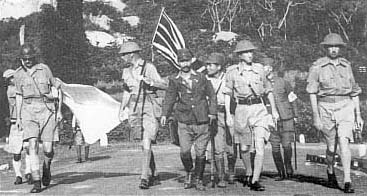
  25. Arthur Percival marches under a flag of truce in order to sue for surrender of the British forces to the Japanese on 15 February 1942

    Story 23 of 57 · Axis victories

    Battles and campaigns

    The fall of Singapore

    A smaller Japanese army, having advanced down the Malay Peninsula on bicycles and by tank, took Britain's great Asian fortress. Some 80,000 to 90,000 British, Indian and Australian troops surrendered.

    Next story1942 · The Battle of Midway
  26. Chapter III

    The tide turns

    14 stories in this chapter

  27. Aerial photograph of Midway Atoll, looking just south of west across the southern side of the atoll, 24 November 1941

    Story 24 of 57 · The tide turns

    Battles and campaigns

    The Battle of Midway

    US Navy dive-bombers, helped by code-breakers who had warned of the attack, sank four Japanese aircraft carriers in about a day. Japan never regained the strength to take the offensive in the Pacific.

    Next story1942 · Guadalcanal
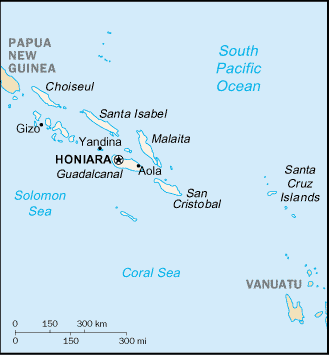
  28. Map of Solomon Islands, showing major towns

    Story 25 of 57 · The tide turns

    Battles and campaigns

    Guadalcanal

    American Marines landed on a Pacific island to take an airfield the Japanese were building. Six months of fighting at sea, in the air and in the jungle followed. Japan finally evacuated.

    Next story1942 · The Battle of Stalingrad
  29. The Battle of Stalingrad

    Story 26 of 57 · The tide turns

    Battles and campaigns

    The Battle of Stalingrad

    German forces fought house by house for a city on the Volga. In November Soviet armies encircled them, and a German army of about 250,000 men was destroyed or captured. The two sides together lost around two million casualties.

    Next story1942 · El Alamein
  30. El Alamein

    Story 27 of 57 · The tide turns

    Battles and campaigns

    El Alamein

    After a huge artillery barrage, Montgomery's British Eighth Army broke Rommel's forces in the Egyptian desert and drove them across Libya. Churchill called it the end of the beginning.

    Next story1942 · Operation Torch
  31. American soldiers in helmets crowded into a landing craft heading for the beach at Oran

    Story 28 of 57 · The tide turns

    Battles and campaigns Unverified

    Operation Torch

    American and British troops landed at Casablanca, Oran and Algiers in French North Africa, which was loyal to Vichy. After a few days of fighting the French forces there came over to the Allies, and the race for Tunisia began.

    Next story1943 · The Bengal famine
  32. A worried woman during the Bengal famine of 1943

    Story 29 of 57 · The tide turns

    People and society

    The Bengal famine

    Estimates of the dead in Bengal run from about 800,000 to 3.8 million, from hunger and the diseases that followed it. A cyclone, rice imports lost to Japan's conquest of Burma, hoarding and wartime policies of the British government all contributed.

    Next story1943 · The Warsaw Ghetto Uprising
  33. Original or archival image caption, which may be erroneous, biased, obsolete or politically extreme

    Story 30 of 57 · The tide turns

    Revolt and resistance

    The Warsaw Ghetto Uprising

    When the Germans came to deport the last Jews from the ghetto to Treblinka, young Jewish fighters with a few weapons resisted for nearly a month. The ghetto was burned to the ground.

    Next story1943 · The Battle of Kursk
  34. Soviet troops of the Voronezh Front counterattacking behind T-34 tanks at Prokhorovka during the Battle of Kursk

    Story 31 of 57 · The tide turns

    Battles and campaigns

    The Battle of Kursk

    Germany launched its last great offensive in the east against a bulge in the Soviet line that the Red Army had fortified in depth. After a huge tank battle, the Soviets counter-attacked and kept the initiative to the end of the war.

    Next story1943 · The Allies invade Sicily
  35. The Allies invade Sicily

    Story 32 of 57 · The tide turns

    Battles and campaigns

    The Allies invade Sicily

    British, Canadian and American forces landed in the largest amphibious operation to date. Within weeks Mussolini was dismissed by his own government, and the Allies were ready to cross to the Italian mainland.

    Next story1943 · Italy changes sides
  36. Artillery being landed during the invasion of mainland Italy at Salerno, September 1943

    Story 33 of 57 · The tide turns

    Politics and diplomacy

    Italy changes sides

    Italy's new government announced an armistice with the Allies as British and American troops landed on the mainland. German forces occupied the north and the Allies advanced slowly up the peninsula in costly fighting.

    Next story1943 · The Tehran Conference
  37. From left to right: Joseph Stalin , Franklin D

    Story 34 of 57 · The tide turns

    Politics and diplomacy

    The Tehran Conference

    Roosevelt, Churchill and Stalin met together for the first time. They agreed that the Western Allies would invade France in 1944, and Stalin promised to enter the war against Japan after Germany's defeat.

    Next story1944 · The Battle of Kohima
  38. The Battle of Kohima March - July 1944: View of the Garrison Hill battlefield with the British and Japanese positions shown

    Story 35 of 57 · The tide turns

    Battles and campaigns

    The Battle of Kohima

    British and Indian troops held a hilltop hamlet in north-east India against a much bigger Japanese attack, in some places fighting across a tennis court. The relieved garrison ended Japan's attempt to invade India.

    Next story1944 · Operation Ichi-Go
  39. Japanese tanks and trucks on a dirt road towards Luoyang, 1944

    Story 36 of 57 · The tide turns

    Battles and campaigns Unverified

    Operation Ichi-Go

    Japan's largest offensive of the war swept through the Chinese provinces of Henan, Hunan and Guangxi, seeking a land route to Indochina and the airfields from which American bombers struck Japan. Nationalist armies collapsed before it.

    Next story1944 · D-Day: the Normandy landings
  40. A LCVP (Landing Craft, Vehicle, Personnel) from the U.S

    Story 37 of 57 · The tide turns

    Battles and campaigns

    D-Day: the Normandy landings

    About 160,000 American, British and Canadian troops crossed the English Channel and landed on five beaches in Normandy, protected by thousands of aircraft and ships and by paratroopers dropped behind the lines.

    Next story1944 · Operation Bagration
  41. Chapter IV

    Allied victory

    18 stories in this chapter

  42. Map of deployments during Operation Bagration, June–August 1944

    Story 38 of 57 · Allied victory

    Battles and campaigns

    Operation Bagration

    A huge Soviet offensive in Belarus destroyed Germany's Army Group Centre, three years to the day after the invasion of the USSR. More than 300,000 German soldiers were killed or captured.

    Next story1944 · The Warsaw Uprising
  43. Grave of insurgents from battalion "Chrobry I" killed on August 31th, 1944 in wing of Simons' department store at Wyjazd street

    Story 39 of 57 · Allied victory

    Revolt and resistance

    The Warsaw Uprising

    The Polish Home Army rose against German occupation as the Red Army approached. Soviet forces halted across the river. After 63 days the Germans crushed the rising, killed an estimated 150,000 to 200,000 civilians and destroyed much of the city.

    Next story1944 · The liberation of Paris
  44. The liberation of Paris

    Story 40 of 57 · Allied victory

    Battles and campaigns

    The liberation of Paris

    After a rising by the French resistance, Free French and American troops entered Paris, and the German commander surrendered against Hitler's orders to destroy the city. De Gaulle walked down the Champs-Élysées.

    Next story1944 · Battle of Leyte Gulf
  45. A column of smoke rising from the light carrier USS Princeton after it was hit by a Japanese bomb, October 1944

    Story 41 of 57 · Allied victory

    Battles and campaigns

    Battle of Leyte Gulf

    In four separate engagements over four days, the US Navy destroyed what remained of Japan's fleet as it tried to stop the invasion of the Philippines. It was possibly the largest naval battle in history, and the first with organised kamikaze attacks.

    Next story1944 · The Battle of the Bulge
  46. Mottet farm in Marenne after passage of 116 Panzer Division 1945 Battle of the Bulge

    Story 42 of 57 · Allied victory

    Battles and campaigns

    The Battle of the Bulge

    Hitler's last offensive in the west struck through the snowy Ardennes forest in a bid to split the Allied armies and take Antwerp. American troops held at Bastogne, and the attack ran out of fuel.

    Next story1945 · The liberation of Auschwitz
  47. Child survivors of Auschwitz, in a still from Soviet film footage shot after the camp's liberation

    Story 43 of 57 · Allied victory

    People and society

    The liberation of Auschwitz

    Soviet soldiers reached the Auschwitz camp complex in occupied Poland, where more than a million people, about nine in ten of them Jews, had been murdered. They found about 7,500 survivors, mostly sick or dying.

    Next story1945 · The Yalta Conference
  48. Churchill, Roosevelt and Stalin seated together at the Yalta Conference

    Story 44 of 57 · Allied victory

    Politics and diplomacy

    The Yalta Conference

    Roosevelt, Churchill and Stalin met in Crimea to plan the end of the war and the shape of Europe. They agreed on zones of occupation in Germany, a United Nations, and free elections in Poland, which Stalin did not allow.

    Next story1945 · The bombing of Dresden
  49. For documentary purposes the German Federal Archive often retained the original image captions , which may be erroneous, biased, obsolete or politically extreme

    Story 45 of 57 · Allied victory

    Battles and campaigns

    The bombing of Dresden

    British and American bombers dropped high explosives and incendiaries on Dresden over three days, causing a firestorm that destroyed the centre. About 25,000 people were killed. The raid has been debated ever since.

    Next story1945 · The Battle of Iwo Jima
  50. Raising the Flag on Iwo Jima

    Story 46 of 57 · Allied victory

    Battles and campaigns

    The Battle of Iwo Jima

    US Marines fought through tunnels and caves for a volcanic island 1,200 kilometres from Tokyo. About 6,800 Americans were killed. Nearly all the Japanese defenders, some 18,000 to 21,000, died. A photograph of the flag raised on Mount Suribachi became famous.

    Next story1945 · The firebombing of Tokyo
  51. Map of the air-raid damage to Tokyo, compiled in December 1945

    Story 47 of 57 · Allied victory

    People and society

    The firebombing of Tokyo

    American bombers dropped incendiaries on the wood-and-paper houses of eastern Tokyo overnight. A firestorm killed an estimated 80,000 to 100,000 people, most of them civilians, and left a million homeless. It was the deadliest air raid of the war.

    Next story1945 · The Battle of Okinawa
  52. Okinawa - American LCTs unload supplies on Yellow Beach near the mouth of the Bishi Gawa river on 13 April 1945

    Story 48 of 57 · Allied victory

    Battles and campaigns

    The Battle of Okinawa

    The last and bloodiest battle of the Pacific. More than 12,000 Americans died, as did about 100,000 Japanese soldiers and, by local counts, well over 100,000 Okinawans, some of them forced to take their own lives.

    Next story1945 · The Battle of Berlin
  53. For documentary purposes the German Federal Archive often retained the original image captions , which may be erroneous, biased, obsolete or politically extreme

    Story 49 of 57 · Allied victory

    Battles and campaigns

    The Battle of Berlin

    Soviet armies surrounded and stormed the German capital in the final major battle in Europe. Hitler killed himself in his bunker on 30 April. The city surrendered on 2 May.

    Next story1945 · Victory in Europe Day
  54. The liberation of Utrecht by Canadian soldiers of the First Canadian Army

    Story 50 of 57 · Allied victory

    Politics and diplomacy

    Victory in Europe Day

    Germany's unconditional surrender took effect, and crowds celebrated in London, Paris, New York and Moscow. In many places, the end of war meant shortages, displacement and the start of new troubles.

    Next story1945 · The Trinity test
  55. PA-98-0520 — Trinity Site explosion , 0.016 second after explosion, July 16, 1945

    Story 51 of 57 · Allied victory

    Trade, technology and economy

    The Trinity test

    In the New Mexico desert, scientists of the Manhattan Project exploded the first nuclear weapon. J. Robert Oppenheimer later recalled a line from Hindu scripture about becoming death.

    Next story1945 · The Potsdam Conference
  56. The Potsdam Conference

    Story 52 of 57 · Allied victory

    Politics and diplomacy

    The Potsdam Conference

    Truman, Stalin and Churchill, later replaced by Attlee, met near Berlin to settle postwar Europe. The US, Britain and China called on Japan to surrender or face destruction. The Allies were already disagreeing.

    Next story1945 · Hiroshima and Nagasaki
  57. Hiroshima and Nagasaki

    Story 53 of 57 · Allied victory

    Battles and campaigns

    Hiroshima and Nagasaki

    American aircraft dropped atomic bombs on Hiroshima and, three days later, Nagasaki. Exact numbers are unknown, but between about 150,000 and 246,000 people are estimated to have died, most of them civilians. They remain the only use of nuclear weapons in war.

    Next story1945 · The Soviet Union attacks Japan
  58. Soviet Invasion of Manchuria (1945), based on Glantz's maps in Levenworth Paper No 7 - Feb 1983

    Story 54 of 57 · Allied victory

    Battles and campaigns

    The Soviet Union attacks Japan

    Three months after Germany's surrender, the Soviet Union ended its neutrality pact with Japan and attacked its army in Manchuria with well over a million men. The weakened Japanese forces could offer little resistance.

    Next story1945 · Japan surrenders
  59. Japan surrenders

    Story 55 of 57 · Allied victory

    Politics and diplomacy

    Japan surrenders

    Emperor Hirohito told his people by radio on 15 August that Japan would accept the Allied terms. The formal surrender was signed on 2 September aboard the battleship USS Missouri in Tokyo Bay.

    Next story1945 · The United Nations is founded
  60. Chapter V

    Peace and judgement

    2 stories in this chapter

  61. The United Nations is founded

    Story 56 of 57 · Peace and judgement

    Politics and diplomacy

    The United Nations is founded

    Fifty-one countries, mostly Allies, joined the new organisation when its charter came into force. It was set up to keep the peace, with a Security Council on which the great powers had a veto.

    Next story1945 · The Nuremberg trials
  62. View of the defendants in the dock at the International Military Tribunal trial of war criminals in Nuremberg, Bavaria, Germany

    Story 57 of 57 · Peace and judgement

    Politics and diplomacy

    The Nuremberg trials

    An international tribunal tried 22 surviving Nazi leaders for crimes against peace, war crimes and crimes against humanity. Twelve were sentenced to death. Several later trials followed.

    NextJourney's end

Journey complete

You travelled 8 years

57 stories, 1937 to 1945. More turning points are being researched and added.

Choose another eventBack to the start